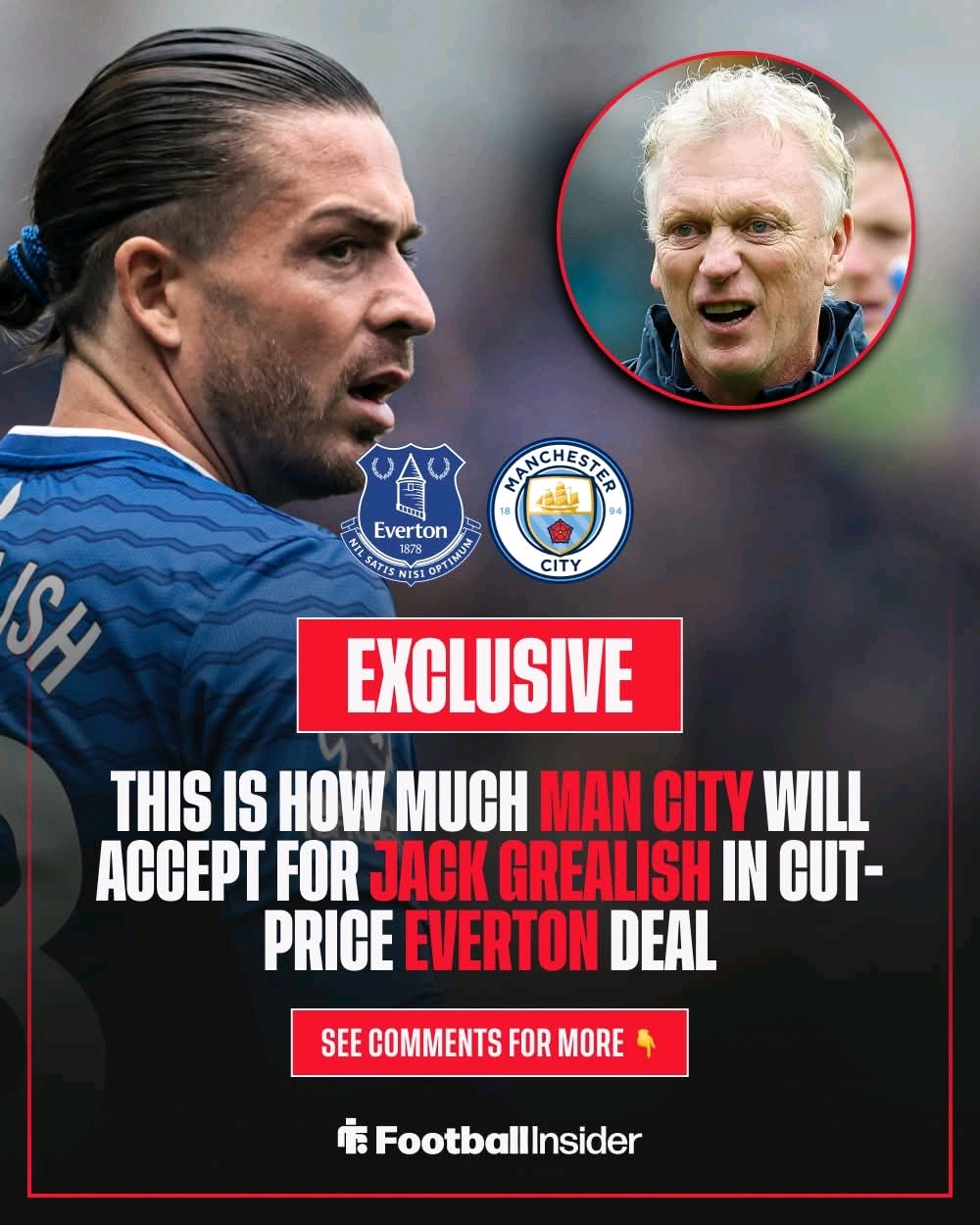
Everton’s season has been defined by cautious optimism, flashes of quality, and difficult financial decisions, none more complex than the future of Jack Grealish. The England international arrived on Merseyside amid significant attention during the summer transfer window, joining on a season-long loan from Manchester City. While his arrival was initially seen as a statement of intent, the question looming large over Goodison Park is whether Everton should—and realistically could—make that move permanent.
At the heart of the issue lies a £50 million option-to-buy clause, a hefty wage commitment, and a player whose performances have ranged from brilliant to inconsistent. With Everton operating under tight financial constraints and Manchester City keen to streamline their wage bill, the situation is far more nuanced than it appears on paper.
When Everton secured Grealish on loan, it was widely regarded as one of the most eye-catching deals of the summer. A former £100 million signing for Manchester City, Grealish brought pedigree, experience, and star power to a club in transition. At 30 years old, he was no longer a developing prospect but a seasoned Premier League campaigner seeking regular football and renewed confidence.
Manchester City, meanwhile, were open to letting him leave temporarily. With Pep Guardiola evolving his squad and younger, more dynamic options emerging, Grealish found himself increasingly on the fringes at the Etihad Stadium. The loan move offered City an opportunity to reduce their wage burden while giving the player a chance to rebuild his form elsewhere.
For Everton, the deal was structured carefully. While Grealish’s weekly salary is believed to be around £300,000, Everton are covering approximately £225,000 of that figure. The agreement also included a clause allowing Everton to sign him permanently for £50 million at the end of the season.
On the surface, the option appeared ambitious but potentially manageable—assuming Grealish delivered consistently and Everton’s financial situation improved.
Grealish wasted little time making an impact. His performances in the opening weeks of the campaign were among the best of his recent career. Operating in a free, expressive role, he provided creativity, leadership, and composure in the final third
His influence was such that he was named Premier League Player of the Month for August, an accolade that underlined just how effective he had been early on. Everton supporters quickly embraced him, and there was genuine belief that the club might be witnessing the revival of a player once considered among England’s most gifted attackers. At that stage, discussions about triggering the £50 million clause did not seem unreasonable. If Grealish continued on that trajectory, Everton would have faced a difficult but exciting decision
As the season progressed, however, Grealish’s form became more uneven. While he continued to contribute with goals and assists, his influence waned in certain matches. Injuries, tactical adjustments, and the physical demands of regular football all played a part in disrupting his rhythm.
By the halfway point of the season, Grealish had recorded two goals and four assists across 18 appearances—respectable numbers, but not necessarily those of a £50 million player on elite wages
This inconsistency has forced Everton’s hierarchy to reassess their position. The club must balance footballing ambition with financial reality, particularly given their ongoing need to comply with league regulations.
Everton’s financial situation is well documented. Years of overspending, combined with stadium development costs and regulatory scrutiny, have left the club operating with limited flexibility in the transfer market
Committing £50 million to a single player—especially one approaching the latter stages of his prime—would represent a significant risk. Add to that Grealish’s substantial wage demands, and the potential long-term impact on Everton’s budget becomes clear Even if Everton were willing to invest heavily in a marquee signing, doing so for Grealish at the agreed price would likely restrict their ability to strengthen elsewhere in the squad
Former Manchester City financial adviser Stefan Borson has offered a candid assessment of the situation, suggesting that the £50 million clause is unlikely to be activated.
According to Borson, the option-to-buy clause exists more for appearance than practical use. In his view, Everton were never realistically expected to pay that amount, regardless of Grealish’s performances.
Borson believes the real decision will come later, once Everton and Manchester City sit down to negotiate a new fee based on Grealish’s form, age, and market value
Rather than triggering the clause, Everton are expected to wait until the end of the season and submit a significantly lower bid.
From Manchester City’s perspective, the situation is equally pragmatic. Grealish’s contract runs until June 2027, meaning he will enter the final year of his deal next summer if he remains on loan for the full season.
At that point, his book value—taking amortisation into account—is expected to be around £20 million. Selling him for that figure would allow City to balance their books, avoid paying his substantial wages, and free up space within the squad.
Borson has suggested that City may even accept a small accounting loss if it means removing Grealish’s salary from their wage structure.
In short, City are unlikely to hold out for £50 million when market conditions, the player’s age, and their own squad planning all point towards a more modest valuation
Another key factor influencing Grealish’s future is the absence of significant competition. Unlike younger or more versatile players, Grealish does not appear to be attracting widespread interest from other elite clubs.
His wages alone limit the number of potential buyers, and few teams outside the Premier League could realistically afford him. Within England, Everton may represent the best fit in terms of playing time, environment, and expectations.
Borson has noted that there is little chance of a bidding war developing, which strengthens Everton’s negotiating position. Without pressure from rival clubs, Manchester City may be more inclined to accept a reduced offer
From the player’s perspective, stability may be the priority. Grealish has found a degree of happiness and freedom at Everton that had been missing during his later years at City.
He is playing regular football, enjoying the support of the fans, and operating in a system that allows him to express himself creatively. A return to Manchester City, where competition for places is intense and tactical discipline is paramount, seems unlikely.
Equally, a move abroad or to another Premier League club would involve uncertainty and disruption. Staying at Everton, where he is settled and valued, may represent the most appealing option
On the pitch, Grealish remains a valuable asset. Even when not at his best, his ability to retain possession, draw fouls, and create chances makes him a unique presence in Everton’s attack.
His experience also benefits younger players, offering leadership in high-pressure situations. While his output may not always justify a premium transfer fee, his overall contribution goes beyond statistics.
This raises an important question for Everton: is Grealish worth £50 million, or is he worth £20 million?
The answer to that question will define the club’s strategy
As things stand, the most probable scenario is that Everton allow the season to run its course without triggering the option clause. Instead, they will assess Grealish’s overall contribution, fitness, and consistency before entering negotiations with Manchester City.
A deal in the region of £20 million appears far more realistic and aligned with Everton’s financial capabilities. Such a fee would reflect Grealish’s remaining contract length, age, and market demand.
For Manchester City, accepting that amount would resolve a lingering squad issue and reduce wage expenditure. For Grealish, it would provide clarity and continuity.
Jack Grealish’s loan spell at Everton has been neither a resounding success nor a disappointment. It has shown glimpses of what he can offer while also highlighting the risks involved in a long-term commitment.
The £50 million option-to-buy clause may never be activated, but it has served its purpose as a framework for negotiations. The real value of the deal lies in the flexibility it provides both clubs.
If Everton can secure Grealish permanently for a significantly reduced fee, it could represent smart business rather than reckless spending. For Manchester City, moving him on at the right price would allow them to focus on the future.
Ultimately, the next few months will determine whether Grealish’s time on Merseyside becomes a permanent chapter or simply a memorable loan spell. What seems clear, however, is that any deal will be shaped not by headline figures, but by realism, timing, and compromise.