The night Manchester City faced Chelsea at the Etihad Stadium was meant to be a big test in the Premier League title race. Instead, it has turned into one of the most controversial matches of the season, with refereeing decisions now under heavy scrutiny and calls growing louder for the Football Association to step in. What happened on the pitch has refused to fade away, and days later, the debate is still raging across English football.
At the heart of the storm is a fiery incident involving Chelsea striker Liam Delap and Manchester City defender Abdukodir Khusanov. The clash, which sent Khusanov crashing into the advertising boards and left him lying on the ground in pain, has sparked serious questions about player safety, refereeing standards, and whether English football is doing enough to protect players during high-intensity matches.
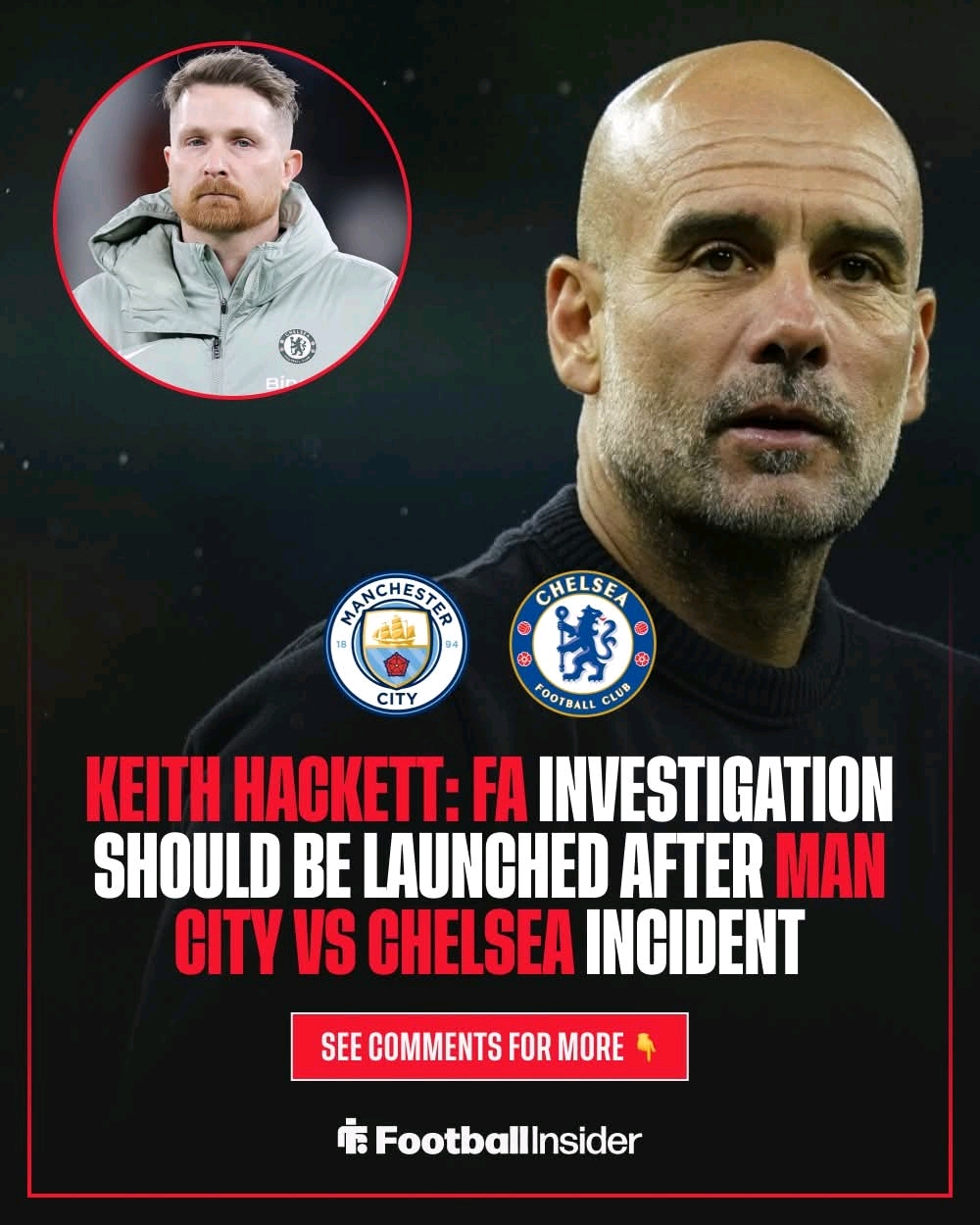
Former PGMOL chief and ex-FIFA referee Keith Hackett has now added fuel to the fire. Speaking with authority and experience, Hackett believes the incident is so serious that the FA should launch a formal investigation. In his view, this is not just another controversial moment to be forgotten. He believes it represents a deeper problem that needs urgent attention.
The match itself was already tense before the flashpoint. Manchester City entered the game under pressure, knowing that any slip-up would damage their title hopes. Arsenal had already secured a narrow win over Bournemouth, and Pep Guardiola’s side knew they could not afford to fall further behind. Chelsea, meanwhile, arrived at the Etihad with confidence and hunger, determined to prove they could compete with the champions.
From the opening minutes, the game was physical and fast. Challenges flew in, tempers flared, and the atmosphere inside the Etihad was electric. Early on, questions were raised about referee Michael Oliver’s control of the game. Reece James and Bernardo Silva both escaped what many felt should have been yellow cards in the early stages. Those moments planted the first seeds of frustration among players, managers, and fans.
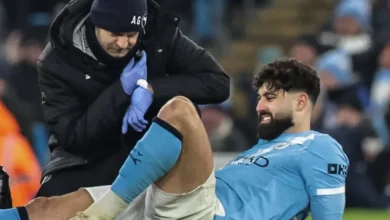
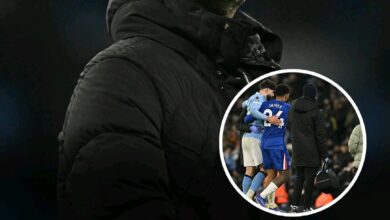
But those decisions were only the beginning. The real explosion came later, when Liam Delap and Abdukodir Khusanov collided in a moment that stunned everyone watching. Delap, charging forward with aggression, crashed Khusanov into the advertising boards at speed. The City defender went down hard, clearly shaken, and stayed on the ground as players from both teams rushed in.
Related Posts:




For a few seconds, the game lost all structure. Players surrounded the scene. Shouts were exchanged. Arms were raised. Emotions boiled over. In situations like this, referees are expected to act quickly and firmly to calm things down and protect players. What followed, however, only made matters worse.
Michael Oliver decided to caution Matheus Nunes for backing up his teammate, while Delap escaped with no major punishment. Other players involved were also spared serious sanctions. To many watching, it felt like a moment that demanded stronger action. A yellow card seemed too soft. The lack of decisive punishment allowed frustration to grow instead of disappear.
Keith Hackett has been outspoken about refereeing standards for years, and this incident pushed him to speak out once again. In his view, this was not a simple coming together of two players. He believes the authorities must look deeper and ask whether player safety was compromised and whether the referee failed to apply the laws of the game properly.
Hackett has criticised Michael Oliver in the past, even though the referee is highly respected and regularly officiates Champions League and World Cup matches. This time, Hackett suggested that some decisions from the game could even be overturned upon review. That is a rare and serious statement from a former head of the PGMOL.
According to Hackett, situations like the Delap-Khusanov clash cannot be ignored, especially when they involve excessive force and lead to mass confrontation. He pointed out that clubs are often punished for failing to control their players in these moments, yet in this case, the response felt weak and incomplete.
What made the situation even more frustrating for Manchester City fans was what happened next. Just as the crowd was trying to calm down and refocus on the game, Chelsea struck. Enzo Fernandez scored a late equaliser, silencing the Etihad Stadium and delivering a crushing blow to City’s title hopes.
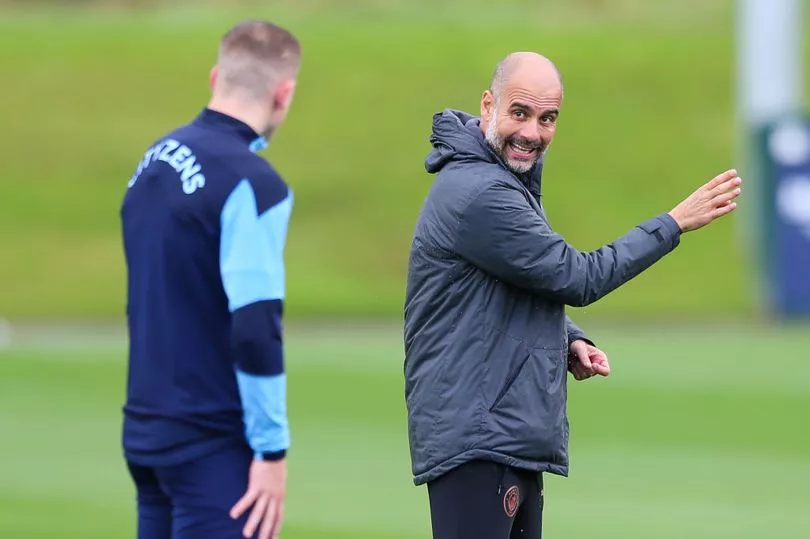
The goal hit Guardiola hard. Cameras caught him raging on the sidelines, shouting and gesturing in disbelief. His frustration was not just about conceding late. It was about everything that had built up throughout the match. The refereeing decisions. The missed cautions. The lack of protection for his players. And now, the two dropped points that left City six points behind Arsenal.
For Guardiola, this draw felt like a defeat. For City fans, it felt like injustice. And for Keith Hackett, it felt like a moment that demanded accountability.
Speaking exclusively to Football Insider on The Final Whistle, Hackett explained why he believes the FA should step in. He pointed out that the time of year can sometimes affect how incidents are handled. With holidays ongoing and attention divided, serious issues can be overlooked. In his long career, he has seen important matters slip through the cracks simply because of timing.
Hackett made it clear that while the FA is often reluctant to “re-referee” matches, incidents like this deserve special attention. He argued that acts of simulation, dangerous challenges, and mass confrontations should not be brushed aside. If referees fail to deal with them properly during the game, authorities must step in afterward.
His comments have reopened a long-running debate in English football. Should the FA have the power to revisit major incidents and apply punishment after the match? Or does that undermine the authority of referees on the pitch? Opinions are divided, but incidents like this make it harder to ignore the problem.
Player safety has become a major concern in modern football. The game is faster, stronger, and more intense than ever. When challenges go unchecked, the risk of serious injury increases. Hackett’s concern is not just about one match. It is about setting standards and protecting players across the league.
From Chelsea’s perspective, some fans argue that Delap was simply being aggressive and competitive. They believe the clash was part of football and that City players overreacted. Others feel that City are using the incident as an excuse for dropping points. These arguments have flooded social media, further dividing opinion.
But neutral observers have largely agreed on one thing. The incident deserved more attention than it received at the time. Whether through a red card, further sanctions, or a post-match review, many believe stronger action was needed.
Michael Oliver, for his part, has remained silent. Referees rarely comment on individual decisions, and that silence often adds to the frustration of fans and managers. Oliver’s reputation as one of England’s top officials makes the controversy even louder. When mistakes happen at this level, they attract maximum attention.
The FA now faces pressure. If they ignore Hackett’s call, critics will accuse them of protecting referees at the expense of fairness. If they act, they risk opening the door to endless reviews and complaints from clubs. It is a delicate balance, but one that football authorities cannot avoid forever.
For Manchester City, the damage has already been done. Dropping points at this stage of the season could prove costly. Arsenal are flying. Confidence is growing in North London. City, meanwhile, are dealing with injuries, pressure, and now controversy.
Pep Guardiola’s frustration reflects a deeper issue. Managers want consistency. Players want protection. Fans want fairness. When all three feel let down, trust in the system begins to crack.
Chelsea, on the other hand, will see the draw as a positive result. A late goal at the Etihad is no small achievement. Enzo Fernandez’s strike showed character and belief. But even their joy has been overshadowed by the debate that followed.
As the days pass, the incident refuses to disappear. Pundits discuss it. Former referees analyse it. Fans argue about it. And now, with Keith Hackett demanding action, the pressure is firmly on the FA to respond.
Whether an investigation is launched or not, this match will be remembered for more than the scoreline. It will be remembered as another example of how one moment can shape a season, ignite controversy, and expose the cracks in football’s governing systems.
The Premier League prides itself on being the best league in the world. With that status comes responsibility. Decisions must be right. Players must be protected. And when mistakes happen, accountability must follow.
For now, Manchester City wait. Chelsea move on. Guardiola fumes. And English football holds its breath, waiting to see whether the authorities will act or once again choose silence.