UEFA President Aleksander Čeferin sent a direct message to Phil Foden, sending shockwaves across Europe and the global football world.

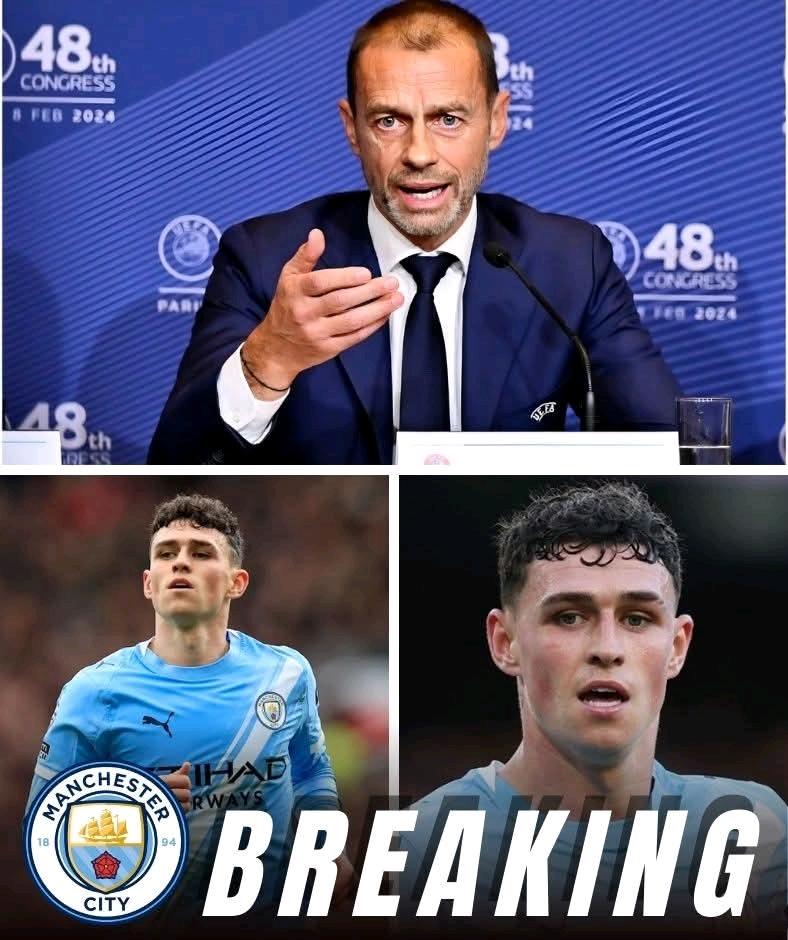
The football world was calm on the surface, but behind the scenes something powerful was already moving. It happened quietly, without flashing cameras or breaking news banners at first. Then suddenly, just ten minutes ago, a short story exploded across Europe and beyond. The name at the center of it all was Phil Foden. The message came from the very top of European football power. UEFA president Aleksander Čeferin had sent a direct message to the Manchester City and England star. That alone was enough to make people sit up. But what truly shook the football world was not the message itself. It was Phil Foden’s reply. Just three words. Three simple words that carried heavy meaning. Three words that felt calm, but sounded loud. Three words that made it clear this was not a normal exchange, not a friendly note, and not something that would be forgotten quickly.
Phil Foden has always been seen as the quiet one. He is not the type to shout in the media or fight battles on social media. He lets his football speak. From the streets of Stockport to the bright lights of the Etihad Stadium, his journey has been built on patience, discipline, and belief. Pep Guardiola once called him the most talented player he has ever coached. Teammates speak about his hunger. Fans talk about his touch, his movement, his intelligence. But off the pitch, Foden has always been private. That is why this moment felt so powerful. When a man like Foden speaks, even with just three words, people listen.
Aleksander Čeferin is not just any football official. He is the president of UEFA, the body that controls European football. His words can shape competitions, punish clubs, and influence the future of the game. When someone like him reaches out directly to a player, it usually means something serious is happening. Messages like that are not sent without reason. They are often linked to big decisions, strong opinions, or major concerns about the state of football. That is why the news spread so fast. People wanted to know why Čeferin contacted Foden. Was it about Manchester City. Was it about England. Was it about football politics. Was it about power, pressure, or principle.
The message itself was described as firm but respectful. It was not aggressive, but it was not casual either. It carried the weight of authority. It spoke about responsibility, influence, and the role of top players in shaping the future of the game. According to reports, Čeferin wanted to remind Foden of how important his voice is in modern football. He spoke about leadership, about being a role model, and about the direction football is heading in Europe. Some sources say the message also touched on recent tensions between UEFA and elite clubs, including issues around competitions, control, and the growing power of players and clubs.
For many players, a message like that would lead to a long reply. Some would explain themselves. Some would defend their position. Others might try to please the authority figure. But Phil Foden did none of that. He did not write a long response. He did not ask questions. He did not try to soften the tone. He replied with just three words. Simple words. Calm words. But words that landed like a thunderbolt.
Those three words were not rude. They were not aggressive. They were not emotional. But they were strong. They showed confidence. They showed clarity. And most of all, they showed that Phil Foden knows exactly who he is and where he stands. His reply was polite, but it was firm. It suggested that he understands the message, but he will not be moved easily. It was the kind of response that tells you everything without explaining anything.
Related Posts:






As soon as the reply became public, reactions exploded. Fans across Europe started sharing their thoughts. Some praised Foden for his maturity. Others said he showed courage by standing his ground. Many people were shocked that a player so young could show such calm strength in a moment like that. Pundits on television began to debate what it all meant. Former players said it showed leadership. Journalists said it showed a shift in power between players and football authorities.
In England, the reaction was especially strong. Phil Foden is not just another player. He is seen as the future of English football. He grew up in the City academy. He won trophies at a young age. He played in big Champions League nights. He carried pressure that would break many players. Yet he kept improving. For England fans, this moment felt like another sign that Foden is growing not just as a footballer, but as a man.
Manchester City fans were proud. They saw this as proof that their star is confident and fearless. They remember how Guardiola trusted him when others doubted. They remember the big goals, the important assists, the performances in the biggest games. Now they saw something else. They saw character. They saw strength off the pitch.
Across Europe, opinions were divided. Some people felt Foden’s reply was too cold. They argued that players should show more respect to football authorities. Others said respect does not mean silence or obedience. They argued that modern players have a right to their own voice. They said Foden’s response was not disrespectful, but honest.
What made the moment even more powerful was the timing. Football in Europe is going through a tense period. There are ongoing debates about power, money, competitions, and control. UEFA has been under pressure. Clubs want more freedom. Players want more say. Fans want fairness. In the middle of all this, a young English footballer sends a three-word reply that seems to capture the mood of an entire generation.
Phil Foden did not plan to become a symbol. He did not try to start a movement. But sometimes, moments choose people. And this moment chose him. His reply felt like a quiet stand. Not loud, not dramatic, but firm. It reminded people that footballers are not just employees. They are humans with opinions, values, and boundaries.
People also started looking back at Foden’s past interviews. They noticed how often he speaks about loving football, about playing with freedom, about enjoying the game. He has always said he plays his best football when he feels trusted and happy. That context made his reply even clearer. It felt like he was protecting something important to him. Not money. Not fame. But the joy of the game.
Aleksander Čeferin’s reaction was closely watched. He did not respond publicly straight away. That silence only added to the tension. Some believe he respected Foden’s honesty. Others think he was surprised. Insiders say the message exchange was calm, but serious. There was no argument, but there was also no agreement. It was a moment of understanding, but also a moment of difference.
The story continued to grow. Media outlets across Europe picked it up. Headlines talked about the three words that echoed across the continent. Commentators analysed every possible meaning. Social media turned it into a trend. Fans tried to guess the exact words and their deeper message. Even players from other clubs reportedly spoke about it in private conversations.
For young footballers watching from academies around the world, the moment felt inspiring. It showed that you can be respectful without being silent. It showed that you can be calm without being weak. It showed that your voice matters, even if it is short.
Phil Foden went back to training as usual. He did not post anything online. He did not explain himself. He did not add context. That silence was just as powerful as the reply itself. It showed that he said what he needed to say, and nothing more.
Pep Guardiola was asked about the situation. As expected, he protected his player. He spoke about personality, about confidence, about being true to yourself. He said football needs players who think for themselves. He did not reveal details, but his support was clear.
England manager also showed quiet backing. He spoke about leadership and maturity. He said modern footballers face pressures that people do not always see. He praised Foden’s focus and professionalism.
As the hours passed, the story did not fade. Instead, it settled into something deeper. It became less about the exact words and more about what they represented. A generation of players growing into their power. A shift in how football authority is viewed. A reminder that respect goes both ways.
In the end, Phil Foden’s three words did not start a war. They did not insult anyone. They did not break rules. But they did something else. They drew a line. A quiet line, but a clear one. They said that this young man knows who he is. He knows what he believes. And he is not afraid to express it, even to the most powerful figures in the game.
Football has always been about moments. Goals, tackles, trophies, tears. But sometimes, the biggest moments do not happen on the pitch. Sometimes, they happen in private messages, with just a few words. And sometimes, those few words can echo across Europe, across the world, and into the future of the game itself.
Phil Foden returned to the pitch carrying the same calm expression. The same focus. The same hunger. But something had changed. Not in his game, but in how he was seen. No longer just a talented footballer. No longer just a Pep Guardiola favourite. He was now also a voice. A symbol of quiet strength in a noisy football world.
And all of that came from three simple words.