UEFA President Aleksander Čeferin sent a direct message to Phil Foden, sending shockwaves across Europe and the global football world. However, what truly ignited public reaction was the English star’s reply of just three words — a short response loaded with deep meaning, making it clear this was anything but an ordinary reaction

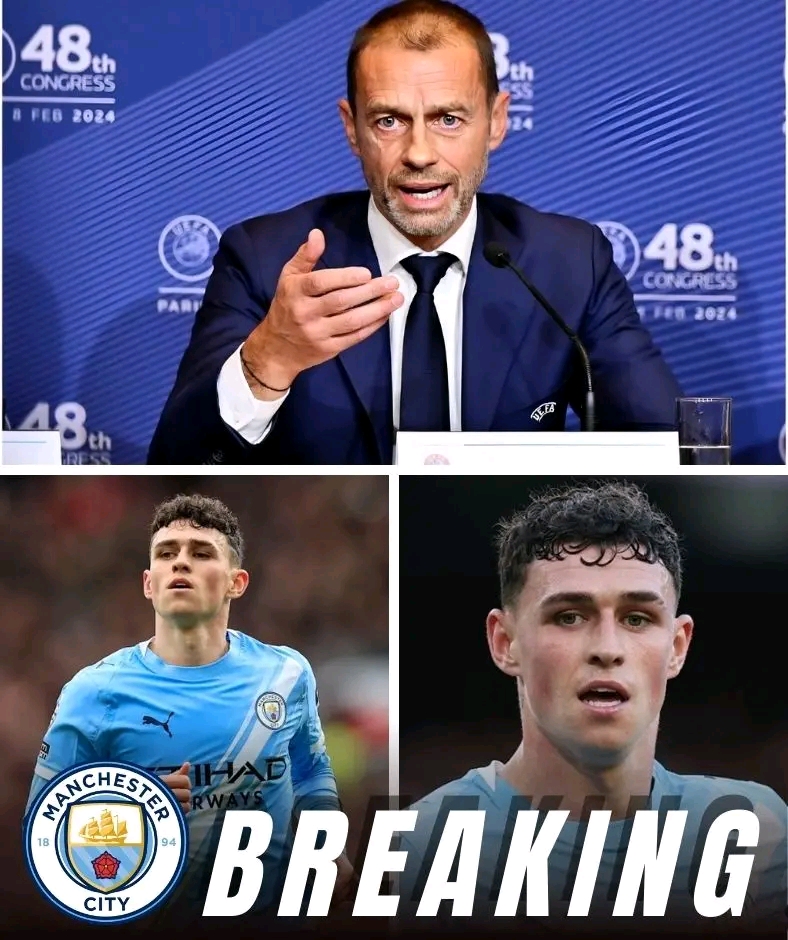
The football world moves fast. News appears every minute. But sometimes, a single message can shake the entire sport. That is exactly what happened when Aleksander Čeferin, the president of UEFA, reportedly sent a direct message to Phil Foden. What happened next quickly became one of the most talked-about moments in football circles across Europe.
For many fans, it began like any other rumour spreading online. A report surfaced claiming that Čeferin had personally contacted Foden. That alone was enough to raise eyebrows. The UEFA president rarely sends direct personal messages to active players, especially those who are in the middle of intense club and international competition. When the story started spreading, people wondered why the governing body’s most powerful figure would reach out directly to a player.
But the story became even more dramatic when reports claimed that Foden responded with only three words.
Three words.
That was all.
And according to many fans and commentators, those three words carried more weight than an entire press conference.
The reaction was immediate. Social media exploded. Fans debated the meaning behind the message. Some praised Foden for his calm confidence. Others believed the response showed a deeper tension between players and football authorities.
To understand why this moment captured so much attention, it helps to look at the people involved.
Aleksander Čeferin has been one of the most powerful figures in European football since becoming UEFA president in 2016. During his time in charge, he has overseen major decisions that shaped modern football. He led the fight against the controversial European Super League project. He defended UEFA competitions like the Champions League. And he often speaks strongly about protecting football traditions.
Because of his position, Čeferin rarely interacts publicly with individual players. Most communication between UEFA and players happens through clubs, agents, or official channels. That is why the idea of a direct message immediately caught people’s attention.
On the other side of the story is Phil Foden, one of England’s brightest football talents.
The young star from Manchester City has become one of the most important players for both his club and the England national team. Since breaking into the Manchester City first team under Pep Guardiola, Foden has grown from a promising academy graduate into one of the most creative midfielders in the Premier League.
Fans love him for his fearless style, his quick feet, and his ability to change games in seconds. Coaches trust him because he understands the game at a very high level despite his young age.
Over the past few seasons, Foden has played in huge matches: Premier League title races, Champions League knockouts, and international tournaments. With every performance, his reputation has grown.
So when rumours appeared that UEFA’s president had contacted him directly, it instantly became global football news.
At first, nobody knew exactly what the message said. Some reports claimed that Čeferin wanted to praise Foden for his performances. Others suggested the message might have been related to issues involving players, competitions, or football governance.
But what truly caught attention was not the message itself.
It was the reply.
According to several reports circulating online, Phil Foden responded with only three words.
A short answer.
Simple.
But powerful.
The exact wording quickly became the focus of discussion among fans. Some sources claimed the words were calm and respectful. Others suggested they carried a deeper meaning, almost like a quiet statement about the relationship between players and football authorities.
Whatever the exact phrase was, the idea of such a brief response sparked massive debate.
Why only three words?
Was it confidence?
Was it frustration?
Or was it simply the way Foden prefers to communicate — direct and uncomplicated?
Those questions began spreading across football communities.
Pundits started discussing the situation on television. Fans on social media shared theories. Some believed the response showed maturity. Others thought it hinted at tension between players and the administrators who run the sport.
Inside Manchester City circles, people were reportedly surprised by how quickly the story spread. Players and staff are used to attention, but even they were shocked by how such a small moment turned into a worldwide headline.
For Guardiola and his team, the focus remains on football. Manchester City have spent years building one of the strongest squads in Europe. Their ambition is simple: win trophies, dominate competitions, and continue their legacy as one of the modern game’s most successful teams.
But stories like this show how modern football works. Today, even a private message can become global news within minutes.
Fans are always searching for meaning behind every word, every gesture, every interaction between football’s biggest names.
And because both Čeferin and Foden are major figures in the sport, the story naturally gained attention.
Some experts believe the reaction also reflects the growing influence of players in modern football.
In the past, administrators and club executives often held most of the power. Players performed on the pitch but rarely spoke directly about how the sport was run.
That has changed in recent years.
Today’s top players have massive global followings. Their voices carry weight. Their opinions can shape debates about competitions, scheduling, player welfare, and the future of football.
Phil Foden represents this new generation of players. Young, confident, and aware of the platform he has.
Even if his reply was just three words, people believe it may reflect the mindset of modern footballers — focused, independent, and not easily influenced.
Meanwhile, Aleksander Čeferin continues to lead UEFA through a complicated era.
European football faces constant challenges. New competitions are proposed. Club finances grow larger every year. Fans demand fairer systems. Players worry about overloaded schedules.
As UEFA president, Čeferin stands at the centre of these debates.
Every decision he makes affects clubs, players, and millions of supporters around the world.
That is why any interaction involving him becomes a major story.
When the message to Foden became public knowledge, it was almost inevitable that it would spark conversation.
Even though the exchange itself may have been short, the symbolism felt much bigger.
It showed the connection between football’s leadership and the stars who actually play the game.
Some fans praised the moment as a reminder that players are no longer silent figures within the sport.
Others believed the entire story might simply be overblown internet speculation.
In modern football media, that happens often.
A rumour appears.
Fans react instantly.
And suddenly a small event becomes a global headline.
But regardless of whether the message was serious, friendly, or misunderstood, one thing is certain: it captured the imagination of the football world.
Phil Foden continues to focus on his performances for Manchester City.
His career is still rising. Every season he becomes more important to Guardiola’s system. His creativity, vision, and intelligence on the pitch make him one of the most exciting players to watch.
Many experts believe his best years are still ahead.
For England as well, Foden represents hope for future tournaments. Supporters believe he can lead the national team in major competitions and help bring success that fans have waited decades to see.
Meanwhile, UEFA will continue shaping European football’s future.
Aleksander Čeferin remains determined to protect the Champions League and maintain the balance of the sport across different leagues and countries.
The relationship between governing bodies and players will always be complex.
Players want fair treatment, reasonable schedules, and respect for their careers.
Administrators must organise competitions, protect traditions, and manage football’s enormous global business.
Sometimes those interests align.
Sometimes they clash.
And sometimes, as this strange story shows, the entire debate can be symbolised by just a few words.
Three words from Phil Foden.
Three words that travelled across the football world in minutes.
Three words that fans interpreted in dozens of different ways.
Maybe the message was calm and respectful.
Maybe it was confident and bold.
Or maybe it was simply a young footballer answering a message without expecting it to become international news.
That is the mystery that keeps the story alive.
Because in football, the biggest drama does not always happen on the pitch.
Sometimes it begins with a simple message… and a reply that changes the conversation everywhere.