The night felt heavy inside the Santiago Bernabeu, a place where football breathes differently and where every touch of the ball carries a kind of electricity that players can feel in their bones. Manchester City walked into the stadium knowing the importance of the moment, knowing how Real Madrid loved these big European nights, knowing how the whole world watched with sharp eyes. Yet despite the weight of the moment, despite the noise, the lights, and the tension, Manchester City still managed to walk out with a 2-1 victory. A win that on paper looked like a brilliant result. A win that should have brought nothing but smiles. But even inside victory, sometimes the problems start to show. Sometimes the cracks become bigger. Sometimes the performance of one player starts a storm among fans, and this exact storm decided to form around Bernardo Silva.
Pep Guardiola stood on the sidelines during the match looking tense, looking unsettled, almost like something bothered him deep inside his mind. He kept moving from left to right, whispering instructions, shouting when needed, waving his hands like a man who knew the match could slip away at any moment. City got their goals, City fought hard, City battled Real Madrid under the Champions League lights, but that didn’t stop the frustration that began to rise among supporters watching the performance of one of the most experienced players in the squad.
Bernardo Silva, a man once praised for his intelligence, his technique, his calmness under pressure, found himself in the middle of the storm once again. Once upon a time, the Portuguese midfielder felt untouchable in Guardiola’s system. He was the player fans trusted to help control matches, the man who knitted the game together with his touches, the man who balanced the midfield with his movement and brain. But on this December night, under the white lights of Madrid, he looked like a shadow of himself, and Manchester City fans could feel it. They could feel the weakness in his duels, they could feel the moments where the game passed him by, they could feel the way Real Madrid players found space around him. And football fans have never been known for being gentle when emotions run high. The anger started growing online. The frustration turned into words. And the words turned into something louder: “Leave my club.”
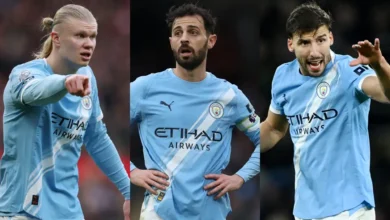
Manchester City’s victory had been built on fine margins. Erling Haaland scored a penalty after VAR overturned a decision, a controversial moment that created tension in the stadium but ended with City celebrating. Former referee Keith Hackett even confirmed the call was correct, something that brought a bit of comfort to City fans who were worried the referee would ruin their night. But despite the correct call, despite Haaland’s calmness from the spot, despite the 2-1 win, the story of the night became Bernardo Silva’s performance, or rather, his lack of it.
Silva played in midfield alongside Nico Gonzalez and Phil Foden. A trio that looked on paper like it would overwhelm Real Madrid with technical brilliance. Gonzalez especially shined, carrying the midfield like a warrior with fire in his chest. He chased every ball, he fought every duel, he pressed with intensity, he controlled the rhythm when the match became chaotic. Foden tried to contribute in his own way too, showing flashes of creativity. But Bernardo Silva? He struggled. He looked slow. He looked unsure. He looked out of rhythm, like the tempo of the match moved faster than his legs could handle.
Across the full 90 minutes he played, his numbers told the story clearly. Bernardo Silva lost possession nine times. He committed three fouls. He received a yellow card in the 90th minute, a card that will now force him to miss Manchester City’s next Champions League game against Bodo/Glimt in the new year. And most worrying of all, he won only two out of ten ground duels. When a midfielder loses 80% of his battles in a match of this magnitude, fans are going to notice. Opponents feel encouraged. Teammates feel pressured. The balance of the match suffers. And that is exactly what happened.
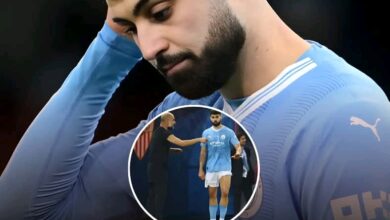
Real Madrid’s midfield cut through City’s middle too easily at times. Bernardo Silva got dribbled past. His reactions seemed slow. His timing looked off. His energy didn’t match the intensity of the match. The only reason City survived those moments was because of the brilliance of defenders Josko Gvardiol and Ruben Dias. Both players played like lions, blocking shots, winning tackles, reading danger before it appeared, standing in front of Real Madrid’s attacks like walls that refused to break. Without them, Manchester City might not have left Spain with a win at all.
But fans didn’t want excuses. Fans didn’t want explanations. Fans saw a performance that made them angry, a performance that reminded them of the growing decline they’ve been noticing in Bernardo Silva throughout the season. And when football fans feel disappointment mixed with emotion, the words come easily. Social media became a battlefield of opinions, and Silva was right at the center of it.
The anger didn’t come from nowhere. It came from months of watching Silva struggle. It came from noticing small drops in his energy, small changes in his reactions, small moments where he didn’t look like the same Bernardo Silva who once danced through midfielders with beautiful control. The fans felt like they were watching the slow fading of a player they used to adore. Some said he was past his best. Others said he should be benched. Others said he should not play another Champions League match this season. And there were those who took it further, saying it was time for Bernardo Silva to leave the club completely.
As the reactions grew louder, one question became difficult to ignore: was this the end of Bernardo Silva’s era at Manchester City?
City fans are emotional because they know what Silva once was. They know the standard he once set. They saw him dominate matches, control tempo, handle pressure, create magic in the tightest spaces. But football shows no mercy. Football doesn’t slow down because a player hits 31. Football doesn’t wait for legs that are getting tired. And fans can see that Silva is no longer able to control games like before.
One big moment that made fans furious was his late yellow card, given in the 90th minute. A moment that came from frustration, from poor timing, from a challenge he didn’t need to make. That card didn’t just damage his own reputation. It damaged the team too because Manchester City will now have to face Bodo/Glimt without him. The fans felt like the challenge was careless. A veteran player should not be picking up unnecessary cards that hurt the squad.
And when supporters feel betrayed by decisions like that, the frustration doesn’t stay small. It grows. It spills out. It turns into words that are hard and sharp. Some fans even said the decline of Bernardo Silva was happening too fast, too visibly, too painfully.
The disappointment was everywhere. For many supporters, watching Silva now felt like watching a completely different person. A player missing confidence. A player losing sharpness. A player who looked uncomfortable in matches he used to dominate with ease. Even though Manchester City won the game, the performance wasn’t enough to protect him from criticism. In fact, the victory almost made the criticism worse because fans wanted a perfect night, not a night that left them with questions about a player they once trusted.
Pep Guardiola himself seemed concerned on the sidelines. His expressions said more than his words ever could. He knows Bernardo Silva better than anyone. He knows when a player is declining. He knows when someone can no longer give what the system demands. Guardiola has trusted Silva for years, trusted him in the biggest matches, trusted him when others doubted him. But trust is not stronger than time. And it looks like time is catching up with the Portuguese midfielder.
It is no coincidence that Manchester City are prepared to let Bernardo Silva leave at the end of the season when his contract expires. They have not extended his deal. They have shown no interest in keeping him long-term. They know his best years are behind him, and the club is ready to move in a new direction. The writing is on the wall. The exit door is waiting. And nights like the one against Real Madrid make that exit feel even more certain.
At 31 years old, Silva is reaching the stage where most midfielders begin to lose that natural speed, that explosiveness, that tight control that allowed them to escape pressure. Fans can see it. Coaches can see it. Even opponents can see it. The 2025-26 season has shown many moments where Silva does not look sharp, moments where his awareness seems slow, moments where he looks tired. His fitness isn’t the same. His reactions aren’t the same. His influence is fading. And the fans cannot ignore that anymore.
But even inside the criticism, there is also sadness. Because at his best, Bernardo Silva was beautiful to watch. A magician. A smooth, clever, unpredictable talent who helped Manchester City win trophies and dominate European football. He was part of iconic moments. He was loved. He was appreciated. He was respected. But football is a brutal sport. It remembers your peak, but it judges your present. And right now, the present doesn’t belong to him anymore.
A separation at the end of the season now looks like the best choice for everyone. A chance for City to refresh the squad. A chance for Silva to find a new home where expectations are lighter. A chance for both sides to end things without bitterness. Because if he stays longer, the criticism will only grow louder. The frustration will only rise. And the fans who once adored him will continue to turn against him.
Manchester City’s victory over Real Madrid should have been remembered for the fight, for the courage, for Haaland’s penalty, for Dias and Gvardiol’s incredible defending. But instead, many fans walked away talking about one thing: what has happened to Bernardo Silva? And how much longer can they watch him struggle in big Champions League matches?
In football, every story has a beginning and an ending. Bernardo Silva’s beginning at Manchester City was full of joy, creativity, and brilliance. But the ending now feels close, and the signs are everywhere. The decline is real. The doubts are real. And the fans have spoken loudly.
For now, he remains a Manchester City player. For now, he will continue to play when selected. But the energy has shifted. The atmosphere is different. The patience is fading. And when a fan base starts saying “leave my club,” the truth is already written.