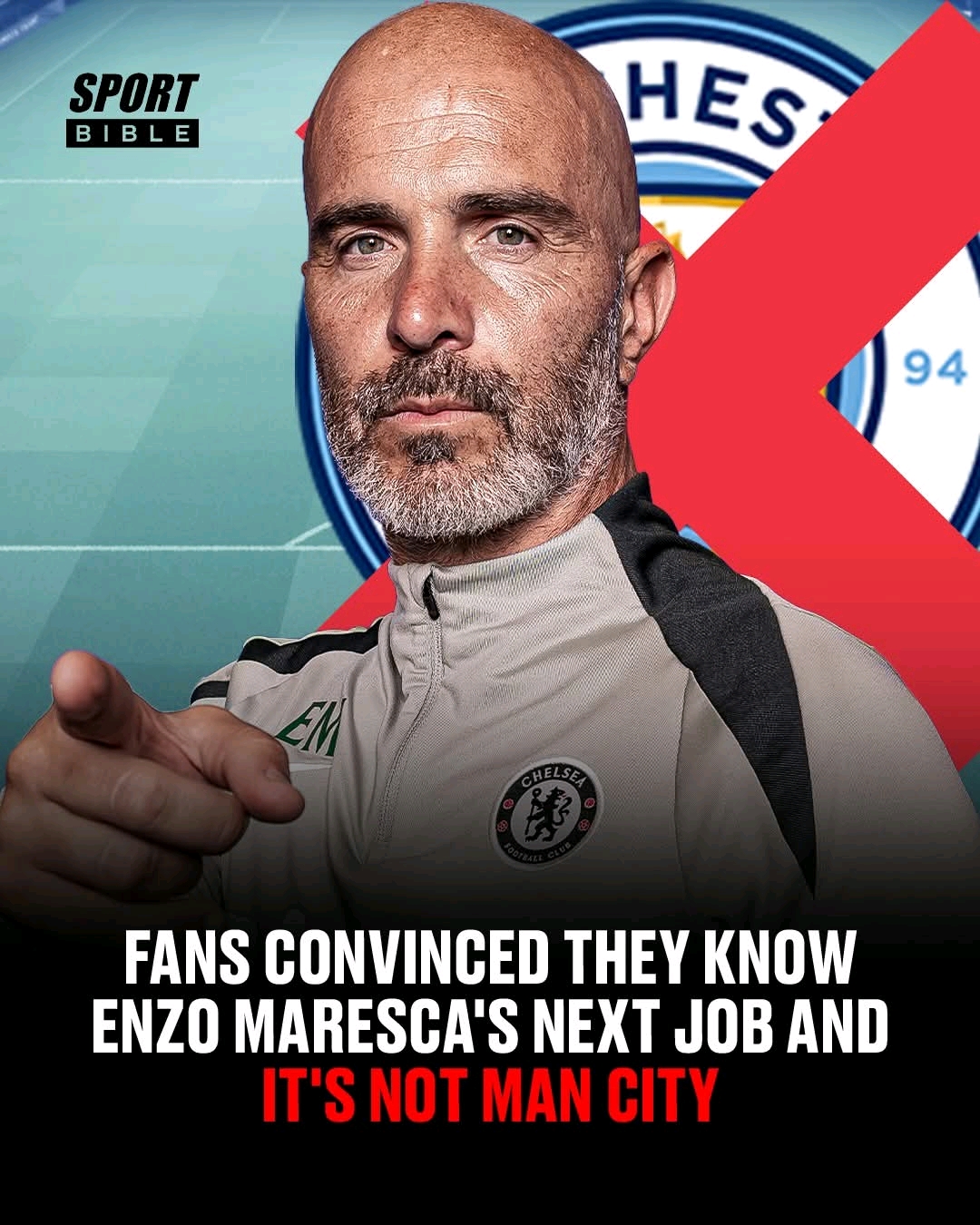
Chelsea Football Club found itself in familiar chaos once again as the new year opened, with another managerial chapter ending abruptly and another uncertain story beginning. Enzo Maresca’s departure left a sudden silence on the Stamford Bridge touchline, a silence filled with questions, confusion, and urgency. With no permanent replacement ready and a crucial Premier League match looming against Manchester City, Chelsea turned inward, not outward. They did not appoint a big name. They did not rush a headline-grabbing figure into the dugout. Instead, they handed the responsibility to a man few fans had ever heard of. His name is Calum McFarlane.
For one weekend at least, Calum McFarlane became the face of Chelsea Football Club. A caretaker manager tasked with leading one of England’s biggest clubs against one of the most dominant teams of the modern era. A man who has never coached a senior match. A man whose experience lies in youth development, not Premier League pressure. And yet, in a club defined by constant change, his appointment somehow felt perfectly Chelsea.
McFarlane’s story is not one of glamour or fame. It is a quiet journey through coaching corridors, training pitches, and academy classrooms. He currently serves as Chelsea’s under-21 head coach, guiding young players through their final steps before senior football. Under his watch, Chelsea’s U21s sit fourth in Premier League 2 after nine matches, a respectable position that reflects structure, discipline, and development rather than dominance.
This season is McFarlane’s first as head coach at Chelsea. He arrived from Southampton, where he built a reputation as a thoughtful coach focused on learning, structure, and long-term growth. His move to Chelsea came quickly, and so did his promotion. He initially joined as an assistant coach for the under-21s, only to be elevated weeks later after Filipe Coelho left to become assistant head coach at Strasbourg. Opportunity knocked, and McFarlane stepped forward.
Within months, his responsibilities expanded even further. In the UEFA Youth League, he took charge of Chelsea’s under-19 side and delivered impressive results. Victories against Bayern Munich and Benfica, two European powerhouses at youth level, signalled his ability to prepare teams tactically and mentally. These were not lucky wins. They were organised, confident performances that reflected planning and belief.
But youth football, no matter how competitive, is not the Premier League. It does not carry the same spotlight, the same pressure, or the same unforgiving scrutiny. Saturday’s match against Manchester City would be different. It would be watched by millions. Every decision would be questioned. Every substitution analysed. Every mistake magnified.
What made McFarlane’s appointment even more intriguing was his connection to Manchester City. This is not a coincidence. Chelsea’s recent recruitment strategy has been deeply influenced by City’s football model. McFarlane previously spent three years at Manchester City’s academy after joining in 2020. During that period, both Pep Guardiola and Enzo Maresca were at the club. He worked in an environment shaped by positional play, tactical discipline, and relentless attention to detail.
In many ways, McFarlane represents the silent spread of the Guardiola philosophy across English football. He followed familiar faces from City to Chelsea, including Glenn van de Kraan, Chelsea’s academy technical director, and Joe Shields, their co-director of recruitment and talent. This shared history helped build trust. It helped open doors. And now, it placed McFarlane in one of the most difficult positions in football.
Chelsea’s owners were clear about his role. This was not an audition. This was not the start of a long caretaker reign. McFarlane himself confirmed that his brief was limited to one match only. One game. One afternoon. One enormous challenge. After that, Chelsea would move on, most likely to a permanent appointment.
Behind the scenes, Liam Rosenior emerged as the leading candidate to replace Maresca. Sources indicated Chelsea admired his work, his communication skills, and his tactical approach. But Rosenior would not take charge in time to face Manchester City. That task fell to McFarlane alone.
The symbolism of the situation was hard to ignore. Chelsea, a club built on spending, ambition, and instant success, entrusting a youth coach to face Pep Guardiola’s Manchester City. A team that represents structure, continuity, and dominance. It felt like a clash of philosophies as much as a football match
McFarlane’s own words offer insight into the type of coach he is. Speaking last month about his work with Chelsea’s under-21s, he described an environment built on trust, clarity, and honesty. He emphasised strong connections with players, open communication, and clear expectations. Performance standards are set early. Behaviour matters. Commitment is non-negotiable.
He believes players must feel supported but also challenged. Feedback, he says, is not always easy to hear, but it is necessary. Players need guidance, but they also need freedom. Freedom to make mistakes. Freedom to learn. Freedom to grow as footballers and as individuals.
This philosophy will now be tested at the highest level. Against elite professionals. Against a team coached by one of the greatest managers in football history. Against a system designed to expose weakness and punish hesitation.
Physically, McFarlane is known for working closely with sports science departments. He believes training, recovery, and match preparation must align. Gym work is planned with match demands in mind. Recovery is treated as seriously as training. Nothing is left to chance.
Tactically, he relies on analysis and meetings. He studies games in detail. He reinforces lessons through repetition and clarity. He believes players perform best when they understand why they are doing something, not just what they are doing.
Mentally, he places strong emphasis on focus, resilience, and consistency. Data supports his work, but it does not dominate it. Numbers inform decisions, but observation and human connection remain central. It is a balanced approach, one rooted in development rather than instant results.
But development will not be Chelsea fans’ priority this weekend. Results will. Pride will. Survival will. Stamford Bridge has seen too many managers come and go, too many false dawns, too many rebuilds that never quite take hold. Supporters are tired. They want direction. They want belief. They want something to hold onto.
For McFarlane, the challenge is enormous. He must prepare a squad still emotionally unsettled by Maresca’s exit. He must face a City side chasing the title, driven by frustration after recent setbacks, and sharpened by Guardiola’s relentless standards. He must make decisions he has never made before, under pressure he has never felt before
There is also irony in the timing. McFarlane’s football education was shaped at Manchester City. Now he stands opposite them. A student facing the master. A youth coach confronting the system that helped shape his ideas. Pep Guardiola will know his name. He will know his background. He will know what kind of football McFarlane believes in
Football, however, does not care about stories. It cares about execution. Chelsea will need discipline, courage, and unity. They will need to defend well, stay compact, and take their chances. They will need to believe in the plan, even if the plan comes from a man with no senior experience.
For McFarlane, this match could be a defining moment. Not because it will decide his future at Chelsea, but because it will test his character. How does he handle pressure? How does he communicate with senior players? How does he react when things go wrong?
Sometimes football offers unlikely stages to unlikely figures. Sometimes those moments pass quietly. Sometimes they leave a mark.
Chelsea’s long-term future will be decided elsewhere, by boardrooms and negotiations and interviews. But for ninety minutes, Calum McFarlane will stand in the technical area, wearing Chelsea colours, carrying responsibility few ever imagined he would hold.
Whether Chelsea win, lose, or draw, his name will be written into the club’s chaotic modern history. A caretaker. A connector. A reminder that football paths do not always follow straight lines.For one weekend, Chelsea belongs to Calum McFarlane. And football waits to see what he does with it.