The story of Scottish football in Europe over the past few seasons has been one of struggle, disappointment, and missed opportunities. For years, fans have watched their clubs compete valiantly on the continental stage, only to see hopes dashed by stronger opposition, narrow defeats, or unexpected upsets. Yet, amid this prolonged period of difficulty, recent events in Greece have opened a small but tantalizing window of opportunity for one of Scotland’s most historic and ambitious clubs. The possibility exists for Rangers to bypass the usual qualifying hurdles and secure a direct entry into the Champions League group stage, a scenario that could change not only their season but potentially the fortunes of Scottish football as a whole.
The backdrop to this is a tale of Scotland’s gradual decline in UEFA’s club coefficient rankings. Over recent years, Scottish clubs have struggled to advance deep into European competitions, resulting in a drop in the points awarded for UEFA coefficients. This system, which evaluates the performance of clubs from each national association over a rolling five-year period, has concrete consequences: it determines not just how many teams a country can enter into European competitions but also at which stage they enter. For Scottish clubs, this has meant that even the champions, who in decades past might have gone straight into the group stages of the Champions League, are now forced to navigate multiple qualifying rounds. Both Celtic and Rangers, Scotland’s traditional giants, have been caught in this net of disadvantage, often finding themselves in qualifying rounds that can be as treacherous as the group stages themselves.
For the 2026–27 season, the landscape remains challenging. Hearts, Rangers, and Celtic are all contenders for the Premiership title, and only one of them will finish at the summit to claim the top prize. Depending on the outcome, the domestic champion would usually enter the Champions League at the play-off round, still a significant obstacle. However, the intervention of European circumstances outside Scotland could change the equation entirely. The mechanism that makes this possible is something UEFA refers to as “title-holder rebalancing,” introduced in 2024. Under this system, if the reigning Champions League winners have already qualified for the group stage through their domestic league, the spot intended for them can be reallocated to the domestic champion with the highest UEFA club coefficient, effectively allowing a team to bypass the usual qualifying rounds.
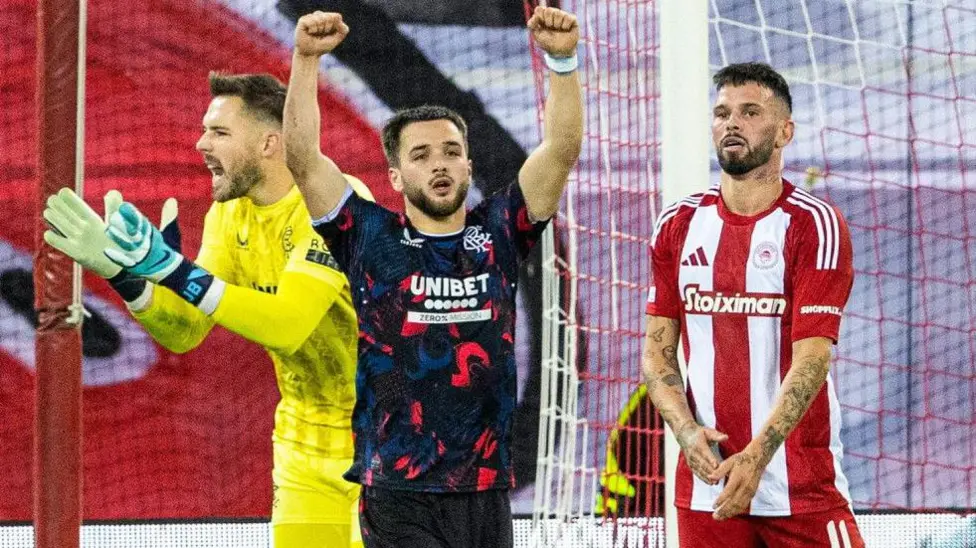
Here, the Greeks play a pivotal role. Olympiakos, historically dominant in the Greek Super League and a club consistently earning high UEFA coefficient points, could ironically facilitate Rangers’ direct access to the Champions League group stage. This is because if Olympiakos fail to retain their domestic title, the rebalancing mechanism would favor the next-highest ranked domestic champion in terms of UEFA coefficient points from outside the top six leagues, which currently positions Rangers as the likely beneficiaries. The details are nuanced: Olympiakos are five points behind AEK Athens in the Greek Super League as of recent matchdays, and statistical models suggest they now only have about a 16% chance of clinching another Greek title. With just five play-off games remaining, the likelihood of Olympiakos failing to win their league is significant, meaning Rangers’ opportunity for a direct route into the Champions League group phase is not just theoretical but realistically achievable.
This potential scenario carries profound implications for Scottish football. Should Rangers secure this direct entry, it would provide a crucial boost to the country’s UEFA coefficient. Over the past few seasons, Scottish clubs have struggled collectively in Europe. Celtic finished 21st in the Europa League this season, while Rangers ended 32nd out of 36 teams. Aberdeen and Hibernian failed to navigate the Europa League qualifiers, and only Aberdeen participated in the Conference League group stage. These results have steadily eroded Scotland’s standing in European football, affecting both the number of places allocated to the country in continental competitions and the stage at which its teams enter. A guaranteed Champions League group stage spot for Rangers would therefore represent a welcome corrective, providing both prestige and valuable coefficient points.
Of course, the scenario is contingent upon precise circumstances. Celtic and Hearts, although competing domestically, would not benefit in the same way. UEFA coefficients are the key differentiator. Olympiakos, for example, rank 34th in the club coefficient table, while Rangers are 37th. Celtic, at 58th, and Hearts, at 154th, are too far down the rankings to be eligible for the reallocation if Olympiakos fail to secure the Greek title. In such a case, the vacant Champions League spot would default to clubs from other countries with higher coefficients, such as Shakhtar Donetsk from Ukraine or Ferencvaros from Hungary. This underlines the strategic importance of not only winning domestically but also maintaining strong UEFA coefficient performance over multiple seasons.
The timing of this opportunity is dramatic. With Olympiakos facing AEK Athens and Panathinaikos hosting Olympiakos in upcoming fixtures, Rangers supporters are understandably vigilant, monitoring results hundreds of miles away that could have a direct impact on their club’s European campaign next season. The interplay between Greek domestic outcomes and Scottish European access underscores the interconnectedness of modern football: a league match in Athens can determine whether a club from Glasgow bypasses the grueling qualifiers and secures a guaranteed place among Europe’s elite.
This interconnectedness is compounded by the importance of Champions League placement for financial, sporting, and reputational reasons. For Scottish clubs, bypassing the qualifying rounds removes a significant hurdle. Qualifying matches, often scheduled in the high-pressure environment of early summer, can be physically and mentally draining. They also carry financial risk; early elimination means lost revenue from broadcasting, gate receipts, and performance-related bonuses. Direct entry into the league phase, by contrast, guarantees participation in the lucrative group stage, offers exposure to global audiences, and provides a platform to compete against Europe’s best, which in turn can attract higher-caliber players and sponsorship deals.
Yet, while the potential benefits for Rangers are significant, the broader picture remains sobering for Scottish football. The country’s overall European allocation is shrinking. Already, the number of Champions League spots for Scotland will drop to one after the next season, and the total allocation in UEFA’s three competitions will decrease from five to four. This reduction, coupled with the requirement for teams to enter at earlier rounds, signals the difficult environment Scottish clubs must navigate to maintain a presence in Europe. Strategic planning, coefficient management, and domestic dominance have become more important than ever, highlighting that success in European football requires more than just winning at home—it requires consistent performance abroad.
The story of Rangers’ potential windfall is emblematic of the wider challenges facing Scottish clubs. Historically, Scotland has been home to competitive and passionate football, with clubs like Celtic and Rangers achieving memorable European campaigns. But recent years have seen a relative decline in performance. The difficulty is structural: smaller leagues, fewer financial resources, and intense competition for top talent mean Scottish clubs face an uphill battle when confronting wealthier leagues. UEFA’s coefficient system, while a fair measure of performance over time, also amplifies these challenges by placing additional pressure on consistent European results.
In this context, the possibility of Rangers bypassing the qualifiers offers not just immediate competitive advantage but also a symbolic reprieve. It demonstrates that, despite systemic challenges, strategic positioning and a touch of fortune can create opportunities for Scottish clubs to punch above their weight on the European stage. It also underscores the importance of international football governance mechanisms—like title-holder rebalancing—which can reward historical consistency and allow clubs from smaller nations to secure meaningful participation in Europe’s premier competitions.
However, the story does not stop with Rangers. The Scottish Premiership itself remains highly competitive, with Hearts and Celtic closely contesting the title. Hearts, with their lead over Rangers reduced to a single point after recent weekend results, remain in the hunt, while Celtic, traditionally dominant, continue to compete strongly for domestic honors. The title race in Scotland, therefore, is not only a domestic battle but also carries international ramifications: the champion may directly influence Scotland’s representation in the Champions League, which in turn affects UEFA coefficients and the country’s future in European competitions.
Moreover, Scottish clubs’ European performances have a ripple effect on the league’s overall reputation and attractiveness. A strong showing in the Champions League can elevate perceptions, enhance scouting networks, and attract sponsorships, which benefits all clubs within the league. Conversely, early exits or poor results, as has been the case in recent seasons, depress the league’s profile and create a cycle of disadvantage. Thus, Rangers’ potential direct entry is about more than just one club—it carries the possibility of positively impacting the trajectory of Scottish football as a whole.
In addition to the UEFA coefficient dynamics, the story highlights the strategic interplay between domestic and international football. Clubs must balance priorities, managing player fatigue, squad rotation, and tactical approaches to maximize performance both at home and abroad. The interaction between Scottish champions and Greek league outcomes exemplifies this balance. Clubs are not operating in isolation; their fates are intertwined with the fortunes of competitors abroad, demonstrating the increasingly complex and globalized nature of football competition.
For Rangers fans, the coming weeks are likely to be a tense mixture of hope and anxiety. Every result in Greece carries weight. Every goal, every point, every fixture is observed with a level of scrutiny normally reserved for domestic rivals. The global nature of modern football means that their season’s success may hinge not only on their own performances but also on the results of teams playing thousands of kilometers away. This intertwining of local ambition and international circumstance is both thrilling and nerve-wracking, illustrating the unique drama that football can create.
At the same time, the narrative serves as a cautionary tale for Hearts and Celtic. While success domestically is essential, European coefficient standing cannot be ignored. Clubs with lower rankings, like Celtic and Hearts, will not benefit from title-holder rebalancing if Olympiakos fail to win in Greece. Maintaining a strong international record over multiple seasons is crucial to ensure eligibility for such opportunities, highlighting the importance of strategic long-term planning alongside immediate domestic priorities.
Looking ahead, the next set of fixtures in the Greek league takes on outsized significance. The matches between AEK Athens and PAOK, as well as Panathinaikos against Olympiakos, will be pivotal in determining Rangers’ European fate. Fans, analysts, and statisticians will be watching intently, calculating probabilities and projecting scenarios. Every corner kick, every defensive clearance, every red card has the potential to ripple across leagues and influence who plays in Europe next season, exemplifying the interconnectedness of the modern game.
Ultimately, the story of Rangers’ potential bypass of the Champions League qualifiers is about opportunity emerging from adversity. Scottish clubs have endured a difficult period in Europe, but circumstances beyond their borders—specifically, the shifting fortunes of Greek clubs and the mechanics of UEFA’s rebalancing system—could create a lifeline. For Rangers, this is a chance not only to compete among Europe’s elite but also to contribute to a broader national cause: improving Scotland’s UEFA coefficient and restoring prestige to Scottish football on the international stage.
The narrative also emphasizes the unpredictable and sometimes poetic nature of football. It demonstrates how outcomes in one country can directly affect the opportunities of clubs in another, showing that the game is not confined by geography but is a web of interrelated events. A goal scored in Athens can resonate in Glasgow; a defensive lapse in Thessaloniki can open doors for Scottish champions to step onto Europe’s biggest stage. The drama, stakes, and interconnectivity of football are encapsulated in this unfolding scenario.
In the final analysis, Rangers’ potential leap into the Champions League group stage is a story of hope, strategy, and circumstance. It highlights the fragility and complexity of European football hierarchies, the importance of maintaining strong performance over time, and the ways in which clubs can leverage opportunity to their advantage. For Scottish football, it represents a moment of optimism in a period marked by European struggles. For Rangers, it is a tangible chance to secure direct access to the continent’s most prestigious competition, bypassing obstacles that have traditionally impeded Scottish champions. And for fans, it is a reminder that even in the midst of challenges, football can deliver unexpected twists and the thrill of possibility.
This story is far from over. As the Greek season reaches its climax, as Rangers push for domestic glory, and as UEFA coefficients continue to shape opportunities, the coming weeks will be critical. Every result matters, every scenario counts, and the intertwining of domestic success and international circumstance will define the shape of Scottish football’s future in European competition. It is a moment filled with tension, excitement, and the hope that, at last, Scottish clubs can once again reclaim a place among Europe’s elite.
Rangers, their fans, and indeed Scottish football itself now wait with bated breath for the conclusion of this extraordinary confluence of events. What unfolds in Athens and Thessaloniki in the coming weeks could very well determine whether Rangers step directly into the Champions League group stage next season, bypassing qualifiers, and potentially altering the trajectory of the country’s European football standing for years to come.