Yes, he still doesn’t admit his guilt 🙃 “Liverpool tried to pick things up at half time but

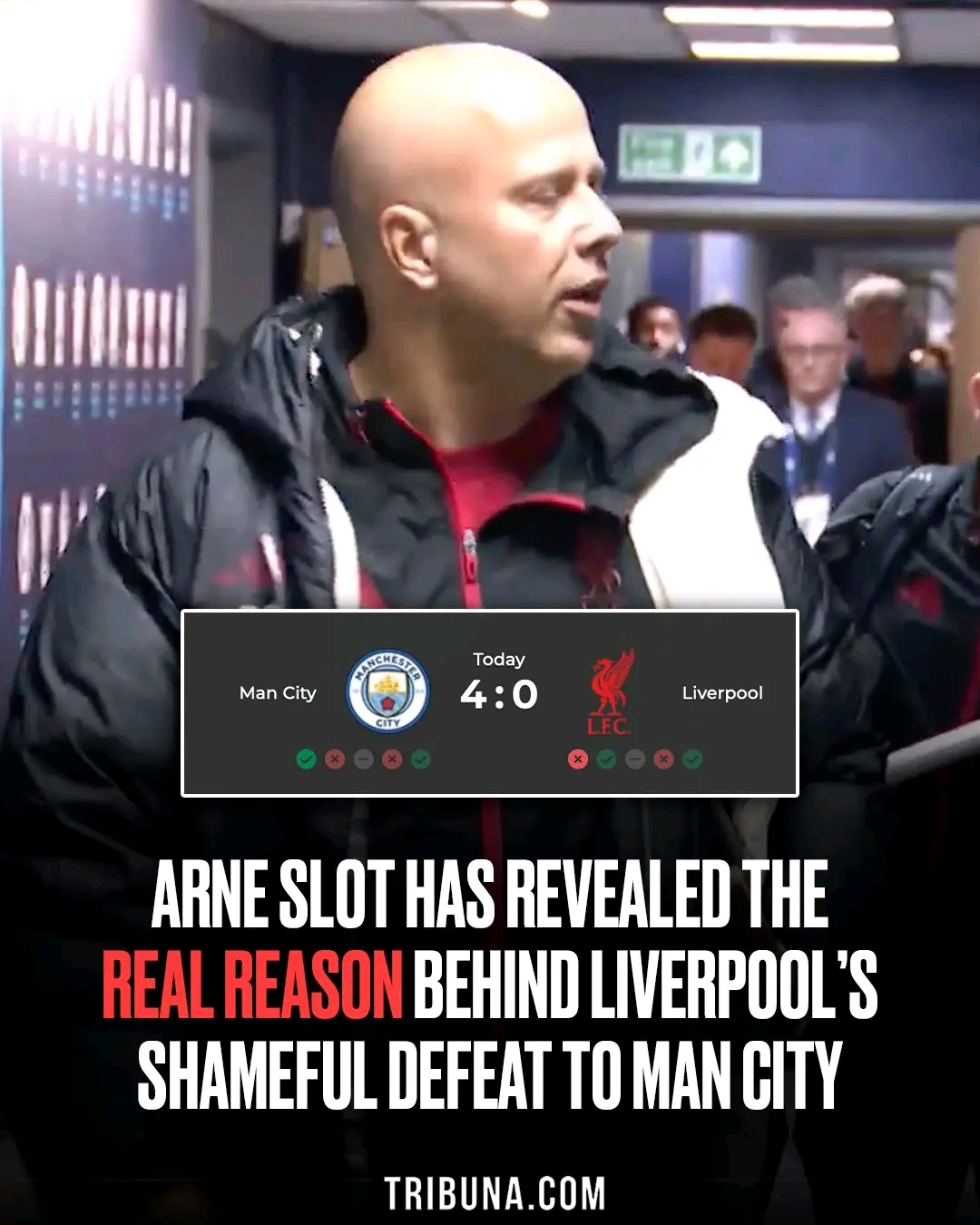
Liverpool’s FA Cup dreams for this season ended in devastating fashion on a cool April evening at the Etihad Stadium, a place that has become almost a fortress of fear for them. Manchester City were waiting, ruthless and precise, and from the first whistle, it was clear that Liverpool would face the full force of Pep Guardiola’s tactical genius. The match, which ended 4-0 in favour of City, was more than just a defeat; it was a mirror showing Liverpool everything that has been going wrong under Arne Slot this season.
Slot, the Liverpool manager, walked into his post-match press conference with a weary look, one that reflected not just the scoreline but a deeper sense of frustration. He did not attempt to hide the disappointment. “Very disappointing,” he said, his voice heavy but measured. “Not only to be out but also the manner. Another big disappointment from us.” His words hung in the room, echoing the sentiment that had been building among Liverpool supporters for months now.
Liverpool had entered this FA Cup quarter-final with hope, but the reality of facing Manchester City quickly stripped it away. For the first 35 minutes, Slot admitted he saw some promise. Liverpool had moments of intensity, pockets of play that suggested they could challenge City, but as the first goal came from a penalty, the fragile optimism shattered. “The first 35 minutes I saw, I liked to see, but afterwards we have to defend so, so much better than we did today,” Slot confessed, almost as if he was coaching himself through the mistakes he had witnessed.
The story of Liverpool’s struggles this season is written in the fine details that many fans might overlook, but Slot was painfully aware. What was missing was consistency, and crucially, the ability to convert chances into goals. “Things have been missing for a large part of this season, converting chances into goals. That’s the thing that was missing in the first half because I think it was an equal game up till the moment they scored the penalty,” he explained. And indeed, up until that moment, Liverpool had shown flashes of fight, energy, and tactical awareness. They pressed when needed, they closed spaces, they tried to create chances. But just like in their previous encounters with City this season, the decisive moment came, and Liverpool faltered.
This defeat was not just another loss. It was the third defeat in as many meetings against Manchester City in the season, with an aggregate score of 1-9. The numbers were brutal, and they told a story of dominance by City and struggle by Liverpool. The mental aspect, Slot noted, was significant. Conceding early goals at the Etihad has been a recurring nightmare. “Last time we played here, we conceded before half time. Today again. Mentally, not easy,” he said, his voice tinged with frustration.
Despite this, Slot insisted that Liverpool tried to rally after the halftime break. The team went back to the pitch with the intention of regaining composure, pressing, and trying to claw their way back into the game. But City’s efficiency was merciless. Within five to ten minutes, the damage was done. Two quick goals effectively sealed Liverpool’s fate, leaving them staring down the barrel of a humiliating exit. “We tried to pick things up at half time, but 5-10 mins later, they scored twice,” Slot lamented.
Fans watching the match were left stunned by the pace at which City dismantled Liverpool. Every pass was purposeful, every movement calculated, every player seemingly aware of his role in Guardiola’s grand design. Liverpool, on the other hand, appeared disjointed, sometimes hesitant, and frequently outnumbered in key areas of the pitch. The midfield, which had been expected to hold the line and control the tempo, struggled against the relentless City press. Defensively, Liverpool’s shape collapsed at critical moments, exposing gaps that City exploited with surgical precision.
The reaction on social media was immediate and intense. Eric Owusu, a Liverpool supporter, voiced the anger of many, saying, “FSG need to wake up and see this man no longer has the trust of his team. They are not playing for him and no amount of signing is going to change that. No heart of fight in this team.” The comments underlined a growing unease among fans, a sense that the disconnect between Slot and his players might be deeper than mere tactics. Saleh Amour echoed this sentiment, noting that the body language of players suggested a lack of belief in the manager. Meanwhile, others defended Slot, arguing he did not have the necessary backing from the club to make the team competitive against City’s financial and tactical might.
The defeat also sparked debate about Liverpool’s strategic planning and the role of FSG, the club’s ownership. Some fans wondered aloud why the club had not intervened to provide Slot with the tools necessary to compete at the highest level. Appa Rau’s comment summarized a common line of thought: Slot is a good coach, but perhaps not the right fit for Liverpool. “Tactics are awfully to watch and not convincing enough. No progress in the transition period! Not sure what FSG sees in him,” he wrote, highlighting the frustration that had been simmering beneath the surface since Liverpool’s February struggles.
Slot, however, remained calm and reflective in his public statements. He did not blame his players or the opposition, and he did not let the post-match criticism dictate his analysis. Instead, he focused on the lessons that could be learned. Liverpool’s inability to capitalize on chances, the lapses in concentration, and the mental strain of conceding early goals were all areas Slot acknowledged needed urgent attention. He seemed acutely aware that this match was a microcosm of a season fraught with challenges, a season where inconsistency had become Liverpool’s defining feature.
The narrative of Liverpool’s struggles this season extends beyond a single match or manager. It is a story of high expectations colliding with reality, of historic legacy weighed against modern football’s relentless pace, of tactical innovation meeting human limitation. Slot’s reflections after the City defeat captured all of these elements. The disappointment was deep, but so was the awareness of the work that lay ahead.
Analysts watching the game noted how City’s pressing was relentless, a clear testament to Guardiola’s philosophy and preparation. Liverpool’s defensive errors, often individual mistakes compounded by poor coordination, were ruthlessly punished. The quick succession of goals after halftime was particularly telling. It revealed a team that had the intention to fight back but lacked the structure and mental resilience to execute it effectively against one of the best sides in Europe.
For Liverpool fans, the match offered a bitter reminder of what has been missing this season. The attacking spark that had occasionally lit up Anfield was inconsistent, the defensive stability that could withstand top-tier pressure was fragile, and the mental toughness to respond to adversity seemed to waver at crucial moments. Slot’s admission that the team tried to lift itself after halftime but quickly conceded again was both a candid reflection and an implicit acknowledgment of these ongoing issues.
Liverpool’s FA Cup exit at the hands of Manchester City was, in many ways, inevitable. The gulf in class, preparation, and execution was visible throughout the match. Slot’s post-match interview captured the essence of this reality, blending disappointment with insight, frustration with honesty. He did not seek excuses, nor did he deflect responsibility. Instead, he painted a picture of a team caught between potential and performance, between ambition and execution.
As the season continues, Liverpool faces a crossroads. The lessons from the Etihad are harsh but necessary. Slot’s reflections, combined with the analysis of fans and experts, highlight the areas that require urgent attention. Converting chances, maintaining defensive solidity, and nurturing mental resilience are all critical for Liverpool if they hope to compete at the highest levels in the months and seasons ahead.
The story of Liverpool against Manchester City this season is not just a story of a single match or a single manager. It is a story of ambition, expectation, and the harsh realities of modern football. Slot’s candid reflections provide a blueprint for understanding both the failures and the possibilities that remain. For Liverpool, the challenge is clear: learn from the mistakes, adapt, and rebuild with focus and determination. The FA Cup may have slipped away, but the lessons it imparted are invaluable.
The reactions from fans, while harsh, underscore a broader truth about football culture. Supporters demand not just results but belief, leadership, and resilience. Slot’s acknowledgment of the team’s shortcomings, paired with his measured approach to analysis, suggests a manager who is willing to confront difficult truths, even in the face of criticism. It is this willingness to reflect, to learn, and to adapt that will determine Liverpool’s trajectory in the seasons to come.
As Liverpool moves forward, the Etihad defeat will be remembered not just as a loss but as a moment of clarity. The team saw, firsthand, the level of precision, preparation, and mental fortitude required to compete with Europe’s best. Slot’s post-match reflections serve as both an honest assessment and a challenge: to rebuild, to refocus, and to ensure that future encounters, whether in domestic cups or European competitions, are met with a team capable of matching the intensity and quality of sides like Manchester City.
Ultimately, Liverpool’s journey this season is a testament to the unpredictable nature of football. One match, one result, can reflect broader patterns of success or failure, reveal hidden strengths or expose weaknesses, and serve as a turning point for reflection and change. Arne Slot’s candid admission of the challenges his team faced at the Etihad is a reminder of the relentless scrutiny, pressure, and expectations that define modern football, and of the constant evolution required to stay at the top.
The Etihad may have been another chapter of disappointment, but it also offered a clear vision of the road ahead. Liverpool’s focus must now be on addressing the gaps, building mental resilience, and ensuring that every chance is converted, every defensive lapse corrected, and every moment of opportunity seized. Slot’s reflections, while tinged with frustration, are ultimately a call to action—a recognition that while the loss hurts, the path forward is defined by learning, adapting, and striving for excellence in every match yet to come.
And as Liverpool regroups, the echoes of the Etihad defeat will linger, a reminder of the standards required, the challenges faced, and the relentless pursuit of progress that defines the journey of one of the world’s most storied football clubs.