£700m spent Huge sponsorship deals £474m recouped in sales Three years on from the 115 charges announcement, it is still business as usual

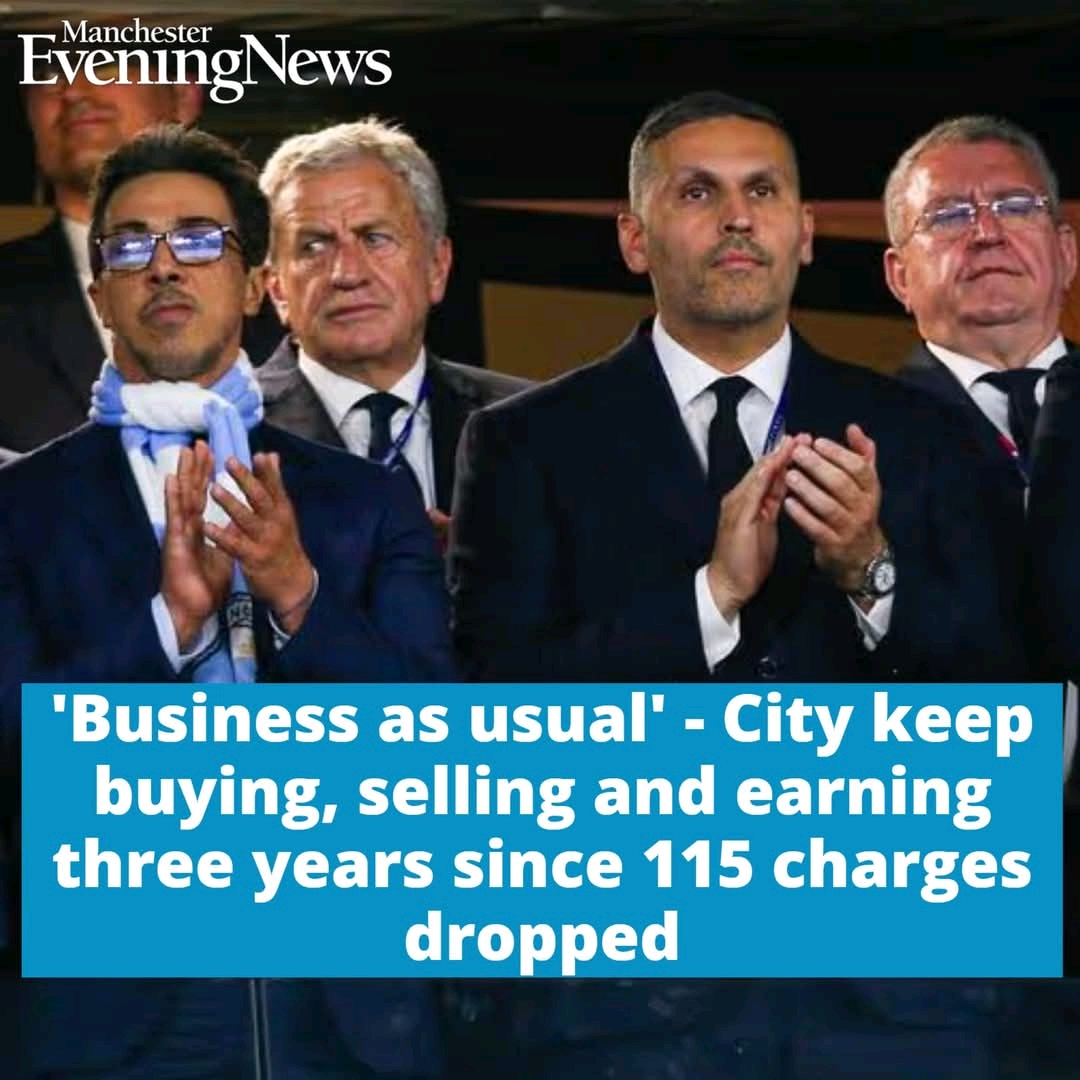
Three years have passed since the Premier League dropped the most explosive charges English football has ever seen on Manchester City, and yet the club still wakes up every morning and behaves like nothing has changed. Back in February 2023, when the league announced more than one hundred alleged breaches of financial rules, many people believed the ground beneath the Etihad would split open. Rivals waited with excitement. Pundits sharpened their knives. Fans of other clubs celebrated early, convinced that the giant built under Sheikh Mansour was finally about to fall. The accusations were so serious that they threatened the very foundations of City’s success. Fraud was whispered. Titles were questioned. History itself seemed ready to be rewritten. But three years later, the collapse never came, and Manchester City are still standing, still buying, still selling, still winning, and still earning more money than most clubs can dream of.
From the outside, it looked impossible. The Premier League moved quickly and aggressively, releasing a long list of alleged offences that stretched over many seasons. The message felt clear. This was not a small dispute. This was war. Many expected instant punishment, heavy sanctions, transfer bans, point deductions, or even expulsion. Some believed Pep Guardiola would walk away immediately. Others said Erling Haaland would never stay. There were even stories suggesting that staff members leaving their roles were secret signals that the club knew it was guilty. Every tiny movement inside City was turned into evidence by people desperate for confirmation that the empire was finally cracking.
Instead, Manchester City went quiet. They issued one short statement denying all wrongdoing and promising to defend themselves. Then they stopped talking. Inside the Etihad, a phrase began to circulate and it never changed. Business as usual. It sounded simple, almost arrogant, but it became the club’s shield. While the football world argued, City carried on. Training continued. Matches were played. Contracts were negotiated. Sponsorship meetings were held. Money kept flowing in and out. Nothing stopped.
The silence frustrated rivals even more. Without public panic, without apologies, without visible fear, City denied others the drama they wanted. Months passed, then years. The independent panel finished hearing evidence more than a year ago, yet no verdict has arrived. Nobody knows when it will come. Guesses appear in newspapers, on television, and across social media, but none have been proven right. The waiting has become its own punishment, not just for City, but for everyone else too.
During this long pause, City did something that hurt their enemies more than any statement ever could. They won. In 2023, they completed the Treble, conquering England and Europe in a season that placed them among the greatest teams the game has ever seen. Then they went even further. They made history by becoming the first English club to win four league titles in a row. Each trophy felt like salt in an open wound. Each celebration reminded rivals that while accusations hung in the air, the football on the pitch remained devastatingly strong.
Some anger softened over time. Liverpool, who felt robbed during the Guardiola era, finally lifted the title again in 2025. Their fans enjoyed the release. A parade rolled through the city. The pain eased slightly. But the shadow over City never fully disappeared. Every win still came with comments. Every signing still sparked arguments. The charges became a convenient excuse. When other clubs failed, it was easier to blame City than to admit mistakes closer to home.
Related Posts:

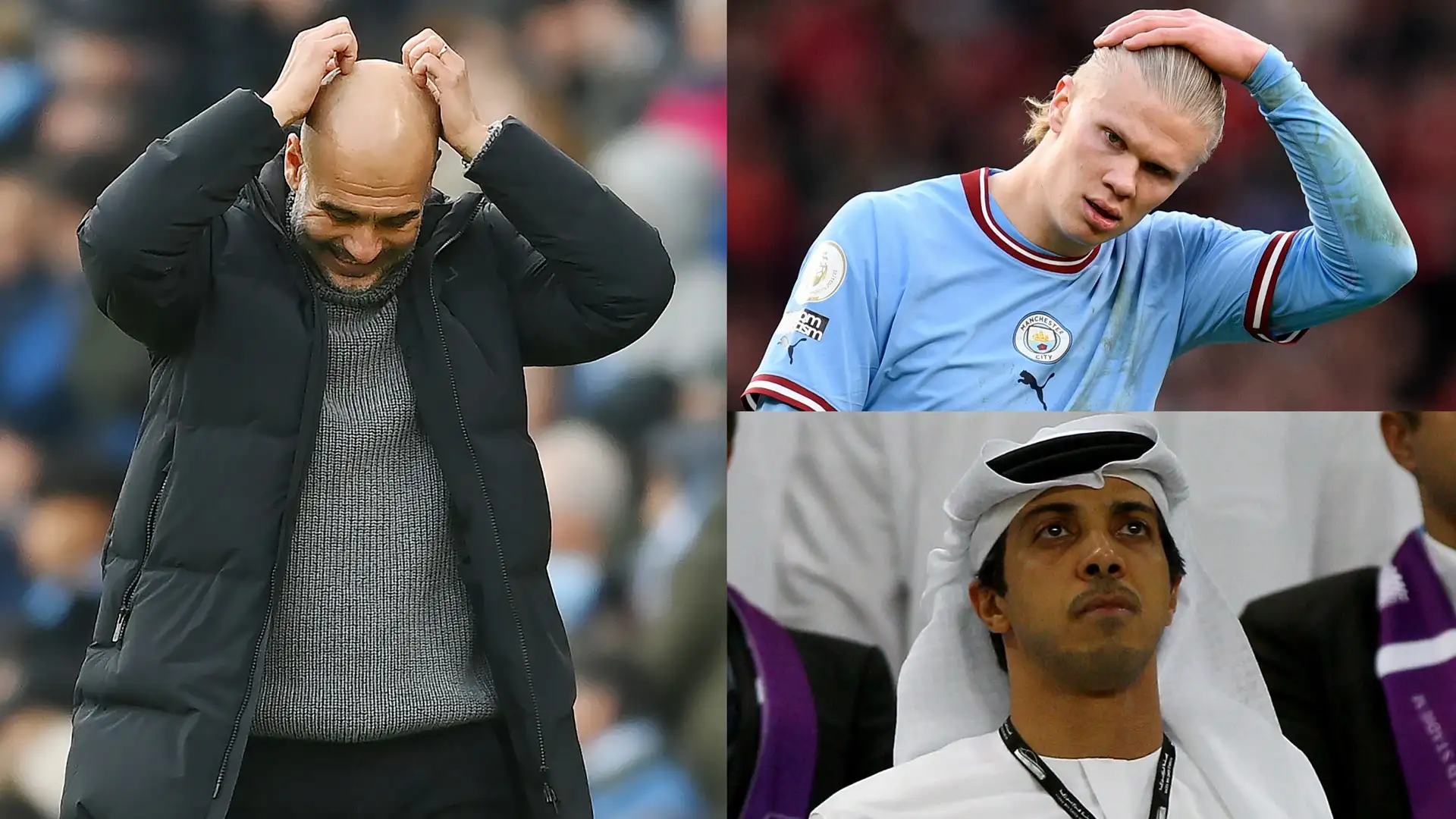
There was a time when many believed City were racing against the clock, spending wildly before an inevitable punishment arrived. But the reality tells a different story. Their transfer activity followed logic, not panic. The summer after the Treble was chaotic, not because of fear, but because success changes everything. Players won it all and wanted new challenges. The following year, spending slowed because Guardiola trusted his squad. When that decision backfired badly, the rebuild came quickly and decisively.
In the last three transfer windows alone, City spent around four hundred and thirty million pounds. Since the charges were announced, that number rises to nearly seven hundred million. Marc Guehi and Antoine Semenyo arrived not as acts of desperation, but as solutions to problems that had appeared on the pitch. Guardiola misjudged the balance of his squad in 2024, and the cost was heavy. The response was equally strong. A team that had grown old together was broken apart and rebuilt piece by piece.
Sales followed the same calm logic. Cole Palmer left because he wanted minutes, not because City needed cash. Julian Alvarez moved on for a massive fee because he wanted to be the main man somewhere else. Kyle Walker, Jack Grealish, and Kevin De Bruyne departed at natural points in their careers. These were not firesales. They were planned exits. City made almost five hundred million pounds from player sales in this period, keeping their net spend high but far from reckless compared to other Premier League giants.
The message to the football world was clear. Players were not afraid. New signings did not hesitate. Existing stars stayed. Contracts were extended. The biggest moment came in November 2024 when Pep Guardiola agreed to stay. For rivals, it felt like a punch to the stomach. If the man most associated with City’s dominance was not running, why should anyone else? Two months later, Erling Haaland signed a deal that shocked the sport, tying himself to City until 2034. It was a statement louder than any press release.
Haaland himself brushed aside concerns. He said he trusted the club. He said he did not worry about consequences. He said he preferred to focus on football. His words were simple, but powerful. The biggest striker in the world saw no reason to leave. That alone told its own story.
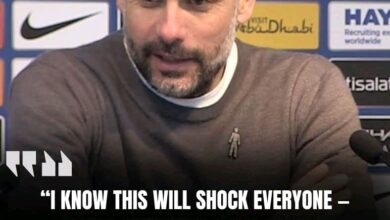
Away from the pitch, the club’s commercial machine never slowed. While critics questioned old sponsorship deals, new ones arrived. A record-breaking kit agreement with Puma was signed in 2025, worth one billion pounds over ten years. Other major partners renewed their faith. OKX stayed. Asahi stayed. New names joined. Joie became the women’s stadium sponsor. Hytro and Revolut invested in the women’s team. Lucozade signed a multi-year partnership that immediately delivered global exposure, symbolised perfectly by a bottle sitting beside Guardiola during a press conference that went viral for reasons far beyond football.
That moment summed up City’s position perfectly. Guardiola spoke about world politics, about issues far bigger than sport, and millions watched. Alongside him sat a sponsor logo reaching audiences few clubs could ever touch. It was proof that, commercially, City remained a giant. Partners were not scared. They were attracted.
The club’s legal victory over the Premier League regarding Associated Party Transactions opened even more doors. Revenue already sits around seven hundred million pounds a year, among the highest in world football. More deals are coming. More money will flow. For a club supposedly living under a cloud of uncertainty, the confidence is striking.
Of course, this cannot last forever. A verdict will come. When it does, it will be devastating for someone. Either Manchester City will be found guilty and face consequences that could reshape English football, or the Premier League will lose a battle that questions its authority and judgment. Experts have said from the start that whichever side loses will see senior figures step aside. The stakes are enormous. There will be no quiet ending.
But until that day arrives, City continue as they promised. They wake up. They train. They negotiate. They sign. They sell. They compete. They win. The waiting has not weakened them. If anything, it has hardened them. Every accusation has been met not with words, but with actions. Every prediction of collapse has been answered with trophies, contracts, and profit.
Three years ago, many believed Manchester City were living on borrowed time. Today, they look more powerful, more organised, and more confident than ever. The irony is painful for their rivals. The longer the silence lasts, the more normal everything feels. Business as usual was never a slogan. It was a warning.