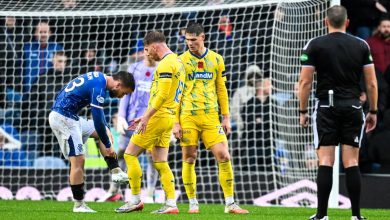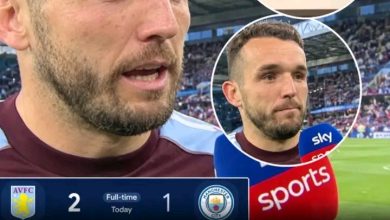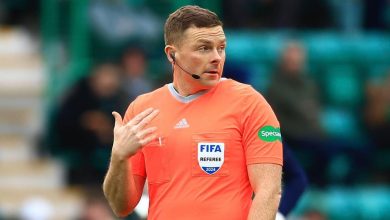
Anfield was still boiling with emotion long after the final whistle blew, because Liverpool’s 2-1 defeat to Manchester City was not just another loss. It was a match filled with moments that will be argued about for months, moments that Liverpool believe changed everything, moments that left Arne Slot frustrated, fans furious, and officials once again at the centre of the football world’s attention. While Manchester City celebrated another famous victory on hostile ground, Liverpool were left replaying one incident over and over again in their minds, an incident involving Mohamed Salah and Marc Guehi that many believe could have rewritten the entire story of the match.
The game itself was tense from the very first minute. Liverpool and Manchester City have defined the Premier League era for years, and even with changes in managers and squads, the rivalry still carries fear, respect, and enormous pressure. Liverpool, under Arne Slot, came into the match knowing they needed a statement performance. City arrived knowing Arsenal were pulling away at the top and that dropped points could cost them everything. From the opening whistle, it felt like a match where one moment would decide everything.
The first half was tight, aggressive, and full of tactical battles. Liverpool pressed high, trying to disrupt City’s rhythm, while Guardiola’s side patiently waited for gaps to appear. Chances were limited, but the intensity never dropped. Every tackle was cheered. Every decision was argued. Every touch from Mohamed Salah brought a roar from the crowd, because Anfield sensed that if anyone could hurt City, it would be him.
Then came the moment that now defines the entire match.
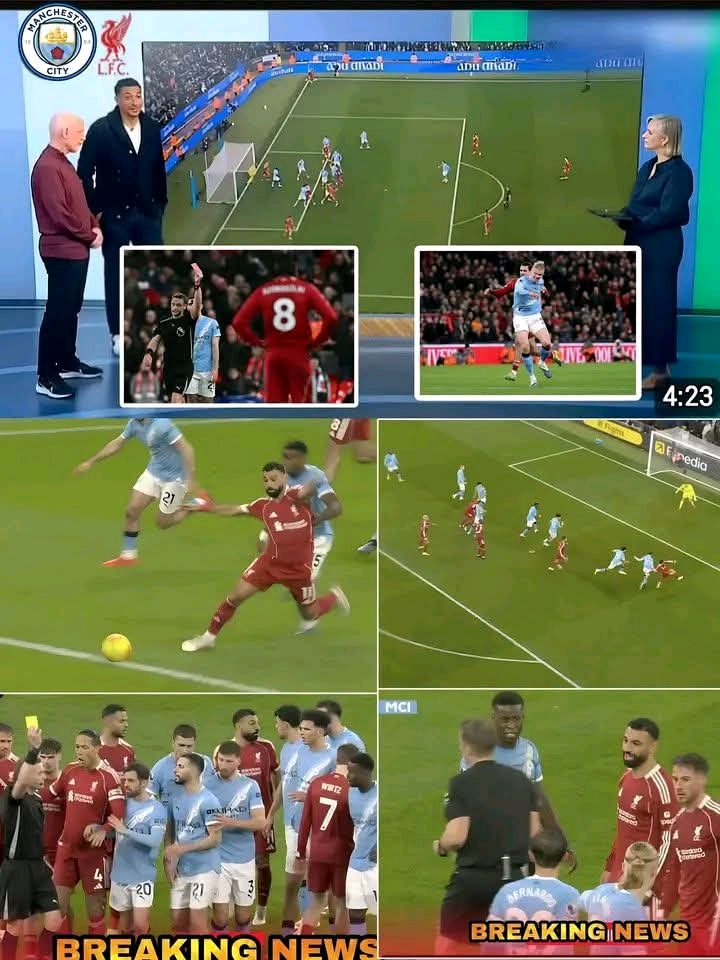
Midway through the first half, Salah found space and burst forward with that familiar acceleration that defenders know too well. He was through, racing toward goal, with only the goalkeeper ahead of him and Anfield rising to its feet. In those seconds, Liverpool fans already saw the ball hitting the net. They have watched Salah score those goals for eight years. They know what happens when he gets that chance.
But Marc Guehi was behind him.
As Salah pushed the ball ahead and prepared to finish, Guehi reached out and pulled his shirt. It was not subtle. It was not accidental. It was a clear tug that stopped Salah’s momentum and forced him off balance just outside the penalty area. Salah threw his arms up. The crowd exploded. Liverpool players surrounded the referee. Everyone inside Anfield believed the same thing.
Red card.
The referee blew his whistle and awarded a free kick. Guehi was booked. Yellow card. Play stopped as VAR checked the incident. The stadium waited. Replays were shown. From every angle, it looked like Salah had been denied a clear path to goal. For Liverpool fans, it felt obvious. For them, it was denial of a goalscoring opportunity, clear and simple.
But VAR agreed with the referee.
The decision stood. Yellow card only.
At that moment, the frustration was loud, but the match continued. Liverpool had to move on. They still had time. They still had belief. But deep down, that decision stayed in their minds, like a wound that refused to close.
The second half brought even more drama. Dominik Szoboszlai produced a moment of magic, curling a beautiful free kick past Gianluigi Donnarumma to give Liverpool the lead. Anfield exploded. Slot celebrated wildly. It felt like justice. It felt like Liverpool were taking control of their destiny despite earlier disappointment.
But Manchester City are never finished.
Bernardo Silva equalised late in the game, silencing the crowd and reminding everyone why City are serial winners. Then came the chaos at the end. Alisson went forward. City broke. A goal was scored, then disallowed. Szoboszlai was sent off. Haaland shrugged. VAR ruled. Confusion ruled the night.
When Erling Haaland converted a penalty to seal the win, the scoreboard showed Liverpool 1, Manchester City 2. The result was final, but the arguments were just beginning.
After the match, Arne Slot could not hide his frustration. While he spoke calmly, his words carried anger, disbelief, and disappointment. He made it clear that football is full of opinions and that not every decision is black and white. But when asked to choose one moment that hurt Liverpool the most, he did not hesitate.
He spoke about Salah.
Slot reminded everyone of what Salah means to Liverpool, and what he usually does in those situations. He said that anyone who has watched Liverpool over the last eight years knows exactly what happens when Salah is through on goal. He scores. Again and again. Slot said that for him, that was absolutely a goalscoring opportunity. Not maybe. Not sometimes. Definitely.
He admitted that there will always be disagreement, that maybe some officials would see it differently, but he believed the majority would agree it should have been a red card. He described it as an 80/20 decision, and for him, football should protect attackers in moments like that.
Slot’s frustration was not just about one card. It was about consequences. If Guehi had been sent off, Liverpool would have played most of the match against ten men. The game would have changed. The pressure would have shifted. The result could have been completely different.
The Premier League’s Match Centre quickly responded online, explaining the decision. They said the challenge was outside the box and that a covering defender was present, meaning it did not meet the criteria for denial of an obvious goalscoring opportunity. According to them, the yellow card was correct.
Former FIFA referee and ex-PGMOL chief Keith Hackett agreed with that explanation. Speaking after the match, Hackett said the presence of a covering defender meant the incident did not fulfil DOGSO requirements. In his view, the officials applied the law correctly. Yellow card. End of discussion.
Jamie Carragher, watching as a pundit, also sided with the officials. He admitted that decisions like this are frustrating when they go against your team, and he said he fully understood Slot’s anger. But he believed there was enough doubt to avoid a red card. For Carragher, it was the right call, even if it felt harsh for Liverpool.
But football is not played in law books or studios.
It is played in moments, in instincts, in emotions. And for Liverpool fans, that moment with Salah and Guehi will always feel wrong. They will always believe that if Salah had been allowed to continue, he would have scored. They will always believe that City were let off. And they will always connect that decision to the final result.
Manchester City, on the other hand, will say the rules were followed. They will say football is about dealing with adversity. They will say Liverpool still scored, still led, and still lost. From their perspective, they earned the win.
This is what makes football cruel and beautiful at the same time.
One decision can change a match. One interpretation can shift momentum. One yellow instead of red can shape a title race. Liverpool were not beaten only by goals. They were beaten by moments they feel were taken away from them.
As the dust settles, this match will be remembered not just for Haaland’s penalty or Szoboszlai’s free kick, but for a shirt pull, a referee’s whistle, and a debate that may never truly end.