Money down the drain: 3/10 Ibrox signing should never start for Rangers again, he’s done – opinion

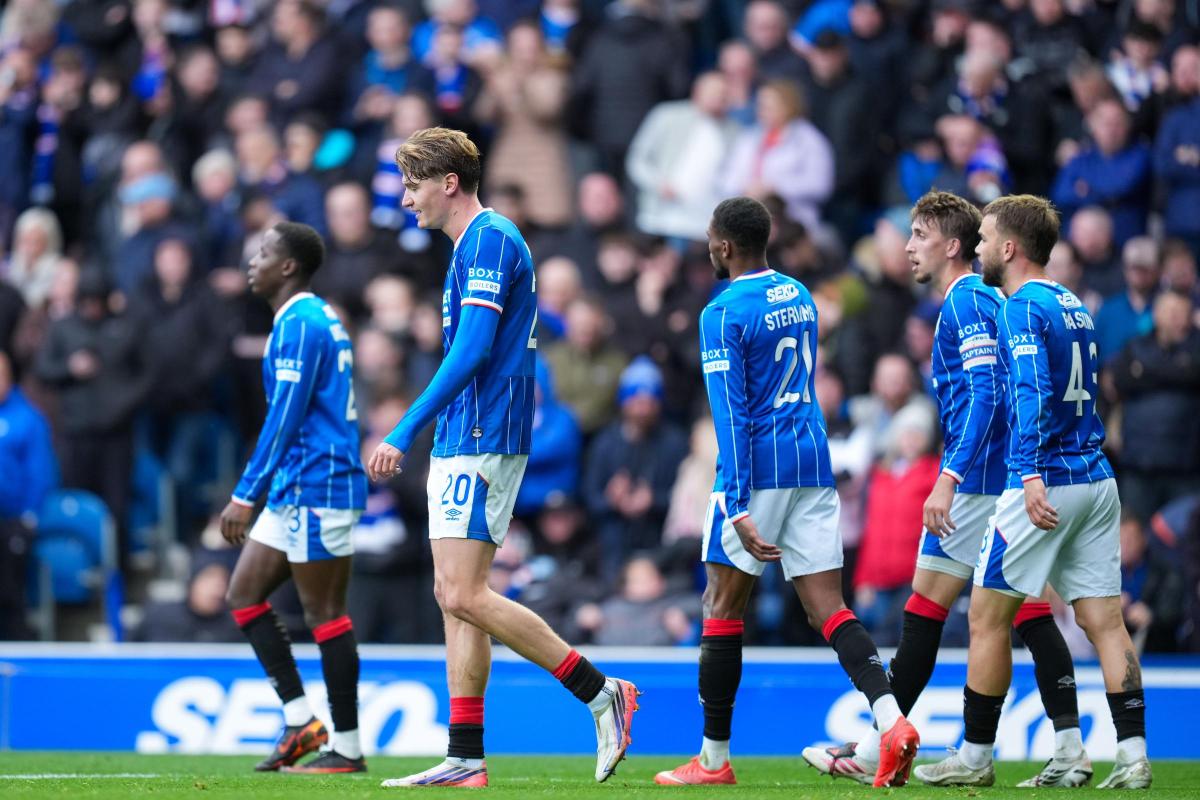
Football fans love a clear verdict, and football writers know it. When a signing begins to struggle, the temptation is to reduce the whole story to a single number, a rating out of ten, and to argue that the money has been wasted. That is the approach taken in a new FootballFanCast opinion piece about Rangers midfielder Tochi Chukwuani, which calls him a 3/10 signing, says the club has wasted more than £4.3 million, and argues that he should never start for the club again. It is a provocative claim, and it has some evidence behind it. But the story is more complicated than the headline suggests, and it raises questions about how clubs should judge a young player who has fallen out of favour after a change of manager.
The facts, as far as they are known, are these. Chukwuani is a 23-year-old Danish defensive midfielder who joined Rangers from Sturm Graz in January for a reported £4.3 million. He arrived under Danny Rohl, who has since left, and he quickly became an important figure in the team. According to the available statistics, he made 18 appearances last season, started 14 of them, played 1,184 minutes and scored four goals, including his most recent goal against Falkirk in May. That was a respectable start for a player adapting to a new country and a new league, and it suggested that he might develop into a long-term starter. Rangers gave him a contract until 2029, which reflected the belief that he could be developed and, if the numbers worked, sold on at a profit.
Everything changed when Derek McInnes arrived. The new manager has built his midfield around Dan Neil and Nicolas Raskin, who play together in a double pivot, and he has barely moved from that combination. FootballFanCast’s own figures show both players with seven Premiership appearances this season, and the team has recorded seven consecutive wins at one point, so there has been little reason to change. Chukwuani has been left on the margins. He has not started a single league match, he has made four appearances in the Premiership and he has played only 41 league minutes in total. Across all competitions he has made eight appearances, and he has been an unused substitute on seven occasions, including in the 2-2 draw at Dundee last weekend.
Those numbers are what give the opinion piece its force. A player who cost more than £4 million and who has played 41 minutes in the league in a season is not delivering value in any conventional sense. The article argues that he lacks the technical quality and mobility that Raskin and Neil bring, which may be why McInnes has been reluctant to use him, and that he should be moved on in January if a buyer can be found. It also suggests that he may end up as one of the club’s most expensive midfield flops in recent history. There are other commentators who share that view. A separate piece from the same website, published a few days earlier, compared him to Joe Rothwell, a midfielder who struggled for similar reasons, and argued that he lacks the mobility and intensity to dominate the middle of the park.
It is worth examining that criticism carefully, because it is not baseless. The same article pointed out that Chukwuani averages just 0.3 tackles and interceptions per game in the Premiership this season, a figure that is low for a defensive midfielder. That statistic must be treated with caution, because it is based on a tiny sample of minutes, and a player who comes on for a few moments at the end of a match has little chance to accumulate meaningful numbers. But it does fit with the broader picture of a player who has not made a strong impression in his limited opportunities. When a manager gives a player 41 minutes in a league season, he is telling the world something about his opinion, and it is not usually a flattering one.
There are, however, several reasons to be cautious about the strongest version of the argument. The first is that the evidence is thin. A player’s value cannot be judged on 41 league minutes, and there is no meaningful basis for a rating of three out of ten from that sample. A rating is only as good as the information behind it, and in this case, the information is mostly about who has not been picked, not how the player has performed. When Chukwuani did play, in the European qualifiers against Jablonec, he completed 90 minutes in the home leg and 120 minutes in the away leg, recording average ratings of 7.5 and 6.3 on one popular statistics site. Those are not the figures of a player who is out of his depth.
The second reason is that the lack of minutes has a simple explanation, which is the strength of the competition. Neil and Raskin are both established, high-quality players who have formed an effective partnership, and Rangers have been winning. In those circumstances, it would be unusual for a manager to change the midfield, particularly when the team has not played in Europe since the qualifying rounds. A squad player on the bench is not a failure. He is a squad player. The question is whether Chukwuani is capable of being a good one, and for that there is no clear evidence either way. The article’s author is entitled to his opinion, but a rating based on who plays in front of a player is really a rating of the person in front, not the person behind.
There is also the matter of context. McInnes took over a squad that had been assembled under a different manager, and every new coach has his own ideas about which players suit his system. A midfielder who was bought to fit Rohl’s approach may not suit the one that McInnes prefers, which is a question of fit rather than quality. That is a common story in football, and it is why so many signings look better or worse depending on who is in charge. Chukwuani was brought to Glasgow by one manager, and he now plays for another. His struggles are at least partly a product of that change, and it would be unfair to treat them as a permanent verdict on his ability.
The money argument also deserves scrutiny. It is tempting to say that £4.3 million has been wasted because the player is not playing, but that is not quite how football economics works. The transfer fee has already been paid, and it cannot be recovered by never playing the player again. What matters now is what the club can do with the asset it owns. A 23-year-old midfielder with a contract until 2029 retains a real market value, and if he plays well in the right circumstances, he could be sold for a similar sum or even a profit. If he is left on the bench for the rest of the season, his value will fall, but if he is given a chance to rebuild his form, it could rise. The sunk cost of the original fee should not drive the decision. The only relevant question is what gives Rangers the best return from here.
That is where the January transfer window comes in. Football Insider has reported that Chukwuani is ready to consider leaving Ibrox in January if his game time does not improve, which is a natural response from a young player who wants to play. The same report suggests that it will be difficult for him to break into the starting eleven, because McInnes is loyal to Neil and Raskin. That puts the club in an awkward position. If it sells him, it loses a squad option and takes a financial hit if the fee is lower than the price it paid. If it keeps him, it risks having an unhappy player who is not contributing. A loan to a club that would play him regularly might be an attractive compromise, but it would depend on the right offer arriving.
The most important point, and one that the opinion piece largely ignores, is Raskin’s situation. The Belgian midfielder has been linked with a move away from Ibrox for much of the year, and several clubs, including Real Betis, Aston Villa and others, are reported to be interested. If Raskin were to leave in January, which is a real possibility, McInnes would need a replacement, and the club’s other central midfield options are limited. Beyond Neil, the manager has Cammy Devlin, Vanja Dragojevic and Jose Cifuentes, although Cifuentes is widely expected to be moved on. In that scenario, Chukwuani would suddenly become a much more important member of the squad, and his value would increase accordingly. Selling him now could therefore be a mistake, because it would leave Rangers short in a key area.
That is not a hypothetical concern. The club’s chairman, Andrew Cavenagh, has urged patience on transfer spending and indicated that January business will be limited as the club works towards financial stability. Football Insider has also reported that Rangers expect a quiet window. If both of those reports are correct, the squad McInnes has now is largely the squad he will have for the rest of the season, and any departures would be difficult to replace. In that context, a player who can cover the defensive midfield position, even if he is not a regular starter, has real value. A sensible manager does not discard his depth without a clear plan to replace it, and Rangers do not appear to have one.
It is also worth thinking about what Chukwuani offers that the others do not. The 4th Official’s analysis of his situation suggests that his strength and mobility could help to close games, shield the defence and provide rotation, and there is some logic in that. A team that is chasing a lead late in a match might want an extra layer of protection, and a defensive midfielder with a physical presence could provide it. Rangers have also shown some vulnerability in recent matches, conceding two goals in the draw at Dundee after avoidable mistakes. A holding midfielder who can add stability might be useful in those situations, and the fact that he is on the bench rather than in the stands suggests that McInnes recognises that.
Another consideration is the number of games Rangers face. Even though the team is not playing in Europe, the domestic calendar is demanding, with league matches, cup ties and the possibility of injuries and suspensions. A manager who relies on two midfielders for the whole season is taking a risk, and McInnes will eventually need to rotate. When that moment arrives, he will want a player who can step in without disrupting the team. Chukwuani, who has played at a high level in Austria and who showed his ability last season, is a plausible option. Writing him off after 41 league minutes would be premature, and it would leave the manager with fewer choices at precisely the moment he needs them.
There is, of course, a case for the other side. Football moves quickly, and a young player who has fallen down the pecking order can find it difficult to recover. If Chukwuani wants to play regularly, he may be better off leaving, and if Rangers can recoup a reasonable fee, that could be sensible business. The club’s recruitment model is built on buying young players, developing them and selling them at a profit, and a player who is not progressing may not fit that model. There is no sentiment in the transfer market, and the board may decide that it is better to cut its losses than to wait. That is a legitimate position, and it is one that many clubs have taken with similar players.
The key is to avoid making a decision based on rhetoric. The headline that describes the signing as money down the drain is a good example of the kind of language that dominates modern football commentary, where everything is either a triumph or a disaster. In reality, most signings fall somewhere in between, and the verdict often changes as circumstances evolve. A player who looks like a flop in October can become a hero in March, and the reverse is just as common. Judging a transfer after a few months is rarely wise, and judging it on the basis of minutes played rather than performances is even less so. The article raises a fair question about Chukwuani’s future, but it answers it too quickly.
For McInnes, the practical challenge is to manage the situation sensibly. He has said little publicly about Chukwuani, and there is no sign that he has fallen out with the player. He gave him minutes in a bounce game against Dundee this week, alongside several other squad players, which suggests that he is keeping him involved. That is the right approach. A player who is training well and who is available for selection can still play a role, even if it is a smaller one than he would like. The manager’s job is to keep his squad motivated and to make sure that everyone understands where they stand, and open communication with Chukwuani will be essential in the weeks ahead.
For the player himself, the next few weeks are an opportunity. He is 23, he has a contract until 2029, and he has shown in the past that he can perform at the level required. If he takes his chances in training and in the minutes that come his way, he may force his way back into the reckoning. If he does not, a January move might be the best outcome for everyone. Either way, the decision should be based on evidence and on conversation, not on a number in a headline. Football is a long game, and the people who succeed in it are usually those who keep working when things are not going their way.
So is Chukwuani done at Rangers? The honest answer is that nobody knows. He is not in McInnes’s plans at the moment, and the competition for places is fierce, but that situation could change quickly if Raskin leaves, if injuries strike or if the team’s form dips. The claim that the money has been wasted is premature, because the asset still has value and the contract is long. The assertion that he should never start again is too absolute, because circumstances change. A more reasonable view is that he is a squad player who has fallen down the pecking order, that his future depends on the January window and that Rangers should keep their options open. That is less dramatic than the headline, but it is closer to the truth.