Begin with the central claim. According to the report, Raskin turned down a move to Besiktas this summer even after agreeing personal terms, because he wanted to wait for a club from one of Europe’s top five leagues. That is a significant detail, because it shows that the midfielder is not simply looking for a way out of Ibrox. He is looking for a particular kind of destination, one that offers a bigger stage and a higher level of competition. Real Betis fit that description neatly. They play in LaLiga, one of the five leagues Raskin has said he is targeting, and they are currently involved in the Champions League, which would give him the chance to test himself against the best teams in Europe.
The same report makes clear that Rangers have not weakened their stance. No bid has come close to the figure the club demands, which is understood to be well above £20 million after Raskin’s performances at the 2026 World Cup lifted his profile. Rangers are under no financial pressure to sell in January, and they have been consistent in saying that they intend to keep a key player for a title challenge. At the same time, the report notes that Raskin is unlikely to sign a new contract. If that proves correct, he would enter the final twelve months of his deal next summer, which would leave Rangers with little choice but to cash in at that point or risk losing him for nothing.
That contract detail is the most interesting part of the whole story, because it changes the nature of the negotiation. Normally, a club with a valuable player under a long deal holds most of the cards, since the buyer has to pay whatever the seller demands. When the player is reluctant to extend and the contract is running down, the balance begins to shift. By next summer, Raskin would have a year left, which reduces his market value and strengthens the hand of any buyer. In January, with roughly eighteen months remaining, Rangers are still in a strong position, but the window of maximum leverage is closing. A sensible club might therefore consider whether the best price will come now or later.
To understand how the situation has reached this point, it helps to look at the summer. Raskin was expected to leave after a series of eye-catching displays at the World Cup, and several clubs were interested, including Besiktas, Bologna, Real Betis, Villarreal, Atalanta and Hull City. The most concrete approach came from Besiktas, who initially discussed a loan before making an offer of £10.3 million, which Rangers rejected. Hull, newly promoted to the Premier League, made a verbal offer worth around £12 million that the club dismissed quickly. Both bids fell well short of Rangers’ valuation, and the deadline passed with the midfielder still at Ibrox. He was reportedly disappointed, and he said as much after returning to international duty.
His own words at the time were revealing. Speaking with the Belgium squad, Raskin admitted that he had been mentally ready to leave and that the failure of the move was a disappointment. But he also said that he was not in a position where he absolutely had to go, adding that Rangers was a good club where he played regularly and where the team was achieving good things. That is a mature and balanced statement, and it captures the tension in his situation. He wants the next step in his career, but he is not desperate, and he is not prepared to burn his bridges at Ibrox. It is also a reminder that, whatever the headlines say, a player in his position tends to be pragmatic about timing.
There is, however, some confusion about how the Besiktas saga unfolded. Ibrox News reports that Raskin himself rejected the move, while other reports in the Turkish press suggested that Rangers blocked it for their own reasons, including a failure to bring Vaclav Cerny back to the club. A third version, relayed by Fotomac and attributed to the newspaper Sabah, claims that Besiktas have reached a preliminary agreement with Rangers to sign the midfielder in January, with the player agreeing a salary of around £4.3 million a year. That report has not been confirmed by Rangers, Besiktas or Raskin, and it sits awkwardly alongside the claim that he is determined to wait for a top-five league. It should be treated with considerable caution, because transfer stories from different countries often conflict.
What is not in dispute is how highly Derek McInnes rates the player. The manager has described Raskin as first-class since he returned from the World Cup, praising his attitude and his training, and saying that he has been as good as gold. That matters because managers do not usually say such things about players who are causing problems. It suggests that, despite the speculation, Raskin has remained professional and focused, and that the dressing room has not been disrupted. It also means that McInnes will be reluctant to lose him, particularly at a time when the team is building momentum and the title race is still open.
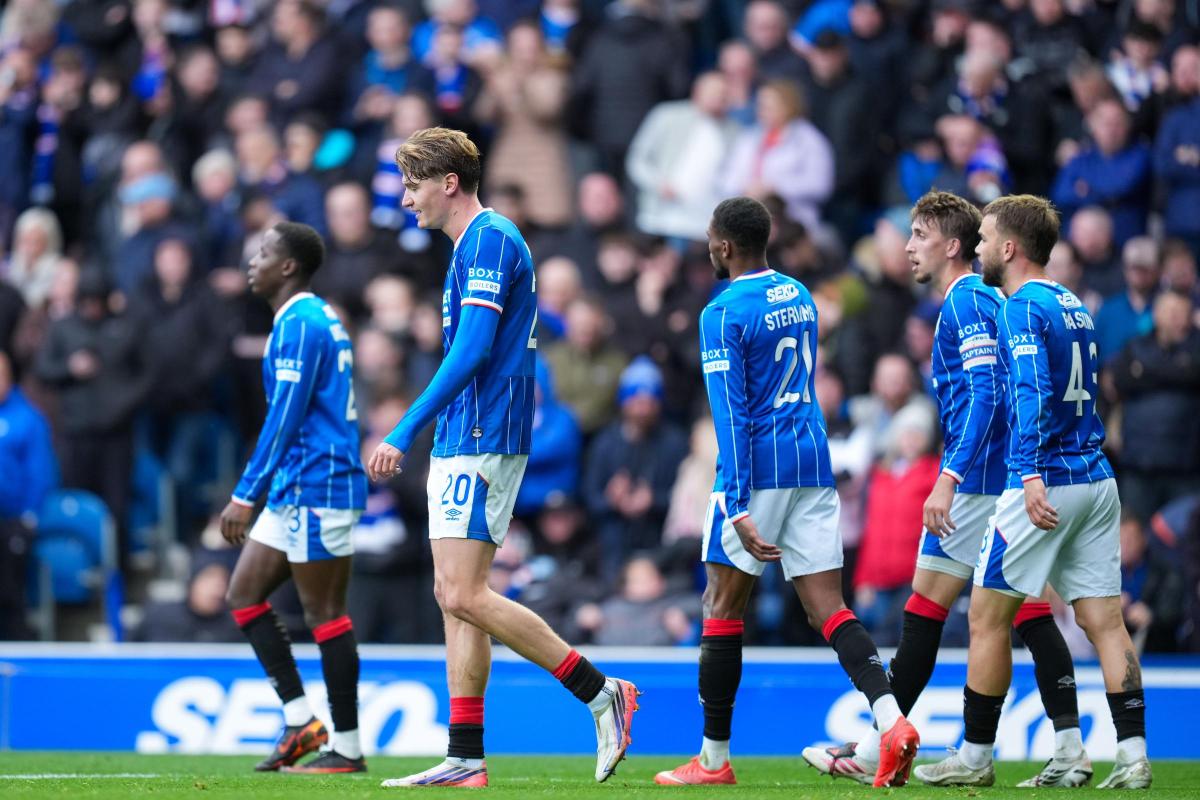
The evidence of the pitch supports that view. Raskin has been in the starting eleven for each of Rangers’ recent matches, and he has played a central role in a run of seven consecutive wins that included two victories over Celtic within a week. In the 2-2 draw at Dundee, he scored one of the goals of the season so far, a thunderous strike from outside the box that flew in off the underside of the crossbar and put Rangers ahead in the sixtieth minute. James McFadden was effusive about the goal on commentary, and it was exactly the kind of moment that reminds supporters why he is so highly valued. A midfielder who can control matches, win the ball and score spectacular goals is rare, and clubs across Europe have noticed.
Rangers’ record this season shows how much the team has improved. They have collected 20 points from nine league matches, with six wins, two draws and one defeat, scoring 13 goals and conceding seven. That is a strong return for a squad that has been rebuilt in several areas, and it reflects the stability McInnes has created. Opta’s supercomputer now gives them a 22.92 per cent chance of winning the title, behind Celtic’s 74.88 per cent, so the gap is large but not insurmountable. In that context, selling a key midfielder in January would be a significant risk. A title challenge depends on consistency, and consistency depends on keeping the players who produce it.
There is also the question of replacement. The January market is notoriously difficult, because clubs are reluctant to sell their best players in the middle of a season, and the players who are available are often either too expensive or not good enough. Football Insider has reported that Rangers expect a quiet window and will only act if forced to do so by injuries or by the growing interest in their top players. If Raskin were to leave, McInnes would need to find a replacement who could slot into the midfield without disrupting the team, and that is a tall order. The club’s chairman, Andrew Cavenagh, has also urged patience on transfer spending, which means that any reinvestment would have to be carefully planned.
Against that, the financial case for selling is not trivial. A fee of £20 million or more would be a substantial sum for Rangers, and it would give the club the chance to invest in several players rather than relying on one. The club’s recruitment model is built on buying talented players, developing them and selling them at a profit, and Raskin is the clearest example of how that model can work. He has been at Ibrox since January 2023, having arrived from Standard Liege, and he has made more than a hundred appearances for the club. If the board can secure a price that reflects his value, it would be a reasonable business decision, even if it causes some short-term disruption.
The player’s own perspective deserves consideration too. At 25, Raskin is at an age when a footballer’s market value is at its highest, and the chance to move to a bigger league may not last forever. He has also shown in the past that he can be unsettled by speculation. Reports have suggested that in the early part of last season he was dropped by the then manager, Russell Martin, because he allegedly had his head turned by outside interest. Whether or not that is accurate, it shows that the midfielder’s situation has been a source of tension before. McInnes has handled it better, and Raskin has responded professionally, but the longer the uncertainty continues, the greater the risk of distraction.
The most practical solution would be a compromise that suits everyone. If a club like Betis were to make an offer that met Rangers’ valuation, the Scottish club could consider selling in January with an agreement that the player stays on loan until the end of the season. That kind of arrangement is common in modern football, and it would allow Rangers to keep their midfielder for the title run-in while banking the money. It would also give the buyer security, because they would have secured the player before his value rose further. Whether Betis would accept such a deal is uncertain, since a club playing in the Champions League might want the player immediately, but it is the kind of creative solution that both sides could explore.
If no such deal emerges, Rangers can simply hold their position. The club is under no obligation to sell, and the strength of its negotiating stance depends on being willing to say no. By keeping the price high and the door firmly shut to cheap offers, Rangers protect their asset and send a message to the market. If Raskin continues to perform at his current level, his valuation is likely to remain strong or even increase, and the club can revisit the question in the summer. The risk is that the contract situation weakens their position by then, but that is a risk the club appears willing to accept.
There is also a sporting argument for the player himself to stay. A title challenge with Rangers would give him the chance to win silverware, to play in the Champions League qualifiers and to build his reputation in a team that is clearly improving. Those are all good reasons to wait, and they might lead to a better move in the summer than the one on offer in January. A player who leaves in the middle of a season, even for a bigger club, can find that he struggles to settle, particularly if he is joining a squad that has already established its routines. The best moves tend to happen at the right time, and for Raskin, that may well e the end of the season.
Nevertheless, the report’s central message is that the midfielder is open to leaving, and that should not be ignored. Players who want to move can make life difficult for their clubs, by refusing to sign new deals, by seeking assurances about their future or by simply allowing their performance to dip. So far, Raskin has done none of those things, but the pressure will grow as January approaches. Rangers will have to manage the situation carefully, balancing their desire to keep a key player against the reality that he may want to go. That requires honest communication, clear boundaries and a willingness to compromise on both sides.
In the end, the story of Raskin and Rangers is a familiar one in modern football. A talented player outgrows a club, the club tries to keep him for as long as it can, and eventually the market decides. The question is when that moment arrives, and whether it arrives in January or in the summer. The reports suggest that Rangers will resist any approach that does not meet their valuation, and that they are prepared to be patient. They also suggest that Raskin is ready to move if the right opportunity appears. Those two positions are not contradictory, but they will collide if a serious bid is made, and the outcome will depend on the size of the offer and the strength of the player’s desire.
For supporters, the best approach is to enjoy what they have while it lasts. Raskin has been one of the most consistent and effective midfielders in the league, and his presence has helped to make Rangers a serious contender. Whether he stays until the summer or leaves in January, his contribution has been significant, and it will be remembered. In the meantime, the club’s focus should remain on the next match, the next result and the next step in a title race that is still very much alive. The transfer window will come soon enough, and when it does, the decisions that Rangers make will say a lot about their ambitions and their ability to hold on to their best players