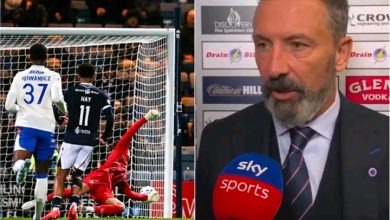
Derek McInnes has spent a lot of his managerial career talking about momentum, and on Saturday night at Dens Park he watched it disappear in a matter of seconds. Rangers arrived in Dundee with their confidence high after seven consecutive wins, and for much of the second half they looked every bit like a team who deserved to be going top of the Scottish Premiership. They left with a 2-2 draw, a point that felt like a defeat and a manager who admitted openly that the mood in his camp had gone flat. The frustration was not about the opposition, who earned their share of the spoils. It was about the sense that Rangers had been in control of the match and had handed it back.
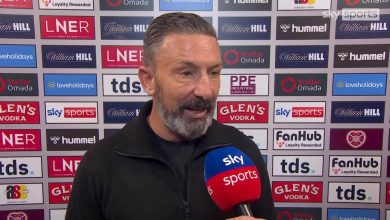
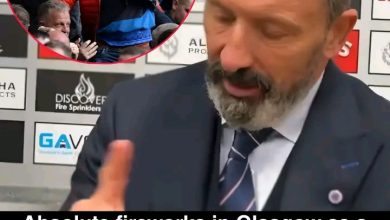
McInnes did not hide from any of it. Speaking to Sky Sports and to the written press afterwards, he gave an assessment that was candid even by the standards of a manager known for plain speaking. He began by being fair to Dundee, saying that they had probably shaded the first half and had been a handful, as he had expected they would be. He said his team had known Dundee would mix up the game and come after them with a full press, and that they had duly done so. Steven Pressley’s side had asked uncomfortable questions of Rangers early on, and the manager did not pretend otherwise. Praise for the opposition is easy to offer when you have won, but McInnes offered it after a draw that he clearly believed his own players should have turned into three points.
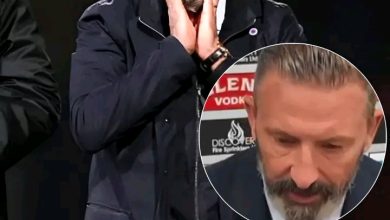
The turning point, as McInnes saw it, was not a tactical failing or a lack of fitness. It was a single moment. Callum Jones punished a misplaced pass from Dan Neil, the stand-in captain, in the sixty-ninth minute and slotted in the equaliser that wiped out the lead Nico Raskin had given Rangers nine minutes earlier. McInnes described the effect on his team with a vivid image, saying it felt like a balloon popping. That is a precise way of putting it. A balloon does not leak slowly. It is full one second and empty the next, and the air that fills it takes time to replace. Rangers had been playing with such authority that Dundee were struggling to get out of their own half, and the manager felt his side were in a very good place. Then the mistake came, and the mood changed.
What stood out about the way McInnes talked was that he did not single out Neil for blame, even though the error was plainly his. He spoke instead about how these things can happen in football, and about the psychological consequences once they do. A goal like that, he explained, gives the opposition something to cling to. Dundee had been defending for long spells and chasing shadows, but suddenly they had a reason to believe they might take something from the game. That belief is a powerful thing, particularly for a home side with a noisy crowd behind them. It lifted Dundee in the closing stages, and it sapped Rangers of the certainty that had defined their play after the interval. McInnes understood that a defensive error costs a team more than a single goal, because of the way it shifts the emotional balance of the match.
He also acknowledged that Rangers failed to rediscover the level they had reached before the equaliser. He said his team never really got back to the same standard afterwards, although he insisted they still had enough balls into the Dundee box to score a third. His argument was that the side kept two wide players and two strikers on the pitch, kept making Dundee defend and still created opportunities. He believed they were the dominant team and the one more likely to win the game, even after the setback. It is an interesting claim, and it reflects a manager who is trying to balance honesty with the need to keep his players’ belief intact. He did not want to say that the team had collapsed, because it had not. But he did want them to understand that dominance means little if it does not end in goals.
That point about goals is the one that seemed to bother McInnes most. He described a theme he has noticed repeatedly, which is that Rangers have too often produced dominant performances without getting the goals their play deserves. On Saturday, both goals Rangers scored were spectacular individual efforts, a curling finish from Badredine Bouanani in the first half and a thunderbolt from Raskin in the second. Neither came from a patient, well-constructed move. McInnes was pleased with the quality of the goals but made it clear that he wanted the team to be more clinical. He said Rangers had created far better chances than the one Raskin converted, and that those chances should have been used to put the game beyond Dundee’s reach. When a manager points to better opportunities than a goal of the season contender, he is telling you how seriously he takes the problem of finishing.
There is a logic to his frustration. Rangers had around sixty per cent of the ball and took twenty-one shots to Dundee’s ten, which are numbers that should lead to a comfortable victory. Dundee goalkeeper Owen Goodman had to make a series of smart saves after the break, and Rangers’ wide players, especially Bouanani and Djeidi Gassama, were the source of most of the danger. McInnes said afterwards that he had been encouraged by the contribution of his wingers, who lifted the tempo and gave Dundee problems they struggled to solve. Yet the very fact that his side could dominate so thoroughly and still drop points is what made the result so hard to accept. In his view, two goals should have been enough to win a match in which his team kept Dundee at arm’s length for most of the second half.
The other side of the manager’s analysis was defensive, and it was every bit as blunt. McInnes revealed that the players had been spoken to before the game about the need to defend well, and that the defenders had been told they needed to be good defenders. That is a strikingly direct message to send before a match, and it suggests that the coaching staff had identified Dundee’s threat and wanted to make sure the back line was ready for it. Yet Rangers conceded twice from situations that should have been avoidable. The first goal, scored by Bradley Fink, came when a routine long ball was not dealt with, and the second came from Neil’s misplaced pass. The manager was clear that the team had been punished for mistakes, and that it had gifted Dundee an opportunity to take a point they might not otherwise have earned.
It is worth noting how fair McInnes was to Dundee throughout. He called them a good team and a good attacking side, and said they had been good value for a point. That generosity says something about his character, but it also says something about his realism. Pressley’s players did what they were supposed to do. They pressed with intensity in the first half, they stayed in the game while Rangers dominated the second, and they punished the mistakes they were given. Fink took his goal with composure, and Jones took his with the instinct of a forward who knows that a loose ball in the box is an invitation. A manager who dismisses an opponent after a draw is usually trying to avoid his own team’s failings. McInnes did the opposite. He gave Dundee their due while still being clear about where his own team fell short.
The wider context makes the deflation easier to understand. Rangers came into the match on a seven-game winning run, and McInnes has been steadily building a sense that the club is moving in the right direction under his leadership. A victory at Dens Park would have lifted them to the top of the table, at least until Celtic played Hearts the following day, and it would have extended the unbeaten stretch to a point where momentum could carry them through a busy autumn. Instead, the run ended in the most frustrating way possible. The first dropped points in eight matches arrived after a performance in which Rangers had done most of the right things and then stopped doing them at the critical moment. For a squad that has been growing in confidence, a setback like that can linger if it is not handled carefully.
That is where the manager’s own role becomes important. McInnes has a reputation for being pragmatic and level-headed, and the way he spoke after the match suggested he was already thinking about how to turn the disappointment into something useful. He did not rage against the officials, even though there was a penalty appeal in the first half after Minsu Kim’s shot struck the arm of Ryan Astley, and a pundit like James McFadden argued that the decision not to award it was correct. He did not blame bad luck or the pitch or the atmosphere. He focused on the things Rangers could control, which were their decisions in possession, their concentration in defence and their ability to convert dominance into goals. That is the approach of a manager who understands that a draw can be as instructive as a win, provided the lessons are taken seriously.
The lessons themselves are not complicated. Rangers need to be more ruthless when they are on top, which means turning the chances they create into goals before the opposition has time to recover. They need to be more secure at the back, particularly when the opposition are pressing and the margin for error is small. They also need to find a way of protecting the lead once they have it, whether by keeping the ball more cleverly, making smarter substitutions or simply ensuring that a captain or a senior player makes the safe decision when the situation calls for it. None of those things requires a change of philosophy. They require sharper execution, and sharper execution comes from focus and repetition. McInnes has a squad capable of both, but Saturday showed that the standard has to be maintained for ninety minutes, not just for the stretches when everything is going well.
Neil himself will need support. The midfielder was wearing the captain’s armband on the night, and there is a particular kind of pressure that comes with leading the team out and then making the error that costs it two points. Players in that position can either let a mistake define them or use it as fuel, and the manager’s public refusal to hang him out to dry will help. McInnes described the moment as one of those things that can happen in football, and that is the right attitude for a manager to take. A player who is scolded publicly may lose his nerve, whereas a player who is backed will be eager to prove he can put things right. The next few matches will show how Neil responds, and the manager’s handling of the situation will be an important test of his man-management.
The bigger picture is that Rangers remain well placed. They finished the night second in the table and one point behind Celtic, which is close enough that a couple of results could put them back on top. A draw at a difficult ground, against a team that played with energy and organisation, is not the end of the world, and McInnes will no doubt remind his players of that in the days ahead. The title race is long, and the best sides usually drop points somewhere along the way. What matters is how quickly they recover and what they learn. The deflation that McInnes described is real, but it is also temporary, and the manager’s own response suggested that he intends to turn it into motivation rather than allow it to become doubt.
It is also worth remembering what went right. Bouanani was the man of the match according to some reports, and his goal was the sort of moment that shows what he can offer when he is given a chance. The Algeria international, on loan from VfB Stuttgart, made only his second start of the season and rose to the occasion, scoring a first-half equaliser that kept Rangers in the match and forcing Dundee to think carefully about how to defend against him. Raskin’s strike was a reminder of the quality in the middle of the pitch, and the wingers combined to produce the pressure that kept Dundee pinned back for long stretches. These are positive signs, and they suggest that the team has the tools to win matches even when the build-up play is not at its best.
If there is a theme running through McInnes’s comments, it is that Rangers are close to being the finished article but are not quite there. The raw materials are present. The squad has quality, the manager has clear ideas, and the results over recent weeks have been strong. But the margins in a title race are fine, and the difference between a good team and a champion often lies in the ability to see out matches that are there to be won. Saturday’s draw was an example of what happens when that ability slips for a short time. Two mistakes, one in each half, were enough to turn a comfortable afternoon into a frustrating one, and the manager knows that the same mistakes in a bigger match could cost far more than two points.
So Rangers return to Ibrox with a point, a few bruised egos and a clear set of tasks. McInnes will use the coming days to talk through what went wrong, to reinforce what went right and to make sure that the balloon that burst on Saturday is inflated again before the next match. His honesty after the final whistle was refreshing, and it set the tone for what should be a constructive reaction. The disappointment is genuine, and he did not try to dress it up as anything else, but it is also the kind of disappointment that can sharpen a team if it is handled well. A manager who can say that his team gifted an opportunity, and who can say it without blaming anyone in particular, is a manager who knows how to lead a group through a difficult moment. If Rangers respond the way he hopes they will, Saturday’s deflation may be remembered as the night that taught them a lesson they needed to lear