Rangers predicted XI vs Dundee as winger who needs a rest marked as solitary change from Kilmarnock victory

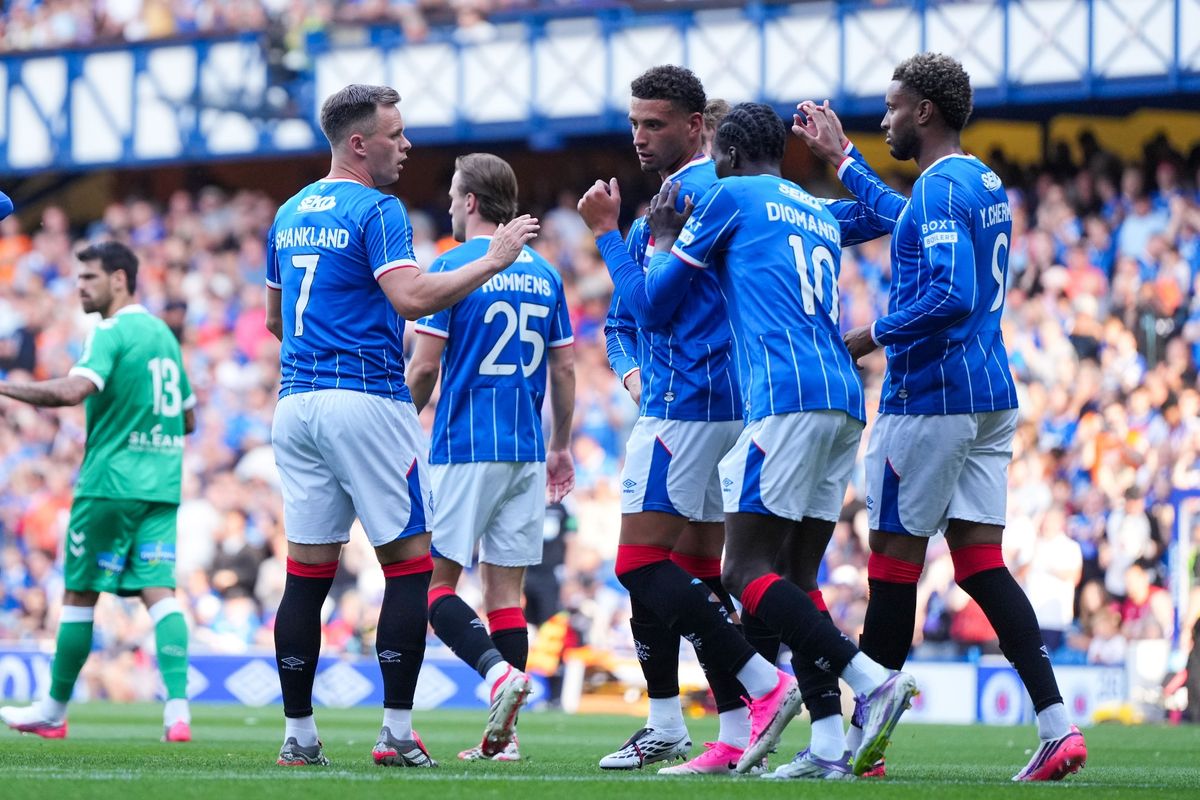
Rangers head into their Scottish Premiership meeting with Dundee knowing that another victory could prove important in their pursuit of the league leaders. After an impressive 3–1 win over Kilmarnock at Ibrox, Derek McInnes has a difficult decision to make regarding his starting lineup, with one winger potentially making way despite the team’s recent success.
The Light Blues have built impressive momentum in recent weeks, and there is little reason for McInnes to make wholesale changes to a side that continues to deliver results. However, the physical demands of international football, combined with the intensity of the previous match, mean that some rotation could be necessary.
Kim Min-su is the player expected to make way in the predicted lineup, with Findlay Curtis tipped to take his place. The South Korean winger covered considerable ground against Kilmarnock and has also had to deal with the demands of international travel. Giving him a rest could therefore be a sensible decision as Rangers prepare for another challenging fixture.
Curtis, meanwhile, could receive an opportunity to demonstrate why he deserves more regular involvement in the first team. The young winger has qualities that could prove useful against Dundee, particularly if Rangers need pace, direct running and energy in the wide areas.
The potential change would allow McInnes to maintain the general structure of his team while refreshing one position. Rather than disrupting a winning formula, the Rangers manager could make a calculated adjustment designed to keep his players fresh throughout the campaign.
There is plenty at stake at Dens Park. Rangers are looking to continue their winning run and put pressure on Celtic, while Dundee will be determined to use their home advantage to cause problems for one of the title contenders.
The predicted lineup suggests that McInnes remains confident in his current defensive and attacking combinations. Ivor Pandur is expected to start in goal, while the back four could remain largely unchanged, provided Dujon Sterling is fit enough to feature.
Pandur has been one of the encouraging additions to the Rangers squad. His performances have helped provide greater stability at the back, and the goalkeeper will be hoping to continue his positive run against a Dundee side that has shown it can threaten opponents.
Although Kilmarnock managed to score late in the previous match, Rangers had already established a commanding advantage. The concession will not erase the positive aspects of the performance, but McInnes will still expect his players to maintain concentration for the full 90 minutes.
The goalkeeper’s role will be especially important if Dundee attempt to put Rangers under pressure early in the contest. The home side will want to make the most of the atmosphere at Dens Park, and Rangers must be prepared to defend crosses, deal with second balls and avoid giving away unnecessary opportunities.
At right-back, Sterling is expected to retain his place if available. There had been concern after he was withdrawn at half-time against Kilmarnock, but the explanation provided by McInnes was that the defender was struggling with tonsillitis rather than suffering a new serious injury.
Reports ahead of the Dundee fixture indicated that Sterling had returned to training and was expected to be available. That would represent a welcome boost for Rangers, although his fitness and ability to complete the match remain separate questions.
Sterling’s versatility makes him a valuable option for the manager. He can provide defensive strength while also supporting attacks down the right flank. Against Dundee, Rangers could need that balance, particularly if the opposition attempts to exploit space behind the full-backs.
The central defensive partnership is also expected to remain intact. Emmanuel Fernandez and Olwethu Makhanya have been part of a defensive unit that has helped Rangers establish a strong run of results.
Fernandez brings physical presence and an aerial threat, while Makhanya has impressed with his ability to settle into the team. Their partnership will be tested against a Dundee side that will look for opportunities to get forward and make the most of home advantage.
For Rangers, the challenge will be to avoid unnecessary mistakes when playing out from the back. Dundee may attempt to press aggressively at certain moments, and the defenders will need to choose carefully when to play through the opposition and when to move the ball into safer areas.
The full-backs will also have to be aware of their positioning. Rangers are likely to enjoy periods of possession, but they cannot afford to leave too much space behind them when attacks break down. A disciplined defensive structure will be important if they want to keep Dundee from creating clear chances.
James Penrice is expected to continue at left-back despite competition from Tuur Rommens, who has returned to fitness following a groin problem. Penrice has performed well enough to make the position his own in recent weeks, and the manager may see little reason to change that arrangement.
Rommens’ return nevertheless gives McInnes another option. Having competition across the defence is important over a long season, particularly when injuries and fixture congestion can force managers to make adjustments.
Penrice’s ability to contribute in different areas could be useful against Dundee. Rangers will need their full-backs to provide width when the wingers move inside, but they must also be ready to recover quickly when possession changes hands.
In midfield, Dan Neil and Nico Raskin are expected to continue their partnership. Both players have important responsibilities, and their performances could determine how effectively Rangers control the match.
Neil has grown into his role and has contributed to the team’s recent improvement. His passing and positional awareness can help Rangers move the ball through the middle of the pitch, while his willingness to compete provides an additional defensive dimension.
The midfielder will need to be alert to Dundee’s attempts to disrupt possession. Playing away from home can create different challenges, particularly when the opposition tries to turn the game into a physical contest. Neil must help Rangers remain composed and avoid allowing the match to become unnecessarily chaotic.
Raskin’s role will be equally important. The Belgian has the energy to press opponents, recover possession and support attacking moves. Although he has not always been at his best recently, his qualities remain valuable to McInnes.
The partnership between Neil and Raskin gives Rangers a combination of passing ability, work rate and defensive commitment. If both players perform well, they could help the visitors establish control and create the conditions for their attacking players to make a difference.
However, the midfielders cannot afford to become careless. Dundee have won their recent matches and will arrive with confidence, so Rangers must respect the threat posed by their opponents.
The expected change on the right wing is the most interesting part of the predicted team. Kim Min-su impressed with his work rate against Kilmarnock, but the demands placed on him over the international break could persuade McInnes to give him a rest.
International football can be demanding for players who have to travel long distances between countries. Even when they avoid injuries, the combination of travel, training and match commitments can affect recovery. Managers must therefore consider more than the previous performance when deciding whether a player should start again.
Min-su has shown qualities that can help Rangers, but the manager must also think about his availability over the coming weeks. Starting him in every match without considering fatigue could increase the risk of a decline in performance.
That is where Curtis could enter the picture. The young winger has an opportunity to make a case for greater involvement if selected against Dundee. He can bring fresh energy to the attack and challenge defenders with direct runs.
For Curtis, this would be more than simply filling a position. It would be an opportunity to show that he can contribute when Rangers need him. Young players often have to wait patiently for chances, and making the most of those opportunities can influence how much responsibility they receive in the future.
The winger’s task would be to play with confidence while remaining disciplined within the team’s structure. He must support the right-back, make himself available for passes and look for opportunities to deliver dangerous balls into the penalty area.
Rangers will also want him to make intelligent decisions in the final third. Speed and enthusiasm are useful, but the team needs quality when creating chances. Curtis could make a difference by choosing the right moments to take on defenders, combine with teammates or deliver a cross.
The predicted change would not necessarily mean that Min-su has fallen out of favour. It could simply be a matter of managing his workload and keeping the squad fresh. If Rangers want to maintain their winning run, they will need contributions from more than the same eleven players.
On the opposite flank, Djeidi Gassama is expected to keep his place. The winger has become an important part of the team’s attacking approach because of his pace, movement and ability to carry the ball forward.
Gassama has occasionally struggled to provide the final product that his performances deserve, but his influence cannot be measured only by goals and assists. His runs can force defenders into difficult positions, create space for teammates and win free-kicks in dangerous areas.
Against Dundee, Rangers may need that ability to stretch the opposition. If the home side defends in a compact shape, Gassama’s willingness to attack defenders could help create openings that are otherwise difficult to find.
The winger must nevertheless make sure his attacking efforts benefit the team. Better decision-making in the final third would help Rangers turn promising situations into clear chances. Whether through a well-timed pass, a cross or a shot, the objective will be to make his involvement count.
McInnes is unlikely to want Gassama to abandon his natural style. Instead, the manager will hope that the winger combines his direct approach with greater efficiency when the opportunity arises.
The biggest reason for Rangers’ optimism, however, remains the form of their forwards.
Ryan Naderi is expected to lead the attack alongside Kevin Kelsy after the pair contributed to the victory over Kilmarnock. Naderi scored twice in that match, continuing an encouraging spell that has made him one of the players attracting the most attention among Rangers supporters.
His recent performances have offered Rangers a reliable source of attacking threat. Naderi has shown an ability to find useful positions, combine with teammates and take advantage of opportunities inside the penalty area.
The double against Kilmarnock will have boosted his confidence, but the striker must now prove that he can maintain his form away from Ibrox. Dundee are unlikely to make the match easy, and Naderi may have fewer opportunities if the home side defends aggressively.
His movement will therefore be important. By making runs behind the defensive line and finding space between defenders, he can give Rangers a way to progress quickly when the opportunity appears.
Naderi must also be prepared to contribute when the team does not have possession. Pressing the opposition defenders can force mistakes and help Rangers recover the ball in dangerous areas. The work he does away from the penalty area could be just as important as his finishing.
Kelsy is also expected to retain his position. The forward scored against Kilmarnock and has been developing a useful understanding with Naderi. Their partnership gives Rangers two different attacking options, which could make it more difficult for Dundee to defend against them.
Kelsy’s physical presence can help Rangers compete for long balls and provide an outlet when the team needs to move forward quickly. He can also occupy central defenders, creating space for Naderi to exploit.
The pair will need to communicate effectively and avoid making similar runs into the same areas. If they can complement each other’s movements, Rangers could create significant problems for the Dundee defence.
There is still room for improvement in their overall attacking play. Rangers will want their forwards to link with the midfield more consistently, particularly when Dundee attempt to close down the space in front of their defence.
The manager will also be looking for greater efficiency after the break. Rangers produced an excellent first-half display against Kilmarnock but found it harder to maintain the same intensity later in the match. That is an issue the team must address if it wants to become more consistent.
The importance of squad rotation becomes clearer when considering that challenge. A fresh winger could help Rangers maintain their energy levels, while the availability of substitutes gives McInnes options if the game becomes difficult.
The manager must decide whether to make changes before the match or wait until the second half. Starting Curtis could provide fresh legs from the opening whistle, while keeping Min-su on the bench would give Rangers another attacking option if needed.
Neither approach guarantees success, but the decision will reflect McInnes’ assessment of the players’ fitness and the tactical demands of the fixture.
Dundee should not be underestimated. Steven Pressley’s side have enjoyed a positive run of results and have moved into the upper part of the table. Their recent performances suggest that they will approach the match with confidence rather than simply attempting to limit the damage.
A home fixture against Rangers gives Dundee an opportunity to measure themselves against one of the league’s strongest teams. They will want to compete physically, remain organised and take advantage of any mistakes made by the visitors.
Rangers must therefore avoid assuming that their recent victories will automatically translate into another comfortable result. Their opponents have their own ambitions, and the match could become difficult if the visitors allow Dundee to gain confidence.
The opening stages may be particularly important. If Rangers move the ball quickly and establish control, they could force Dundee to defend for long periods. If the home side disrupts their rhythm, however, the match could become more evenly balanced.
McInnes will want his players to remain patient. The team should look for opportunities to move the opposition from side to side, create space in wide areas and attack the penalty box with purpose.
Defensive concentration will be equally important. Rangers cannot allow their attacking ambitions to leave the back line exposed, especially against a team capable of exploiting space during counterattacks.
The predicted lineup suggests that McInnes is unlikely to make dramatic changes after the Kilmarnock win. Continuity has helped Rangers build momentum, and maintaining a settled team could be beneficial as they approach another important league fixture.
At the same time, the expected inclusion of Curtis demonstrates why having a strong squad matters. Players who do not start every week must remain ready to contribute when their opportunity arrives.
If Curtis performs well, he could give the manager another reliable option on the wing. If Min-su returns to the lineup for a later match, the competition between them could help both players improve.
That is the type of situation Rangers need as they continue their campaign. A successful team cannot rely entirely on its preferred starting eleven. Injuries, fatigue and changing tactical requirements will create opportunities for other players, and those opportunities must be taken.
The match against Dundee could therefore provide another indication of how well Rangers are managing their squad. A positive performance from the predicted starting eleven would strengthen the argument for maintaining continuity, while effective contributions from substitutes would demonstrate the depth available to McInnes.
Ultimately, the manager’s priority will be to secure three points. The exact lineup matters, but the players must deliver the performance required to win the match.
Rangers have already shown that they can compete strongly against their domestic rivals, and the Kilmarnock victory has given them another reason to believe they can continue their progress. Their challenge now is to reproduce that intensity while dealing with the different conditions of an away fixture.
For supporters, the possible change involving Min-su and Curtis will be one of the main talking points before kick-off. Min-su has worked hard and contributed to the team’s recent success, but the demands of international travel could make a rest beneficial.
Curtis, meanwhile, has the chance to turn an expected opportunity into something more significant. A strong performance could increase his involvement in the weeks ahead and give Rangers another attacking option.
The predicted Rangers XI is therefore expected to feature Ivor Pandur in goal; Dujon Sterling, Emmanuel Fernandez, Olwethu Makhanya and James Penrice in defence; Dan Neil and Nico Raskin in midfield; Findlay Curtis and Djeidi Gassama on the wings; and Ryan Naderi alongside Kevin Kelsy up front.
This remains a predicted lineup rather than the official team selection, and McInnes could still make adjustments depending on fitness and tactical considerations.
If the prediction proves correct, Rangers will have made just one change from the team that defeated Kilmarnock. That would underline the manager’s confidence in his players while allowing him to manage the workload of a winger who has had a demanding period.
The objective is clear: continue winning, maintain pressure on Celtic and demonstrate that Rangers have the depth and consistency required for a serious title challenge.
A victory at Dens Park would provide another important boost, but Dundee are likely to make Rangers work for every opportunity. The visitors must remain disciplined, use their attacking quality effectively and avoid the drop in intensity that affected the latter stages of their previous match.
For McInnes, the balance between continuity and rotation could be crucial. Keeping the winning team together has its advantages, but knowing when to rest a player can be just as important over the course of a long season.
The expected selection of Curtis in place of Min-su could be a small adjustment, yet it may prove useful if it helps Rangers maintain their energy and attacking threat.
Now, the final decision rests with McInnes. The predicted XI points towards one change, but only the official team sheet will reveal whether the Rangers manager sticks with the expected selection or has another surprise in store.
Predicted Rangers XI vs Dundee: Pandur; Sterling, Fernandez, Makhanya, Penrice; Neil, Raskin; Curtis, Gassama; Naderi, Kelsy.










