
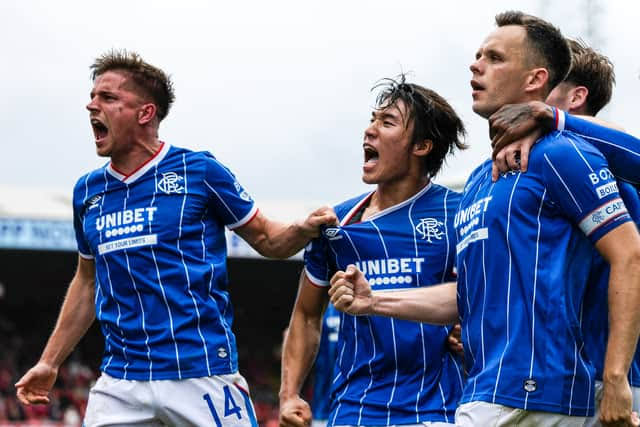
Rangers have found their new number 10, and it could be the beginning of an exciting new chapter for the club. For a team with the history, expectations and ambitions of Rangers, finding a player capable of making a difference in the final third is always important. Supporters want someone who can create chances, score goals, unlock stubborn defences and give the team something special when a match becomes difficult. The number 10 role represents all those qualities, and the latest discussion surrounding Rangers has created fresh excitement about what the club could achieve. However, the real question is whether Rangers have finally identified the player who can become the creative force they need.
For years, the number 10 position has carried enormous importance at Ibrox. It is not simply about wearing a particular shirt number or playing behind the main striker. It is about taking responsibility when the team needs inspiration. A good number 10 must understand how to find space between the opposition’s midfield and defence, make intelligent decisions under pressure and deliver passes that change the direction of an attack. Rangers need players who can do these things consistently, especially when opponents sit deep and make it difficult to find a way through. Against those teams, possession alone is rarely enough. Someone must provide the imagination, movement and quality required to turn control of the ball into genuine goalscoring opportunities.
That is why the possibility of Rangers finding their new number 10 deserves attention. Supporters have seen how important creativity can be in deciding the outcome of major matches. A team can have hardworking midfielders, reliable defenders and dangerous forwards, but it still needs someone capable of connecting those areas. Without that link, attacks can become predictable, and opponents can find it easier to organise themselves. The right attacking midfielder can change everything by moving into pockets of space, drawing defenders out of position and giving teammates more opportunities to attack. If Rangers have identified a player who can perform that role effectively, it could become one of the most important developments in their efforts to build a stronger team.
One of the biggest challenges facing Rangers is finding consistency in the attacking areas. Supporters naturally expect their team to dominate possession and create opportunities, particularly in domestic matches where opponents often defend in numbers. However, breaking down an organised defence requires more than simply moving the ball from one side of the pitch to the other. Players must recognise when to accelerate the game, when to attempt a difficult pass and when to keep possession until a better opportunity appears. A genuine number 10 understands these situations. Rather than making every attack complicated, the player knows how to make the right decision at the right moment. That football intelligence can be just as valuable as technical ability.
Rangers also need attacking players who can handle the pressure that comes with representing the club. Playing at Ibrox is different from playing at many other grounds. The expectations are high, the supporters demand results and every performance is examined closely. A player who looks impressive in a less demanding environment must still prove that he can deliver when the pressure increases. The number 10 role makes this particularly important because the player is often expected to produce something decisive. One excellent pass, one intelligent run or one moment of individual quality can determine the result of a match. At the same time, a poor decision can allow an opponent to launch a dangerous counterattack. The position requires both courage and responsibility.
The ideal Rangers number 10 would offer much more than attractive football. Creativity is essential, but the modern game demands that attacking midfielders contribute to the team’s overall structure. They must press opponents, track runners when possession is lost and help the midfield maintain its balance. Rangers cannot afford to build their attacking system around a player who contributes only when the team has the ball. The strongest attacking midfielders understand that their work begins long before they receive a pass in a dangerous area. Their movement can create room for a teammate, while their pressing can force an opponent into a mistake. These less obvious contributions can be just as important as goals and assists.
There is also the question of how the new number 10 would fit into the existing Rangers team. Signing or identifying a talented attacking player is only the first step. The manager must find the right position, understand the player’s strengths and build a system that allows those qualities to influence matches. Some attacking midfielders perform best when they have freedom to move across the pitch, while others prefer to operate centrally and receive the ball between the lines. Some are excellent at carrying the ball forward, while others make their biggest contribution through passing and movement. Rangers must understand these differences if they want to get the best out of their creative options. The objective should be to build a balanced attack rather than simply place another talented player in the starting eleven.
A successful number 10 could also improve the performances of Rangers’ strikers. Forwards depend on service, movement and intelligent combinations to produce their best football. When an attacking midfielder consistently delivers accurate passes into dangerous areas, strikers can spend more time concentrating on getting into goalscoring positions. Instead of dropping deep to collect the ball, a forward can attack the penalty area and make runs behind the defence. This can increase the number of clear chances the team creates. It can also make life more difficult for opposition defenders, who must decide whether to follow the attacking midfielder into space or remain close to the striker. Those difficult decisions can create openings that Rangers can exploit.
The benefits would not stop with the main striker. Wingers and attacking full-backs could also find more opportunities if Rangers have a creative player capable of controlling the space around the opposition penalty area. A number 10 who attracts defenders towards the middle can create room on the wings, allowing wide players to receive the ball in better positions. Equally, a midfielder who recognises when a winger is making a run can deliver an early pass before the defence has time to recover. These combinations are especially useful against teams that defend with a compact shape. Instead of relying entirely on individual dribbling, Rangers would have several ways to create danger. That variety could make the team less predictable and more difficult to defend against.
Another important quality is the ability to make an impact in big matches. Rangers supporters judge players not only by their performances against weaker opposition but also by what they produce when the stakes are highest. Matches against Celtic, important domestic cup ties and decisive fixtures in the league can place enormous pressure on attacking players. The number 10 must be willing to demand possession, even when opponents are pressing aggressively. He must also remain composed when an opportunity appears and avoid allowing the atmosphere to affect his decision-making. A player who can maintain his standards in these circumstances can quickly become an important figure in the squad. However, that reputation must be earned through performances rather than promises.
The Scottish Premiership presents its own challenges for a creative midfielder. Rangers regularly face opponents who are prepared to defend deep, close down passing lanes and limit the space available around the penalty area. In these matches, a number 10 may have very little time to make a decision. The player must be able to receive the ball under pressure, turn quickly and identify an opening before defenders close him down. He must also understand when a simple pass is more effective than an ambitious attempt to force a chance. Patience is essential because the opening may not appear immediately. If Rangers can rely on a player who combines technical quality with the discipline to make sensible decisions, they could become more effective against the teams that make domestic football difficult.
European competition would provide another test. Rangers need players who can adapt when they face opponents with different tactical approaches and greater individual quality in certain areas. A creative midfielder must be prepared to defend intelligently, move the ball quickly and recognise opportunities to attack spaces left behind by opposing teams. In some matches, Rangers may have more possession and need to find a way through a compact defence. In others, they may have to absorb pressure and use quick transitions to create chances. The ability to perform both roles would make a number 10 especially valuable. It would also give the manager more tactical options when trying to change a game.
Nevertheless, Rangers must avoid placing unrealistic expectations on any player simply because of his position or shirt number. Football supporters understandably become excited when they believe the club has discovered a missing piece of the puzzle, but the number 10 role does not guarantee success. Some players need time to adapt to a new league, a different tactical system or the pressure of a major club. Others may begin strongly before opponents learn how to limit their influence. The important thing is to assess performances over a meaningful period rather than judge a player on one outstanding display. Rangers need sustained quality, not just occasional moments of brilliance.
The manager’s role will be crucial in determining whether the new number 10 can succeed. A player may possess excellent technical ability, but those qualities will not always appear if the team does not provide the right support. Rangers must ensure that the midfield behind the attacking player is organised enough to protect possession and recover the ball when attacks break down. The forwards must also understand how to work with the number 10, making runs that provide passing options rather than occupying the same spaces. When the movement of the players becomes coordinated, the team can attack with greater speed and purpose. This kind of understanding usually develops through training, tactical preparation and regular matches together.
There is also a psychological advantage to having a recognised creative leader in the team. When Rangers are struggling to find a breakthrough, teammates need someone who remains confident enough to take responsibility. That does not mean attempting a spectacular pass every time the ball arrives. Sometimes leadership involves slowing the game down, keeping possession and encouraging the team to remain patient. At other moments, it means taking a risk and attempting something that opponents do not expect. A mature attacking midfielder understands the difference. If Rangers have found a player who combines this mentality with the necessary footballing ability, he could become an important influence both on and off the pitch.
For supporters, the excitement surrounding a potential new number 10 also raises questions about the club’s wider recruitment strategy. Rangers cannot depend on one player to solve every attacking problem. A successful squad requires competition for places, dependable options from the bench and enough depth to cope with injuries and suspensions. If the first-choice attacking midfielder is unavailable, the team should still have a plan for creating chances. This is particularly important during a demanding season when domestic and European fixtures can arrive close together. Recruitment must therefore consider how different players complement one another, rather than focusing exclusively on individual reputations. A balanced squad gives the manager more flexibility and reduces the risk of one absence damaging the team’s entire attacking structure.
The club must also think carefully about how the number 10 role fits into its long-term plans. If the player is already part of the squad, developing his strengths and giving him consistent opportunities could be more valuable than immediately searching for another signing. If a transfer is required, Rangers must consider the player’s age, experience, availability and ability to adapt to Scottish football. The right decision is not necessarily the most expensive one. A player who understands the tactical requirements and works well with his teammates can sometimes provide more value than a bigger name who struggles to settle. Recruitment should be based on what the team actually needs, with the manager and recruitment staff working towards the same objective.
Another factor worth considering is the importance of goals from midfield. While the number 10 is often expected to create chances for others, the best players in that position can also threaten the goal themselves. When a striker attracts the attention of two defenders, space may open outside the penalty area. An attacking midfielder who is confident enough to shoot can punish opponents for leaving that space unprotected. This additional threat makes the team’s attack more difficult to predict. Defenders cannot focus entirely on stopping the striker because they must also monitor the player arriving behind him. Rangers would benefit from having an attacking midfielder who can contribute goals without neglecting his responsibility to create opportunities for teammates.
Set pieces could offer another advantage. Free kicks, corners and other dead-ball situations often decide closely contested matches, particularly when open-play opportunities are limited. A technically gifted number 10 may be able to deliver dangerous crosses, find teammates with clever passes or threaten the goal directly from a suitable free-kick position. These moments can provide Rangers with additional ways to score when opponents defend effectively. However, set-piece quality must be demonstrated in matches, and the team needs well-rehearsed routines to make the most of it. A player who contributes both during open play and from set pieces could offer the manager another valuable attacking option.
Ultimately, the biggest test will be whether Rangers can turn their promise into consistent results. Supporters do not simply want a player who looks comfortable on the ball or produces occasional moments of skill. They want someone who helps the team win matches, creates opportunities when the game is tight and contributes to the club’s ambitions over an entire season. Those expectations are reasonable at a club of Rangers’ size, but they require patience and a clear understanding of what the player can realistically deliver. The best way to judge a number 10 is to look at the quality of his decisions, the chances he creates, his contribution to the team’s structure and the difference he makes when matches become difficult.
If Rangers have genuinely identified the right player for this role, the timing could be significant. The club needs an attacking identity that combines creativity, intensity and efficiency. A strong number 10 could help bring those qualities together by linking the midfield with the forwards and giving the team a clearer route towards goal. His presence could also encourage other attacking players to take more risks because they would know that someone in the middle can connect their movement with the ball. Over time, those relationships could make Rangers a more confident and dangerous team. But the manager must still ensure that the defensive structure remains solid and that the side does not become dependent on one individual.
For now, the headline that Rangers have found their new number 10 captures the excitement surrounding the possibility of a fresh creative force at Ibrox. It suggests that the club may have found a player capable of bringing greater imagination and purpose to its attacking play. Yet the real story will be written on the pitch, where every pass, chance created and important performance will help determine whether the expectations are justified. Rangers supporters have every reason to hope that the team can find the right balance between creativity and consistency. If the player in question can deliver both, the number 10 role could become one of the most important parts of the club’s next chapter.
The question now is whether Rangers have found someone who can truly make that shirt his own. A successful number 10 must do more than carry a famous number on his back. He must influence games, help his teammates perform better and show the quality required to succeed under pressure. If Rangers can develop those qualities within their team, the benefits could extend far beyond one position. Their forwards could receive better service, their wide players could find more space and the entire attack could become harder to predict. That is what makes the search for a genuine creative leader so important. Rangers need a player who can turn promising attacks into decisive moments, and if they have found that player, supporters will be eager to see what comes next.








