Ryan Naderi just showed why £5m Ibrox flop will never play another minute for Rangers

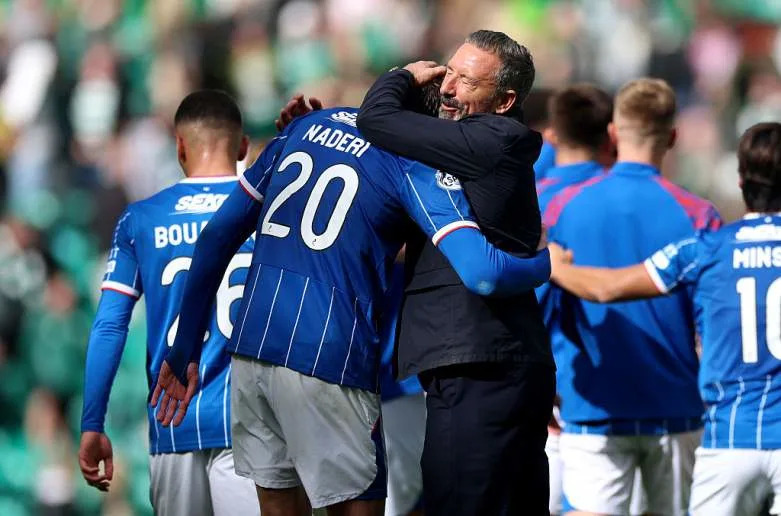
Ryan Naderi’s latest performance has given Rangers fans another reason to believe that the club may already have found a solution to a problem that has troubled them for some time. While much of the attention has been focused on the young forward and what he could bring to the team, his contribution has also raised serious questions about the future of a £5 million Rangers signing who has struggled to justify the expectations that came with his arrival at Ibrox.
Football can change quickly, particularly at a club where the pressure to deliver results is relentless. A player who arrives with a big reputation and an expensive transfer fee can quickly find himself under scrutiny if he fails to produce the performances supporters expect. At Rangers, that pressure is even greater because the club is judged not only by its results but also by the quality of football it delivers and its ability to compete for major honours.
Naderi’s emergence has therefore created an interesting situation. His performances have provided a reminder that opportunities in football are never guaranteed, regardless of how much a club has spent on a player. If a younger or less established option begins to demonstrate the qualities required to succeed, the manager must consider whether continuing to trust an underperforming signing is really the best decision for the team
That is precisely why Naderi’s contribution deserves attention. Rather than simply being another promising display from a forward looking to establish himself, it could represent an important moment in the competition for places at Rangers. The club needs players who can make a difference, influence matches and provide a consistent threat in the final third. Anyone unable to meet those expectations risks falling behind.
For the £5 million signing in question, the situation is becoming increasingly difficult to ignore. Transfer fees can create expectations, but they cannot guarantee a place in the starting lineup. A player must continue to demonstrate his value through performances, attitude, consistency and an ability to meet the manager’s tactical requirements.
Naderi’s showing has made that point particularly clear. If he continues to take his opportunities and demonstrate that he can contribute to the team’s attacking play, Rangers will have a strong reason to give him more responsibility. At the same time, the player who has struggled to make the desired impact will have to work harder to convince the coaching staff that he deserves another chance.
It would be premature to conclude that the £5 million signing will never play for Rangers again. Football is unpredictable, and injuries, changes in tactics and improvements in training performances can alter a player’s position very quickly. However, it is reasonable to argue that his route back into the team could become significantly more complicated if Naderi continues to impress.
The important question is not simply whether Naderi can score goals or produce one memorable performance. It is whether he can establish a level of consistency that makes him a dependable option for Rangers throughout the season. Managers need players who can perform against different opponents, adapt to different match situations and remain effective when the team is under pressure.
If Naderi can demonstrate those qualities, his case for regular involvement will become stronger. Rangers cannot afford to ignore a player who is contributing positively simply because another option arrived with a larger transfer fee or a bigger reputation.
Supporters have seen enough football to understand that a transfer fee means very little once the season begins. What matters is what happens on the pitch. A player can cost millions and still struggle to settle, while another can arrive with fewer expectations and quickly become an important member of the squad.
This is one of the reasons Naderi’s development could be significant for Rangers. Every successful team needs competition within its squad. When players know that their places are not guaranteed, they have an incentive to improve their performances and maintain the standards expected by the manager.
Competition can also reveal weaknesses that might otherwise remain hidden. If one forward consistently makes better decisions, presses more effectively or provides a greater attacking threat, the manager must take those differences seriously. Selecting a team based on reputation rather than current performance can undermine the very competition that is supposed to make the squad stronger.
For Rangers, the priority must be finding the right balance between giving players time to develop and demanding performances that justify selection. Patience is important because footballers sometimes need time to adapt to a new club, a different league or a more demanding tactical system. However, patience cannot become an excuse for ignoring repeated shortcomings.
A £5 million investment deserves a fair assessment, but it does not deserve unlimited opportunities regardless of performance. The club must be prepared to make difficult decisions when the evidence suggests that another player is better suited to the role.
Naderi now has an opportunity to make that decision more difficult for the manager. If he continues to produce encouraging performances, he could become a central part of Rangers’ plans rather than simply another option available from the bench. That would represent a significant development for a player seeking to establish himself at Ibrox.
It would also send a message to the rest of the squad. No player should assume that his position is secure, and no signing should believe that a transfer fee automatically places him ahead of his teammates. Every player must earn the right to represent Rangers through the work he does on the training ground and the contribution he makes during matches.
The pressure surrounding the £5 million signing is understandable. Supporters want to see value from the club’s investment, especially when the team is trying to build a squad capable of challenging for trophies. When a player struggles to meet expectations, frustration can grow quickly, particularly if another option appears to offer something the team has been missing.
Nevertheless, it is important to separate disappointment from a final judgement on a player’s future. One strong performance from Naderi does not automatically establish that his teammate has no future at the club. Likewise, a difficult spell does not necessarily mean that an expensive signing cannot recover his form.
What Naderi’s contribution can do is change the conversation. Instead of asking whether Rangers have enough options in attack, supporters can begin considering whether the club already has a player capable of offering a more effective solution. That shift in perspective can have major consequences for squad selection.
The manager will ultimately have to decide which players provide the best combination of quality, consistency and tactical discipline. If Naderi proves that he can meet those requirements, he should be given the opportunity to continue. If the £5 million signing cannot demonstrate similar qualities, his involvement may naturally decrease.
This is how competition for places should work at a club with Rangers’ ambitions. Selection must be based on what players contribute rather than what they cost.
There is also a wider lesson for the club’s recruitment strategy. Expensive transfers attract attention and create excitement, but they are not always the most reliable route to improving a team. Recruitment departments must identify players whose characteristics fit the manager’s approach and whose performances can translate into the demands of Scottish football.
A successful transfer should make the squad better. It should provide the manager with another dependable option, improve competition and help the team achieve its objectives. When a signing fails to deliver those benefits, the club must examine what went wrong and determine whether the situation can be corrected.
Naderi’s emergence could therefore prove useful beyond the immediate question of who deserves to play. It may encourage Rangers to assess their attacking options more critically and consider whether the players currently receiving opportunities are genuinely the best choices.
The coming matches will be important. A promising performance must be followed by further evidence that the player can deliver consistently. Naderi needs to show that he can maintain his standards, contribute when space is limited and make intelligent decisions against opponents who are prepared to target his weaknesses.
If he succeeds, his position in the squad should strengthen. The manager will have greater confidence in selecting him, and the pressure on competing forwards will increase. That would be a positive outcome for Rangers because a team with several motivated attacking options is better equipped to deal with injuries, suspensions and demanding periods of the season.
For the £5 million signing, however, the challenge will be to respond. Footballers often face difficult periods, and the best response is to work hard, improve and demonstrate that they remain capable of contributing. If he wants to reclaim his place, he must give the manager convincing reasons to select him.
That means showing greater consistency, making better use of opportunities and proving that he can fulfil the responsibilities required by the team’s system. Reputation alone will not be enough.
There is no guarantee that the competition will end in Naderi’s favour. A change in formation or a different tactical requirement could create opportunities for another forward. An injury or a change in form could also alter the situation. Those possibilities are part of professional football, which is why any claim that a player will never feature again should be treated as an opinion rather than an established fact.
Even so, the central argument remains compelling: Naderi’s performances could make it increasingly difficult for Rangers to justify selecting a more expensive alternative who is not delivering the same level of impact.
That is a debate supporters will continue to have as the season develops. Fans naturally want the players who give the team the best chance of winning, and they expect the manager to make selection decisions with those objectives in mind.
If Naderi continues to impress, Rangers should not hesitate to reward him with further opportunities. Young or relatively unproven players cannot develop fully if they are removed from consideration whenever an established signing becomes available. Trust must be earned, but it must also be given when a player demonstrates that he is ready for greater responsibility.
At the same time, the club must remain realistic about the demands of a title challenge. Potential is valuable, but performances matter most. Naderi will need to show that he can deliver across a sustained run of matches rather than relying on isolated moments of quality.
That is the challenge facing every player who wants to become a regular at Ibrox. The expectations are high, the competition is fierce and the supporters demand commitment from everyone who wears the shirt.
The £5 million signing is now facing a particularly important period. He must show that he still has something meaningful to offer Rangers and that the manager should not write him off. If he can respond positively, the situation could yet change.
If he cannot, the club may eventually have to consider whether keeping him in its plans makes sense. That could mean a reduced role, a loan move or a permanent departure, depending on the circumstances and the options available to Rangers.
For now, Naderi’s emergence should be viewed as a potential turning point rather than definitive proof that another player has reached the end of his Rangers career. The forward has an opportunity to strengthen his position, and the manager has a responsibility to judge every player fairly.
But one thing is clear: Rangers cannot afford to let transfer fees dictate team selection. Every place in the squad must be earned, and every player must continue to demonstrate that he deserves to be involved.
Naderi has given the club anoter reason to examine its attacking hierarchy. If he keeps delivering, the competition could become increasingly difficult for the £5 million signing to win.
That is why Rangers supporters should pay close attention to what happens next. Naderi’s progress could influence more than his own future. It could help determine which players the manager trusts, how the club approaches its attacking options and whether an expensive signing remains part of the long-term plan.
The verdict will ultimately be delivered on the pitch. If Naderi continues to perform, Rangers will have little reason to overlook him. If his teammate continues to struggle, the pressure to make a change will only increase.
The debate is far from settled, but Naderi has given himself an opportunity to change the picture at Ibrox. Now he must prove that he can maintain the standard and turn promise into consistency.
For Rangers, that is exactly the kind of competition the club needs. For the £5 million signing, it is a reminder that no reputation, contract or transfer fee can guarantee a future at Ibrox.
And if Naderi continues to make the most of his opportunities, the manager may eventually face a decision that once seemed unlikely: whether the club should move forward without one of its most expensive attacking investments.
That possibility may be uncomfortable, but at Rangers, performances must always come first.








