Rangers need to put Ibrox dud up for sale after just 13 games, he’s worth even less than Devlin – view

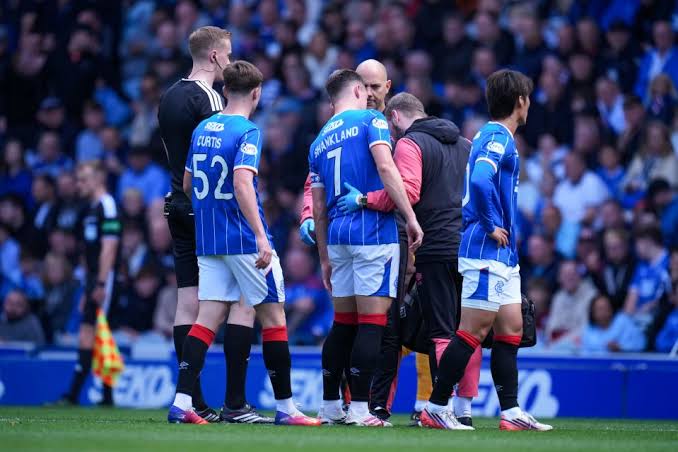
Every football fan knows the feeling of reading a headline and nodding along before the brain has caught up. “Rangers need to put Ibrox dud up for sale after just 13 games, he’s worth even less than Devlin.” It is punchy and confident, and it gives you a problem and a solution in a single sentence. The trouble is that once you slow down and check it, most of it does not hold up. This post is about Ross McCausland, a 23-year-old Rangers forward who found himself at the centre of that headline. It is also about how we judge players in 2026, and why a number on a valuation website should not decide a young footballer’s future.
Start with the facts. The column is a FootballFanCast opinion piece published on 6 October 2026. It says McCausland has eight goals and seven assists in 67 first-team games for Rangers, that he has been an unused substitute in five of his six matchday-squad appearances this season, and that Transfermarkt values him at £635,000, which is less than Cammy Devlin. Devlin joined on a free transfer from Hearts over the summer. So the argument runs like this: McCausland is not playing, his numbers are modest, and his value is low, so Rangers should sell. That is three links in a chain, and each one deserves a test.
The first link is that he is not playing. This is the strongest part of the case, and I will not pretend otherwise. Being left out of the squad, or named and then not used, tells you something. Managers pick players for reasons, and when a forward keeps sitting on the bench in matches Rangers are trying to win, the head coach is showing you where that player sits in the pecking order. But look at what this tells you and what it does not. It tells you that, right now, Derek McInnes prefers other attackers. It does not tell you that McCausland is poor. Those are different claims. A new head coach arrives with a system and an idea of which players suit it. Some players are in because they are better, and some are in because they fit the plan, and from the outside it is hard to tell the two apart.
The context matters too. McInnes took charge of a club that finished third last season, its lowest placing since 2018, and he has been busy since. Dan Neil, Cammy Devlin and Vanja Dragojevic arrived. James Tavernier, Jack Butland and Oliver Antman left, and Nedim Bajrami was reported to be heading to Al-Taawoun. That is a lot of upheaval for one summer. In that kind of environment, who plays and who does not is partly a story about a manager building his own team, and not only a ranking of individual quality. Squads in transition are untidy. Some players get lost in the shuffle for reasons that have little to do with their ability.
The second link is that his numbers are modest. Eight goals and seven assists in 67 games is not exciting when you read it cold. Fifteen goal involvements in that many appearances does not make the case for a star in the making. But I would want to know three more things before judging it. First, how many of those 67 games were starts? Appearances and starts are very different things. A player who has come off the bench for fifteen minutes in half of his games has had a fraction of the opportunity that a regular starter gets, and per-appearance numbers are unfair to him. Figures per 90 minutes would tell a much fairer story. Second, what was his role? A forward asked to run in behind, hold the ball up or press from the front will produce different numbers from one given the freedom to roam. Output depends heavily on instructions. Third, what was the team doing? Forwards at big clubs often play against deep defences where chances are scarce. Judging a player’s end product without thinking about how the opposition set up is like judging a driver without looking at the road.
None of this makes McCausland a hidden gem. It means that the headline numbers cannot carry the weight the column puts on them. Eight goals and seven assists is roughly what you would expect from a squad player in his position. It is not proof of a dud. It is proof of a player who has not yet convinced a succession of coaches that he should be a regular, which is a very different thing and a far more common one.
The third link is that he is worth less than Devlin, and this is where the argument gets shaky. It also deserves the most attention, because it is the part that makes the headline travel. The valuation the column relies on comes from Transfermarkt, a crowd-sourced website. Its figures are estimates produced by community discussion and algorithms. They are a reasonable rough guide to where a player sits in the market, but nobody’s chequebook is tied to them. Clubs negotiate fees based on contract length, wages, age, resale potential, competing interest and a dozen other things the site cannot see. Treating a Transfermarkt number as a player’s real worth is like treating an online estimate as the price a house will sell for. It is a starting point for a conversation, and nothing more.
The comparison with Devlin is also weaker than it looks. Devlin arrived for nothing, so his cost to Rangers is his wages and a place in the squad, not a transfer fee. McCausland came through the academy, so any fee he brings in is pure profit. Putting the two on the same value scale ignores the fact that they are completely different kinds of assets. And if the real point is that Devlin has disappointed, which the column suggests by calling him a summer flop, then comparing McCausland to him says very little about McCausland. It uses one player’s alleged struggles as a yardstick for another’s. It is a rhetorical device, and not a strong one.
There is a further problem that I find hard to square with the headline. Suppose we accept that McCausland’s value is low. Then selling him now means selling at a low point. If the argument is that he is unlikely to improve, fine. But if there is any chance that he does, you are giving away the upside for a modest return. Good clubs sell players when their value is high and their usefulness is low. They do not sell when value is low and the future is uncertain. The columnist’s own premise cuts against the conclusion. A low valuation is an argument for patience, or for a loan that might lift the price, and not for a quick exit.
It is also worth looking at the phrase “after just 13 games,” because it shows how these headlines work. It sounds like a measure of McCausland’s time at Ibrox, but it is not. It is simply how far into the season Rangers are. The player has 67 senior appearances behind him, and the 13 is a snapshot of one campaign. A number gets attached to a judgement, and the number carries an air of precision even though it is doing no analytical work. Thirteen games is about a third of a season. That is hardly enough to write anyone off, and the column is really about a player who has not been getting minutes, rather than one who has failed with them.
I do not want to be unfair to the columnist, because the question being raised is a good one. A manager who names a forward in the matchday squad and then does not use him is making a statement. If McCausland were firmly in the plans, you would expect him to get minutes in games that are comfortably won, in cup ties, or anywhere the manager could give him a run. The fact that he is mostly an unused substitute suggests that the staff see him as depth rather than a developing option. That is a legitimate concern, and it raises a harder question than the headline does: is Rangers the right place for him to spend the next year or two?
Here is the uncomfortable truth about academy players at big clubs. The pressure to win means managers rarely take risks on young players. The same culture that produces homegrown talent often makes it very difficult for those players to actually play. If McCausland’s path to regular football at Ibrox is blocked, then staying put is not obviously the kind option, however much supporters love an academy graduate. Sometimes the best thing a club can do for a young player is let him go somewhere he will be needed.
Setting the clickbait aside, there are three honest options for Rangers. The first is to loan him out. For a 23-year-old who needs games, this is the classic middle route. He plays regularly, Rangers keep the asset, and everyone learns more about what he can do. A strong spell somewhere else could lift his value more than another season on the bench ever will. The catch is making sure the destination club actually plays him. A loan that ends with him on a different bench is the worst of both worlds, and the loan market is full of players who went out hoping for minutes and did not get them.
The second option is to sell him. If the club has decided that he does not figure in the long term, selling is perfectly rational, and because he is an academy graduate, any fee is a bonus. But the sensible version of a sale involves a fair price and a sell-on clause, so that Rangers share in the upside if he develops elsewhere. The version in the headline, a quick sale because a website says the number is low, is the one to avoid. Selling in a hurry at a small price is how clubs end up regretting decisions a year later.
The third option is to keep him and develop him. This only works if there is a clear plan: a specific improvement the coaches want to work on, or a realistic prospect of an opening in the team. Keeping a player simply because you have not decided what to do with him is not a plan. It is drift. If the coaching staff genuinely believe he can add something particular, such as sharper finishing, better movement or more physical strength, then patience makes sense. If they do not, the other two options look better.
If I had to choose, I would lean towards the loan, with a sale as the fallback. That is a fairly conventional answer, but conventional answers are often right for a reason. A loan protects the asset, gives the player a pathway and keeps Rangers’ options open. It also gives the club real evidence, rather than a headline, to base the next decision on.
It is easy to forget that there is a person at the centre of stories like this one. McCausland is 23, an age where careers are still being shaped. He is reading the same headlines the rest of us are, and “dud” is a hard word to read about yourself. Young players at big clubs live under unusual scrutiny. They are judged against the best in the league and measured against supporter expectations that leave little room for development. A forward who takes a few seasons to find his level at a smaller club gets patience. At Rangers, he gets a string of headlines. I am not suggesting that anyone should be immune from criticism. If a player is not performing, say so. But there is a difference between criticism that engages with what is happening on the pitch and labels that reduce a person to a single word. The second kind is cheap, and it tends to outlive the facts it was based on.
It would be easy to pick on one article, so let me be careful. The FootballFanCast piece is typical of a whole genre. Headlines built on words like “dud,” “flop,” “sell” and “worth less than” are designed to provoke, and they work because they give readers a simple story and an emotion to attach to it. The genre also leans heavily on third-party valuation numbers because they give an appearance of objectivity. If a figure says a player is worth £635,000, the headline does not need to argue the point. It can just point at the number. But numbers like that are estimates, and treating them as facts distorts the picture.
As fans, we get better at reading these pieces when we ask a few simple questions. What is the evidence, and is it strong enough for the conclusion? Is the comparison being made actually fair? What would the argument look like if the opposite were true? And what does the headline leave out? Run those questions on “put him up for sale, he’s worth less than Devlin,” and the headline loses a lot of its force. What is left is a perfectly reasonable observation, that a player who is not playing may need a fresh start, wrapped in a conclusion that the evidence does not support.
If I were sitting in the Rangers recruitment office, I would want answers to a short list of questions before making any decision. How many minutes has he actually played over the past two seasons, and what do his figures per 90 look like? What do the underlying numbers say? Expected goals and expected assists, shot quality and chance creation help to separate bad luck from bad process. How does he fit McInnes’s system? If the head coach wants a specific kind of forward, is McCausland that player, or could he become one? What is his contract situation? A long deal gives Rangers leverage and time, while a short one narrows the options. What would a buyer realistically pay? If the offers on the table are small, there is little point in selling, but if there is genuine interest at a fair price, it changes the picture. And finally, what do the coaches see in training? That is the one thing outsiders can never know, and it often matters most. None of these questions appears in a headline, which tells you something about the format.
So here is my verdict, held loosely. The instinct behind the column, that a player who is not getting minutes may need a fresh start, is reasonable. The conclusion, that Rangers should rush to sell because of a Transfermarkt figure and a comparison with a free signing, is not. What I would back is patience with a deadline. Give the situation until the January window. If McCausland is still on the fringes by then, the sensible move is a loan to somewhere he will play every week, with the aim of reassessing in the summer. If a proper offer arrives that reflects his worth, ideally with a sell-on clause, take it seriously. If neither happens, keep working with him and see whether form or injuries open a door. That is less dramatic than “put him up for sale,” but it is the version that protects the asset, respects the player and keeps every option available.
At its heart, this is a small story about a 23-year-old forward and a headline. But it points to a habit worth resisting. When we talk about footballers as assets with a number attached, we lose sight of how careers actually work: unevenly, with setbacks, and often depending on being in the right place at the right time. McCausland may never become a first-choice forward at Ibrox. That is a fair possibility, and nobody should pretend otherwise. But he may also be a player who needs minutes, confidence and a different context, and who would look very different with them. A good club works out which of those it is dealing with before it decides. A good fan reads the headline, asks what is missing, and holds back the verdict until the evidence arrives.
What do you think? Should Rangers loan him, sell him, or keep faith? Does a Transfermarkt valuation tell you anything useful, or is it just a number? And do you think academy graduates get a fair chance at big clubs, or does the pressure to win always get in the way? Leave your thoughts in the comments. I would especially like to hear from anyone who thinks selling is the right call, because this is the kind of debate where sensible fans end up in different places.








