Ibrox View: 10/10 star can do no wrong, 9/10 ace fantastic – Rangers player ratings vs Kilmarnock

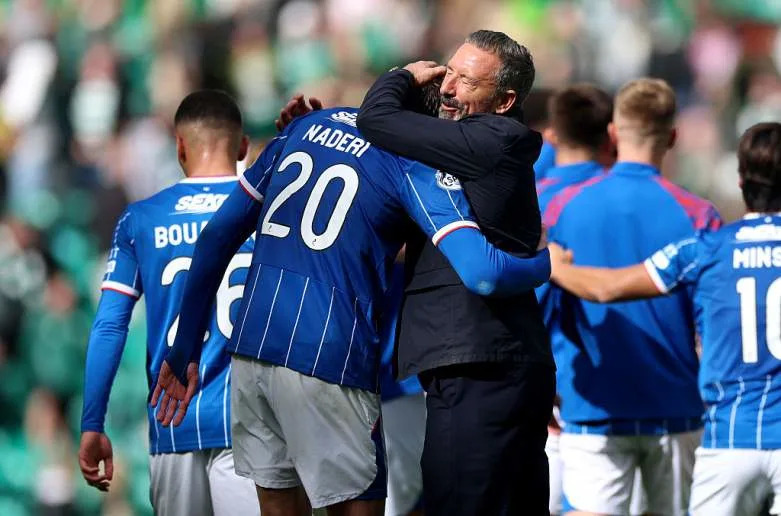
Rangers supporters have plenty to celebrate after their team secured a 3-1 victory over Kilmarnock to move to the top of the Scottish Premiership. Ryan Naderi stole the headlines with two goals, producing the kind of attacking contribution that can make a significant difference during a demanding title race. Derek McInnes will be pleased with the result, but the bigger challenge is ensuring that Rangers can maintain this momentum and continue collecting valuable points. Moving to the top of the table is an important achievement, yet the players must understand that staying there requires consistency, discipline, and a willingness to deliver in every match. Naderi deserves recognition for his brace, while the rest of the team will also want to build on a victory that has strengthened the positive atmosphere around Ibrox. Here is our assessment of the main talking points from the match and what the result could mean for Rangers’ title ambitions.
The biggest talking point is undoubtedly Naderi’s performance. Scoring twice in a 3-1 victory makes him one of the most influential players in the match, and his contribution will naturally attract attention from Rangers supporters. Strikers are often judged by their ability to make decisive contributions, particularly when their team needs goals to turn a promising performance into a winning result. Naderi delivered exactly that outcome against Kilmarnock, finding the net twice as Rangers secured all three points. Such performances can help a forward build confidence and strengthen his position within the manager’s plans. However, it is important to remember that a player’s overall rating should reflect more than goals alone. Movement, teamwork, decision-making, and contribution to the attacking structure also matter. Even so, scoring a brace in a match that takes Rangers to the top of the Premiership is an achievement worthy of significant praise.
For McInnes, the result offers encouragement at an important stage of the campaign. Every manager wants to see his team convert opportunities into victories, particularly when the league table is tight and the pressure to deliver results continues to increase. Rangers have now demonstrated that they can score three goals and take maximum points from this particular fixture. The next step is to establish whether they can reproduce that effectiveness consistently. A single victory cannot guarantee a successful title challenge, but it can provide the confidence needed to approach subsequent matches with greater belief. McInnes must now ensure that his players remain focused and do not allow the excitement of reaching the top to distract them from the work ahead. The strongest teams understand that every match represents a fresh challenge, regardless of the result that came before it.
Naderi’s two goals also raise an important question about Rangers’ attacking options. A team challenging for major honours needs forwards who can contribute consistently, but it also needs players around them who can create opportunities and make the attack more difficult to defend. Rangers cannot depend on one individual to solve every problem throughout the season. Instead, they must develop an attacking structure that allows different players to make decisive contributions. If Naderi continues scoring, his confidence could become an important asset, but the team must also ensure that its other attacking players remain involved. That means improving movement, making intelligent runs, and delivering the ball into dangerous areas whenever opportunities arise. The better the connection between the midfield and the forward line, the more difficult Rangers will be to contain.
Another important consideration is how Rangers manage expectations following a significant victory. Supporters naturally become excited when their team reaches the top of the league, especially after a performance featuring a brace from an attacking player. However, the players must avoid becoming complacent. The Premiership is a demanding competition, and rivals will be determined to respond. Rangers must continue approaching each match with the same seriousness, whether they are facing a direct title challenger or a team fighting for points further down the table. McInnes will need to maintain high standards in training, encourage healthy competition for places, and make sure that every player understands his responsibilities. If Rangers can achieve that balance, this victory could become an important building block rather than a brief moment of success.
The defensive side of the performance also deserves attention. Rangers conceded once against Kilmarnock, so there was no clean sheet to celebrate. That fact alone does not establish that the defenders performed poorly, because assessing their individual displays would require more detailed information about the chances conceded, positioning, challenges, and circumstances surrounding the goal. Nevertheless, every team with title ambitions should examine how it can become more reliable defensively. Scoring three goals is encouraging, but there will be matches when Rangers must protect a narrow lead or find a way to win without producing the same attacking output. Defensive organisation, concentration, and communication will remain important throughout the campaign. McInnes must ensure that the team continues learning from every match, including victories.
The midfield will also have an important role in determining whether Rangers can sustain their position at the top. Midfielders must provide a connection between defence and attack, control the tempo when necessary, and help the team recover possession when opponents threaten. Their contribution can sometimes receive less attention than that of the goalscorers, but a strong midfield often provides the foundation for successful attacking performances. Against Kilmarnock, Rangers scored three times and secured the win, but detailed individual ratings for the midfielders would require a reliable account of their specific contributions. It would be unfair to assign a numerical score without knowing how effectively each player passed the ball, won possession, created opportunities, and fulfilled his tactical responsibilities. What matters moving forward is that Rangers continue building a midfield capable of supporting their ambitions.
The wide players and attacking midfielders must also be prepared to contribute more than occasional moments of quality. In a title race, opponents often attempt to limit the space available to dangerous forwards. That makes creativity and intelligent movement essential. Rangers need players who can recognise when to deliver a cross, when to carry the ball into space, and when to combine with teammates through quick passing. They must also be willing to work defensively when possession is lost. If Naderi is to continue benefiting from the team’s attacking play, the players around him must help create the conditions for further opportunities. Strong individual performances become even more valuable when they are part of a well-organised collective effort.
The goalkeeper’s contribution should not be overlooked either. Although the available match information confirms that Rangers conceded one goal, it does not provide enough detail to determine whether the goalkeeper had opportunities to prevent it or made important saves elsewhere. A fair rating would need to account for shot-stopping, handling, distribution, communication, and decision-making. Goalkeepers can have relatively quiet afternoons and still be required to make one decisive intervention. Equally, a team can win comfortably without its goalkeeper facing a demanding workload. The scoreline alone cannot reveal the full story. Rangers will need their goalkeeper to remain reliable as the season progresses, particularly in close matches when a single save could determine whether the team collects three points or drops valuable points.
The same principle applies to the defenders. Individual ratings should reflect their performances rather than simply the final score. A defender may have contributed effectively to the team’s build-up play, dealt well with aerial challenges, or made important interceptions. Another may have struggled against an opponent’s movement or made decisions that allowed Kilmarnock to create dangerous situations. Without detailed match observations, it is impossible to distinguish accurately between those performances. Rangers supporters deserve ratings that explain what players actually did rather than arbitrary numbers attached to their names. The 3-1 victory is a positive result for the team, but it does not automatically mean that every player produced an outstanding performance.
What can be said with confidence is that Rangers achieved the objective that mattered most: they won the match and moved to the top of the Scottish Premiership. That gives McInnes an opportunity to reinforce the positive aspects of the performance while addressing anything that needs improvement. Successful teams do not stop analysing their performances after victories. Instead, they identify the habits that helped them win and work to repeat them. They also recognise mistakes before those mistakes become recurring problems. This approach can help Rangers maintain consistency and avoid the complacency that sometimes follows an important result.
Naderi will naturally be among the players attracting the most attention after his brace. Goals have a powerful influence on how supporters judge a striker, and two in one match can create a positive atmosphere around a player. Nevertheless, he must continue working hard to maintain that momentum. Opponents will study Rangers’ attacking patterns and look for ways to reduce the space available to their forwards. Naderi will need to remain adaptable, make intelligent movements, and take opportunities when they appear. He should also continue contributing to the team’s overall play rather than measuring success solely by whether he scores. If he combines his finishing with effective movement and teamwork, he could become an important part of Rangers’ efforts to compete throughout the campaign.
There is also a wider lesson for the squad. Every player must recognise that success depends on collective standards. A team cannot build a serious title challenge around one excellent performance or one outstanding individual. It needs several players to contribute consistently, whether through goals, assists, defensive work, pressing, or intelligent positional play. McInnes will want to see his players supporting one another and maintaining their concentration even when matches become difficult. If the team can develop that mentality, it will have a stronger foundation for dealing with the pressure of being league leaders.
Supporters will also be watching how McInnes handles selection in the coming weeks. Naderi’s performance will naturally strengthen the case for continued involvement, but every decision must consider the tactical demands of the next fixture. A manager may need different qualities against an opponent that defends deeply compared with a side that presses aggressively. Rotation can also become necessary when the schedule is demanding. The important thing is that players understand that selection depends on performance, fitness, and tactical suitability. Healthy competition can improve the overall standard of the squad and give the manager more options when circumstances change.
The move to the top of the table could also influence the wider title race. Rangers’ rivals will know that the team has taken advantage of this opportunity, and they will be determined to respond with positive results of their own. That creates an additional challenge for McInnes and his players. They cannot control what other teams do, but they can control their own preparation and performances. If Rangers continue winning, they will give themselves the best chance of remaining in a strong position. If they begin dropping points, the table could change quickly. This is why the manager must keep the players focused on the next match rather than allowing them to become distracted by their current position.
The atmosphere around Ibrox could benefit from this result as well. Supporters want to see evidence that the team is making progress and competing seriously for the biggest domestic prize. A convincing scoreline and a move to the summit provide an encouraging indication that Rangers are capable of producing results. Naderi’s brace gives fans a player to celebrate, while the victory as a whole offers a reason to approach the next fixture with confidence. However, supporters will also understand that consistency matters more than one afternoon of excitement. The team’s challenge is to build on the result and demonstrate that it can maintain its standards when the pressure increases.
For now, Naderi deserves the headlines. His two goals played an important role in the 3-1 victory, and the result has helped Rangers move to the top of the Scottish Premiership. It is reasonable to praise his attacking contribution and recognise the importance of his performance. However, giving every player a precise numerical rating would require more detailed evidence than the scoreline and goalscorer’s name provide. A proper player-ratings article should assess the goalkeeper, defenders, midfielders, and attackers individually, explaining the reasons behind every score.
The biggest conclusion is that Rangers have secured a valuable victory and given themselves an opportunity to build momentum. McInnes must now ensure that the team remains disciplined, continues improving, and approaches every upcoming fixture with the same determination. Naderi’s brace is an encouraging sign, but the success of the campaign will depend on the contribution of the entire squad. If Rangers can maintain their attacking threat while becoming increasingly reliable in other areas, they will have a stronger chance of sustaining their title challenge.
The message for Rangers supporters is clear: celebrate the victory, recognise Naderi’s contribution, and look forward to the next challenge. Moving to the top of the league is an important achievement, but the real test is whether Rangers can remain there. McInnes and his players now have the opportunity to turn this result into a sustained run of performances. That is what will ultimately determine whether this victory becomes a memorable moment in the season or the beginning of something much bigger.








