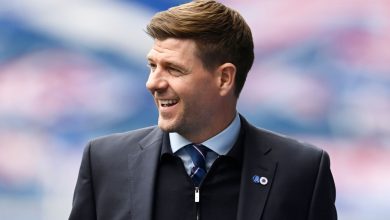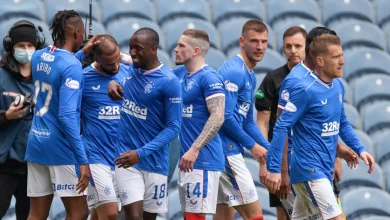
Derek McInnes was left frustrated after Rangers surrendered their advantage in a dramatic 2–2 draw against Dundee, admitting that his side allowed the momentum to disappear at a crucial moment in the match.
Rangers travelled to Dens Park hoping to continue their winning run and strengthen their position in the Scottish Premiership title race. For a period in the second half, it looked as though they would achieve exactly what they wanted. After falling behind, the visitors recovered, produced two outstanding goals and appeared to have taken control of the contest.
However, football can change quickly, and one costly mistake proved decisive.
Dundee refused to give up, taking advantage of a misplaced pass from Rangers captain Dan Neil to equalise through Callum Jones. The goal changed the atmosphere, gave the home side renewed belief and left Rangers searching for a response that never quite arrived. McInnes described the moment as being like a balloon popping, explaining how the equaliser disrupted the confidence and momentum his team had built during an impressive spell of the second half. His comments reflected the disappointment of a manager who believed his side had done enough to put itself in a winning position.
The draw also ended Rangers’ seven-game league winning run and denied them the opportunity to move above Celtic at the top of the table. Rangers remained second, one point behind their rivals, who had the opportunity to extend their advantage against Hearts
For Rangers, this was not simply a case of dropping two points. It was also a reminder that good attacking football must be supported by concentration, defensive discipline and the ability to manage difficult moments. Rangers had to fight back after Dundee’s opening goal
The match did not begin the way McInnes would have wanted. Dundee made life difficult for the visitors, applying pressure and challenging Rangers to deal with their direct approach. The home side were aggressive in the important duels and worked hard to prevent Rangers from settling into their preferred rhythm. Rangers knew they would face a difficult test at Dens Park, but their early performance did not always show the control and sharpness they needed.
Dundee took advantage in the 38th minute when Bradley Fink opened the scoring. Rangers failed to deal with a long ball, allowing Fink to get into a dangerous position and finish beyond the goalkeeper.
It was a disappointing goal for the visitors to concede because the situation demanded a stronger defensive response. Rangers had an opportunity to deal with the danger before it developed into a clear scoring chance, but Dundee punished their failure to do so.
McInnes later acknowledged that his side had not defended the situation well enough. The manager also recognised that Dundee had caused problems during the opening half, particularly with their physical approach and willingness to compete for second balls. The goal gave Dundee something to build onand forced Rangers to respond.
For a team attempting to challenge for the league title, conceding first away from home can make a difficult afternoon even more complicated. The opposition can become more confident, the crowd can grow louder and the team chasing the game must balance attacking ambition with the need to avoid further mistakes.
Rangers needed a response, and they found one through Badredine Bouanani.
Rngers did not allow Dundee’s lead to last for long. Just four minutes after falling behind, Bouanani produced an excellent finish to bring the visitors level. The winger cut inside before curling the ball into the net, scoring his first goal for Rangers and giving his team an important boost before half-time.
It was a moment of individual quality that changed the mood around the match. Until then, Dundee had enjoyed a productive opening period and had given Rangers plenty to think about. Bouanani’s goal, however, ensured the visitors would not go into the break behind. The equaliser also demonstrated why individual quality can be so important in difficult away matches. When a team struggles to establish control, a moment of creativity can change the direction of a cocontest.
For Bouanani, opening his Rangers account was a positive personal milestone. For McInnes, the goal provided evidence that his attacking players could make the difference even when the team was not performing at its best
The manager had reason to be encouraged by the winger’s contribution, especially as the game developed after the interval. Rangers still had work to do, but they had recovered from the setback and given themselves a platform to push for victory. The challenge was to turn that improvement into a complete performance.The second half began with Rangers showing greater urgency.
The visitors moved the ball with more purpose and began putting Dundee under sustained pressure. Their wide players became increasingly influential, while their attacking movements made it harder for the home side to maintain the defensive structure that had served them well in the first half
McInnes had wanted his team to use possession more effectively and move the ball quicker. After the break, Rangers appeared closer to the level of performance he was looking for.
Instead of allowing Dundee to dictate the physical side of the contest, Rangers began to push the home team backwards. Their passing improved, they found better positions in the attacking areas and they started to create more pressure around the Dundee penalty box.
Bouanani was among the players who helped drive the improvement, while the wider attacking play gave Rangers additional options.
For approximately 20 to 25 minutes, the visitors looked capable of turning the match into a comfortable victory. Dundee struggled to get out of their own half for sustained periods, and Rangers appeared to have the game under control. The improvement was rewarded in the 60th minute when Nico Raskin scored a superb goal from distance. The midfielder struck the ball from outside the penalty area, sending it crashing in off the underside of the crossbar. It was an outstanding finish that gave Rangers a 2–1 lead and appeared to put them on course for another three points.At that moment, the visitors had every reason to believe they could complete the comeback. They had responded to Dundee’s opener, taken control of the second half and produced two goals of genuine quality. Their opponents were under pressure, and Rangers appeared to have the advantage in both momentum and confidenc Raskin’s strike was one of the standout moments of the match.
The midfielder showed the confidence to take on the opportunity from distance, and the execution was exceptional. The ball flew beyond the goalkeeper and went in off the underside of the crossbar, leaving Rangers ahead after a period in which they had looked increasingly dangerous.
It was the kind of goal that can settle an away match. When a team has worked hard to recover from an early setback, taking the lead with a spectacular strike can provide a huge psychological advantage. The players can begin to believe that their work is paying off, while the opposition must find another way back into the contest. That was the position Rangers appeared to be in. McInnes later suggested that Raskin’s goal should have been enough to secure victory, given the quality of the finish and the dominance his side had established during that spell. His frustration was understandable. Rangers had done the difficult work of turning the match around, and they were in a position to manage the remaining period.
Yet the goal did not bring the match under control permanently. Dundee continued to compete, and Rangers’ next major mistake gave the home side the opportunity it neede The decisive moment arrived in the 69th minute. Rangers captain Dan Neil lost possession in a dangerous situation, allowing Dundee midfielder Callum Jones to take advantage. Jones moved into the opening and finished to make it 2–2.
It was a costly error because Rangers had looked comfortable shortly before the equaliser.The visitors had been controlling possession, keeping Dundee under pressure and creating opportunities to extend their lead. The goal changed the atmosphere almost immediately.
Dundee suddenly had something to believe in again. Instead of spending the remainder of the match trying to survive Rangers’ pressure, the home side could now see a realistic opportunity to take something from the contest. For Rangers, the situation was the opposite. Their advantage had disappeared, their opponents had regained confidence and the pressure to find a winning goal increased. McInnes did not use the incident as an opportunity to launch a personal attack on Neil. Instead, he acknowledged that it was a mistake while recognising that individual errors can happen in football. That distinction is important. A manager can be disappointed by a player’s decision without allowing one moment to define the player’s entire contribution.
However, the consequences of the error were significant. Rangers had worked hard to recover from their slow start, and they had produced a spell of football that put them in a strong position. The equaliser removed much of that advantage and left the visitors facing a much more difficult finish. It was the type of incident that can determine whether a team leaves an away ground with three points or only one. Speaking after the match, McInnes explained how Dundee’s equaliser affected his team.
He said Rangers had been in a strong position after Raskin’s goal and had appeared to have control of the contest. Dundee were struggling to get out of their own half, and the visitors looked likely to goand secure the win
The mistake, however, changed the moodMcInnes described the moment as being like a balloon popping, explaining that Rangers were unable to return to the same level after conceding
His comments highlighted an important part of football that is sometimes overlooked: the psychological effect of conceding at the wrong time.
A team can dominate a match for a significant period, but one mistake can change the way both sides approach the remainder of the contest.
The Mmn̈ that concedes may become frustrated or lose some of its confidence. The opposition, meanwhile, can find renewed belief and begin to see opportunities that appeared unlikely only minutes earlier.That was the situation at Dens Park.
Rangers had been pushing Dundee back and had created a platform to win. After the equaliser, they did not quite reproduce the same level of control.
McInnes also pointed out that the game is not only physical but mental. His team needed to respond to the setback with greater composure and find a way to regain its earlier momentum.
The manager’s frustration was therefore about more than the goal itself. It was also about how Rangers responded after conceding.
Although McInnes was disappointed by the equaliser, he did not believe Rangers had stopped creating chances.
The visitors continued to send the ball into dangerous areas and had opportunities to find another goal. Their attacking players remained involved, and Dundee were still required to defend.
That is an important part of the manager’s assessment.
Rangers did not simply surrender and allow the home side to take control completely. They continued looking for a winner, but they did not make their remaining opportunities count.
McInnes believed his side should have scored more than twice, particularly given the amount of possession and attacking activity it generated.
That criticism points towards another issue Rangers must address: dominating parts of a match is not enough if the team cannot turn that control into goals.
The best sides in a title race must be able to convert pressure into results. They need to create chances, finish them consistently and avoid allowing opponents to remain in games when the balance of play favours them.
Rangers had the opportunity to build on their second-half improvement, but they left Dens Park without the reward they wanted.
The draw was frustrating because the team had demonstrated the quality needed to win. Bouanani and Raskin both produced outstanding finishes, and Rangers had a period in which they appeared to be the stronger side.
However, the performance was not consistent enough from beginning to end.
The opening half exposed defensive and possession problems, while the equaliser showed how quickly a promising position can disappear.
For McInnes, those issues will be important areas to review before the team’s next match.
While much of the attention after the final whistle focused on Rangers’ disappointment, Dundee also deserve credit for their performance.
The home side started strongly, made life uncomfortable for the visitors and took the lead through Fink. They were competitive in the first half and forced Rangers to improve after the interval. Even when the visitors took control andmoved ahead, Dundee continued to fight.
That determination was rewarded when Jones capitalised on Neil’s mistake to score the equaliser. The goal reflected Dundee’s willingness to remain involved in the match rather than accepting defeat after falling behind.
Their manager, Steven Pressley, praised his players after the game and believed their first-half display had been particularly strong. He also acknowledged that Dundee had needed to withstand Rangers’ pressure after the break.
Taking a point against a Rangers side that had won its previous seven league matches was an achievement for the home team.
It also demonstrated why away matches in the Scottish Premiership can be difficult even for clubs with title ambitions. Opponents have their own strengths, and a strong spell of attacking football does not guarantee that a match will be won.
Dundee combined a competitive opening period with persistence after the interval. Their response to falling behind ensured that Rangers could not simply see out the game.
From the home side’s perspective, the draw was a positive result. From Rangers’ perspective, it was a missed opportunity.
Both assessments can be true
Rangers’ draw carries significance because of the position they were trying to reach in the league table
A victory would have given McInnes’ side the opportunity to move top of the Scottish Premiership, at least temporarily. Instead, they remained one point behind Celtic, who could extend their advantage with their match against Hearts.
The result does not decide the title race, but it does show how important consistency can be
League campaigns are made up of many different types of matches. There are games in which a team dominates from the first minute, matches in which it must fight back from behind and contests in which a single mistake changes the outcome.
Championship-winning teams need to collect points across all of them. Rangers had won seven consecutive league matches before travelling to Dundee. That run demonstrated their ability to build momentum and deliver results, but the draw brought it to an end. The challenge now is to ensure that one disappointing result does not become a larger problem.
McInnes will want his players to learn from the mistakes without losing confidence in the progress they have made. The team has already shown that it can produce high-quality attacking football, and the two goals against Dundee were evidence of that The next step is to combine that quality with greater reliability.
If Rangers want to challenge for the title, they must find ways to protect leads and manage difficult periods. They also need to avoid giving opponents unnecessary opportunities to return to matches. The margin between winning and drawing can be small, but the impact on the league table can be important.
There are several lessons Rangers can take from the match. The first concerns defensive concentration. Dundee’s opening goal came after Rangers failed to deal with a long ball, while the equaliser followed a loss of possession in a dangerous aarean
Those incidents show the importance of making good decisions throughout the game A team can attack impressively for 20 minutes, but it must remain focused when defending. The ability to recognise danger, deal with direct passes and protect possession is essential for a side that wants to compete consistently.
The second lesson concerns game management. After Raskin scored, Rangers needed to find the right balance between continuing to attack and controlling the match. They had established an advantage and were putting Dundee under pressure, so keeping possession and avoiding unnecessary risks became particularly important. That does not mean a team should stop attacking whenever it takes the lead. It means recognising the situation and making decisions that help protect the result. The third lesson is about responding to setbacks.
McInnes felt that Rangers did not return to their earlier level after Dundee equalised. The players must find a way to regain composure when a match suddenly changes direction. That ability is important in any title race. Teams will concede goals, lose possession and face difficult periods. The strongest responses come from maintaining concentration and continuing to follow the game plan.
Finally, Rangers need to be more clinical McInnes believed his side had enough attacking opportunities to score more than two goals. If Rangers had taken another chance, the equaliser might not have been enough to deny them victory
Finishing chances and defending well must work together. Neither can compensate for the other every time. McInnes must keep the bigger picture in min
The disappointment at Dens Park will be understandable, but McInnes must also consider the wider progress of his team.
Rangers had entered the match on a seven-game winning run, showing that they could produce results over a sustained period. Their second-half performance against Dundee also demonstrated the attacking quality within the squad.
Bouanani’s goal and Raskin’s long-range strike were positive moments, and the team’s ability to recover from falling behind showed character.
The problem was that Rangers could not maintain their advantage.
The manager’s task is to identify why the performance changed and help his players respond positively. That involves addressing the defensive mistakes, improving decision-making and ensuring that the team remains composed when an opponent scores.
It is equally important not to overreact to one result.
A draw can reveal weaknesses, but it does not erase the work that went into a winning run. Rangers must use the disappointment as motivation to improve rather than allowing frustration to affect their next performance.
McInnes has made it clear that he was unhappy with the way the match unfolded, especially because his side appeared to have taken control. His comments suggest that the focus will be on understanding what went wrong and preventing a similar situation from happening again.
For the players, the response on the pitch will matter more than the disappointment expressed after the final whistl
Rangers supporters travelled to Dundee hoping to see their team continue its winning run and take another important step in the title race.
Instead, they watched their side fight back from behind, move into the lead and then surrender the advantage.
The frustration will be understandable because the team had created a position from which victory looked achievable.
However, supporters will also recognise that a league campaign is rarely decided by one result. The important thing is how Rangers respond and whether they can return to winning ways.
The team’s next performances will show whether the draw was simply a disappointing afternoon or a sign of problems that need more substantial attention.
Supporters will want to see better concentration in defence, more control when leading and greater efficiency in front of goal.
They will also expect the attacking quality shown by Bouanani and Raskin to continue.
Rangers have demonstrated that they can score excellent goals and put opponents under pressure. The challenge is to make those strengths part of a complete performance that delivers three points more regularly. A strong response in the next match would help restore confidence and keep the team firmly involved in the title race.
McInnes has every reason to regret the equaliser that cost Rangers the chance to take all three points against Dundee.
His team had recovered from Fink’s opening goal, Bouanani had produced an excellent equaliser and Raskin had given Rangers the lead with a spectacular long-range strike. For a significant period in the second half, the visitors looked capable of securing another league victory.
But Neil’s mistake allowed Jones to bring Dundee level, and Rangers were unable to regain the same momentum afterwards.
McInnes’ description of the moment as a balloon popping captured the frustration of watching a promising performance change so quickly
The draw ended Rangers’ seven-game winning run and denied them the opportunity to move top of the Scottish Premiership. It also highlighted the importance of defensive concentration, game management and taking chances when a team is on top.
Dundee deserve credit for the way they competed, while Rangers must accept responsibility for failing to protect their lead.
The result does not end Rangers’ title ambitions, but it provides McInnes and his players with important lessons. They have shown that they possess the quality to produce excellent football. Now they must demonstrate that they can maintain their standards when a match becomes difficult.
For Rangers, the message is clear: **brirlliant goals can put a team in a winning position,but concentration and composure are needed to finish the job.
McInnes will want his players to learn from the disappointment quickly. With the league campaign continuing and the title race still developing, Rangers cannot afford to dwell on missed opportunities for too long.
The best response will be to return to the pitch, correct the mistakes and show that the draw at Dens Park was a setback rather than the beginning of a longer problem.