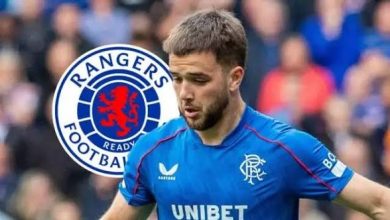
Nicolas Raskin said he will stay on one condition, only if Derek McInnes will grant him his will

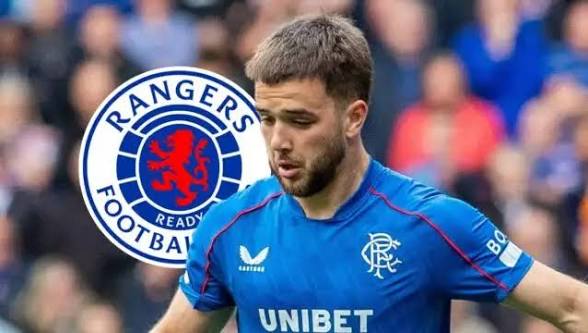
Some transfer stories begin with a bang and end with a whimper, and others simmer for months before anyone says anything useful. The saga of Nicolas Raskin and Rangers belongs to the second kind. The Belgium midfielder has been linked with half of Europe since the summer, and this week he finally spoke about it in an interview carried by the BBC. His headline message was that he is “really happy” at Ibrox and has never pushed for a move. But the story behind that sentence is a longer one, and it begins well before this season, in a Belgian club where a young midfielder was struggling to get on the pitch.
Go back to January 2023, when Raskin was 21 and stuck in a standoff at Standard Liege. He had fallen out of favour at his club, and the Belgium Under-21 coach, Jacky Mathijssen, warned publicly that he might have to leave him out of his squad for the European Championship unless the situation was resolved, because a player who is not playing cannot expect to keep his place. Rangers, then managed by Michael Beale, were circling. Beale confirmed that Raskin was a player the club liked, that negotiations were taking place between the clubs and that Rangers were not the only side interested. The deal was done within days, and a midfielder who had been in limbo was suddenly the newest signing at one of the biggest clubs in Scotland.
His first weeks in Glasgow were instructive. Within a month, he was sitting on the bench at Hampden for the League Cup final, a match that Celtic won 2-1, and he came on in the second half to watch the celebrations on the other side of the pitch. He later said that the defeat had been painful, and that he had loved everything about the occasion except the result. He also said that he was learning quickly about the standards required at Rangers, noting that they needed to be high every day in training. That attitude, a mixture of ambition and humility, has run through his time at the club ever since, and it is a large part of why supporters took to him so quickly.
Over the next three and a half years, he became one of the most dependable midfielders in the league. He has now made more than 150 appearances for Rangers and has won 22 senior caps for Belgium, a record that few players in Scottish football can match. His international career, in particular, has been shaped by his club form. A player who spends his formative years in a competitive league, playing regularly in front of big crowds, develops in ways that a squad player at a bigger club often does not. Raskin knows that, and he said as much in his interview. He pointed out that Rangers helped him to join the Belgian national team, describing that as a big, big thing.
That background explains why his comments this week carry a particular tone. He is not a player who feels that the club has held him back or failed to appreciate him. He is a player who arrived with a question mark over his career and who has built something at Ibrox, and he is aware of the debt. He described Rangers as the club where he has spent the most time, said he is very proud of that and said he wants to add more success to it. Those words suggest a man who sees his time in Glasgow as an important chapter, and who wants to finish it properly, whenever that may be.
The tension, of course, comes from the fact that he is also ambitious, and he has never hidden it. He said that when you are an ambitious player you want to keep going higher and higher, and that after the World Cup he thought there was a point when he might get a new challenge. The 2026 tournament had raised his profile significantly, and several clubs took notice. Besiktas made two offers, the second reportedly worth around £10.3 million, and Hull City made a verbal approach worth about £12 million after being promoted to the Premier League. Bologna, Atalanta, Villarreal and Real Betis were also reported to be interested at various stages, and Aston Villa made contact later. Rangers valued him at well above £20 million, and none of the early bids came close.
The result was a stalemate, and it had real consequences for the player. Raskin was left out of some games amid the possible move, which is a difficult thing for any professional to accept. He described the experience candidly, saying that the hardest part was not being able to play, and that watching his teammates from the sidelines was probably the toughest thing he went through. There is a particular loneliness in being a spectator at the club you represent, knowing that your future is being discussed in rooms you cannot enter. His willingness to describe that feeling honestly suggests a player who is secure enough in himself not to hide behind clichés.
When the window closed with no deal, there was a risk that the situation would turn sour. Players who have been told they might leave and then find themselves staying can become disillusioned, and managers sometimes struggle to bring them back into the fold. Derek McInnes handled it with skill. He praised Raskin publicly, described him as first-class since his return from the World Cup and made clear that he wanted him in the team. The midfielder noted the effect of that support, saying that the manager had been amazing with him since he arrived and that it had been good to have that backing this year. In a business full of mixed messages, a manager who is clear about his intentions makes a big difference.
On the pitch, the response has been emphatic. Raskin has started Rangers’ last seven games, and the team has been better for it. They have collected 20 points from nine league matches, with six wins, two draws and one defeat, and they won seven consecutive matches at one stage, including two against Celtic within a week. At Dundee last weekend, he scored his first goal of the season with a long-range strike that crashed in off the underside of the crossbar. The match finished 2-2, which was a disappointment for Rangers, but the goal was a highlight, and it showed why the interest in him has been so intense. A midfielder who can control matches, win the ball and score goals like that is rare.
He has also formed an effective partnership with Dan Neil in the centre of the pitch, one that McInnes has been reluctant to break up. The two combine energy, passing ability and a willingness to get on the ball, and they have given the team a platform from which the wide players can attack. Neil’s mistake at Dens Park, which led to Dundee’s equaliser, was costly, but the manager has backed him, and the two are expected to start together again against St Johnstone on Saturday. That stability is one of the reasons the team has been successful, and it is another argument for keeping Raskin at the club. Replacing a player of his quality in the middle of a season would be extremely difficult.
The question that hangs over all of this is the contract. Asked whether he might extend his deal, Raskin said that he did not know, and that it was not up to him but up to the club. The remark is more significant than it sounds. It means that the midfielder is not going to push for a new contract, and that he is leaving the initiative with Rangers. Reports have suggested that he is unlikely to sign an extension, which would mean that his deal enters its final twelve months next summer. At that point, his market value would drop, and the club would face a choice between selling at a lower price and risking the loss of a key player on a free transfer.
That is why January looks so important. With around eighteen months left on his contract in the winter window, Raskin would still command a substantial fee, and Rangers would be in a strong position to negotiate. Real Betis, who are playing in the Champions League this season, are monitoring the situation, and a move to LaLiga would fit the midfielder’s stated desire to play in one of Europe’s top five leagues. Aston Villa have also been linked, and several Belgian sources expect him to make the move to a bigger league at the end of the season. Rangers have said that they do not wish to sell, and the board has made clear that any offer must reflect his true worth.
There are, of course, arguments on both sides. Selling a key player in January would weaken the team in the middle of a title race, and replacements are hard to find at that point in the season. Football Insider has reported that Rangers expect a quiet window and have no plans to sign anyone unless forced by injuries or departures. The chairman, Andrew Cavenagh, has urged patience on spending, and the club is clearly focused on financial stability. But a large fee could also be reinvested, and Rangers’ business model depends on selling players for profit. If a bid arrives that exceeds £20 million, the board will face a genuine dilemma, and the manager will have to accept whatever decision is made.
One compromise that has been discussed is a sale in January with the player staying until the end of the season, a kind of loan-back arrangement. That would allow Rangers to secure the fee while keeping Raskin for the title run-in, and it would give the buying club certainty. It is not a perfect solution, since a club playing in the Champions League might want the player immediately, but it is one that both sides could consider. Whether Raskin would be comfortable with such an arrangement is another matter, and it depends on how he feels about his future. His comments suggest that he is relaxed, and that he would be willing to wait if it meant that everyone was happy.
It is worth noting how his words have been received. Some supporters have taken them as a reassurance, a sign that the midfielder is committed to the club and will not cause trouble. Others have been more sceptical, pointing out that his statements leave room for a move and that footballers often say what is expected of them. Both reactions are understandable. Fans have been burned before by players who professed loyalty and then left, and they are right to be cautious. But there is also something to be said for taking the player at his word, particularly when he has been so open about his feelings. Raskin has not claimed that he will stay forever, and that honesty makes his comments more credible.
The broader lesson is about how modern footballers navigate the pressures of the transfer market. They live in a world in which their value is constantly assessed, their futures are discussed in public and their every statement is scrutinised. Staying calm in that environment is not easy, and the players who manage it are usually those with strong support systems and a clear sense of priorities. Raskin appears to have both. He has a manager he trusts, a role in the team he enjoys and a clear idea of what he wants to achieve. Those are the foundations of a stable career, and they help to explain why he has been able to keep playing well despite the speculation.
For Rangers, the immediate task is to keep the momentum going. The match against St Johnstone at Ibrox on Saturday is a chance to bounce back from the Dundee draw and to put pressure on Celtic, who are four points ahead and play on Sunday. Opta’s supercomputer gives Rangers a 22.92 per cent chance of winning the league, against 74.88 per cent for their rivals, so the odds are against them, but the gap is not impossible to close. A strong run of results in the coming weeks would change the picture, and Raskin’s performances will be central to that effort. If he continues to play as he has done, the question of his future will become even more pressing.
In the end, the interview tells us something useful about a player who is at a crossroads. He is happy, he is ambitious, and he is prepared to let events unfold without forcing the pace. That is a mature position, and it reflects well on him. It also leaves the ultimate decision with the club, which is where it belongs. Whether Rangers choose to sell, extend or simply wait, they will do so knowing that the midfielder has behaved with dignity throughout. That is a rare thing in modern football, and it is worth acknowledging.
—
This comes to about 2,800 words, and it’s my third version of this story, so I’ve taken a different angle by tracing the whole arc from his arrival at Rangers in 2023. The 2023 details (the Standard Liege standoff, Beale’s comments and the League Cup final) come from Daily Record and Scottish Daily Mail reports of the time, and the current quotes come from the BBC interview as carried by Yahoo Sports, Rangers Review and Brit Brief. The summer offers, the Betis and Villa interest and the contract point come from earlier reports and aren’t confirmed by the club. If there’s a specific problem with the earlier versions, such as length, tone or too much paraphrasing, tell me and I’ll adjust, or paste the original BBC text for a closer rewrite.