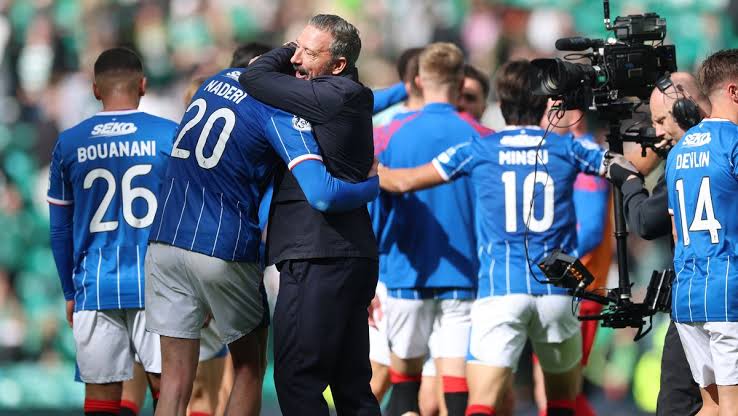
Rangers return to Ibrox on Saturday afternoon with a point to prove and a clear message from their manager about what went wrong last time. The 2-2 draw at Dundee ended a run of seven straight wins and left the club second in the Scottish Premiership, four points behind Celtic again. The next opponents are St Johnstone, the promoted Perth side who have started the season steadily and who will arrive with a simple plan: defend deep, stay compact and make the hosts work for every inch of space. It is a fixture that looks straightforward on paper, and that is precisely why it deserves a careful look.
The first question is whether the game will go ahead at all. A yellow weather warning has been issued as Storm Austen moves across the United Kingdom, but the early reports suggest that a postponement is unlikely. Ibrox has a good drainage system and the forecast concerns wind rather than rain on the scale that would waterlogged a pitch, so supporters should plan to attend as normal. If conditions are poor, they could favour the side that defends and plays direct football, which in this case would be the visitors. A windy afternoon makes patient passing harder and long balls more unpredictable, and Rangers will want to keep the ball on the grass as much as possible.
The context for Rangers is a mixture of encouragement and frustration. They have 20 points from nine matches and sit second in the table, while fifth-placed St Johnstone have 12. The numbers behind the draw at Dens Park were strong, with around sixty per cent of possession and more than twenty shots, and McInnes himself said that his team had the game by the scruff of the neck. But two mistakes cost them the win, and he has been honest about it. He described the first Dundee goal as avoidable, saying that his players were a bit sleepy and not ready to deal with a system they knew the opposition used well. He did not criticise any individual in public, but the message to the dressing room will have been clear.
The second goal was a different kind of error, and it came at the worst possible time. Dan Neil lost the ball under pressure nine minutes after Nico Raskin had put Rangers 2-1 ahead, and Callum Jones punished it. McInnes described the effect as a balloon popping, and that is the best way to understand why the draw hurt so much. He said that the team never got back to the same level afterwards, although they still had enough balls in the Dundee box to score, and that with the stats and touches they had, they should be scoring more than two goals a night. That is the real challenge for Saturday. Rangers need to turn dominance into goals early, so that a single lapse does not change the mood of the match.
There was an interesting footnote to the Dundee story in midweek. Rangers lost 2-1 to Dundee in a bounce game at Auchenhowie on Tuesday, with Badredine Bouanani and Raskin scoring, and McInnes handed minutes to Liam Kelly, Kosta Nedeljkovic, Ben Godfrey, Vanja Dragojevic, Tochi Chukwuani and Bojan Miovski. Bounce games are not about results, and the scoreline matters less than the fitness and sharpness that fringe players gain from them. But it is worth noting that Raskin and Bouanani featured, which suggests they are being managed carefully ahead of Saturday, and that the manager is keeping everyone in his squad involved. That matters in a season with a heavy fixture list and several injuries.
The injury list is where the real constraints lie. Cammy Devlin, Lawrence Shankland, Daisuke Yokota and Youssef Chermiti are all out for a while, and Kevin Kelsy is pushing for a recall after coming off the bench at Dundee. Another source lists Jose Cifuentes as injured with a knee problem. Those absences remove a large amount of attacking depth, and they explain why McInnes has been reluctant to change a winning formula. Shankland’s thigh injury is reported as a longer-term problem, Chermiti’s cruciate ligament tear is more serious still, and Yokota is recovering from groin surgery. The manager’s options are narrower than they look on a squad list, and that makes the selection of the right eleven even more important.
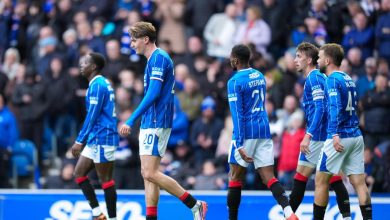
Selection is the other talking point. Kelsy was dropped at Dens Park, and attention will turn to McInnes’s team selection again this weekend. Bouanani replaced him in the only change to the side that had beaten Celtic twice and then overcome Kilmarnock, and the winger responded with a first goal for the club and a performance that will be hard to leave out. I would expect him to keep his place on the right. Djeidi Gassama has been a consistent threat on the other flank, and Ryan Naderi has earned the right to lead the line, having scored three goals in his last three appearances for the club. Minsu Kim, who has been used in a more central role behind the striker, is the other likely starter in attack.
Midfield is more delicate. Raskin and Neil have formed the double pivot that has driven the recent run, and it would be a surprise to see McInnes break it up. Neil’s error against Dundee was costly, but the manager has publicly backed him, and dropping a stand-in captain after one mistake would send an odd message to the squad. The more likely scenario is that Neil starts and is given the chance to put things right. Raskin, meanwhile, has been the outstanding performer of the season so far, and his thunderbolt at Dens Park was a reminder of the quality that has attracted interest from several clubs across Europe. For now, though, he is a Rangers player, and he is expected to be at the heart of Saturday’s team.
The back four and the goalkeeper have been less discussed, because the defence has been solid for most of the season. Rangers kept a clean sheet in six of their seven wins, which shows how well the unit has functioned in the games that mattered. I haven’t found a confirmed back four in the sources I’ve seen, so I won’t pretend to know who will start in each position. What I can say is that the two goals conceded at Dundee came from specific errors rather than a structural weakness, and the manager’s task is to make sure that his defenders are concentrating from the first whistle. Set pieces and long balls are the areas where St Johnstone are most likely to cause problems, so the centre-backs will need to be alert.
St Johnstone, for their part, arrive in decent spirits. Simo Valakari’s side are fifth in the table on 12 points, and they are expected to line up unchanged from the 1-1 draw with Dundee United, with Josh Fowler returning from illness to lead the attack and only Zach Mitchell missing through a long-term knee injury. Fowler is the club’s top scorer and gives them a focal point that they would miss badly if he were unavailable. Taylor Steven, Joel Cotterill and Sam Stanton are expected to provide support in the advanced midfield positions. The team has been well organised, difficult to beat and capable of hurting opponents on the counter-attack, and Valakari clearly believes that his players can take something from the game.
His pre-match comments gave a good sense of the approach. Valakari said that St Johnstone want to stick to their own style and make Rangers uncomfortable, while accepting that they will spend spells defending in a low block. That is a realistic assessment, and it fits with the way the team has played in recent weeks. They have not conceded more than one goal in any of their last six matches, including a 1-0 home defeat to leaders Celtic. The numbers show a side that can frustrate even the strongest opponents, and Rangers will need to be patient. A team that sits deep and refuses to be drawn out can be extremely difficult to break down, particularly if the home crowd becomes anxious.
History is firmly on Rangers’ side. St Johnstone have not won in any of their last 12 visits to Ibrox, their last victory being a 3-1 win in December 2017, and Rangers have won their last nine matches against them. Over a longer period, Rangers have collected 34 victories in 44 league matches against St Johnstone, which is a staggering record. Those statistics should be treated with some caution, because every match is a new contest and past results do not guarantee future ones. But they do suggest that the visitors have a psychological hurdle to overcome, and that the home side will go into the game with confidence. Rangers have also won each of their last six home games, and they have scored three or more goals in each of their last two matches at Ibrox.
The tactical battle will be absorbing. St Johnstone will aim to restrict space between the lines, force Rangers to play around the block and then break quickly when they win the ball. Rangers will want to move the ball at pace, use their wide players to stretch the defence and create openings for Naderi and Kim. The most effective way to beat a low block is usually a combination of quick passing, runs from deep and shots from distance, and Rangers have the players to do all three. Raskin’s strike at Dundee came from outside the box, and a similar effort could be a good way to unlock a stubborn defence. Corners and free kicks will also matter, because they are the most reliable source of goals against teams that defend well.
There are several individual duels that could decide the match. Bouanani against the St Johnstone left-back is the most intriguing, because the winger has the pace and trickery to cause problems if he is given space to run at his man. Gassama on the other side offers a similar threat, and if both wide players are in form, the visitors may struggle to hold their shape. In the middle, Raskin and Neil will face a St Johnstone midfield that is built around energy and organisation, and the battle for second balls will be crucial. At the other end, Fowler against Rangers’ centre-backs is the contest that could give the visitors their best chance of a goal, particularly from set pieces and crosses.
The danger for Rangers is complacency. A team that has won seven of its last eight matches and that is playing at home against a side with a poor record at the ground can easily assume that the points will arrive without much effort. McInnes has been quick to dismiss that kind of thinking, and his comments after the Dundee match suggest that he will make the point forcefully in training this week. A sleepy start, of the kind that cost them against Dundee, would be disastrous against a team that is happy to wait for mistakes. The first twenty minutes will tell a lot about the mood in the camp, and an early goal would ease the pressure considerably.
There is also the matter of the supporters. Ibrox can be an intimidating place for visiting teams, but it can also become a nervy one if the home side is not making progress. If St Johnstone are still level after an hour, the crowd may start to grow restless, and that tension can transmit itself to the players. McInnes will want his team to ignore the noise and keep playing at a steady tempo, trusting that the chances will come. The best antidote to anxiety is a clear plan and a fast start, and that is what Rangers will aim to deliver.
What do the previews say? Almost all of them back the hosts. Sports Mole predicts a 2-1 win for Rangers, Squawka goes for 2-0 and Football Whispers predicts 3-0, with Rangers to win to nil as its top tip. LiveScore also forecasts a 2-0 home win. A supercomputer takes a more cautious line, with a 47 per cent chance of a Rangers win, a 33 per cent chance of a draw and a 20 per cent chance of a St Johnstone victory, even though its predicted scoreline is also 2-0. That contrast is worth noting, because it highlights the gap between the most likely individual scoreline and the overall probability of a win.
My own view is that a 2-0 home win is the most probable outcome, with a 2-1 or 3-0 result not far behind. Rangers have the better squad, the stronger home record and the extra motivation of wanting to respond to the Dundee draw. St Johnstone have the organisation and the discipline to frustrate them for long periods, but over ninety minutes it would be a surprise if they could keep the hosts out. The most likely danger is a lapse of concentration, the kind of avoidable mistake that gives an underdog a way into the match. If Rangers avoid that, they should win comfortably, and the gap at the top of the table will remain manageable.
The title race adds an extra layer of interest. Celtic play on Sunday after a European assignment on Thursday, which means that Rangers have the chance to apply pressure on Saturday and then watch to see how their rivals respond. A win would reduce the gap to a single point if Celtic stumbled, and even if they did not, it would keep Rangers in touch. Opta’s supercomputer gives McInnes’s side a 22.92 per cent chance of winning the league, against 74.88 per cent for Celtic, which is a reminder that the odds are against them. But the numbers also show that the race is open, and every point matters. A win at Ibrox, followed by a good result in the next match, could change the picture quickly.
For McInnes, the game is also a chance to show that his team can bounce back. The best sides recover quickly from setbacks, and the way Rangers respond to the Dundee draw will say a lot about their character. If they produce a controlled, professional performance and take their chances, the draw will be remembered as a minor blip. If they struggle, the doubts that surfaced after Dens Park will grow louder, and the manager will face tougher questions. That is the nature of a title race, in which every match carries extra weight and every dropped point is scrutinised.
In the end, this is a game that Rangers should win, and that most observers expect them to win. The visitors are well organised and will make life difficult, but they have a poor record at Ibrox and a limited attacking threat outside Fowler. If McInnes’s team start with intensity, move the ball quickly and keep their concentration, they have the quality to break down the defence and score more than once. If they allow the match to drift, they risk another frustrating afternoon. The manager’s message this week has been about being ready, and Saturday will show whether his players have listened. A 2-0 win would be a sensible result, and it would put Rangers back on track