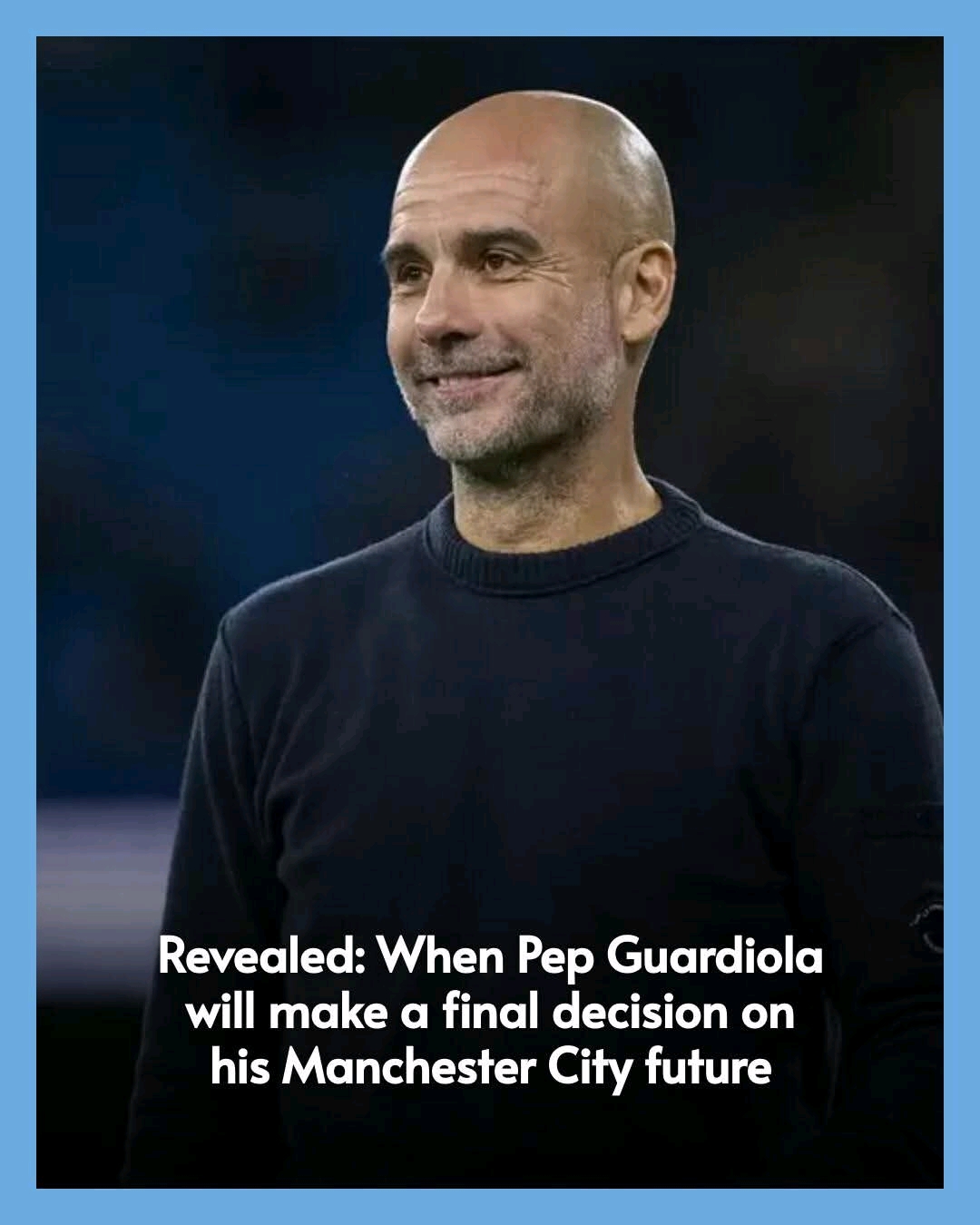
A new report has outlined when Manchester City manager Pep Guardiola will make a firm decision on his future at the club. The rumour mill has not stopped running over the Catalan’s future at…
There are moments in football that never truly disappear. They stay buried in memory, waiting for the right night, the right opponent, and the right stadium to come back to life. For Bernardo Silva, Anfield on a cold February night felt like one of those moments. A place of noise, pressure, history, and expectation. A place where doubters often expect age to catch up with players. A place where Manchester City have suffered pain before. But on this night, Bernardo Silva reminded everyone watching that age is not a limit. It is a weapon when combined with hunger, intelligence, and leadership.
The story really begins years earlier, during a time football fans would rather forget. The COVID-19 pandemic had emptied stadiums, silenced crowds, and changed the rhythm of the game. Liverpool had finally ended their 30-year wait for a Premier League title under Jurgen Klopp, while Manchester City, champions of the previous two seasons, had slipped. At the Etihad Stadium, with no fans present, City players lined up to give Liverpool a guard of honour. It was a painful moment for many, but one player stood out for different reasons. Bernardo Silva did not clap. He did not smile. He looked away, standing stiff, like a child forced to sit through a lesson they did not agree with. It was not disrespect. It was fire. It was refusal. It was a quiet promise to himself that this would not be the end of the story.
Fast forward to Sunday at Anfield, and that promise came alive.
As always, when Manchester City and Liverpool meet, the game felt bigger than just three points. History followed them onto the pitch. Tension filled the air long before the first whistle. The noise inside Anfield was relentless, the kind that tries to crush confidence before the ball even moves. City knew what was at stake. Liverpool knew it too. Arsenal were watching closely, hoping for a result that would open the door to the title race.
From the first minute, Manchester City showed intent. They controlled possession, moved the ball quickly, and asked difficult questions of Liverpool’s defence. Chances came and went. The ball flashed across goal. Shots were blocked. Final passes just missed their target. City were clearly the more dangerous side in the first half, but football is cruel. When you fail to take chances, punishment often follows.
That punishment arrived in spectacular fashion.
In the 74th minute, Dominik Szoboszlai picked up the ball deep inside his own half. Few expected what came next. From around 35 yards, he struck the ball with perfect technique. It flew through the air, bending slightly, before crashing into the back of the net. Anfield exploded. Liverpool were ahead. The goal felt like more than just a lead. It felt like a statement. Around the country, Arsenal fans celebrated. Thirteen games early, it looked like the title race might be over.
On the Manchester City bench, Pep Guardiola slumped into his seat. His body language said everything. Shoulders dropped. Head down. For a moment, he looked like a man watching something slip away from him. The cameras caught it. The stadium felt it. City looked stunned.
But one man did not panic.
Bernardo Silva looked around the pitch and saw opportunity where others saw danger. At 31 years old, with legs that have run thousands of kilometres in a City shirt, he refused to accept defeat. He shouted. He pointed. He demanded more. This was not about energy alone. This was about belief.
Ten minutes later, belief became reality.
Erling Haaland rose high to meet a cross, powering a header toward goal. The ball dropped inside the box, and there was Bernardo Silva, arriving at the perfect moment. Calm. Composed. He struck the ball cleanly. The net rippled. Silence fell over Anfield. The comeback had begun.
It was Silva’s 74th goal for Manchester City, but it felt heavier than most. It carried history, leadership, and defiance. It reminded everyone watching that this was not just another midfielder. This was the captain. This was the heart of the team.
From that moment, Liverpool began to wobble. City smelled blood. They pressed harder, moved faster, and played with renewed confidence. The crowd grew nervous. Passes went astray. Tackles became desperate.
Then came the moment that sealed it.
A penalty was awarded to Manchester City. Erling Haaland stepped up. The noise was deafening. Pressure from all sides. He took a breath and smashed the ball home. 2-1. Complete turnaround. Manchester City had done what few teams manage at Anfield. They had come back from behind and taken control.
The chaos was not finished.
In the dying moments of the match, Rayan Cherki picked up the ball deep inside his own half. Liverpool players were pushing forward, desperate. Cherki saw the goalkeeper off his line and launched an outrageous effort toward the empty net. The ball rolled in. 3-1. Or so it seemed.
But football is never that simple.
In the build-up, Szoboszlai and Haaland were locked in a physical battle, pulling each other’s shirts. The referee reviewed the incident. The goal was disallowed. Szoboszlai was sent off. Anfield descended into fury and confusion. The final whistle followed soon after. Manchester City walked off the pitch as winners, having completed their first league double over Liverpool since the 1936/37 season.
In the middle of it all stood Bernardo Silva, calm once again.
After the match, Pep Guardiola did not hide his admiration.
“He is one of the best players I have ever trained,” Guardiola said. “He is the perfect captain. The team comes first for him. His contribution is massive. He is one of the legends of this club.”
Those words were not spoken lightly. Guardiola has coached some of the greatest players of this generation. For him to speak like that says everything about Silva’s importance.
Yet, strangely, Bernardo Silva is often overlooked. Manchester City’s squad is filled with stars. Rayan Cherki’s flair. Phil Foden’s intelligence. Antoine Semenyo’s power. Savinho’s speed. Tijjani Reijnders’ elegance. Omar Marmoush’s sharpness. And, of course, Erling Haaland’s goals. These are the names that dominate headlines and highlight reels.
But what they do not offer is what Bernardo Silva gives naturally.
Flexibility. Intelligence. Scrifice.
He can play on the right wing, drifting inside to overload midfield. He can operate as a false nine, linking play and pressing defenders. He can run box-to-box for ninety minutes without complaint. He can even drop deep as a number six when the team needs control. Few players in world football can do all that at an elite level.
Against Liverpool, Silva ran 12.9 kilometres. He completed 87 percent of his passes. He pressed relentlessly. He tracked back. He led by example. These numbers may not trend online, but they win titles.
Bernardo Silva turns 32 in August. In modern football, that number often triggers questions. Is he slowing down? Can he keep up? Is it time to move on?
Sunday at Anfield answered those questions clearly.
If anything, Silva looks sharper. Smarter. More efficient. He knows when to run and when to conserve energy. He reads the game better than ever. He does not waste movement. Every action has purpose.
Yet uncertainty hangs over his future.
His contract is approaching its end. Rumours continue to link him with moves away from Manchester City. Spain. Portugal. Even a return home has been whispered about. If he leaves, City will not just lose a great player. They will lose something far more difficult to replace.
They will lose the connective tissue of the Pep Guardiola era.
Since arriving from AS Monaco in 2017, Bernardo Silva has been there for everything. The early dominance. The record-breaking points totals. The domestic trebles. The historic 2022/23 season when City finally lifted the Champions League and completed an unprecedented Treble. Six Premier League titles. Two FA Cups. Countless defining performances.
But trophies alone do not tell his story.
It is nights like Anfield that define legacies.
Moments when everything feels lost, when pressure is at its highest, and when leaders step forward. Bernardo Silva has done this time and time again. Quietly. Relentlessly. Without demanding attention.
That is why Guardiola said last month, “I’d love for Manchester City, for myself, if Silva could stay forever.”
It was not just sentiment. It was truth.
As the season moves forward, and the title race tightens, this game may be remembered as a turning point. Thirteen games remain. Every point matters. Every performance matters. And if Manchester City lift the Premier League trophy once again, many will look back to Anfield and remember the night Bernardo Silva refused to let age, noise, or pressure decide the outcome.
Because for him, football is not about how old you are.
It is about how much you still care.
And Bernardo Silva cares as much now as he did when he refused to clap all those years ago.