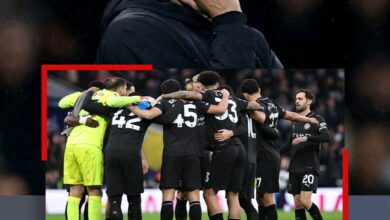
Manchester City left north London with heavy hearts, tired legs, and loud questions ringing in their heads after what felt like another painful night in a season full of tension, anger, hope, and disbelief. The scoreboard inside the Tottenham Hotspur Stadium said 2-2, but to Pep Guardiola and his players, it felt like two points had slipped through their fingers and fallen into the cold London air. For a team chasing the Premier League title and trying desperately to stay alive in a race that refuses to slow down, this draw felt like a small defeat disguised as a shared result. Yet even in frustration, even in anger, Guardiola stood firm, refusing to wave the white flag or accept that Manchester City’s reign at the top is coming to an end.
The game itself started in a way that looked familiar to anyone who has watched City dominate English football over the last decade. Calm on the ball, confident in their movement, and sharp in front of goal, City looked like a team that had come to make a statement. Tottenham, ravaged by injuries and surrounded by questions about their direction, struggled to cope in the opening stages. The visitors moved the ball quickly, cutting through Spurs with purpose, and it did not take long before their quality told. When Rayan Cherki opened the scoring, it felt like the beginning of a comfortable night. The goal was smooth, well worked, and full of belief. City looked in control. They looked like champions.
That feeling only grew stronger when Antoine Semenyo added a second goal before the break. At 2-0, City were flying. Guardiola stood on the touchline barking instructions, but there was calm in his body language. His players were doing what he asked. The ball was moving, the press was working, and Tottenham looked unsure, hesitant, and overwhelmed. For a moment, it felt like the title race might still be alive in a strong and powerful way. Arsenal might be leading the table, but City were showing that they were not ready to disappear quietly.
Then the second half began, and everything changed.
Football has a cruel way of flipping emotions in a matter of seconds, and Manchester City found that out the hard way. Tottenham came out with more energy, more aggression, and more belief. They pressed higher, fought harder for second balls, and pushed City back little by little. Guardiola later spoke about transitions, long balls, and emotional moments, and this was where the game turned. City lost control of the rhythm, and Tottenham smelled blood.
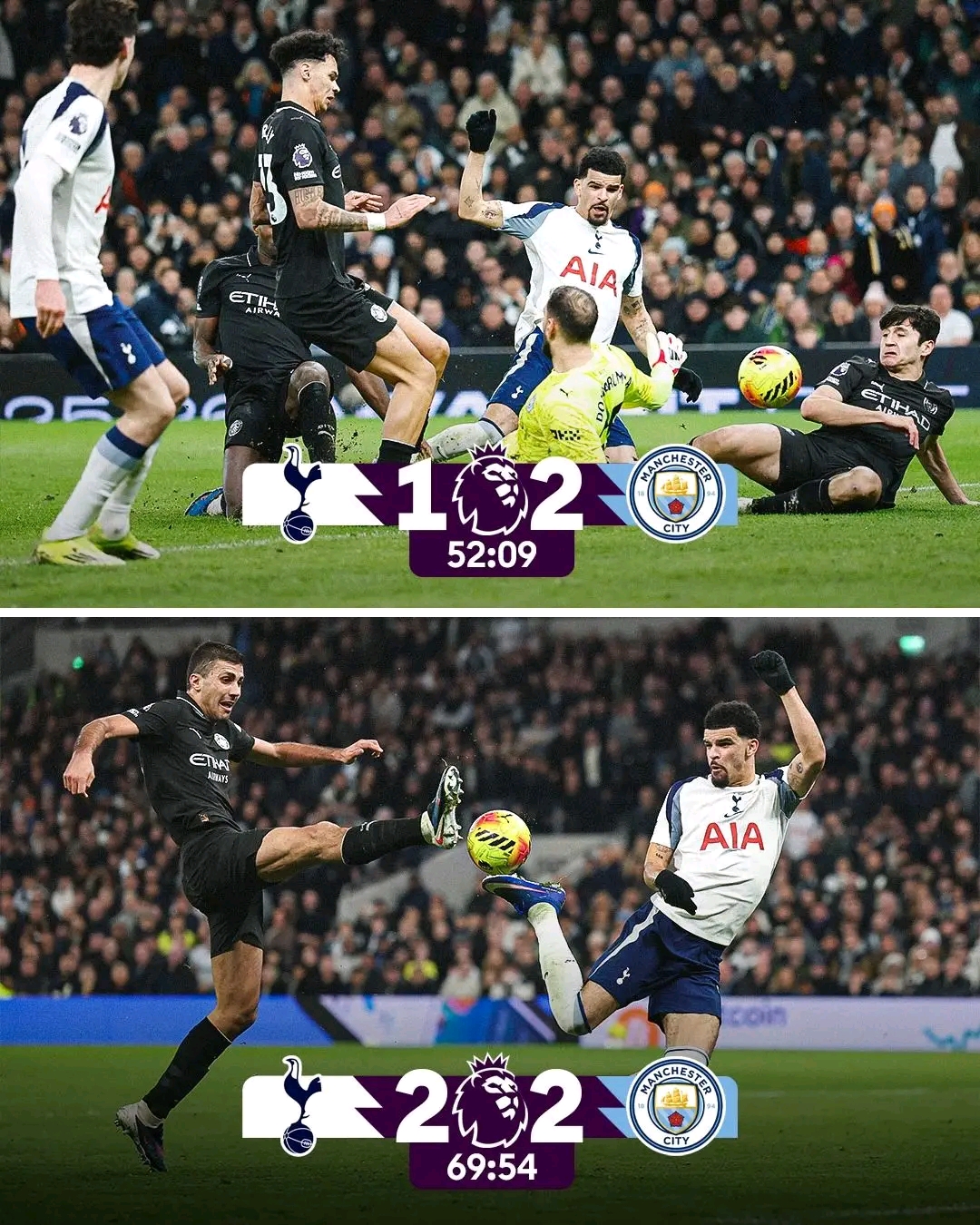
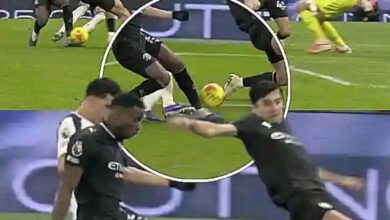
The first goal that brought Spurs back into the game was the moment that sparked fury on the City bench and disbelief among the players. Dominic Solanke chased a loose ball inside the box, made contact with City defender Marc Guehi, and bundled the ball into the net. Replays showed Solanke kicking the back of Guehi’s leg in the act of scoring. To many watching, it looked like a foul. To Guardiola, it was clear. He said later that if a central defender does that to a striker, it is a penalty every time. But VAR checked the incident and allowed the goal to stand.
That decision changed the mood of the match completely.
Guardiola lost his calm. He protested, shouted, and pointed, eventually earning himself a yellow card. When the incident was replayed on the big screens inside the stadium, the City manager stood there in disbelief, shaking his head. His players felt the injustice too. Their focus slipped. Their anger grew. The control they had shown in the first half disappeared, replaced by tension and uncertainty. Football is not just about tactics and technique. It is about emotions, and City lost the emotional battle at that moment.
Tottenham fed off the chaos. The home crowd roared louder. The pressure increased. City tried to slow the game down, but they could not stop the wave. Every clearance came straight back. Every duel felt harder. Guardiola later admitted that after the first goal, the momentum became difficult to control. City were no longer dictating the game. They were reacting, surviving, hoping.
Then came the moment that truly broke City’s hearts.
Dominic Solanke, already the villain in City’s eyes, produced a moment of magic that stunned everyone inside the stadium. As Conor Gallagher’s cross floated into the box, Solanke threw his body at the ball and flicked it into the net with a scorpion kick. It was daring, audacious, and unstoppable. For Tottenham fans, it was a moment of joy and pride. For City, it was a hammer blow. A two-goal lead had vanished. A match they thought they had won was suddenly slipping away.
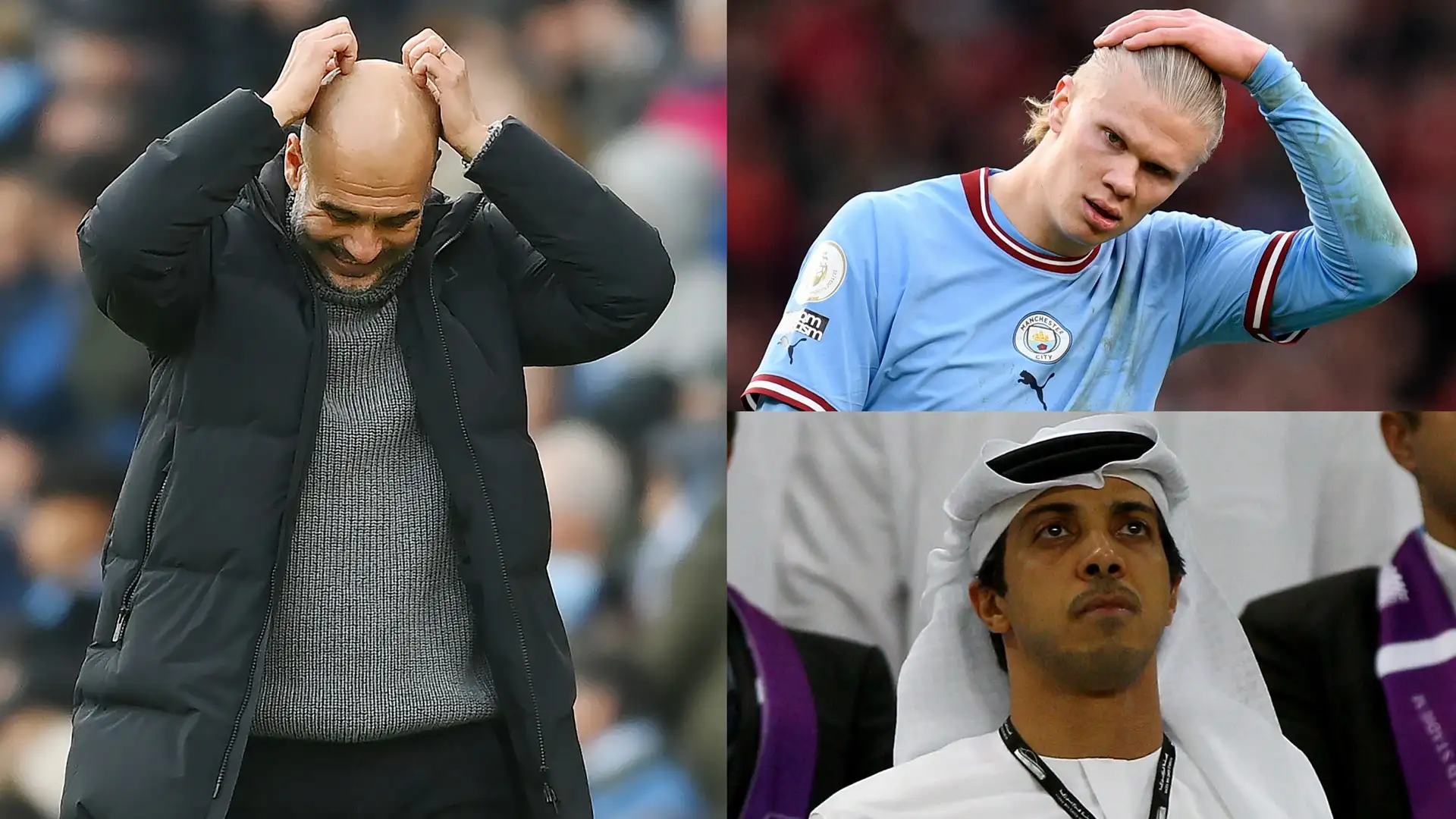
Phil Foden stood with his hands on his hips, staring into the distance. Erling Haaland looked frustrated, isolated, and angry. Around them, City players tried to regroup, but the damage had been done. The belief that had carried them through the first half was gone. In its place was fear, doubt, and the sinking feeling that this season might not end the way they hoped.
When the final whistle blew, the scoreline confirmed what City already knew. A 2-2 draw. One point. Another missed opportunity. Another reminder that the margins are fine and the pressure is relentless. City have now won just once in their last six league games. Arsenal, meanwhile, had smashed Leeds 4-0 the day before, sending a clear message that they are not slowing down. The gap at the top of the table is now six points, and with every passing week, the mountain City must climb grows steeper.
Yet Pep Guardiola refuses to accept defeat.
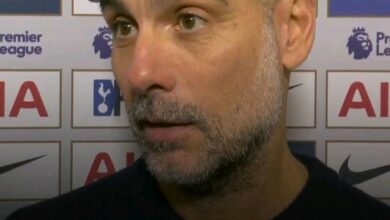
In his post-match comments, he spoke with honesty, frustration, and stubborn belief. With 14 games still to play, he insists that the chance is there. The hope will always be there. He knows these are the games City usually win. He knows that in past seasons, they would have capitalised and taken all three points. But this season has been different. Injuries have played their part. At one point, City were missing nine or ten players. Key figures were absent. Rhythm was lost. Consistency suffered.
Still, Guardiola pointed to the spirit he saw in his players. He spoke about those returning from injury. He spoke about belief. He spoke about fighting until the very end. To him, surrender is not an option. As long as there are games left to play, Manchester City will not give up their crown without a battle.
This stubbornness is part of what has made Guardiola one of the greatest managers in football history. He does not accept decline easily. He does not believe in cycles ending quietly. He believes in response, in growth, and in finding solutions even when the road is rough. City may be second. They may be struggling. But they are still there, still breathing, still chasing.
For Tottenham, the draw felt like a victory of spirit and resilience. Injuries have ripped through their squad, leaving Thomas Frank with limited options and growing pressure. In recent weeks, there had been calls for his sacking. Doubts about his leadership. Questions about the direction of the club. But nights like this remind everyone why football is unpredictable and why belief matters.
Tottenham were missing 11 players. Even during the game, Solanke and young Archie Gray were limping towards the end, running on pain and adrenaline. Yet they did not stop. They did not fold. They fought back from two goals down against one of the best teams in the world. For Frank, it was proof that something is being built, even in difficult conditions.
He spoke proudly of his team’s ability to respond to setbacks. He spoke about resilience growing bit by bit. He spoke about building a mentality even as players drop left, right, and centre with injuries. His words were calm, but his pride was clear. This was not just a draw. It was a sign of character.
For City, though, pride was mixed with frustration.
They know they cannot keep dropping points. They know Arsenal are strong, confident, and hungry. Mikel Arteta has built a team that believes it is their time. Every slip from City feels like an invitation for Arsenal to pull further away. Guardiola knows this. His players know this. The pressure is enormous.
And yet, within that pressure, there is still belief. There is still fire. There is still the memory of seasons where City have chased down leads, overturned deficits, and written dramatic endings. Guardiola has been here before. He has seen his teams questioned, doubted, and written off. He has also seen them respond in ruthless fashion.
The title race is far from over, even if it feels like it is slipping. Fourteen games is a long time in football. Injuries can heal. Momentum can shift. One win can change everything. One stumble from Arsenal can reopen the door. Guardiola is betting on that possibility. He is betting on his players. He is betting on their experience, their quality, and their refusal to accept second place as good enough.
As the City players left the pitch at Tottenham Hotspur Stadium, their faces told a story of exhaustion and disappointment. But there was also defiance. This team has been hurt, but it is not broken. This manager has been frustrated, but he is not defeated. The Premier League title race is alive, bruised, and chaotic, and Manchester City are still in it, whether anyone likes it or not.
The season is entering its most intense phase. Every game will feel like a final. Every decision will be examined. Every mistake will be punished. City know this. Arsenal know this. Tottenham, fighting their own battles, have shown that nothing is guaranteed.
Pep Guardiola’s message was clear. Manchester City will not surrender. Not now. Not yet. Not with games still to play and belief still burning. Football has a habit of surprising everyone, and Guardiola is counting on that truth to keep City’s dream alive until the very end.