Fifa set to take legal action against pep Guardiola following his recent instagram post this may affect man city and the players

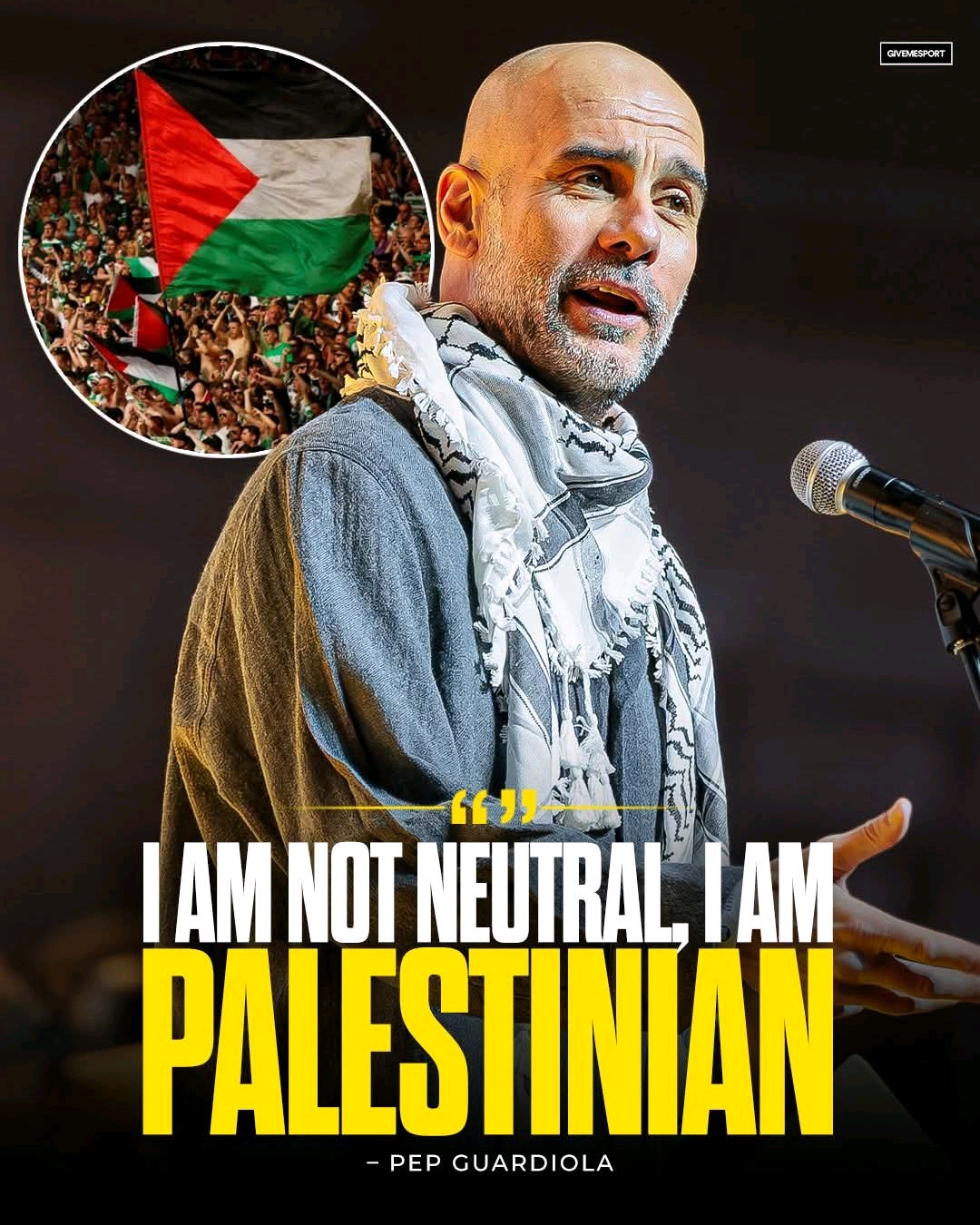
Pep Guardiola stood in front of the room quietly at first, his face serious, his eyes heavy with emotion, as if the weight of the world had settled on his shoulders. This was not the Pep Guardiola many people knew from the touchline, shouting instructions, celebrating goals, or arguing with referees. This was a man speaking as a human being, as a father, as someone who could no longer keep silent. His voice was calm, but inside it carried pain, sadness, and deep frustration. When he finally spoke, every word felt deliberate, slow, and honest, as if he wanted the world to truly listen for once.
He said that today was about standing with Palestine, but also about standing with all causes that speak to humanity. He explained that this was not only a political statement, and not about choosing sides in a simple way. For him, it was a statement about life, about children, about innocent people who wake up every day in fear. He said it was a statement for Palestine, yes, but also for humanity itself, because when humanity fails in one place, it fails everywhere. He wanted people to understand that silence is also a choice, and silence can be a form of abandonment.
Pep spoke about what he had seen, and his words grew heavier as he described it. He talked about a video of a child, a small child, recording himself among rubble and destruction, crying and asking a simple question: where is my mother. The child did not know where she was. He did not know if she was alive or dead. He did not understand why his home was gone, why everything around him had turned to dust and broken concrete. Pep paused when he spoke about this, as if even repeating it out loud hurt him deeply.
He said he could not stop thinking about that child. He said he kept asking himself what must be going through the minds of these children. Children who should be playing, laughing, learning, dreaming about the future. Instead, they are surrounded by fear, explosions, loss, and confusion. They do not understand politics, borders, or power. They only understand pain, hunger, and the absence of safety. Pep said that when he looks at those images, he feels that the world has left these children alone.
He used the word abandoned, and he did not soften it. He repeated it because he wanted people to feel the weight of it. He said the children have been abandoned by the world, abandoned by leaders, abandoned by those with the power to stop the suffering. He said he imagines these children crying out, asking a question that echoes in his mind again and again: where are you, come help us. He said that question should haunt all of us, because it shows how far humanity has fallen.
Pep admitted that even now, nothing meaningful has been done. He said that despite all the speeches, meetings, statements, and promises, the reality for these children has not changed. Bombs still fall, homes are still destroyed, families are still torn apart. He said that saying kind words is not enough when lives are being lost every single day. He said that history will judge how the world responded, or failed to respond, in this moment.
He made it clear that his support was not about hate or anger towards anyone. He said this was about love, empathy, and responsibility. He said that when children are suffering, there should be no debate about whether we care or not. Caring should be automatic. Helping should be natural. Protecting life should be the highest priority. He said that if we cannot protect children, then all our talk about values, morals, and civilization is meaningless.
Pep spoke as a father, and his voice softened when he mentioned this. He said he looks at his own children and imagines them in that situation. He said he tries to imagine his own child standing alone in rubble, holding a phone, crying for a parent who is gone. He said that thought breaks him every time. He said no parent should ever have to bury a child, and no child should ever have to search for a parent under broken stones.
He criticized the idea that this kind of suffering has become normal. He said the world has become used to seeing images of dead children, destroyed neighborhoods, and crying families on screens. He said this numbness is dangerous. It allows violence to continue without outrage. It allows leaders to delay action while people die. He said we must refuse to accept this as normal, because it is not normal, and it should never be normal.
Pep said football has given him a global voice, and he feels a responsibility to use it. He said he knows some people will say he should stick to football, tactics, and trophies. But he said there are moments when being silent is not an option. He said when you have a platform and you see injustice, you must speak, even if it makes people uncomfortable. He said discomfort is nothing compared to the pain of those living through war.
He spoke about humanity as a shared bond. He said pain does not need a passport. Tears look the same everywhere. A child’s cry sounds the same in every language. He said that when one part of humanity suffers, all of humanity is wounded. He said borders and flags should never matter more than human lives. He said that if we truly believe in human rights, then those rights must apply to everyone, not just some people.
Pep also talked about hope, even though it felt fragile. He said he believes people are good at heart. He said he believes most people, if they truly understood what was happening, would want it to stop. He said hope lies in ordinary people refusing to look away, refusing to be silent, and refusing to accept lies that justify suffering. He said hope lies in empathy, in education, and in courage.
He called on leaders around the world to act with bravery and compassion. He said leadership is not about power or control, but about protecting the most vulnerable. He 1said leaders will be remembered not for their speeches, but for their actions. He said 1111this is a moment that will define generations, and the choices made now will be studied in the future. He asked whether we want to be remembered as those who stood up, or those who looked away.
Pep returned again to the image of the child asking for his mother. He said that question represents thousands of other children whose voices are not heard. Children who cannot record videos, who cannot speak to the world, who disappear silently under rubble. He said each of those children had a name, a face, a dream. He said reducing them to numbers is another form of abandonment, because it strips them of their humanity.
He said this is why he stands with Palestine, because standing with Palestine means standing with children, with families, and with innocent lives. He said it does not mean supporting violence or hatred. It means demanding an end to suffering. It means demanding dignity, safety, and a future for children who deserve to grow up without fear. He said supporting humanity should never be controversial.
Pep acknowledged that his words alone will not stop bombs or rebuild homes. But he said silence achieves even less. He said speaking out is the first step, and it can inspire others to speak, to act, and to demand change. He said history has shown that change often begins with people refusing to stay quiet. He said he hopes his words encourage others to use their voices, no matter how small they think they are.
He spoke about responsibility again, saying that we all share it. He said it is easy to say this is someone else’s problem, or that it is too complicated. He said complexity should never be an excuse for inaction when children are dying. He said everyone can do something, even if it is only caring, learning, and refusing to spread hatred. He said humanity begins with empathy.
Pep’s voice trembled slightly as he spoke his final thoughts. He said that so far, the world has failed these children. He said that is a painful truth, but it must be faced. He said acknowledging failure is the first step towards change. He said it is not too late to choose compassion, but time is running out for those trapped in the middle of violence.
He ended by repeating that haunting idea one last time. He said he imagines the children asking, where are you, come help us. He said that question should not go unanswered. He said it should echo in the halls of power, in the hearts of ordinary people, and in every place where decisions are made. He said that answering that call is not about politics, but about humanity itself.
Pep stood still after finishing his speech, letting the silence speak. There was no applause at first, only reflection. His message was clear, heavy, and impossible to ignore. It was a reminder that beyond football, trophies, and fame, there is a world where children are suffering, and they need the world to care. He had spoken not as a coach, but as a human being, asking others to remember what it truly means to be human.