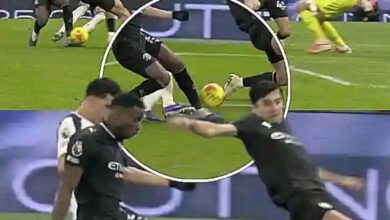
It is a clear and obvious error by the referee. The player committing the offence should have been sent off

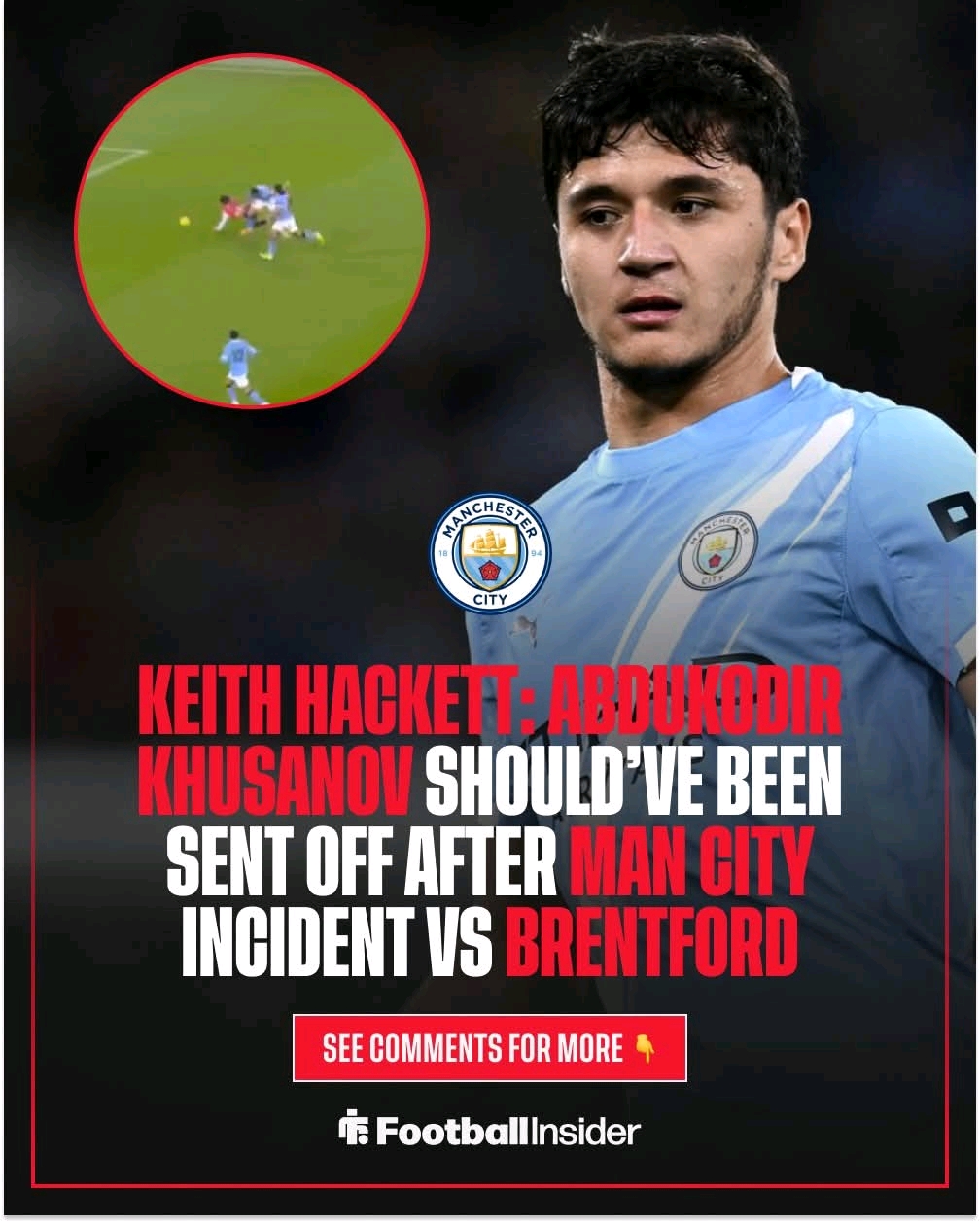
Manchester City walked off the pitch at the Etihad Stadium on Wednesday night with a 2–0 victory over Brentford and a place in the Carabao Cup semi-finals, but long after the final whistle, the main talking point was not the goals, the celebrations, or the progress toward silverware. Instead, the debate centred around one moment early in the game, one sliding challenge, one referee decision, and one Manchester City defender who may have been extremely lucky to still be on the pitch. That defender was Abdukodir Khusanov.
The Uzbekistan international has already had a difficult start to life at Manchester City, and against Brentford, he once again found himself under the spotlight for all the wrong reasons. Just fifteen minutes into the match, Khusanov made a challenge on Brentford forward Kevin Schade that immediately split opinion across the football world. To some, it was a professional foul deserving of a yellow card. To others, it was a clear denial of a goalscoring opportunity that should have resulted in a red card and a long walk to the dressing room.
One man firmly in the second camp is former PGMOL general manager and ex-FIFA referee Keith Hackett. Speaking exclusively after the match, Hackett did not hesitate. In his view, the referee got it wrong. Very wrong.
Manchester City came into the Carabao Cup quarter-final full of confidence, but also full of changes. Pep Guardiola decided to rotate his squad heavily, giving opportunities to players who had not featured regularly in recent weeks. One of those players was Khusanov, who was handed his eighth start of the season and trusted to play at centre-back alongside Nathan Aké.
For Khusanov, this was another chance to prove that he belongs at the highest level. Signed from Lens in January, the young defender arrived with promise, but his adaptation to Guardiola’s system has been far from smooth. Mistakes, shaky performances, and moments of uncertainty have followed him throughout the season, and against Brentford, those fears surfaced again
The Etihad crowd was still settling into their seats when the moment happened. Brentford centre-back Kristoffer Ajer spotted Kevin Schade making a run and launched a perfectly weighted ball over City’s defensive line. In an instant, Schade was free, racing toward goal with only the goalkeeper ahead of him. Khusanov reacted late.
Related Posts:





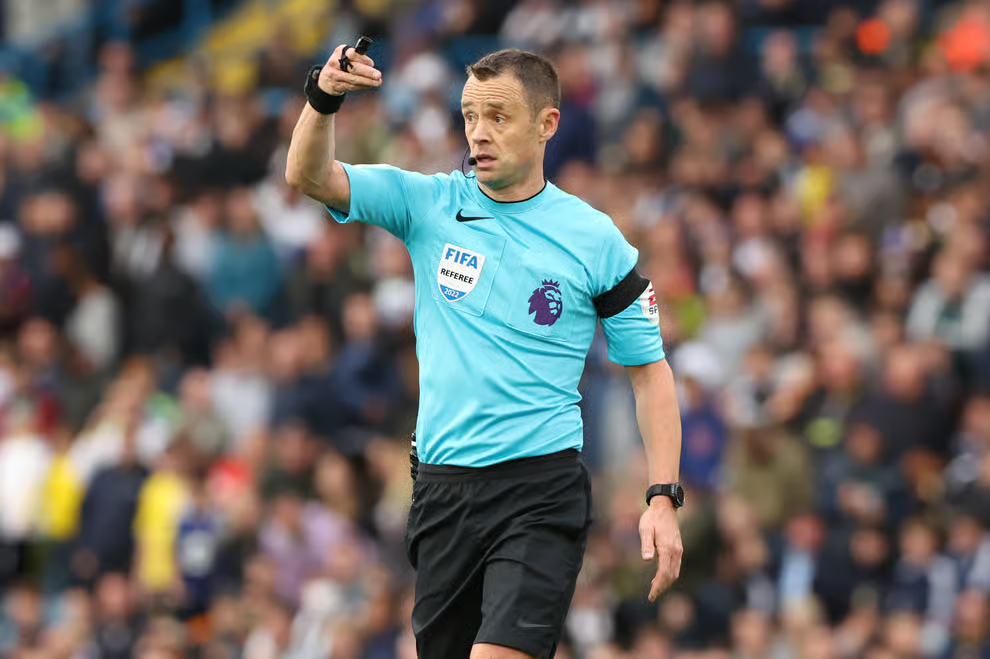
As Schade took the ball down and prepared to burst into the box, Khusanov lunged across him and brought him down. The whistle blew immediately. Players stopped. Brentford players threw their arms in the air. Manchester City players froze, waiting.Referee Sam Barrott reached into his pocket and produced a yellow card
That decision sent shockwaves through the Brentford team. They surrounded the referee, arguing that their forward had been clean through on goal and that the foul had denied a clear scoring opportunity. On the Brentford bench, frustration boiled over. On the City bench, relief washed through.
In another competition, the decision might have gone to VAR. But in the Carabao Cup, video review is not introduced until the semi-final stage. There would be no second look, no slow-motion replay, no intervention. The yellow card stood, and Khusanov remained on the pitch. For Keith Hackett, that was unacceptable.
The former referee was clear in his assessment. According to him, the laws of the game provide a clear framework for judging incidents like this, and when that framework is applied correctly, the outcome should have been a red card.
Hackett explained that when a foul occurs just outside the penalty area, referees must go through what is known as the DOGSO process, which stands for Denial of an Obvious Goal-Scoring Opportunity. This is not based on feelings or interpretations but on specific criteria laid out in the laws of the game.
Those criteria include the distance between the offence and the goal, the general direction of play, the likelihood of the attacker keeping control of the ball, and the location and number of defenders who could intervene.In this case, Hackett believes every single criterion was met.
Schade was running directly toward goal. He had the ball under control. He was ahead of both Khusanov and Aké. There were no other defenders in a position to recover. The foul stoppe a clear chance.For Hackett, that should have been the end of the discussion.
Instead, Barrott chose yellow, and Hackett did not hide his disbelief. He described the decision as a “clear and obvious error” and stated plainly that Khusanov should have been sent off.
This verdict only added fuel to the growing debate around Khusanov’s place in the Manchester City squad. Since his arrival, he has struggled to settle, often looking uncomfortable in possession and uncertain in his positioning. Against Brentford, even after escaping a red card, his performance remained shaky.
City may have kept a clean sheet, but it was not because their defence was flawless. Brentford had moments, and Khusanov’s nervousness was visible throughout the match. Each time the ball came near him, there was a sense of tension in the stadium.
For Pep Guardiola, this was another reminder of the risks that come with squad rotation. While City dominated possession and eventually found the net through Rayan Cherki and Savinho, the game could have taken a very different direction if Khusanov had been dismissed early.
Playing with ten men for over seventy minutes against an organised Brentford side would have been a huge challenge, even for a team of City’s quality. The entire tactical plan would have changed. The pressure would have increased. The margin for error would have disappeared.
Instead, City survived the scare, took control of the match, and progressed. But survival does not equal vindication.
The reaction from Brentford was one of anger and disbelief. Players felt robbed. Supporters felt ignored. Many pointed out that if VAR had been available, the decision would almost certainly have been overturned.
This incident also reopened old wounds for Manchester City fans, who remember vividly the FA Cup final defeat to Crystal Palace earlier in the year. In that match, Crystal Palace goalkeeper Dean Henderson escaped a red card after bringing down Erling Haaland when the striker was clean through on goal.
On that occasion, City felt cheated. This time, they benefited.Football, it seems, has a way of balancing injustice with fortune.
But for officials like Keith Hackett, that is not good enough. Refereeing, he argues, must be consistent, fair, and accurate, regardless of which team benefits.
Hackett’s criticism was not aimed at Manchester City or Khusanov personally. It was aimed squarely at the referee and the system that allowed such a decision to stand without review.
The absence of VAR in the early rounds of the Carabao Cup has long been controversial, and this incident will only strengthen calls for its earlier introduction. In modern football, where margins are tiny and decisions can define seasons, leaving referees without technological support feels increasingly outdated.
For Khusanov, the incident may prove costly in another way. Guardiola is known for his high standards, especially when it comes to defenders. Positioning, awareness, and decision-making are non-negotiable in his system. A mistake that risks leaving the team a man down in a crucial knockout match is unlikely to be forgotten quickly.
While Khusanov avoided a red card on the night, the scrutiny he faces will only intensify. Every touch, every challenge, every moment of hesitation will be analysed. Trust, once shaken, is hard to rebuild.
City fans, too, are divided. Some sympathise with the young defender, arguing that he was put in a difficult position by a high defensive line and a perfectly timed pass. Others feel that he lacks the composure required at this level and that City should look elsewhere for defensive depth.
The goals from Cherki and Savinho eventually settled the contest, but even those moments of quality could not fully erase the memory of the early controversy. As City celebrated progression, Brentford were left to reflect on what might have been.
Had Khusanov been sent off, the game would have changed completely. Brentford might have sensed an opportunity. City might have been forced into survival mode. The entire narrative of the night would have shifted.
Instead, the match will be remembered as another example of refereeing inconsistency, another chapter in the ongoing debate about VAR, and another difficult night for a Manchester City defender still searching for his footing.
Keith Hackett’s words will linger. “Clear and obvious error.” In football, those words carry weight. They speak to a failure not just of one referee, but of a system that allows such moments to pass without correction.
As Manchester City march on in the Carabao Cup, questions remain unanswered. About refereeing. About VAR. About Khusanov’s future. About how many times luck can intervene before it runs out.
For now, City are through. Khusanov escaped. Brentford were left frustrated. And football, once again, reminded everyone that one decision can change everything, even when it does not change the scoreline.
The debate will continue, the clips will be replayed, and opinions will remain divided. But for Keith Hackett, there is no debate at all. In his eyes, the law was clear, the offence was clear, and the punishment should have been clear as well.