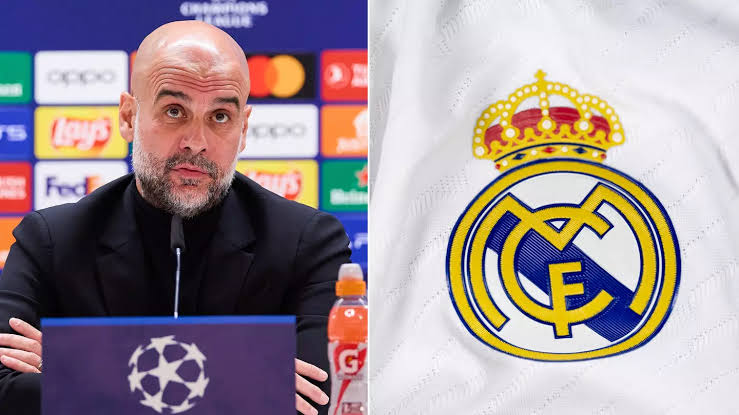
The idea sounds dramatic, eye-catching, and perfect for headlines, but when you slow everything down and really think about it, the proposed Manchester City and Real Madrid swap deal makes almost no sense at all from Madrid’s point of view. On the surface, the name Rodri still carries huge weight in European football. He has won everything there is to win, he has been central to Pep Guardiola’s Manchester City dominance, and he even lifted the Ballon d’Or in 2024 in one of the most controversial decisions in recent memory. But football decisions are not made on past glory alone, especially at a club like Real Madrid, where every transfer is judged by age, timing, value, contract situation, and long-term planning.
Reports coming out of Spain and England suggest that Manchester City are willing to let Rodri leave this summer, and that Pep Guardiola has “accepted” that the Spanish midfielder could move on. The suggestion is that City would prefer a swap deal rather than a straight sale, with Real Madrid players like Rodrygo or Federico Valverde being discussed as possible pieces in that deal. For Madrid fans and neutral observers alike, this proposal feels less like a serious negotiation and more like wishful thinking from the Premier League side.
Rodri has long been admired by Real Madrid. That much is not new. As a Spanish international, a former Villarreal player, and a deep-lying midfielder with elite tactical intelligence, he fits the traditional Madrid profile in many ways. For years, he has been described as the perfect heir to players like Casemiro or even Sergio Busquets in terms of positional discipline and control. With Toni Kroos aging and Luka Modric nearing the end of his legendary career, it is no secret that Madrid are planning a midfield refresh. On paper, Rodri could look like an answer.
But football is not played on paper, and transfer decisions cannot ignore reality. Rodri is now 29 years old and will turn 30 during the next season. He has just over a year left on his Manchester City contract, which immediately reduces his market value. More importantly, his physical condition is no longer what it once was. Over the past couple of seasons, he has struggled with injuries, including a serious ACL problem in the 2024–25 campaign. Since returning, he has not looked like the same unstoppable force that once controlled matches with authority and calm.
This season has been particularly telling. Rodri has made 17 appearances across all competitions and scored just one goal. While statistics never tell the full story for a holding midfielder, the eye test has raised concerns. He has looked slower, less dominant in duels, and more vulnerable when pressed aggressively. Manchester City themselves have struggled for consistency, especially in big league games, and Rodri’s decline has been part of that story. For a team chasing Arsenal in the Premier League title race, any drop-off in midfield control becomes glaringly obvious.
This context is crucial when assessing why Manchester City might be open to letting Rodri go. Pep Guardiola is famously ruthless when it comes to squad evolution. He moved on club legends at Barcelona, Bayern Munich, and City when he felt the time was right. Sentiment has never stopped him from making hard decisions. If Guardiola is willing to sacrifice Rodri, that alone should raise alarm bells for any club considering paying a premium price, or worse, giving up key players in return.
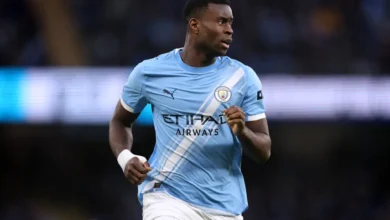
According to reports relayed by Football365, Guardiola would be delighted to welcome Rodrygo to Manchester City. The Brazilian winger is highly rated by City’s recruitment team and fits perfectly into Guardiola’s style. Young, explosive, technically gifted, and capable of playing across the front line, Rodrygo represents the kind of player City want to build around for the future. The same applies, perhaps even more strongly, to Federico Valverde.
Valverde has become one of the most important players at Real Madrid over the past few seasons. His versatility alone makes him priceless. He can play as a central midfielder, a box-to-box engine, a defensive shield, or even on the right wing when needed. His energy, pressing ability, leadership, and consistency have been vital during difficult periods. At just 27 years old, he is in his prime and tied to Real Madrid until 2029. From Madrid’s perspective, Valverde is not just a player, he is a cornerstone of the present and the future.
This is where the proposed swap deal completely falls apart. Rodrygo is 25 years old and still improving. He has already delivered in the biggest moments, scoring crucial goals in the Champions League and showing mental strength well beyond his years. He still has over two years left on his contract and remains one of the most marketable and valuable young attackers in world football. Valverde, as mentioned, is locked into a long-term deal and is one of the first names on the team sheet. Suggesting that Real Madrid would consider giving up either of these players, let alone one of them plus cash, for a 29-year-old midfielder with injury issues and a short contract is, frankly, absurd.
Real Madrid’s transfer strategy in recent years has been very clear. They invest in youth, physical durability, and long-term value. Jude Bellingham, Eduardo Camavinga, Aurélien Tchouaméni, and Endrick are all part of a carefully planned project. Even when Madrid sign experienced players, they do so on free transfers or short-term deals that carry minimal risk. David Alaba and Antonio Rüdiger are perfect examples. Rodri does not fit this pattern at all, especially not at the cost being discussed.
There is also the tactical question to consider. Real Madrid already have defensive midfield options. Tchouaméni, while not perfect, is young and improving. Camavinga continues to grow into a more complete midfielder. Valverde offers balance and intensity. Adding Rodri would not just be about improving quality, it would disrupt an already established midfield hierarchy. For a player entering his thirties, this disruption only makes sense if the upgrade is overwhelming. At this stage of Rodri’s career, it simply is not.
Another key issue is resale value. Real Madrid think years ahead. Rodrygo and Valverde will still be valuable assets five years from now. Rodri, even if he performs well for a season or two, would have little to no resale value by the time his contract ends. From a business standpoint alone, the deal makes no sense.
The fact that Rodri controversially won the Ballon d’Or in 2024 should not cloud judgment either. That award has already become a source of debate, especially after Vinícius Júnior missed out despite a sensational season. Since that moment, Rodri’s form has dipped, and injuries have taken their toll. Awards reflect a snapshot in time, not a guarantee of future performance.
It is also telling that Manchester City are not pushing for a massive cash fee. Instead, they are reportedly open to swaps involving elite Real Madrid players. This suggests City understand that Rodri’s market value has dropped. If he were still at his peak, City would be demanding a huge transfer fee, not trying to balance the deal with younger, more valuable players going the other way.
From Real Madrid’s side, the laughter would be understandable. Giving up Rodrygo or Valverde for Rodri would mean weakening the squad both now and in the future. It would mean sacrificing speed, versatility, goals, and energy for a player whose best years are likely behind him. That is not how Madrid operate, especially under Florentino Pérez, who is obsessed with long-term dominance.
There is also the emotional and dressing room aspect. Valverde is a leader. Rodrygo is deeply loved by fans and teammates. Moving either player would create unnecessary tension, especially for a transfer that does not clearly improve the team. Madrid are not a selling club, and they certainly do not sell core players unless the replacement is younger, better, and more durable.
This is not to say Rodri is finished as a footballer. Far from it. In the right system, with careful management of his fitness, he can still be a top-level midfielder. But that does not mean Real Madrid should twist their entire squad structure to accommodate him. If Madrid were to consider Rodri at all, it would only make sense on a cut-price deal or as a free agent in the future, not as part of a blockbuster swap involving their most valuable assets.
In reality, this proposed deal feels more like Manchester City testing the waters or Spanish media stirring conversation rather than a genuine negotiation. Guardiola’s admiration for Rodrygo and Valverde is understandable. Any manager would want players of that quality. But admiration does not equal feasibility.
For Real Madrid, the answer should be simple. Thank you, but no. Keep the young stars, continue building for the future, and avoid emotional decisions based on past achievements. Football history is full of clubs that paid too much for players just past their peak, only to regret it later.
If Rodri does return to La Liga this summer, it will likely be under very different circumstances. Perhaps a straight transfer at a reduced fee, or a move to another Spanish club willing to take the risk. What seems almost certain is that Real Madrid will not sacrifice Rodrygo or Federico Valverde to make it happen.
In the end, this story says more about Manchester City’s changing priorities than Real Madrid’s. City are planning for life after Rodri. Madrid, meanwhile, are already living in the future.