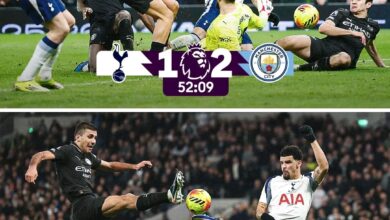
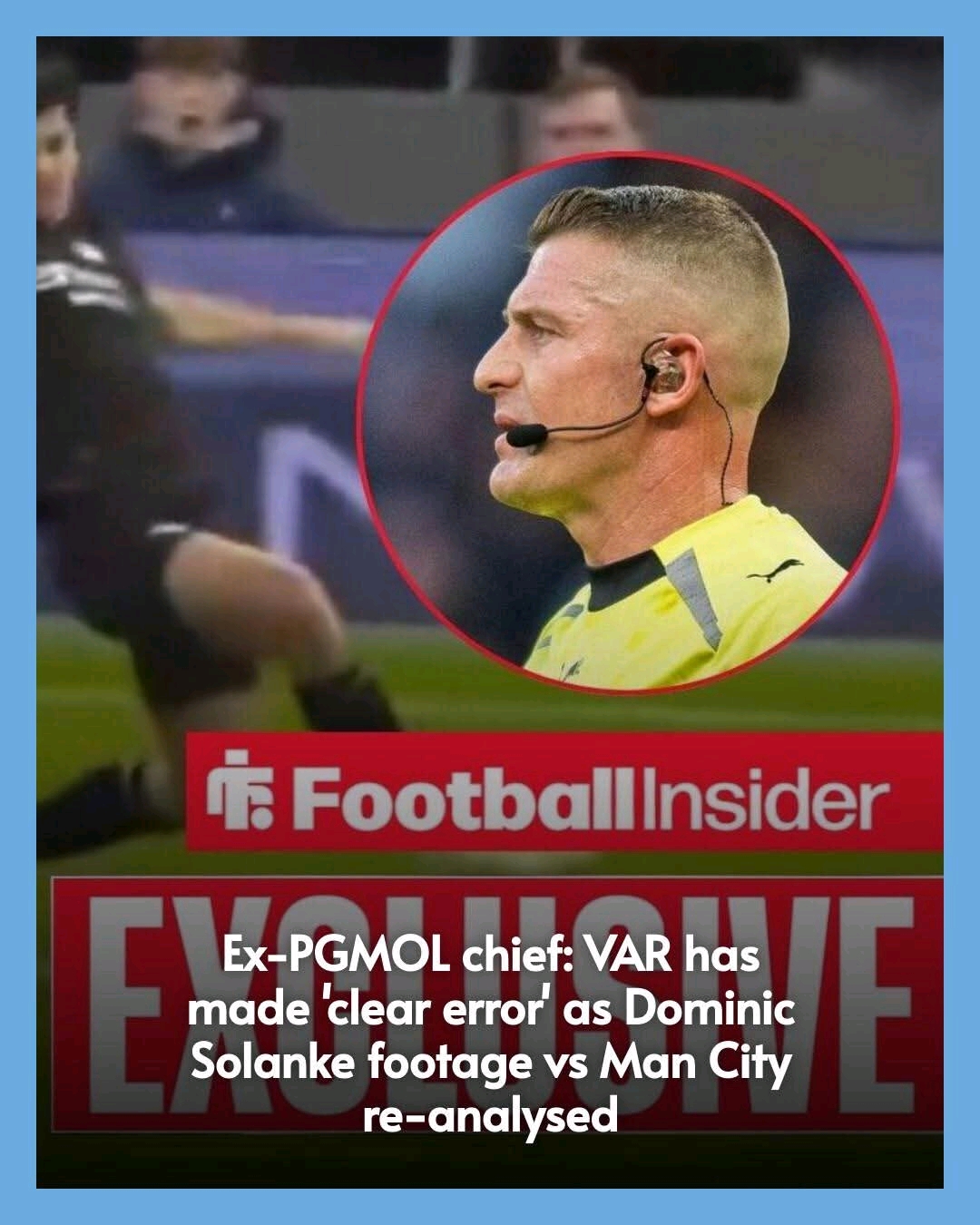
Keith Hackett has questioned VAR once again after reviewing an incident involving Dominic Solanke as Tottenham drew 2-2 with Man City.

Manchester City walked away from the Tottenham Hotspur Stadium feeling empty, angry, and deeply frustrated, like a team that had been cheated out of something they earned with hard work, quality, and control. The scoreboard said 2-2, the officials said play on, and the Premier League table moved forward as if nothing strange had happened. But inside the minds of Pep Guardiola, his players, and millions of City fans around the world, this was not just a draw. This was another painful night that reopened wounds Manchester City feel they never get time to heal. It was about VAR again. It was about refereeing again. And it was about that familiar feeling that when the biggest moments arrive, the decisions somehow fall the wrong way.
City came into the match with purpose written all over their faces. They knew what was at stake. The title race is tight, unforgiving, and cruel. Every point matters. Every mistake is punished. Every draw feels like a loss. Guardiola had drilled his players all week, reminding them that Tottenham away is never easy, that the crowd can turn games in seconds, that concentration must be perfect from first whistle to last. And for the first half, Manchester City were almost flawless.
They passed the ball with confidence and patience, moving Tottenham from side to side, draining the energy from the home crowd. Every City player looked calm, focused, and comfortable. Rayan Cherki played with confidence beyond his years, gliding between the lines, demanding the ball, making things happen. When he scored the opening goal, it felt deserved. It was the reward for City’s control, for their belief in their football, for their refusal to panic. The goal silenced the stadium and gave City exactly what they wanted.
Then came the second goal. Antoine Semenyo powered forward, showed strength and composure, and finished with authority. At 2-0, City were flying. The Tottenham crowd grew restless. Some fans sat down. Others shouted in frustration. City’s bench looked relaxed. Guardiola was calm, focused, already thinking about game management. At half-time, everything felt under control. It felt like another example of Manchester City doing what they do best, going to a difficult ground and making it look easy.
But football never follows the script for long. The second half began with a different Tottenham. They pressed harder. They ran faster. They tackled with more aggression. The crowd woke up, sensing that if their team could score once, the atmosphere could change everything. City still looked solid, but the rhythm was not as smooth. The passes were slightly rushed. The spaces were smaller. The tension slowly began to rise.
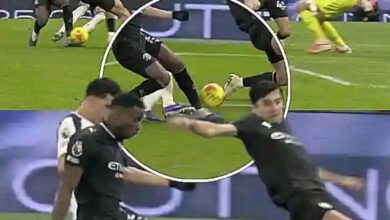
Then came the moment that would change the entire night. A loose ball inside the City penalty area. Dominic Solanke reacted quickly, chasing it down with determination. Marc Guehi moved across to shield the ball, doing exactly what defenders are taught to do. For a split second, everything hung in the balance. Solanke swung his leg. The ball moved forward. But so did Solanke’s foot, straight into the back of Guehi’s leg. The contact was clear. Guehi went down. The ball crossed the line. The referee pointed to the centre circle.
Related Posts:





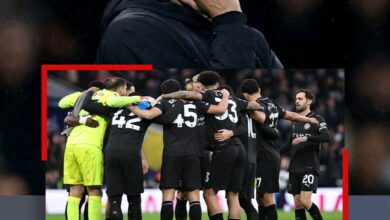
Manchester City exploded. Players surrounded the referee, arms raised, voices shouting. Guehi stayed on the ground, clearly hurt and furious. Guardiola was out of his technical area, waving his arms, shouting for VAR to intervene. Everyone expected it. This was exactly the type of situation VAR was created for. A potential foul leading directly to a goal. Clear contact. Clear impact. Surely the referee would be sent to the monitor.
But nothing happened. VAR stayed silent. The goal stood.
The reaction was instant disbelief. City players looked at each other in shock. Guardiola stood frozen, staring towards the officials, his face showing a mix of anger and exhaustion. On television screens around the world, replays rolled again and again. Each angle showed the same thing. Solanke’s foot hit Guehi’s leg before the ball crossed the line. It was not shoulder to shoulder. It was not a clean tackle. It was a kick from behind. For City fans, it was a foul. For many neutral viewers, it was a foul. Yet according to VAR, it was not a “clear and obvious error.”
That phrase echoed painfully once again. Clear and obvious. Words that are supposed to bring clarity but instead create endless confusion. How much clearer did it need to be? How much more obvious did the contact have to look? These questions filled social media, living rooms, and pubs within minutes. City fans felt that familiar sinking feeling. They had seen this before. They had lived this story before.
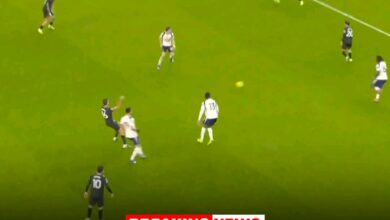
From that moment on, the game changed. Tottenham fed off the decision. The crowd roared with renewed belief. City, still stunned, lost some of their composure. They tried to regain control, but the emotional damage had been done. Then came Solanke’s second goal, a moment of brilliance that will be replayed for years. A scorpion kick, perfectly timed, perfectly executed. It was stunning. Even City fans could not deny the quality of it.
But the problem was timing. Because that first goal should never have stood in City’s eyes, the second felt like salt rubbed into an open wound. From complete control to a 2-2 draw, all within one controversial decision. The title race suddenly felt heavier. The pressure grew. The sense of injustice deepened.
After the final whistle, nobody at Manchester City wanted to talk about tactics or missed chances. The conversation was about VAR. Again. Former PGMOL chief Keith Hackett watched the footage and spoke with clarity and frustration. In his view, this was simple. Solanke kicked Guehi in the back of the leg before the ball went in. That is a foul. End of discussion. For a man with years of refereeing experience, it was shocking that VAR did not intervene.
Hackett explained that VAR exists to correct mistakes like this. If the referee misses something in real time, technology should step in. That is the whole point. He said that if Rob Jones had been sent to the monitor, the goal would almost certainly have been disallowed. That statement carried weight. This was not an angry fan or a biased pundit. This was someone who once ran refereeing in England, openly saying a mistake had been made.
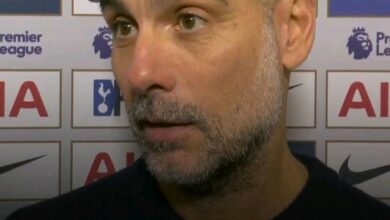
For Manchester City, this felt like confirmation of what they already believed. That they are not imagining things. That these moments are real. That decisions keep going against them at crucial times. Pep Guardiola has spoken about this frustration before, and he has been criticised for it. Some say he complains too much. Some say he puts pressure on referees. But nights like this make it hard to argue against him.
Just weeks earlier, Guardiola had been furious after City were denied a penalty against Wolves. He publicly questioned referee Farai Hallam and PGMOL chief Howard Webb. He asked why his team was always involved in controversial decisions. At the time, some pundits defended the referee, praising his bravery. Alan Shearer even supported the call, saying referees should not be influenced by managers.
But now, here was another major incident. Another big decision. Another game-changing moment. And once again, City were on the wrong side of it. The pattern was becoming harder to ignore. Guardiola’s anger was not about one result. It was about consistency. It was about knowing what the rules are and seeing them applied fairly.
For the players, the emotional toll is heavy. They train every day. They prepare carefully. They execute game plans to perfection. They go 2-0 up away from home against a dangerous opponent. And then they watch it unravel because of something they cannot control. Footballers are told to focus on their performance, but when decisions like this keep happening, that advice feels hollow.
You could see the frustration in their body language. The way heads dropped. The way hands went to hips. The way players argued with officials long after the goal was given. This was not just disappointment. It was anger mixed with helplessness. The feeling that no matter how well they play, something external can still take it away.
Tottenham will argue they deserved their point, and in many ways, they did fight hard. Football rewards belief and effort. Solanke took his chances brilliantly. His second goal was a moment of magic. But football also demands fairness. And when a former PGMOL chief says the first goal should not have counted, it raises serious questions.
As the season moves forward, moments like this could decide everything. Manchester City know what it feels like to win the league by a single point. They also know what it feels like to lose it by the smallest margin. A draw instead of a win in February can come back to haunt you in May. That is why this hurts so much. This was not just any game. This was a key moment in a title race where perfection is demanded.
Guardiola will move on publicly, because he has to. He will refocus his team. He will talk about mentality and resilience. But privately, the frustration will remain. He believes his team is being treated unfairly. He believes VAR is not doing its job properly. And nights like this only strengthen that belief.
City fans felt drained after the match. Social media was filled with slow-motion clips, screenshots, and angry messages. The phrase “clear and obvious” became a joke, repeated with sarcasm and disbelief. How clear does it need to be? How obvious is obvious enough? These questions lingered long after the stadium lights were turned off.
For Dominic Solanke, it was a night he will remember forever. Two goals against Manchester City is something any striker dreams of. Tottenham fans will celebrate it. But for City supporters, that first goal will always feel wrong. They will remember the kick to Guehi’s leg. They will remember VAR doing nothing. They will remember another night when they felt football failed them.
The debate around VAR is not going away. If anything, it is getting louder. Every controversial decision damages trust a little more. Every mistake adds pressure on officials. And when respected voices speak out, it becomes harder to dismiss the concerns. VAR was meant to reduce errors, not create new arguments. Yet here we are again.
Manchester City will continue. They always do. They will fight, compete, and push forward. But this draw will stay in their minds. They did enough to win. They were in control. And one decision changed everything. In a season where margins are tiny, that moment could matter more than anyone wants to admit.