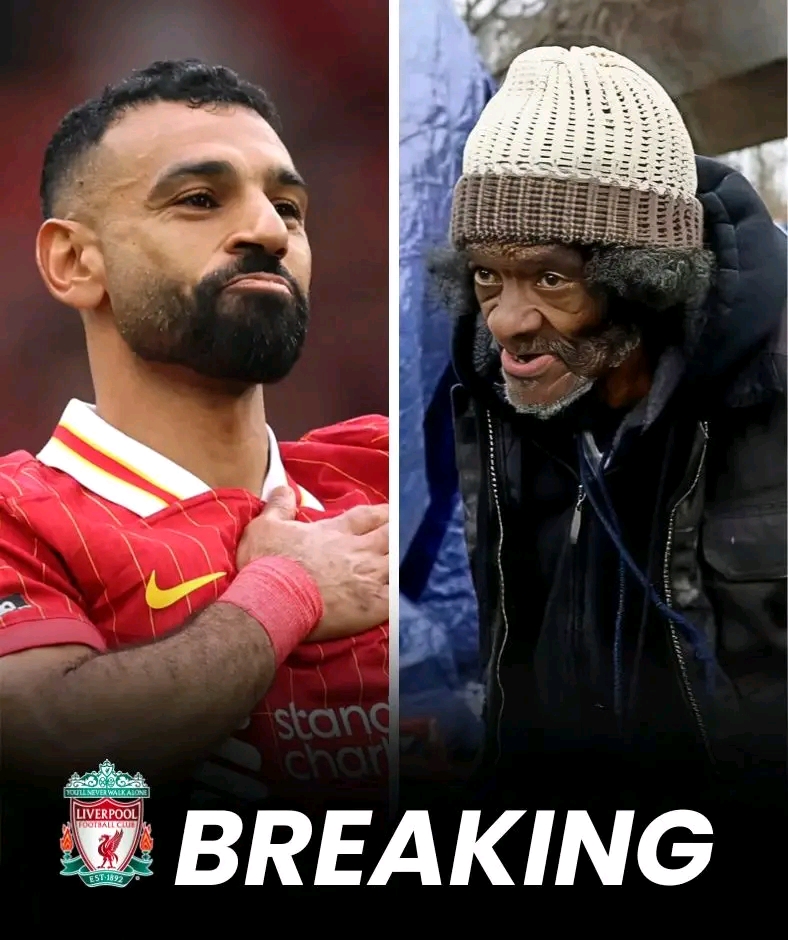
Mohamed Salah sat quietly in front of the cameras, his eyes filled with emotion, his voice soft but powerful. What he was about to say wasn’t about football, goals, or trophies. It was about life, pain, and compassion. It was about humanity. In a world where many athletes talk about luxury, Salah spoke about love. He had just announced something that shook the world beyond football — a $30 million donation to build 3,000 homes and 700 hospital beds for the homeless across the United Kingdom. It was one of the biggest acts of kindness ever seen from a footballer, and the story spread like wildfire from Liverpool to London, from Cairo to every corner of the world. People were left speechless. This wasn’t a PR stunt. This was real. This was Mohamed Salah.
When Salah stood up that morning, he knew the news would surprise many. He had planned it quietly with his foundation and close team for months. No leaks, no social media hints, nothing. He wanted it to come as a shock of goodness in a world full of noise. At the press event, he said, “I’ve been there with nothing. No one deserves to sleep on the streets.” Those words echoed far beyond the room. They carried the weight of experience, the truth of someone who once knew struggle. People forget that before the fame, before the Liverpool glory, Salah was just a boy from Nagrig in Egypt, dreaming of a better life. He knew what it meant to have nothing. That is why this donation came from a deep, personal place
The project itself is massive. Salah’s team confirmed that the $30 million would go directly into building permanent homes for homeless people across the UK and creating hospital facilities for those living rough or dealing with serious health conditions. He worked with architects, local councils, and charities to make sure the money didn’t vanish into bureaucracy. Salah wanted real results. He didn’t just write a cheque — he wanted to see the houses built, the hospital beds filled, the children sleeping in safety. He told his foundation staff, “If even one family can sleep under a roof because of this, that’s more important than any goal I will ever score.”
It’s hard to explain how emotional the moment felt for those who watched him speak. His voice trembled slightly as he shared his reason. The cameras flashed, but Salah wasn’t acting. This was a man who remembered his roots. Fans across the world flooded social media with love and praise. One fan wrote, “He’s not just our king on the pitch, he’s our king in life.” Another said, “Salah just reminded us what true greatness looks like.” On X (formerly Twitter), “Thank You Salah” trended for hours. Even rival fans from Manchester United, Chelsea, and Arsenal posted messages of respect. This wasn’t about rivalry anymore. It was about humanity.
Liverpool’s manager Arne Slot reportedly hugged Salah privately after hearing the news. “You’ve made us proud,” he told him. The club later released a statement saying they would fully support Salah’s initiative and help connect it with local charities in Liverpool. It’s no secret that the city has been battling housing issues for years, and Salah’s decision touched many hearts locally. The mayor of Liverpool even tweeted, “Mohamed Salah just showed the world what leadership means. Thank you for not just representing our club, but our city.” Around Anfield, fans gathered near murals of Salah, placing flowers, banners, and notes that read: “Not all heroes wear capes — some wear No.11.”
The gesture came at a time when many footballers are criticized for being disconnected from real people. But Salah has always been different. He doesn’t show off expensive cars or luxury watches online. Instead, he visits hospitals quietly, helps villages in Egypt build schools, funds water projects, and supports orphans. But this — this $30 million act of love — was on another level. He wasn’t just helping a few people; he was changing the lives of thousands. And he did it without expecting anything back. A BBC commentator said later that evening, “In a time when fame often clouds humility, Mohamed Salah has brought light back into football’s heart.”
Reporters tried to get him to talk more about it afterward, but Salah refused to make it about himself. “It’s not about me,” he said simply. “It’s about those who need help. If I can do something, I should.” That simple line summed up the man he is. Behind every celebration, behind every goal, there’s a soul that believes giving is the real victory. Even his teammates were moved. Virgil van Dijk wrote on Instagram, “Proud of my brother. Always leading with heart.” Trent Alexander-Arnold shared, “He gives everything on and off the pitch. That’s why he’s special.”
People who work closely with Salah say this wasn’t a sudden decision. For years, he has been quietly studying how to make the most impact with his resources. He wanted something that would last longer than his football career. In meetings with his advisors, he spoke about legacy — not the kind that fades when your boots are hung up, but the kind that continues to feed and shelter people for generations. When asked why he chose to focus on homelessness in the UK, Salah said, “I play here, I live here, and I see the struggle every day. If you have the power to change something, you should never look away.”
The reaction from the football world was immediate. FIFA posted a tribute on their official account calling Salah’s act “a beautiful example of leadership through kindness.” UEFA shared a statement praising him for “showing the human side of the game that unites us all.” Even rival players like Kevin De Bruyne and Marcus Rashford expressed their admiration. Rashford, who also leads campaigns to help children in need, wrote, “Respect always, Mo. What you did today gives hope.” It felt like for one day, the whole football world stood still to salute a man who reminded everyone that football is not just about goals — it’s about humanity.
Charities across the UK confirmed that Salah’s initiative will partner with them to identify people most in need — families, veterans, and those who lost their homes due to economic hardship. The plan is to build safe housing units in Liverpool, Manchester, London, and Birmingham, with medical facilities nearby. “This is a turning point,” said one charity worker. “We’ve seen donations before, but nothing on this scale, and never so personally guided by the donor himself.” Salah’s representatives revealed that he insisted on visiting the first construction site himself once building begins, saying, “I want to shake the hands of those who will live here.”
The emotional side of the story deepened when Salah shared that his motivation came from his childhood memories. Growing up in a small Egyptian village, he saw people struggle for food and shelter. He never forgot those faces. “When I see someone sleeping outside in the cold,” he said, “I see my childhood. I see people who just need a chance.” It’s that empathy that has always made him different. He knows pain, and that’s why he refuses to ignore it. This is what makes him not just a football legend but a symbol of hope.
Back in Liverpool, fans began calling his gesture “The Act of Love.” Local newspapers printed front-page stories with headlines like “Salah Gives Hope” and “The King of Hearts.” On radio shows, callers couldn’t stop praising him. “He’s done more than some governments,” one listener said emotionally. Schools even began using his story as a lesson in kindness. Teachers told students, “This is what a role model looks like.” Salah didn’t just donate money — he inspired a generation.
In Egypt, the reaction was even more powerful. People celebrated in the streets, proud of their son who never forgot his roots. Egyptian television dedicated hours of coverage to his story, calling him “The Pride of Africa.” The Egyptian president even released a statement congratulating him, saying, “Mohamed Salah continues to make his country proud not only in sports but in humanity.” Salah’s hometown of Nagrig planned to name a new school after him — “The Salah School of Hope.”
But amid all the praise, Salah kept it simple. After training that evening, he walked out of Melwood with his usual calmness, waved at fans, smiled, and drove home. No big speeches, no further interviews. To him, kindness didn’t need cameras. His teammates joked that he disappeared quietly as always. One staff member said, “That’s Mo. He does something world-changing and still goes home like nothing happened.”
Journalists later described his act as “the moment football found its heart again.” For years, the sport has been dominated by headlines about money, scandals, and ego. Salah changed that narrative with one act of love. He showed that greatness is not measured by the number of goals but by the number of lives you touch. He proved that being a superstar doesn’t mean forgetting the struggles of ordinary people.
As the news continued to spread, the first group of volunteers started mapping out locations for the houses. One man who had been homeless for years told the BBC, “I never thought someone like Salah would think of people like us. He’s given us hope.” That single statement captured everything Salah wanted. Hope — that’s what he wanted to give. Hope to those who had lost faith in kindness.
As night fell over Liverpool, Anfield’s lights glowed, and outside the stadium, someone placed a candle below Salah’s mural. The words written beneath it read: “He scores goals. But today, he scored something bigger — humanity.” For a long time, football fans will remember that day — the day Mohamed Salah turned $30 million into something far greater. Not wealth, not fame, but love. Pure, selfless love. And as the streets of Liverpool whispered his name, one truth stood tall — Mohamed Salah didn’t just play for Liverpool; he played for the world.