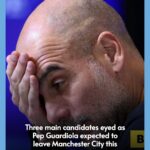
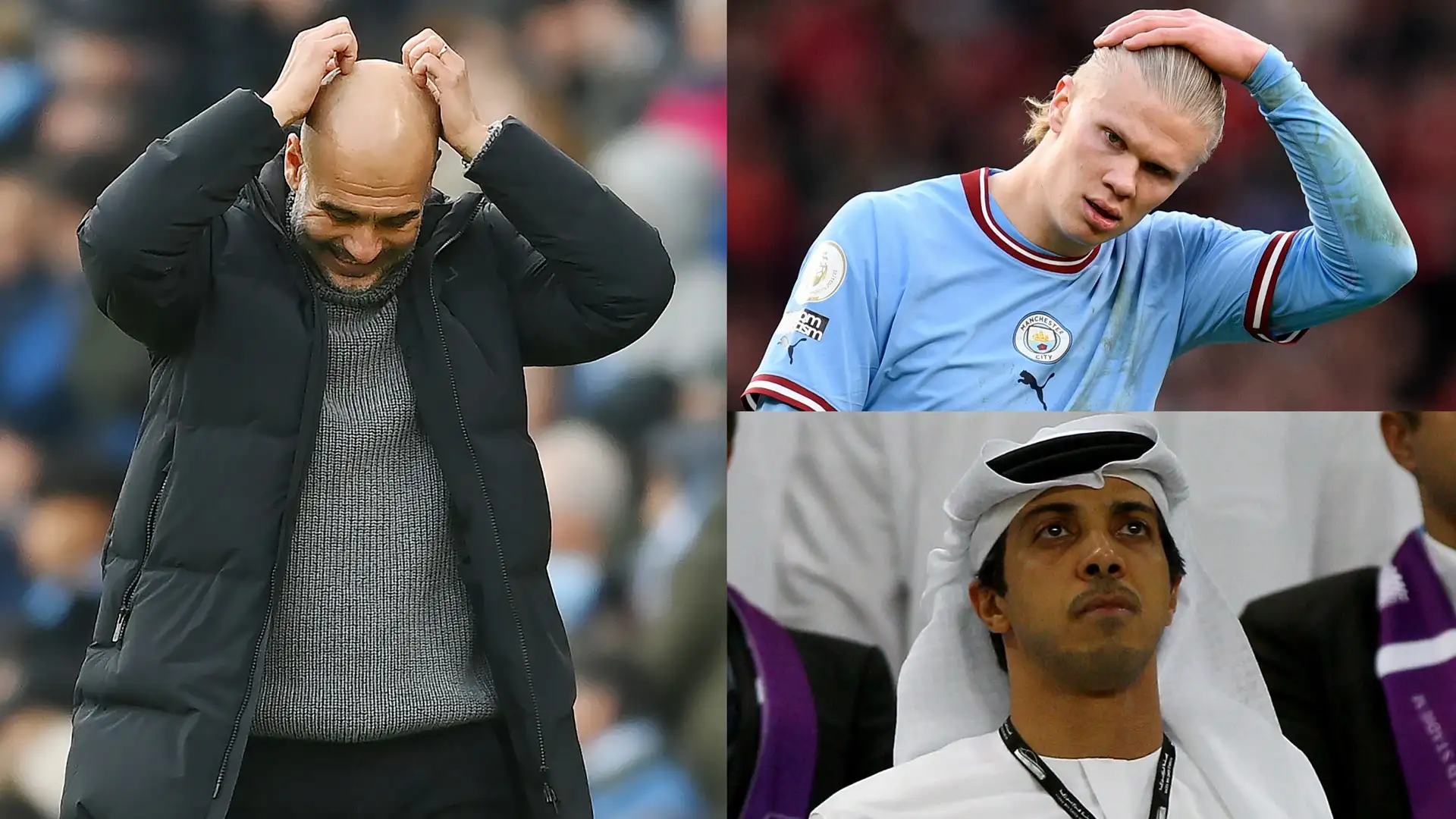
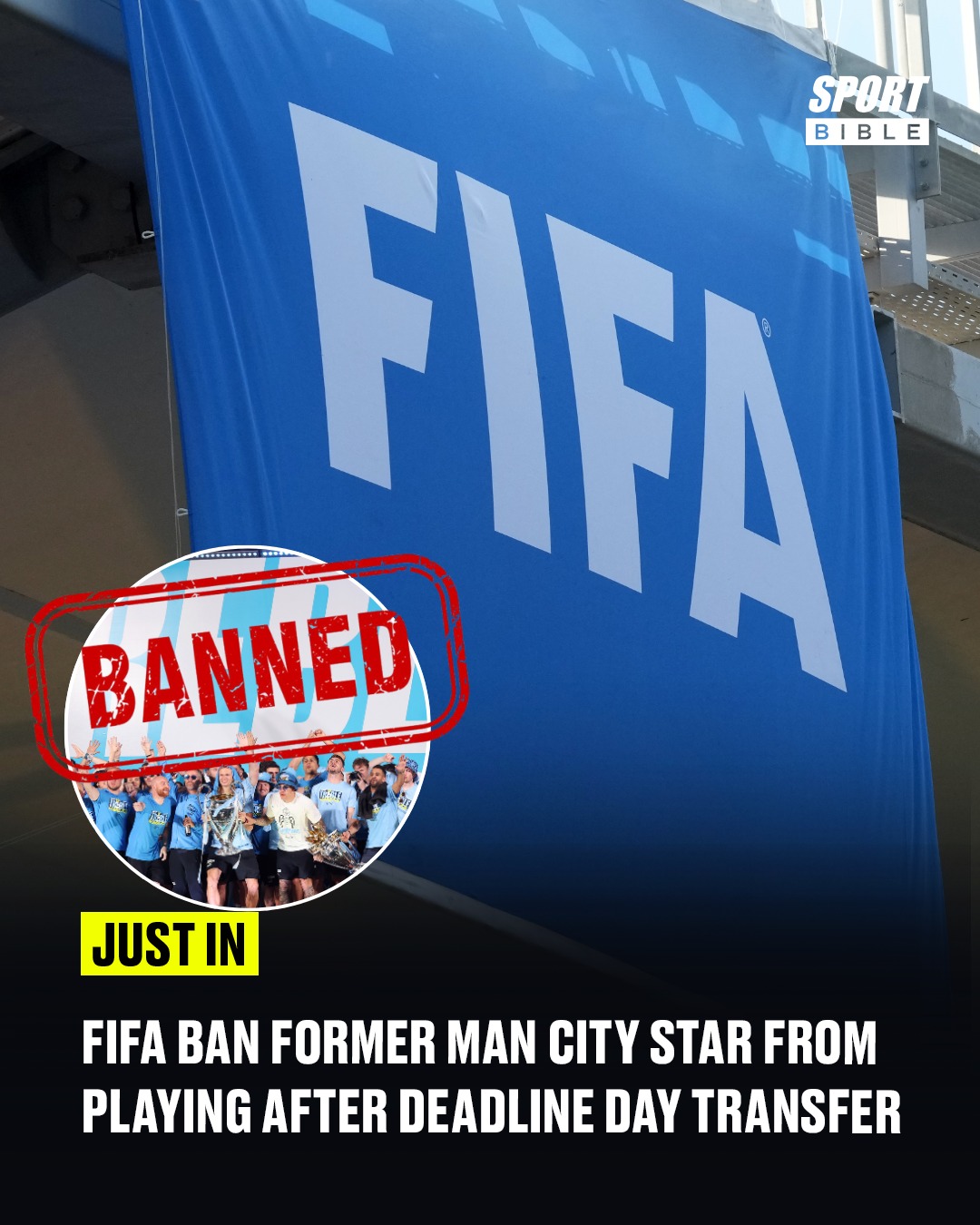
Manchester City stars say emotional goodbye to the club on transfer deadline day Shock exits hit fans as key players prepare for new challenges The transfer window closes with major changes at the Etihad

Manchester City may be quietly preparing for one of the most significant transitions in modern football. According to The Telegraph, it is considered increasingly likely that this will be Pep Guardiola’s final season in charge at the Etihad Stadium, despite the Spanish tactician having a contract that runs until 2027.
While some sources at Manchester City have seemingly denied this, the growing chorus of speculation—particularly from well-connected journalists—suggests that contingency planning is already underway. The Athletic’s David Ornstein recently stated there’s “an extremely strong chance of Pep Guardiola leaving at the end of the season,” adding weight to rumors that have circulated throughout the 2025-26 campaign.
For a club that has dominated English football under Guardiola’s leadership, the prospect of his departure represents both a monumental challenge and an inevitable reality. During his remarkable tenure, Guardiola has transformed Manchester City into a European powerhouse, delivering six Premier League titles, a Champions League trophy, and establishing a style of play that has been widely imitated but rarely replicated.
The Three Candidates: A Closer Look
As City contemplate life after Guardiola, three names have emerged as the primary candidates to inherit one of football’s most demanding positions: Xabi Alonso, Enzo Maresca, and Cesc Fabregas. Each brings unique credentials, varying levels of experience, and distinct tactical philosophies that could shape City’s future direction.
Xabi Alonso: The Fallen Star Looking for Redemption
Perhaps the most intriguing name on Manchester City’s shortlist is Xabi Alonso, who finds himself surprisingly available after a tumultuous seven-month spell at Real Madrid. The 44-year-old’s dismissal from the Spanish giants in January 2026 came as a shock to many, lasting just 233 days in the job despite arriving with an impressive pedigree.
Alonso’s credentials before joining Real Madrid were exceptional. At Bayer Leverkusen, he masterminded a historic achievement, winning the league and cup double without losing a single match—a feat that catapulted him to the top of every major club’s wish list. His tactical acumen, modern approach, and deep understanding of the game made him appear to be the perfect candidate to succeed Carlo Ancelotti at the Bernabeu.
Related Posts:



However, his time in Spain exposed the harsh realities of managing a club filled with galácticos and established hierarchies. Alonso wanted control but encountered chaos, particularly in his dealings with star players. The breaking point came during his first Clásico when Vinícius Júnior reacted furiously to being substituted, confronting his manager and saying he would leave the club. This public display of dissent, combined with the player’s subsequent apology to everyone except Alonso, fatally undermined the manager’s authority.
Despite the disappointing end to his Real Madrid tenure, Alonso won 24 of 34 games, achieving a 71% win percentage—respectable numbers that suggest his methods weren’t fundamentally flawed. The issue, according to multiple reports, was one of fit rather than competence. The style of play Alonso prefers is very German, with high intensity and gegenpressing involved, which clashed with Real Madrid’s more languid, free-flowing tradition under Ancelotti.
For Manchester City, Alonso represents both significant risk and potential reward. His experience at Leverkusen demonstrates he can build and implement a cohesive tactical system, while his Real Madrid failure serves as a cautionary tale about the importance of squad compatibility and dressing room management. At City, however, he would inherit a squad already accustomed to intense positional play and high pressing—potentially making him a more natural fit than he was in Spain.
The question for City’s hierarchy is whether Alonso’s Real Madrid experience has damaged his stock irreparably or whether it represents valuable lessons learned. His availability is undoubtedly attractive, and at 44, he’s young enough to build a long-term project while experienced enough to handle the pressure of elite management.
Enzo Maresca: The Guardiola Disciple
If Manchester City are looking for continuity in both playing style and coaching philosophy, Enzo Maresca presents the most obvious choice. The 45-year-old Italian worked with Guardiola as an assistant at Manchester City from June 2022 to June 2023, giving him intimate knowledge of the club’s structures, expectations, and footballing identity.
Maresca’s Chelsea tenure, which ended abruptly on New Year’s Day 2026, was a mixed bag that ultimately tells the story of a talented coach struggling with institutional chaos. On the positive side, he led Chelsea to success in the UEFA Conference League and the FIFA Club World Cup, while also finishing fourth in the Premier League to secure Champions League qualification in his debut season. These were tangible achievements that demonstrated his tactical abilities and man-management skills.
However, his second season at Stamford Bridge unraveled spectacularly. A run of one win in seven Premier League games left Chelsea fifth in the table, but the sporting results were only part of the problem. According to ESPN, the primary reason for his exit was a breakdown in relations with the club’s hierarchy, not just poor results.
The tension between Maresca and Chelsea’s ownership structure became increasingly public. After the 2-0 home victory over Everton in mid-December, Maresca stunned reporters by saying he had endured his “worst 48 hours” at the club, comments that shocked even his own staff. He subsequently held talks with Manchester City on three separate occasions with a view to potentially replacing Guardiola, behavior that Chelsea’s board viewed as a betrayal of trust.
Behind the scenes, the situation was even more fraught. Chelsea sent a formal letter to Maresca to remind him of his responsibilities, and the club became so concerned about his treatment of players returning from injury that they put the club’s head of physical performance on the bench to advise him. This level of institutional intervention suggests deep-seated problems in his working relationships.
Despite these red flags, Maresca’s supporters would point to the dysfunction at Chelsea itself. The club has now had five permanent head coaches since May 2022—a revolving door that suggests systemic issues beyond any individual manager. Maresca’s year at the club did yield trophies and Champions League qualification, achievements that shouldn’t be dismissed lightly.
For Manchester City, Maresca’s appeal lies in his tactical alignment with Guardiola’s principles and his existing familiarity with the club’s culture. His time at the Etihad might make the transition to life at the Citizens relatively straightforward. He understands City’s demands, knows many of the players, and has been trained in the Guardiola school of football. The concern, however, is whether his interpersonal and political skills are sufficiently developed for a role where harmony between manager and hierarchy is essential.
Cesc Fabregas: The Intriguing Dark Horse
The most surprising name on City’s reported shortlist is Cesc Fabregas, whose managerial career is still in its relative infancy. The 37-year-old former Arsenal, Barcelona, and Chelsea midfielder has been in his first permanent head coaching role at Como since July 2024, on a four-year contract—making him by far the least experienced of the three candidates.
What Fabregas lacks in managerial tenure, however, he makes up for with impressive early results and tactical sophistication. At the halfway point of the 2025-26 season, Como were in sixth place in the Serie A table with an unbeaten record in home matches—a remarkable achievement for a club that was in Italy’s second tier as recently as 2023-24. The team’s defensive record is particularly notable, with Como having only conceded 16 goals in 23 league matches.
Fabregas has shown tactical maturity beyond his limited coaching experience. His Como side plays possession-based football built on positional principles that echo his former manager Guardiola’s influence. Tactical analysis reveals a coach who thinks deeply about build-up patterns, defensive transitions, and creating numerical advantages in key areas of the pitch.
The Spanish coach has not been shy about his Premier League ambitions. In an interview with Sky Sports, Fabregas stated: “The Premier League is the objective; it is the biggest dream a coach can have”, clearly signaling his long-term aspirations. However, he has also demonstrated loyalty to Como, turning down approaches from bigger clubs. When Inter Milan came calling, Como president Mirwan Suwarso revealed that “several clubs have inquired about him, but our position remains the same”, with Fabregas choosing to continue his project in Italy.
The Case For Fabregas: Beyond his tactical promise, Fabregas brings several intangible qualities that could serve him well at City. His playing career at the highest level—including time under Guardiola at Barcelona—gives him credibility with elite players. His cerebral approach to the game and ability to implement complex tactical systems suggest he could maintain City’s sophisticated style of play. Additionally, at 37, he represents a long-term appointment who could grow into the role over many years.
The Case Against: The elephant in the room is Fabregas’s lack of experience. The former Arsenal midfielder has only been in charge as a head coach since July 2024—barely 18 months of management at the top level. Manchester City is a pressure cooker environment where immediate success is demanded and scrutiny is relentless. Managing Como, where expectations are measured relative to avoiding relegation, is vastly different from managing a club expected to win every competition it enters.
The jump from Serie A mid-table to Manchester City would be unprecedented in modern football. While Guardiola himself made a similar leap from Barcelona B to the first team, that was an internal promotion at a club where he was already a legend. Fabregas, despite his Premier League pedigree as a player, has no such connection to Manchester City.
The Guardiola Factor: Understanding the Timeline
To fully grasp the significance of these managerial succession plans, it’s essential to understand Guardiola’s current position and likely timeline. The Catalan coach signed a two-year contract extension in November 2024, keeping him at the club until 2027. However, multiple sources suggest this extension may have been designed to buy time and reduce immediate pressure rather than representing a genuine two-year commitment.
Even inside City, high up, there was an expectation that the extension was going to be for one year, right until the moment it was announced, according to David Ornstein. This suggests that behind closed doors, there’s an acknowledgment that Guardiola may not see out his contract—a possibility that has prompted the club’s apparent contingency planning.
Guardiola himself has been characteristically honest yet ambiguous about his future. In December, he stated “I won’t be here forever,” a calm but unmistakable acknowledgment that his time at City will eventually end. However, when asked directly about leaving in the summer, Guardiola insisted that “the subject is not on the table right now,” adding that he’s planning to be at the club next season.
The tension between Guardiola’s public statements and the persistent speculation creates a complex picture. Former City manager Stuart Pearce offered insight into Guardiola’s likely mindset, suggesting “he’s got a plan in his head and he’ll know whether he wants to stay or go, and I don’t think results come into play at all”. This assessment rings true for a manager who has already won everything possible and whose decisions are more likely driven by personal motivation and energy levels than by trophy accumulation.
The 2025-26 season has been challenging for City by their extraordinary standards, though context is important. While they sit second in the Premier League and faced elimination from the Champions League round of 16—their earliest exit in over a decade—Guardiola has overseen a significant squad refresh. The struggles might be interpreted as transitional growing pains rather than terminal decline.
The Magnitude of the Challenge
Whoever succeeds Guardiola faces one of football’s most daunting assignments. The incoming manager will be following a coach who won 18 trophies with City, transformed English football’s tactical landscape, and established standards of excellence that may be impossible to maintain. Guardiola recorded his 400th win with the club in 569 matches, becoming the fastest manager in England to reach this milestone—a record that illustrates his extraordinary consistency.
Beyond the trophy cabinet, Guardiola’s influence permeates every aspect of the club. He’s been instrumental in recruitment decisions, tactical evolution across the youth academy, and the development of City Football Group’s global identity. His successor will inherit expectations that go far beyond simply winning matches; they must maintain a philosophy, a culture, and a standard of play that has become synonymous with Manchester City.
The comparison to Guardiola will be inevitable and often unfair. Even outstanding achievements might be viewed as disappointing if they fall short of the Guardiola era’s unprecedented success. This psychological burden could weigh heavily on whoever takes the job, particularly if they’re young or relatively inexperienced.
Historical Precedent: Lessons from Other Successions
Football history offers cautionary tales about replacing legendary managers. Manchester United’s struggles after Sir Alex Ferguson’s retirement in 2013 provide the most obvious warning. Despite hiring experienced, successful managers like David Moyes, Louis van Gaal, and José Mourinho, United have never recaptured their pre-Ferguson dominance. The lesson appears to be that institutional success built around a single transformative figure is extraordinarily difficult to replicate.
More recently, Liverpool’s transition from Jürgen Klopp to Arne Slot has shown that succession can work—but only with careful planning and the right candidate. Slot has maintained Liverpool’s competitive edge while gradually implementing his own ideas, suggesting that continuity of playing style combined with fresh perspectives can succeed.
Real Madrid’s revolving door of managers after different eras provides another data point. The club has found success by sometimes promoting from within (Zinedine Zidane) and other times hiring established winners (Carlo Ancelotti). Their model suggests flexibility rather than adherence to a single succession template.
The Decision Matrix: Evaluating the Candidates
When City’s hierarchy sits down to make this crucial decision, several factors will likely dominate their thinking:
Tactical Alignment: All three candidates understand possession-based football and high pressing, though Alonso and Maresca have the most direct experience implementing similar systems. Fabregas’s Como plays attractive football but at a different competitive level.
Immediate Impact vs. Long-Term Project: Alonso and Maresca could theoretically hit the ground running given their experience at elite clubs. Fabregas represents more of a developmental appointment who might need time to adapt.
Personality and Politics: Alonso’s Real Madrid experience raises questions about his ability to manage egos and navigate political complexities. Maresca’s Chelsea exit suggests similar concerns. Fabregas is largely untested in this regard.
Availability and Timing: Both Alonso and Maresca are currently unemployed, making them immediately available. Fabregas is under contract at Como until 2028, though he has been linked with potential moves and might be persuadable.
Risk Tolerance: The safe choice would arguably be Maresca, given his Guardiola connection and Premier League experience. Alonso represents moderate risk with his Leverkusen credentials balanced against his Real Madrid failure. Fabregas is the highest-risk, highest-reward option.
What This Means for Manchester City
The broader implications of this succession planning extend beyond simply choosing a new manager. City’s approach to this transition could define the club for the next decade. A successful appointment could maintain their position as English football’s dominant force and potentially enhance their European credentials. A misstep could see them join Manchester United in the wilderness of post-legendary-manager decline.
The timing of any transition is also crucial. If Guardiola does leave at the end of this season, his successor will inherit a squad in transition. Several key players are aging, and recent transfer windows have focused on bringing in younger talent who haven’t yet reached their peak. This could work in a new manager’s favor—giving them the opportunity to shape the squad’s next generation—or against them if results suffer during the rebuilding phase.
City’s institutional strength should provide some buffer against decline. Unlike many clubs where the manager is the sole source of football knowledge and strategy, City have built robust structures around recruitment, analytics, and player development. Sporting director Hugo Viana will play a crucial role in ensuring continuity, working with whoever succeeds Guardiola to maintain the club’s core principles while allowing for tactical evolution.
Conclusion: An Uncertain but Fascinating Future
As Manchester City potentially prepare for life after Pep Guardiola, the choice between Xabi Alonso, Enzo Maresca, and Cesc Fabregas represents three distinct visions of the club’s future. Alonso offers proven tactical innovation tempered by recent failure; Maresca provides continuity and familiarity with some concerning baggage; Fabregas represents a high-ceiling gamble on potential rather than proven achievement.
The Telegraph’s report might prove premature—Guardiola could yet decide to remain beyond this season, perhaps driven by competitive fire or unfinished business. However, the mere existence of succession planning tells us something important: even the most successful partnerships in football have finite lifespans, and prudent clubs prepare for inevitabilities.
For Manchester City supporters, the prospect of replacing Guardiola brings a mixture of anxiety and curiosity. They’ve lived through a golden era that might never be replicated, but they can take comfort in the fact that the club appears to be approaching this challenge with characteristic thoughtfulness and planning.
Whoever ultimately takes the job—whether one of these three candidates or someone else entirely—will inherit both an incredible opportunity and an impossible comparison. They’ll have resources most managers can only dream of, but they’ll also have the ghost of Pep Guardiola hovering over every decision. It’s football’s ultimate poisoned chalice: a job that promises everything but guarantees nothing except relentless scrutiny and sky-high expectations.
The only certainty is that when Guardiola does eventually leave Manchester City, it will mark the end of one of football’s most significant eras. And the coach who follows him will discover whether they’re capable of achieving the near-impossible: maintaining excellence in the aftermath of greatness.
Word Count: Approximately 2,950 words