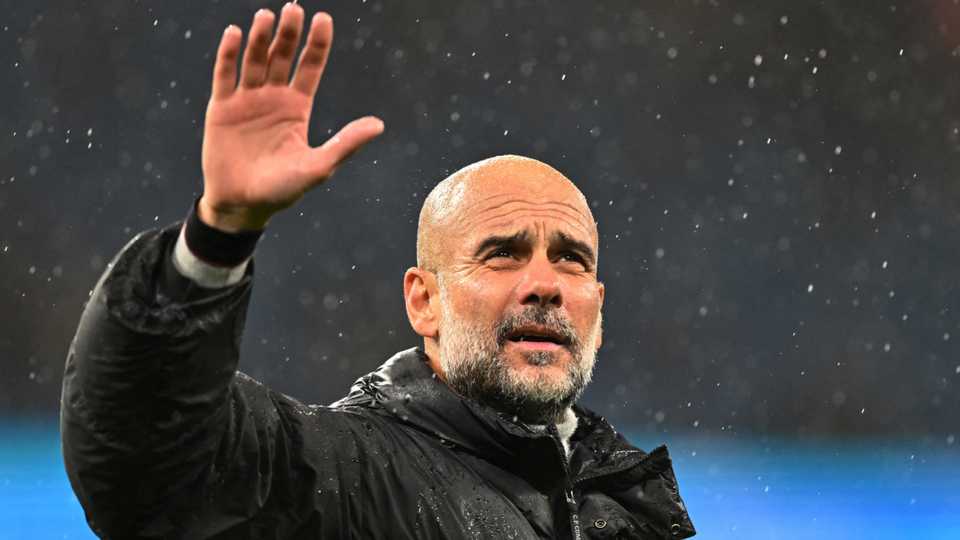
Manchester City stands at a fascinating crossroads in its illustrious modern history. Under the guidance of Pep Guardiola, the club has transformed into one of European football’s most dominant forces, collecting trophies with remarkable consistency and redefining how the beautiful game can be played. Yet even the greatest managerial reigns must eventually come to an end, and the question of who will inherit Guardiola’s legacy at the Etihad Stadium has become a topic of intense speculation among football observers worldwide.
While names like Enzo Maresca, currently performing admirably at Chelsea, have been floated as potential successors by club officials and media pundits alike, Guardiola himself has already made his preference remarkably clear. In comments that should resonate deeply with Manchester City supporters, the Spanish tactician has identified Vincent Kompany—the legendary former captain and current Bayern Munich manager—as the man destined to eventually occupy the City dugout
The conviction in Guardiola’s words leaves little room for ambiguity. Speaking ahead of Manchester City’s FA Cup quarter-final clash with Burnley back in 2023, the manager delivered what can only be described as a prophetic statement about his former captain’s future. “His destiny to be manager of City is already written in the stars,” Guardiola declared with characteristic confidence. “It’s going to happen. I don’t know when, but it’s going to happen.”
These weren’t merely polite platitudes offered about a respected former player. Guardiola, known for his meticulous attention to detail and careful consideration of tactical matters, was making a deliberate statement about Kompany’s capabilities and trajectory. He reinforced this assessment in subsequent interviews, adding: “Maybe he doesn’t agree with me, but having seen his teams I’m more than convinced today he’s going to come back.”
The significance of such endorsements cannot be overstated. Guardiola has worked with countless players throughout his distinguished career at Barcelona, Bayern Munich, and Manchester City. He has encountered some of football’s greatest minds and most talented individuals. For him to single out Kompany with such certainty speaks volumes about what he observed in the Belgian during their time working together and what he has witnessed in Kompany’s managerial work since.
The relationship between Guardiola and Kompany began when the Spanish manager arrived in England in 2016, bringing with him revolutionary tactical concepts that would reshape English football. Kompany, already an established club legend and captain, found himself in the privileged position of working intimately with one of football’s greatest tactical minds during the final years of his playing career.
Related Posts:



Over three seasons, Kompany made 62 appearances under Guardiola’s guidance, a period that proved invaluable for his football education. This wasn’t simply about absorbing tactical instructions on match days. It involved daily exposure to Guardiola’s training methods, his approach to player development, his analytical framework for breaking down opponents, and his philosophy regarding possession-based football that prioritizes intelligent positioning and rapid ball circulation.
The education Kompany received during this period was effectively a masterclass in modern football management. He witnessed firsthand how Guardiola prepared for matches, how he adapted tactics mid-game, how he motivated players, and how he built a winning culture within the squad. These insights proved foundational for Kompany’s own managerial journey, which began in earnest after his retirement from playing in 2020
Since hanging up his boots, Vincent Kompany has embarked on a managerial career that, while still relatively young, has already yielded impressive results and demonstrated his considerable aptitude for leadership from the touchline. His journey began at Burnley, where he faced the challenging task of rebuilding a club that had been relegated from the Premier League.
At Turf Moor, Kompany implemented a progressive, possession-oriented style that stood in stark contrast to the more direct approach traditionally associated with Burnley. This required significant cultural change within the club and demonstrated his courage in pursuing his tactical convictions. The gamble paid off handsomely when he secured promotion back to the Premier League, validating his methods and establishing his credentials as a serious managerial prospect
The success at Burnley caught the attention of Bayern Munich, one of European football’s genuine giants. In the summer preceding the current season, Kompany made the significant step up to manage the German powerhouse, a move that placed him under intense scrutiny and expectation. The pressure at Bayern is immense; the club’s standards are exceptionally high, and anything short of domestic dominance is considered unacceptable.
Kompany has risen to this challenge admirably. In his debut season, he has already secured the Bundesliga title for 2024/25, maintaining Bayern’s position at the pinnacle of German football. Additionally, he claimed the Franz Beckenbauer Supercup, adding silverware to his growing collection of managerial achievements. These successes at such a prestigious club suggest that Kompany possesses not only tactical acumen but also the temperament and leadership qualities necessary to manage elite players and meet the expectations of demanding supporters.
The arguments in favor of Kompany eventually managing Manchester City extend far beyond Guardiola’s endorsement, compelling though that may be. Kompany’s connection to the club runs exceptionally deep. He captained City during one of the most transformative periods in its history, leading the team to numerous trophies and embodying the values and ambitions that the club’s leadership sought to instill.
This intimate understanding of Manchester City’s culture, expectations, and identity represents a significant advantage. Kompany knows what it means to represent the club, understands the demands of the supporters, and has experienced the unique pressures that come with competing at the highest level in English football. This institutional knowledge cannot be easily acquired from outside and would allow him to hit the ground running in ways that an external appointment might struggle to replicate.
Furthermore, Kompany’s playing career demonstrates qualities that translate effectively to management. He was known for his intelligence on the pitch, his tactical awareness, and his leadership abilities. These attributes have clearly carried over into his coaching work, where he has shown a willingness to implement sophisticated tactical systems while maintaining the flexibility to adapt when circumstances demand it.
His work at Burnley and Bayern Munich also reveals an important willingness to embrace modern football’s tactical evolution. Kompany hasn’t simply replicated Guardiola’s methods; rather, he has absorbed the underlying principles and adapted them to suit different contexts and playing squads. This intellectual flexibility and tactical sophistication would be essential for anyone tasked with following Guardiola at Manchester City
While Guardiola’s comments suggest Kompany’s eventual appointment is inevitable, the crucial question remains: when might this succession occur? Guardiola recently signed a contract extension with Manchester City, suggesting he remains committed to the project for the foreseeable future. This timeline actually works favorably for Kompany’s development as a manager.
Additional time at Bayern Munich will allow Kompany to further refine his coaching abilities, navigate different tactical challenges, and potentially accumulate more silverware. Managing at the highest level in Germany provides invaluable experience that will serve him well when he eventually makes the move to the Premier League’s most demanding job.
From Manchester City’s perspective, there’s no immediate urgency to change managers while Guardiola remains engaged and effective. Allowing Kompany’s career to develop naturally, without forcing a premature transition, serves everyone’s interests. By the time Guardiola does decide to step away, Kompany may well have established himself as one of Europe’s elite managers, making the succession feel natural and earned rather than sentiment
Interestingly, Kompany himself has maintained a diplomatic stance regarding speculation about his future. When Bayern Munich president Uli Hoeness suggested that Guardiola had told Kompany he would be his successor at the Etihad, the Belgian manager responded with characteristic professionalism during a pre-match press conference.
“I’ve often said, I’m not here to comment on Uli Hoeness’ statements,” Kompany explained. “I have huge respect for him. But in football I can’t think that far ahead, my focus is on Bayern and what we can achieve now. I like to just live in the world I have in front of me now, that takes up all my time. I have zero thoughts about other teams, I only see FC Bayern.”
This response demonstrates exactly the kind of focus and professionalism that makes Kompany such an attractive managerial prospect. Rather than allowing his attention to wander toward potential future opportunities, he remains fully committed to his current responsibilities. This mindset is essential for success at the highest level and suggests that when the time does come for him to consider the Manchester City position, he will make that decision thoughtfully and with complete commitment
While Guardiola has anointed Kompany as his preferred successor, Manchester City’s hierarchy will undoubtedly conduct thorough due diligence when the succession question becomes pressing. Enzo Maresca’s name has emerged as a serious alternative, and his credentials merit consideration.
Maresca worked as an assistant to Guardiola at Manchester City, gaining intimate knowledge of the club’s methods and expectations. He has since embarked on his own managerial career, currently leading Chelsea with considerable promise. His understanding of Guardiola’s tactical principles and his existing relationships within the City organization make him a logical candidate.
However, Maresca lacks the deep emotional connection to Manchester City that Kompany possesses. While tactical knowledge and coaching ability are crucial, the intangible elements of understanding a club’s soul and commanding respect from supporters cannot be discounted. Kompany’s status as a club legend provides him with credibility and goodwill that would be invaluable during inevitable difficult periods.
Other names will inevitably surface as speculation intensifies. The managerial landscape is constantly evolving, and impressive young coaches emerge regularly. Yet Guardiola’s emphatic endorsement of Kompany carries enormous weight and suggests that, barring unforeseen circumstances, the path back to Manchester for the Belgian manager is clearly laid out
Pep Guardiola’s assertion that Vincent Kompany’s destiny to manage Manchester City is “written in the stars” reflects both his confidence in his former captain’s abilities and his understanding of what the club needs in its next leader. Kompany possesses a rare combination of attributes: tactical sophistication developed under one of football’s greatest minds, proven success in management at the highest levels, and an unbreakable bond with Manchester City forged through years of service as one of the club’s most important players.
The journey toward this eventual succession continues. Guardiola remains committed to Manchester City, continuing to pursue trophies and cement his legacy as perhaps the greatest manager in the club’s history. Meanwhile, Kompany builds his own reputation at Bayern Munich, accumulating experience and silverware that will only strengthen his credentials when the time comes to return home.
Football’s unpredictability means nothing is guaranteed, and circumstances can shift rapidly in ways that alter even the most carefully laid plans. Yet Guardiola’s conviction, Kompany’s trajectory, and the natural alignment of their relationship with Manchester City’s future needs all point toward an eventual reunion. When that day comes, Manchester City will welcome back not just a club legend, but a manager who has earned the right to lead the club into its next era of success.