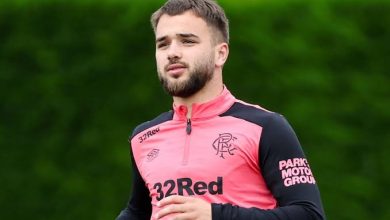
Forgotten Rangers player caught in uncertainty as 10-man decision emerges – report

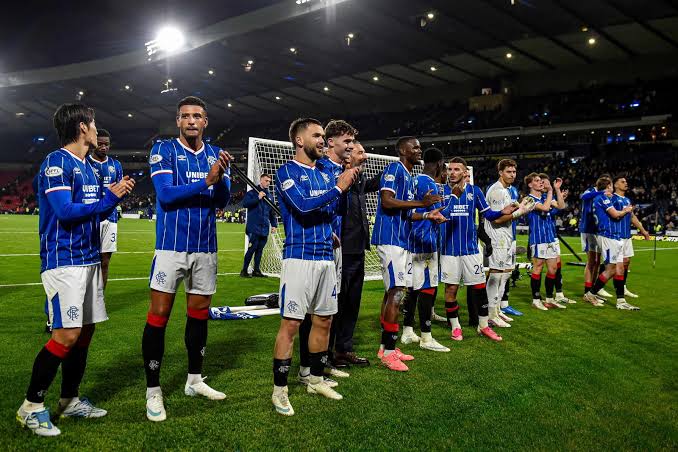
At Ibrox, the loudest stories are usually about the players who dominate the headlines: the captain, the star striker, the midfielder with a twenty-million-pound valuation. Less attention goes to the ones who sit on the fringes, training hard, waiting for a chance and wondering whether the manager still has a plan that includes them. Tochi Chukwuani is the clearest example of that group at Rangers right now. A signing hailed as a sign of ambition less than a year ago, he has become a player whose future is hard to read, with the January window looming as a possible turning point.
A note on the sourcing. I could not open the Ibrox News report behind your headline, so I do not know exactly what its “10-man decision” refers to, and I have left that out rather than invent it. I chose Chukwuani as the subject because he is the Rangers player most often described as a forgotten man in recent coverage. If your original is about someone else, tell me and I will redo it.
To understand how he got here, it helps to start with how he arrived. Chukwuani made a £4.3 million move to Ibrox in January from Sturm Graz, and the central midfielder was expected to become a key player for Rangers. That fee was a significant statement for a club that has had to be careful with its money. It signalled belief, and it came with a particular profile attached. He joined with Champions League pedigree from his 18 months at Sturm Graz. For supporters, that combination of European experience and a relatively young age suggested a player who could grow into the role of a long-term midfield anchor.
His early weeks and months seemed to justify that confidence. The 23-year-old was a mainstay in the middle of the park under Danny Rohl. The numbers back it up. Of the 15 Scottish Premiership games he played last term, he started 13. That is a high proportion for a player settling into a new league, and it shows how much the then head coach trusted him. For a midfielder who had just moved country, it was an excellent introduction. He appeared to have secured his place.
Football, however, has a way of changing quickly. A new season brought a new manager, and with Derek McInnes came a different set of preferences. This season, Chukwuani has slid down the selection pecking order, with McInnes often preferring Dan Neil and Nico Raskin in midfield. Those are two established players with strong claims. Raskin, in particular, is one of the most valued players in the squad, a midfielder who has attracted interest from clubs across Europe. Competing with someone of that calibre for a starting place is a daunting task for any player, let alone one still adapting to a new club.
The statistics tell a clear story. He has made eight appearances this season for the club but is yet to start a league match. For a player who started almost every league game he played last term, that is a dramatic reversal. It is not a gentle fade but a sharp drop, and the shift in his fortunes has been noticed by supporters and commentators alike. He had been on the pitch for only 11 minutes across three league games at one point. Eleven minutes across three matches is the kind of figure that suggests a player on the margins of the manager’s thinking
The £4.3 million price tag makes the situation more awkward. Clubs expect a return on their investments, and a player who costs that much is meant to contribute regularly. His lack of minutes is becoming worrying, given that a fee of that size indicated he was a player for the future. Supporters tend to judge signings by how often they see them on the pitch, and when a player who cost a significant sum is barely featuring, questions follow. Were the club’s expectations unrealistic? Has the manager changed the plan? Or is this simply a temporary dip in a longer story?
There is a good case that it is the latter. Managers change their selections for many reasons, and a player’s position in the squad can shift quickly with injuries, form or tactical adjustments. McInnes has spent the early part of his tenure establishing his preferred system, and midfield is one of the areas where he has been most active in experimenting. James Penrice, who is usually a left-back, has been used in midfield by the manager, including in the Scottish League Cup semi-final against Aberdeen, where Dan Neil was left on the bench. That fact alone shows how fluid the situation is. If a left-back is being asked to play in midfield ahead of an established midfielder, it suggests that the manager is still looking for the right balance.
The competition within the squad is intense. Alex Rae, the former Rangers player and coach, has pointed out how crowded that area of the pitch has become. He said that when you look at the players Rangers have in the middle of the park, it comes to six or seven central midfielders, and that the club needs to get players out of the door before bringing anyone in. That observation is important. A congested midfield means that some quality players inevitably end up on the bench or out of the squad. Chukwuani is one of them, but he is not alone, and the problem is as much about numbers as it is about individual ability.
Rae’s comments also hint at an uncomfortable truth about squad building. When a club signs players in every window without moving others on, the resulting surplus creates difficult decisions. Players who joined with high hopes find themselves in a queue, and the manager has to choose between them. That is part of the reason Chukwuani’s situation feels so uncertain. He is not struggling because he is a poor player. He is struggling because the squad has more midfielders than places in the team.
The uncertainty has begun to affect his outlook. Football Insider reported that Chukwuani is ready to consider a move away from Ibrox in January if his game time does not improve. That is a natural reaction. Footballers, particularly those at the start of their careers, need to play. Sitting on the bench for weeks stunts development, erodes confidence and can damage a player’s market value. If the situation continues, a loan or permanent move may become the sensible option, both for him and for the club.
That decision, however, is not straightforward. Leaving a club after less than a year can look like giving up, and it risks wasting the investment made in him. On the other hand, staying put without minutes could cost him more in the long run. The balance between patience and ambition is a delicate one, and young players often struggle to judge it. Advisers, family and coaches all offer opinions, but ultimately the choice rests with the player.
There is also a reasonable argument that his best prospects lie in staying. The January transfer window could either revive or bury his Rangers career depending on the business done, and he is one or two plausible transfer exits away from being a vitally important player again. That point is worth dwelling on. Midfield depth at Rangers is not fixed. If the club sells or loses players during the winter window, the opportunity for Chukwuani to step in could arrive suddenly. Football is full of examples of players who sat on the bench for months before a departure or an injury changed everything
The most obvious candidate for a departure is Raskin. Reports suggest he is unlikely to leave in January but could depart in the summer. Aston Villa and Tottenham have both been linked with him, although he looks set to remain at Ibrox until at least summer 2027 unless a top-five league club presents an offer that cannot be refused. That timeline matters for Chukwuani. If Raskin stays through the winter, the competition for places stays the same. If an unexpected offer changes that, the path opens. Chukwuani’s future is therefore tied to decisions being made about other players, which is part of what makes his position so uncertain.
It is also tied to the manager’s approach. McInnes is known as a pragmatic coach who prizes organisation and reliability. Midfielders who fit his system and who can be trusted to perform specific roles earn minutes. Those who do not, or who have not yet shown they can, wait. The question for Chukwuani is whether he can demonstrate the qualities the manager wants in the limited opportunities he gets. A strong cameo in a cup tie or a late substitute appearance can change perceptions quickly.
The upcoming fixtures offer opportunities. The League Cup final against Hibernian is a major occasion, and depth matters in a congested calendar. Injuries are always a possibility, and the match schedule means that rotation is necessary. A manager who has to manage a long list of fixtures will, sooner or later, need to call on players who have not featured much. When that moment arrives, Chukwuani will need to be ready, because the next chance may determine how he is viewed for the rest of the season.
Preparation is the key. Players in his position often say that the hardest part is staying sharp without regular match experience. Training can maintain fitness, but it cannot replicate the intensity of a competitive game. That is why reserve matches, development fixtures and loans matter. If the club decides he needs more minutes, a short-term move might serve him better than a prolonged spell on the bench. Alternatively, appearances for the B-team could help him maintain rhythm while waiting for first-team opportunities.
From the club’s perspective, the situation requires careful management. Rangers have invested in him and have an interest in protecting that investment. Allowing a young midfielder’s confidence to collapse through lack of minutes would be a poor outcome. Equally, selling him cheaply after such a short time would look like an admission of error. The best option is likely to find a way to keep him involved while remaining flexible about the future. That means open communication with the player, clear expectations about his role and a plan for January.
Communication is often the missing piece in these situations. Players can cope with disappointment when they understand the reasoning behind it. A manager who explains what is needed, whether it is better positioning, more aggression or tactical discipline, gives the player something to work on. A manager who stays silent leaves him guessing. Whether McInnes has had those conversations is unknown, but they are a standard part of good man-management and could make a significant difference.
For supporters, the story highlights the gap between the narrative of a signing and the reality of squad life. A transfer is often presented as a solution, a piece that completes the puzzle. In practice, new players must earn their place, adapt to the manager’s demands and compete with teammates who are equally ambitious. Not every signing works out as expected, and not every setback is permanent. The most successful players are often those who respond to disappointment with determination.
The comparison with other squad members is instructive. Many Rangers players have found themselves in similar positions at various times, only to bounce back stronger. Some have used a quiet spell to work on their game, returning with greater maturity and consistency. Others have drifted and eventually left. The difference often comes down to attitude and opportunity, and Chukwuani still has both in his favour. He is young, he has pedigree and he has shown what he can do when trusted.
It is also worth remembering that he has had success at Rangers. His performances under Rohl demonstrated that he could handle the demands of the league. He earned his place on merit, and he did so while adjusting to a new country, a new style of football and a new set of teammates. That is no small achievement. The ability is there, and the challenge now is to translate it to a different context under a different manager.
The January window will be the real test. If Rangers add reinforcements in midfield, his path becomes harder. If they let players go, it becomes easier. If he leaves on loan, he could return in the summer with more experience and renewed confidence. If he stays and gets minutes, he could rebuild his position. Each scenario carries risks and rewards, and the outcome will depend on decisions made by the club, the manager and the player himself.
Whatever happens, the next few weeks will shape the rest of his season. A good performance in a limited role can change the conversation, while a poor one can reinforce doubts. For a player in his position, every minute matters. He cannot control the manager’s selections or the club’s transfer plans, but he can control his own preparation and attitude. That is the only reliable advice for anyone caught in this kind of limbo.
In the end, this is a story about uncertainty, which is a normal part of professional football. Players rise and fall in the pecking order, and squads evolve constantly. A footballer who looks forgotten in November can be indispensable by March. The challenge is to remain ready, to stay patient without becoming complacent and to be prepared for the moment when circumstances shift.
Rangers supporters will be watching closely, hoping that the investment made in Chukwuani pays off. They have seen enough of him to know he has quality, and they will want to see more. Whether that happens at Ibrox or elsewhere remains to be decided. For now, he waits, trains and hopes that January brings the opening he needs. If it does, the forgotten man may yet become one of the most important players in the squad