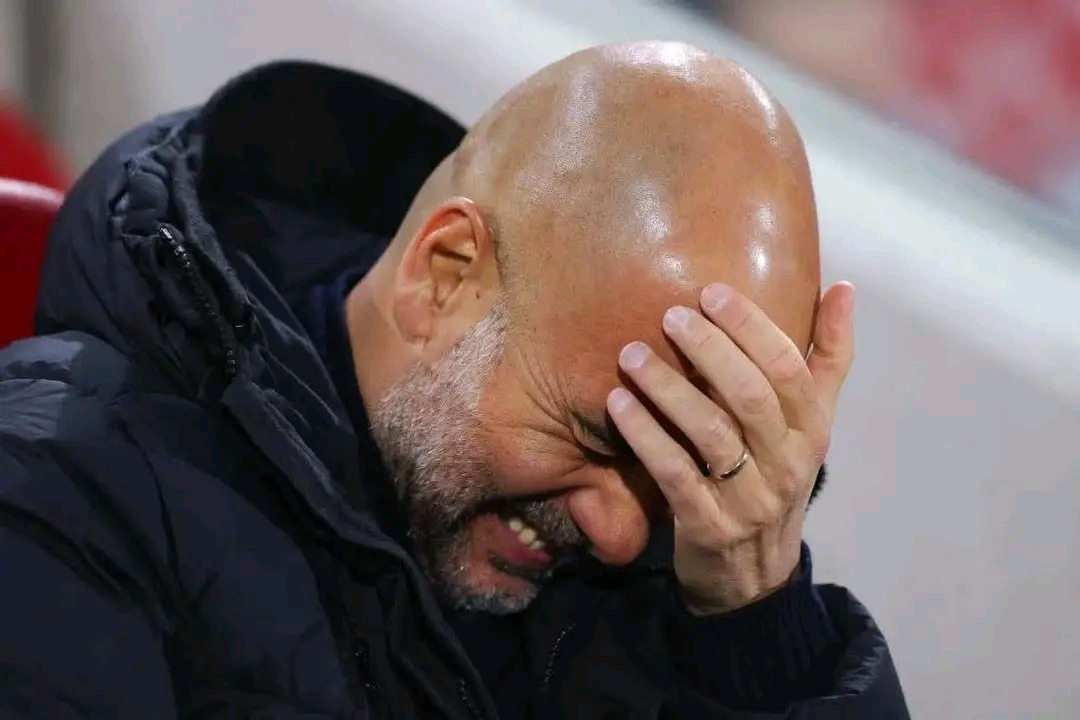
Manchester City walked into the Etihad Stadium on Saturday carrying more than just the pressure of three points. They carried doubt. They carried tired legs, tired minds, and uncomfortable questions that have been growing louder with every dropped point. For a team used to controlling everything, the season had started to slip through their fingers, and Pep Guardiola knew something had to change. Not a big speech. Not a dramatic overhaul. Just a brave decision that sent a message to everyone watching. Even the biggest names can sit down if the team needs something different.
When the team sheet dropped and Erling Haaland’s name was missing from the starting eleven, the noise inside the stadium changed. The same happened when Phil Foden was also named on the bench. These are players City fans expect to see every week, players the system has been built around. But Guardiola had seen enough. Goals had dried up. Energy had dropped. The Premier League title race was slipping away slowly, and City looked like a team playing on memory rather than hunger.
Wolves arrived at the Etihad bottom of the table, fighting for survival, but Guardiola knew this was the perfect moment to experiment. Not because Wolves were weak, but because City needed confidence again. They needed movement. They needed chaos. And most of all, they needed someone to remind them that Manchester City are more than just Erling Haaland.
That someone was Omar Marmoush.
For months, Marmoush had lived in the shadows of Haaland’s goal-scoring reputation. Whenever City needed a late goal or fresh legs, Marmoush was the one called upon. He ran, he pressed, he linked play, but rarely got the headlines. This season, his minutes were limited. His chances were few. His patience was tested. But Guardiola never forgot what Marmoush gave City last season when he first arrived.
Guardiola remembered those two or three months when Marmoush was unstoppable, when his energy carried City through difficult matches, when his movement opened spaces others could not. He remembered that without Marmoush, City might not have reached the Champions League places or the FA Cup final. And on this Saturday afternoon, he decided it was time to remind everyone else too.
From the first whistle, Marmoush played like a man who knew this was his moment. He did not stand still. He did not wait for the ball. He drifted left, dropped deep, attacked space, and pressed defenders who thought they had time. Every run had purpose. Every touch had intent. This was not a striker waiting in the box. This was a forward playing for his life in the team.
The contrast with Haaland’s recent performances was impossible to ignore. In recent defeats, Haaland had barely touched the ball. Fourteen touches across two matches told the story of a striker isolated, waiting for service that never came. Against Wolves, Marmoush had forty touches in just seventy-four minutes. Forty moments of involvement. Forty reminders that football is more than just finishing chances.
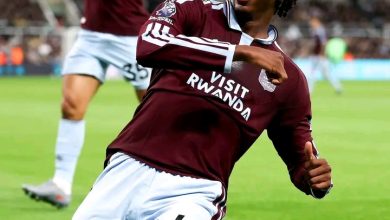
When the goal finally came, it felt inevitable. Matheus Nunes broke through, chaos followed, and Marmoush was exactly where a striker should be. No panic. No hesitation. Just a clean finish that sent the Etihad into relief. Not wild celebration. Relief. The kind that comes when pressure is lifted, even if only for a moment.
For Marmoush, it was his first Premier League goal of the season. For City, it was proof that Guardiola’s gamble was working.
After the goal, Marmoush did not slow down. He kept running. He kept pulling defenders out of position. He kept giving City something they had been missing. Dynamism. Guardiola watched from the touchline with satisfaction. This was exactly what he wanted. A reminder that City have options. That Haaland, for all his brilliance, is not the only solution.
When Haaland eventually came on in the seventy-third minute, the roles were reversed. The Norwegian was the substitute. The box player. The finisher waiting for scraps. And the crowd noticed. Not with anger. Not with boos. But with curiosity. Pep Guardiola had shown that no one is untouchable.
After the match, Guardiola spoke about Marmoush with warmth and honesty. He called him a special player. Not old. Not young. A player with room to grow. A player with a sense of goal and energy in transition. Guardiola made it clear that while Marmoush can play wide, he sees him more as a striker, a weapon for moments when City need speed, movement, and unpredictability.
Marmoush himself spoke with humility. He talked about how important it was to score and help the team. He spoke about returning from the Africa Cup of Nations, where he had scored twice and helped Egypt finish fourth. He did not complain about time on the bench. He did not mention Haaland. He just said he was happy to help.
The Etihad responded. When Marmoush was named player of the match in the final moments, the cheers were loud and genuine. This was not charity applause. This was appreciation.
But the story of the match did not stop with Marmoush.
At the back, Manchester City fans got their first real look at Marc Guehi in sky blue, and what they saw brought calm. Calm has been missing from City’s defence this season. Injuries to Ruben Dias and Josko Gvardiol left holes that could not be ignored. Guehi filled one immediately.
From his first touch, Guehi looked like he belonged. He completed ninety-five passes, the most on the pitch. He rarely panicked. He read danger early. He won the ball back. He intercepted passes before Wolves could breathe. This was not a flashy debut. It was a dependable one. The kind Guardiola loves.
Guardiola did not hide his admiration. He spoke about Guehi as someone you can rely on. A captain. An international. A player who understands the game. Guardiola pointed out how quickly Guehi adapted, how he moved in training, how he communicated, how he read situations around him. These are things fans do not always see, but managers live for.
Alongside Guehi, Antoine Semenyo continued his strong start to life at City. Three goals since joining, confidence growing, impact immediate. Guardiola made it clear these signings were not short-term fixes. They were investments for years to come. Players in the perfect age bracket. Players who could carry City forward when others fade.
The clean sheet mattered. The control mattered. But more than anything, the feeling mattered. City had finally won again in the league after four matches without victory. It was not perfect. It was not dominant. But it was necessary.
The win narrowed the gap to Arsenal at the top to four points. Suddenly, the title race did not look completely lost. City fans found themselves checking fixtures again, hoping for favours, especially from unlikely allies like Manchester United, who were due to face Arsenal next.
Still, not everyone was convinced. Alan Shearer was quick to cool the excitement. He reminded everyone that Wolves are bottom of the table. He warned that this result does not mean City are back. Bigger tests are coming. Stronger opponents will ask harder questions. And he was right.
But football is not always about big statements. Sometimes it is about small signs. Signs that a team is waking up. Signs that a manager is willing to change. Signs that players outside the spotlight are ready when called upon.
For Guardiola, this match was about more than three points. It was about control. About reminding his squad that places are earned, not guaranteed. That effort matters. That energy matters. That even legends can sit on the bench if the team needs something else.
For Haaland, it was a warning without words. For Foden, a chance to reset. For Marmoush, a door opening. For City fans, a breath of relief.
The season is far from over. The title race is still alive. The Champions League remains brutal. Injuries will return. Form will rise and fall. But on this day, Manchester City remembered who they are. Not just a team built around one striker, but a squad with depth, intelligence, and options.
And as the Etihad emptied, one thing was clear. Pep Guardiola had shaken the table. And sometimes, that is all it takes to change everything.