Mick Brown believes the backing of the Man City board and the signings of Marc Guehi and Antoine Semenyo could convince Pep Guardiola to stay.

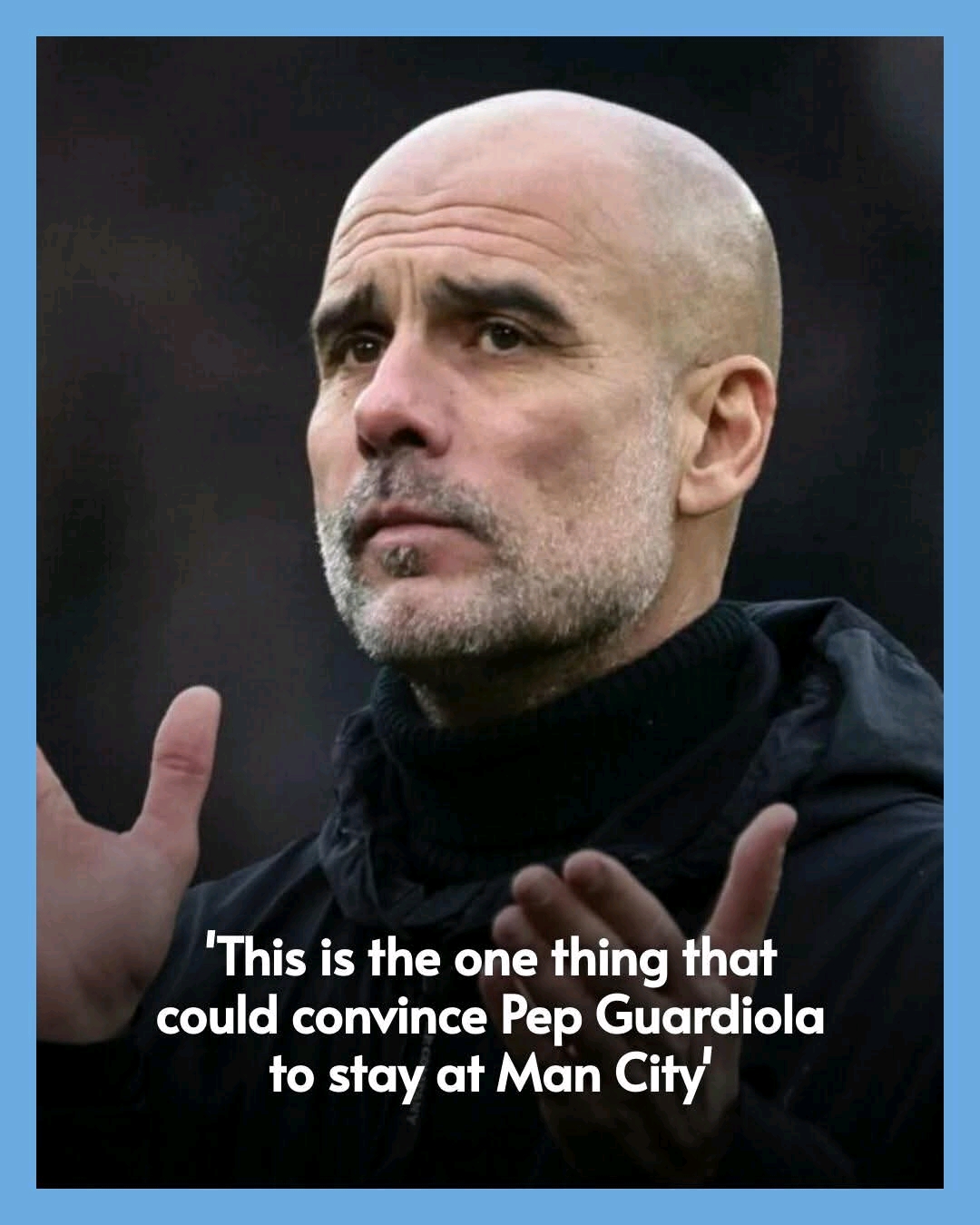
Pep Guardiola stood on the touchline at the Etihad, clapping his players with that familiar calm face, but behind the applause there was a storm of thoughts that only a few people inside Manchester City truly understood. For months now, rumours have followed him everywhere, from press conferences to training sessions, from the stands to the boardroom. People have spoken about fatigue, about a loss of hunger, about a manager who has given everything and might finally be ready to walk away. Yet inside the club, and inside Guardiola himself, the story is far more complex, far more emotional, and far more human than the headlines suggest. At the centre of it all is one powerful truth that could still keep Pep Guardiola at Manchester City when many believe his time is almost up.
This season has not been kind to City by their own impossible standards. Trophies that once felt routine have slipped away, performances have dipped, and rivals have grown louder. The pain of losing the FA Cup final to Crystal Palace last season still lingers like a bad memory that refuses to fade. For a club that has lived at the top for so long, going a second season without silverware feels like failure, even if the football world knows how brutal and demanding this level truly is. Guardiola feels that pressure more than anyone because he built these standards himself. He created the machine, and when it stutters, he feels responsible for every missed pass, every lost duel, every dropped point.
Despite all this noise, Guardiola has not been left to suffer alone. One of the clearest signs of the club’s faith came during the mid season transfer window, when Manchester City moved decisively to sign Antoine Semenyo and Marc Guehi. These were not random names pulled from a scouting list. These were players Guardiola personally wanted, players he believed could change the energy of the squad and fix problems he saw developing long before the public noticed them. City did not hesitate. They backed him fully, fought off competition, and delivered both signings in a clear message that the board still believed in their manager completely.
That backing matters more to Guardiola than many people realise. Pep is not motivated by money or comfort. He is driven by ideas, by trust, by the feeling that everyone around him is moving in the same direction. When a board listens to him, supports his vision, and acts decisively, it creates a bond that is hard to break. Former Manchester United chief scout Mick Brown, speaking to Football Insider, made it clear that this support could be the one thing that convinces Guardiola to stay. In his view, it would be very difficult for Pep to walk away so soon after finally getting two of his top targets through the door.
Guardiola’s current contract runs until 2027, and while contracts mean little if the heart is no longer in it, they still represent a promise. City have shown time and again that they are willing to move mountains to keep Pep happy, to give him the tools he needs, and to protect him from outside pressure. Even in moments of doubt, even when results have not followed, the board has stood firm. That kind of loyalty is rare in modern football, where managers are often treated as disposable parts. Guardiola knows this, and it weighs heavily on his decision.
At the same time, there are genuine doubts about his happiness. Mick Brown has suggested that Guardiola is not fully content at City and may already be edging toward an early exit. The emotional toll of constant competition, constant expectation, and constant scrutiny can wear down even the strongest minds. Pep has always spoken openly about the intensity of his job, about how much it consumes him. When City fail to win, he does not simply shrug and move on. He carries the losses with him, replays them in his head, and questions himself in ways few managers would admit publicly.
Another trophyless season could push him closer to the edge. For Guardiola, winning is not about ego but about validation of his ideas. When those ideas stop producing trophies, even temporarily, doubt creeps in. Losing two seasons in a row without silverware would feel like a personal failure, regardless of context. That is the danger zone for City, because Pep has always believed that when his message no longer works, it is better to leave than to stay too long and damage what he built.
Yet the signings of Semenyo and Guehi change the emotional balance. Guardiola sees them not just as players, but as symbols of renewal. Semenyo brings directness, power, and unpredictability, something Pep feels City have lacked in key moments. Guehi adds leadership, calm defending, and a hunger that can lift those around him. These players represent a fresh chapter, a chance to rebuild energy without tearing everything down. Walking away now would mean abandoning that project before it even begins.
There is also the question of timing. Guardiola has always been careful about how he leaves clubs. At Barcelona and Bayern Munich, he stayed long enough to feel his cycle was complete. Leaving mid rebuild, especially after pushing for specific signings, would feel unfinished. It would raise questions he does not want attached to his legacy. Pep cares deeply about how his work is remembered, not in terms of trophies alone, but in terms of integrity and honesty.
Still, Manchester City are not blind to reality. They know that even the strongest relationships can end suddenly in football. That is why they have quietly begun assessing potential replacements, not because they want Pep gone, but because they must be prepared. Football Insider revealed that Vincent Kompany is seen as the top candidate should Guardiola leave. Kompany is not just a former captain, he is a symbol of City’s modern identity. His success at Bayern Munich has only strengthened his case, showing that he can handle pressure at the highest level.
Kompany’s Bayern side sit comfortably at the top of the Bundesliga, playing dominant football and losing just one game all season. That kind of performance has caught City’s attention. They see in him a continuation of Guardiola’s philosophy mixed with his own authority and emotional connection to the club. If Pep were to leave suddenly, Kompany would represent stability and continuity rather than chaos.
Other names are also in the conversation. Enzo Maresca, who worked closely with Guardiola at City, has already held talks with club representatives before leaving for Chelsea. His understanding of Pep’s methods makes him an interesting option. Xabi Alonso, fresh from leaving Real Madrid, is admired across Europe and remains on City’s radar, even as Liverpool show interest. These discussions do not mean Pep is finished, but they underline how uncertain the situation feels behind closed doors.
For Guardiola, knowing that the club is planning for the future does not feel like betrayal. He understands football better than anyone. What matters more is how they treat him now, in the present. So far, City have done everything right. They have backed his signings, defended him publicly, and resisted panic even when results dipped. That support sends a clear message that they still believe Pep is the man to lead them back to the top.
The players also play a role in this decision. Many of them are deeply loyal to Guardiola and see him as the reason they became better footballers. When a manager feels that connection, it becomes harder to leave. Pep knows that a new manager would change dynamics, change roles, and possibly end certain careers at the club. Leaving would not just affect him, but an entire dressing room that still looks to him for guidance.
As the season moves toward its final months, no final decision has been made. Guardiola himself may not yet know what he will do. He lives in the moment, focused on the next training session, the next match, the next problem to solve. But deep down, the backing of the board, shown so clearly through the signings of Semenyo and Guehi, stands as the strongest argument for staying. It tells him he is not alone, that his ideas still matter, and that the club is willing to fight with him rather than move on without him.
In the end, this may be the one thing that keeps Pep Guardiola at Manchester City. Not fear, not obligation, not money, but belief. Belief from the people above him, belief from the players beside him, and belief that the story is not finished yet. Guardiola has never been a man who runs from challenges. If he feels supported, trusted, and energised by a new project, he may decide that his journey at City still has chapters left to write. And if that happens, the applause at the Etihad will not be a farewell, but a promise of another fight ahead.