Manchester City Superstar Wants to Leave the Club if Pep Guardiola Is Still the Coach

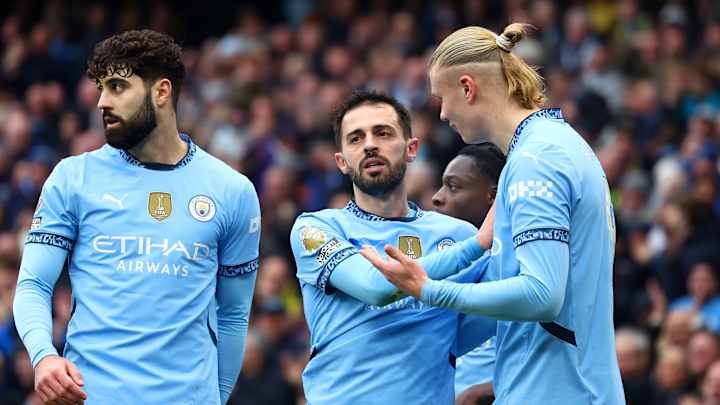
From the very first moment he stepped onto the lush green pitch of the Etihad Stadium, the Manchester City superstar had one dream — to be the best, to be loved, to win trophies, and to play football that made the world stop and watch. At Manchester City, he found fame, fortune, and a stage bigger than anything he had ever imagined as a boy growing up dreaming of lifting trophies. But deep inside, as time passed, something began to change. That change was about to shake the footballing world to its very core.
For years, Manchester City had been home. A home filled with glories, medals, cheers, and celebrations. But behind the smiling photos and roaring crowds, there was a simmering tension. A tension that slowly grew into dissatisfaction. A tension that now brought out one bold, shocking truth: the superstar wanted to leave Manchester City — **if Pep Guardiola remained the coach
This was not just another transfer headline. This was something bigger. Something heavier. Something that threatened to tear apart one of the most successful relationships in modern football.
The superstar in question had been one of the biggest reasons City became a global powerhouse. His speed, his flair, his goals, his presence — they all helped Manchester City win Premier League titles, domestic doubles, and to finally reach the peak of European football. Fans cheered his name, kids wore his shirt, and critics praised his consistency. He was more than a player — he was a symbol of City’s rise.
Yet now, despite all the admiration, something had shifted inside him. Something had broken.
It was no longer about trophies, or records, or history. It was about **footballing identity**, respect, and a dream to play in a system that matched his heart, style, and belief.
Manchester City under Pep Guardiola had been dominant. Guardiola, the tactical genius, the master planner, the coach most teams feared. With him came a style of play so detailed, so refined, that it redefined what modern football could be. Every training session was tactical. Every match was mapped. Every movement was studied. The result was brilliance on the field. Titles and statistics backed it up — few coaches had ever delivered such consistent high performance.
But perfection has its shadow.
For some players, the tactical discipline that gave triumphs also created limitations. Precise roles meant strict movements. Set positions meant less ownership of instinct. Players could shine, but only within the framework Guardiola drew. For many, that was acceptable — because winning felt worth every restriction. But for others, it felt like being caged in golden chains.
Our Manchester City superstar was one of those players.
From the earliest days at the club, he was known for his freedom — freedom to dribble, freedom to create, freedom to improvise. On the pitch, he danced past defenders, changed directions with ease, and scored goals in ways that made fans gasp. His football was art before science. His mind saw space where others saw none.
When he first joined Pep’s City, he adapted. He learned the system. He improved. His talent blossomed in a new way. But something inside him always yearned for expression beyond structure. And as the years passed, that silent yearning grew louder.
It started in small moments. A touch held a little longer. A pass made with private intention. A look to the coaches that held deeper question marks. Fans noticed that sometimes, in big games, he seemed restless. Not tired — just emotionally distant, as if half of his heart was elsewhere even when he scored goals.
People in football circles began whispering about tensions between the star and the coach. Rumors about disagreements in training. About clashes over positions. About frustration when instructions limited his natural talent. But each time, the superstar gave polite interviews about unity, about team spirit, and about respect for Guardiola. Most assumed everything was fine. After all, his performance on the pitch rarely dropped.
But behind closed doors, the story was different.
In private conversations with teammates, close companions, and trusted allies, he admitted that the football he loved — the kind that made him a superstar — was slowly fading. He said he still had fire, still wanted to explode with creativity and passion, but the cage of tactical discipline felt tighter each year.
Guardiola’s philosophy is not a simple one. It’s a philosophy that demands sacrifice — the sacrifice of individual expression for collective perfection. And while many players flourished under it, our superstar felt increasingly conflicted. The magic that once came naturally now felt measured.
“I respect Pep,” he would say quietly. “I’ve learned so much. He made me a better player. But I want to be free again. I want to be who I was before football became so scientific. I want to play with instinct, not just instruction.”
As the news spread, football fans around the world divided into two camps.
There were those who supported the manager. They pointed to the titles, the records, the unmatched success. They reminded critics that few coaches in history would trade places with Guardiola. His method had produced decades of dominance, and the system was bigger than any one player.
Then there were those who supported the superstar. They believed that creativity should not be shrouded by rigid tactics. That football is about flair, emotion, and personal expression. They believed that a world without that player thriving in freedom was poorer for it.
Manchester City fans were torn. The thought of losing their idol was unbearable, yet the thought of him staying unhappy was equally painful.
The club, caught in the middle, kept silent. Inside meetings were intense. Directors met with agents. Scouts prepared alternative plans. Social media buzzed with speculation. Pundits debated and argued on TV. Every football talk show in the world had the same topic: **Will he leave if Pep stays?** The question became a global headline.
For the superstar, the conflict was deeply personal. Every dawn brought a new internal battle. In training sessions, he gave effort. His professionalism never dropped. But at night, he grappled with restless thoughts about the future. Should he stay for loyalty? Should he go for freedom? Should his legacy be defined by trophies or by personal happiness?
In his private journal, he wrote:
*“I owe so much to this club. I owe so much to Pep. But I owe something to myself as well — the right to love what I do, to feel alive when I step onto the pitch. Football is not just about winning. It’s about joy. It’s about expression. It’s about freedom.”*
Those words reflected the heart of the dilemma — a dilemma many professional athletes around the world have faced but few ever publicly admit.
Meanwhile, Guardiola continued his work with calm confidence. He knew the rumours. He saw the headlines. But he remained committed to his vision. In Guardiola’s mind, football is like poetry — structured, beautiful, purposeful. The role of the coach, to him, is to guide every player into a collective masterpiece. Individual artistry must exist inside the team’s canvas, not outside it. And while that idea worked for most, it slowly began to clash with the superstar’s artistic spirit.
Guardiola never publicly criticized the player. He valued him. But he never changed his philosophy for anyone — not even a superstar. That was part of the friction.
As the season progressed, the tension became tangible. Every big match was more than just a game for Manchester City fans — it was a test of loyalty, identity, and belief. Would the superstar rise with passion? Or would he play with a shadow in his eyes?
On the pitch, he was still brilliant. He scored goals. He created chances. He carried the ball with grace. But sometimes after the final whistle, when fans rejoiced and chants filled the stadium, his expression would be blank — a smile that didn’t quite reach his eyes.
Journalists sensed something deeper. They noticed how after celebrations he would stand apart, breathing deeply, as if wrestling with something invisible. Some thought it was fatigue. Others believed it was mental strain. But the truth was personal conflict — a conflict no headline could fully reveal.
Behind the scenes, club meetings grew serious. Directors met with the player’s agent. Phone calls were made to clubs across Europe — to Spain, to Italy, to France — clubs that could give him the freedom he sought. There were offers and promises. Big money. Big projects. Teams ready to build their attack around him, promising creative freedom and emotional connection to the game he loved.
But the superstar hesitated. He was not someone who made decisions lightly. He understood what it meant to leave Manchester City — to abandon a club that had given him fame and love. But he also knew that life was too short to play football that did not ignite his soul.
Some nights, he would lie awake, staring at the ceiling, thinking of what life outside the Etihad could be. A league where his style might be celebrated differently. A coach willing to adapt around him rather than ask him to adapt to him. A system where his natural gift could breathe freely.
But then he would think of the fans — the supporters who wore his shirt, the children who imitated his moves, the memories he had etched into the club’s history. Leaving would break hearts. It would shake football culture. It would be debated for years.
And yet… *something inside him demanded liberation.*
Finally, in a moment that sent shockwaves across football websites, television shows, and social media platforms, the superstar gave an interview. It was sincere, emotional, and honest — a rare moment of transparency few players ever allowed.
He said:
*“I love this club. I love the fans. I respect the coach. What we’ve achieved is incredible. But I’m at a point in my life where I need to play football that feels true to who I am. If I can no longer feel that here, then I will have to consider leaving. I will not disrespect anyone. I will do what is best for my career and for my happiness.”*
Those words were gentle but clear. He did not shout conflict. He did not blame anyone. But he spoke truth.
Football history is full of stories where great players left clubs to find themselves again. Greatness and happiness do not always travel the same path. Some players stay and suffer quietly. Some players leave and find joy. Some players stay and change the system. Some players leave and change the world.
Now, Manchester City faced one of its most defining moments in modern history. Would the club keep Guardiola and risk losing one of its most iconic players? Or would they choose to adapt, perhaps with a coach who could embrace creative freedom?
The football world watched, waiting for the next chapter.
Fans filled stadiums, chanting, hoping this news was just a rumour. Analysts debated loudly on TV. Former players weighed in with their opinions. Social media echoed with heated arguments. Some poems were written about loyalty. Some debates turned into heated rivalries. Every corner of football discourse was focused on the same question:
**Will the superstar stay… or go?**
For the player, the answer was not simple. It was emotional, deeply personal, and layered with history and dreams. He knew that leaving could be painful. He knew that staying could make him feel trapped. He knew that football was more than just a game — it was life itself.
In his final private thoughts before making his decision public, he reflected on his journey:
*“I came to Manchester City as a dreamer. I became a champion. But now, I want to be a player again — not just a part of a system, but a creator of moments, a maker of joy, a footballer who feels alive with every touch. That is my truth.”*
Manchester City, Pep Guardiola, the fans, the media — all awaited what would come next. Would it be a farewell? Or a renewed partnership?
One thing was certain: no matter what happened, this moment marked a turning point in football history. A moment where passion met honesty. A moment where a superstar chose emotional truth over comfort. A moment that reminded the world that football is not only about trophies — it is about the heart.
If he left, the football world would never forget the impact he made. If he stayed, he would still be one of the greatest to wear the sky-blue shirt. But regardless of the outcome, his courage to speak his truth already made him legendary.
Because in the end, football — and life — is about one thing:
**Freedom to love what you do.**
And for this Manchester City superstar, that truth was worth everything.
—
If you want:
• A **shorter rewrite** (e.g., 1000 or 1500 words)
• A **more dramatic storytelling** version
• A **news article style version**
Just tell me!