Man City Player Ratings vs. Leeds: Semenyo Piles Title Race Pressure on Arsenal

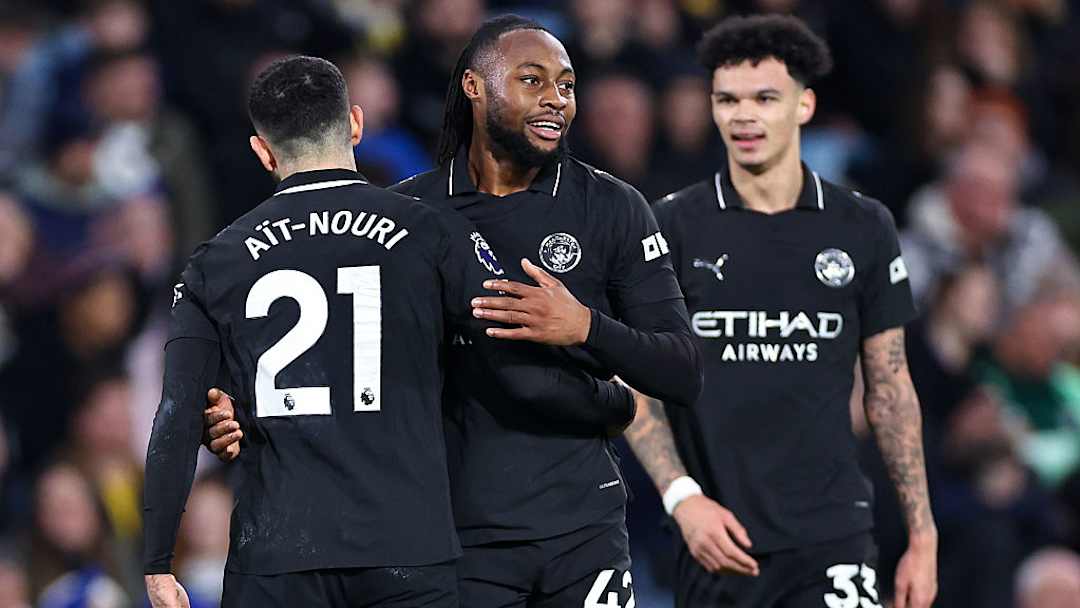
Manchester City’s trip to Elland Road on Saturday felt like a test not just of skill, but of patience, strategy, and character. The Premier League race was tightening, and the title challengers were aware that every single point now mattered. With Arsenal holding the top spot, City knew that even the smallest slip could prove costly. Yet, as the players walked out onto the crisp West Yorkshire pitch, the stage was set for drama, tension, and a clash that would echo far beyond the 90 minutes on the clock.
From the first whistle, Leeds United made it clear they were not going to make life easy. They pressed high, showing intensity and a determination that reminded spectators why they could never be underestimated at home. Every pass from Manchester City’s defenders was met with a wall of white shirts, and the home crowd’s energy seemed to feed the Leeds attack. Dominic Calvert-Lewin, ever the threat in the penalty area, tested the City defense early with a couple of dangerous chances. Both times, the ball flew just wide, but the warning signs were clear: Leeds were ready to punish even the slightest lapse.
For the first twenty-five minutes, Manchester City seemed caught in a storm. The visitors, typically so comfortable in possession, struggled to find rhythm. The familiar sight of quick, precise passing in midfield was disrupted, and Pep Guardiola’s team looked uncharacteristically on the back foot. But Manchester City has built a reputation on resilience, on waiting for the perfect moment to strike, and that patience would soon pay off.
As the half-hour mark approached, City began to find their feet. The intensity of Leeds’ early pressing began to wane, and City’s midfield started to exert control. Rodri’s presence in the deep-lying role was crucial. His composure on the ball, ability to read the game, and precise distribution allowed City to slowly take over. Opportunities started to emerge, but what would define the half—and perhaps the game—was a moment that changed everything just before the break.
Enter Antoine Semenyo. The Ghanaian forward, a midseason signing who had shown glimpses of brilliance since January, was about to announce himself in emphatic fashion. With City having been second best for large stretches of the first half, Semenyo found the chance that many others might have missed. Picking up a pass inside the box, he executed a poacher’s finish that seemed to lift the weight off the entire squad. It was clinical, decisive, and utterly Haaland-esque, even though Erling Haaland himself was resting due to a minor knee issue. Semenyo’s goal did more than put City ahead—it sent a message that the goal-scoring burden could now be shared, that City had found the perfect balance in attack.
The goal changed the narrative of the match. Leeds, who had been energetic and relentless, suddenly seemed to lose their rhythm. The pace of their pressing could not be maintained, and as the second half unfolded, it became clear that City’s victory was increasingly inevitable. Guardiola’s men did not dominate through brute force, but through intelligent control, careful possession, and a calmness that belied the tension of the title race.
When reviewing individual performances, a few names stood out, revealing the underlying reasons for City’s success that day. In goal, Gianluigi Donnarumma delivered a steady presence, though he was largely untested during the first-half storm. His experience and calm allowed City’s defense to settle and play their game without panic. On the right, Matheus Nunes impressed not just defensively, but as an attacking outlet. He showed how modern fullbacks can blend defense and offense seamlessly, making surging runs while also maintaining positional discipline.
Central defense was anchored by Rúben Dias, whose commanding presence in the box was evident every time Leeds threatened. Dias led the match in clearances, interceptions, and aerial duels, embodying the kind of leadership Guardiola prizes in his backline. Alongside him, Marc Guéhi was solid and alert, producing critical interventions, including a goal-saving challenge that could have changed the course of the game early on. On the left, Rayan Aït-Nouri proved indispensable. His clever, forward-thinking run set up the breakthrough, delivering the low cross that Semenyo converted with precision. It was the kind of play that underlines the importance of fullbacks in modern football—players who are defenders, creators, and sometimes the spark for decisive moments.
In midfield, Rodri’s control of tempo after the initial Leeds storm was vital. He dictated rhythm, ensured composure, and allowed City’s attacking players to find pockets of space. Rayan Cherki, although somewhat quieter overall, delivered a crucial pass that opened up the defense for Semenyo’s goal. Bernardo Silva, captain for the day, contributed with intelligence and creativity, though frustration lingered that more decisive moments did not emerge from his play. Nico O’Reilly’s performance showed promise, but his game was cut short due to a limp—a reminder that even the brightest talents must battle not just opponents, but the physical demands of elite football.
Up front, the contrast between the two strikers highlighted City’s evolving attacking strategy. Semenyo was clinical, seizing the chance when it mattered most, while Omar Marmoush struggled to make a major impact, though his influence increased as the first half progressed. The substitutions reflected Guardiola’s tactical awareness: Savinho returned from injury, Tijjani Reijnders added fresh legs, and Nathan Aké provided late defensive protection. The blend of youth, experience, and strategic deployment showcased Guardiola’s ability to manage a squad in the thick of a title fight.
Tactically, the match also revealed a subtle shift in City’s approach. While early overreliance on Haaland had been noticeable in previous months, Semenyo’s contribution demonstrates a team becoming more multidimensional. Goals are no longer solely dependent on a single star, but on the interplay of collective intelligence, movement, and opportunism. Guardiola’s management style shines here, as the team adapts dynamically to circumstances—handling both the intensity of the opposition and the physical limitations of key players.
The statistics further underscore City’s dominance. Possession was heavily in their favor, 67% to Leeds’ 33%, reflecting not only control but a measured approach to tempo. Expected goals (xG) were relatively close, but City’s clinical finish from Semenyo made the difference. Both teams had a total of fourteen shots, but City’s were more effective, with five on target versus Leeds’ two. Passing accuracy was another area where City’s superiority showed; 90% completion compared to 74% from Leeds emphasized technical quality, composure, and effective build-up. Leeds’ fouls slightly outnumbered City’s, reflecting their attempts to disrupt, yet not enough to derail the visitors’ focus.
Beyond numbers, the narrative of the match extends into psychological territory. Semenyo’s goal didn’t just give City the lead—it piled pressure on Arsenal, just two points ahead in the title race. It’s one thing to perform in training, it’s another to deliver when the stakes are at their highest. Semenyo, arriving midseason, has proven himself exactly the kind of signing that can tip tight races. Four Premier League goals since January, six in all competitions, may not sound staggering, but each has come at a crucial moment, and each has altered the emotional landscape of the Premier League race. In a sport where momentum can be as decisive as skill, Semenyo’s timing is perfect.
The match also highlighted ongoing narratives within the squad. Omar Marmoush, for instance, continues to struggle to make an impact, fueling speculation about a summer move to Barcelona. City fans are watching closely, understanding that football careers are as much about seizing opportunity as they are about potential. Meanwhile, the homegrown talent Nico O’Reilly limping off is a reminder of the physical and mental pressures young players endure at the highest level. His development, resilience, and future contributions remain a point of intrigue for supporters and pundits alike.
Guardiola’s decision-making, too, is central to the story. Managing Haaland’s knee issue by resting him, deploying Semenyo, and making tactical adjustments during the game reflect a coach in complete control. The match was a chessboard of calculated risks: when to press, when to conserve energy, when to push young players, when to introduce experienced substitutes. Each decision had repercussions for both the immediate game and the long-term campaign.
As the final whistle blew, the narrative was clear. Manchester City had not just won a game; they had sent a message. The gap to Arsenal was down to two points, and momentum had shifted subtly in City’s favor. The challenge now moves to the capital, where Arsenal face Chelsea in a high-pressure derby that could determine whether City’s victory translates into sustained psychological advantage. Guardiola’s team, meanwhile, returns home with confidence, knowing that their title credentials are reinforced not by luck, but by calculated execution and collective strength.
Looking forward, the implications extend beyond a single matchday. The Premier League is in a state of tension rarely seen, with margins so fine that one decisive moment, one poacher’s goal, can define the season. For Manchester City, the Semenyo effect is a revelation. It is a reminder that football is never static—that squads evolve, stars emerge, and the narrative is always moving. Fans will be watching not just for results, but for the drama, the tactical nuance, and the human stories that unfold alongside every goal, every injury, and every tactical shift.
The Elland Road match may have seemed a simple 1-0 scoreline to some, but beneath the surface, it was rich with storylines. City’s defensive solidity, particularly from Dias and Guéhi, the attacking intelligence from fullbacks like Nunes and Aït-Nouri, the midfield control orchestrated by Rodri, the creative sparks from Cherki and Silva, and the clinical finishing from Semenyo—all combined to produce a masterclass in timing, patience, and execution. Each player’s contribution was a piece of a larger mosaic, and together, they painted a picture of a team capable of challenging for the Premier League crown.
Ultimately, matches like these are why fans fall in love with football. It’s not just the goals, or the statistics, or even the drama of the title race. It’s the storylines that intertwine—the redemption of a player, the emergence of a midseason signing, the calculated management decisions, the psychological pressure of a championship chase. Saturday at Elland Road offered all of that and more. Manchester City left West Yorkshire not just with three points, but with a sense of purpose, momentum, and a reaffirmation of why, in football, the beautiful game is as much about timing, character, and narrative as it is about skill.
And for Antoine Semenyo, the hero of the hour, this was just the beginning. A forward who arrived with expectations, he is now delivering in moments that matter most. Goals like his do more than settle matches—they can shift the balance of entire competitions. As City look to maintain their pressure on Arsenal and push for the Premier League title, Semenyo’s contribution, and the collective performance of Guardiola’s men, may well define the season. Football fans everywhere will be watching closely, knowing that every pass, every tackle, and every finish from this point forward carries the weight of possibility, history, and glory.