Cristiano Ronaldo has brought an extraordinary international career to a close. The 41-year-old Portuguese striker formalised his decision on Thursday 5 November 2026 in a video published on his Instagram account. Within hours, the news had travelled through every dressing room in the sport, from the grandest stadiums in Europe to training grounds in Scotland. At Rangers, as at every club that contains players who grew up with Ronaldo as the defining footballer of their lifetimes, the announcement landed as more than a headline. It marked the end of an era that many in the sport had assumed would last forever.
It is worth being precise about what has and has not happened. Ronaldo has retired from the Portugal national team, not from professional football. He said he was retiring from the Portugal team, bringing the curtain down on one of the most illustrious international careers in the history of football. He remains an Al-Nassr player, and nothing in his announcement suggests he intends to stop competing at club level. That distinction shapes how the news is received. It is not a farewell to the game but a farewell to one particular stage, the one on which he carried the hopes of an entire nation for more than two decades.
The decision came with little real surprise but considerable emotion. The Al-Nassr forward had previously indicated that the 2026 World Cup would be his final appearance at the tournament. Once that tournament had passed, the question was never really whether he would step away from the national side but when and how. The choice of an Instagram video, rather than a press conference or a formal statement through the federation, was typical of the way Ronaldo has managed his public life. He speaks directly to the audience he built, without intermediaries, and on his own terms.
The statistics attached to his international career read almost like fiction. He joined Lionel Messi as the only players to feature at six global tournaments, one of a host of international records set by the Al-Nassr forward. Six tournaments means that he competed across more than two decades of football, adapting through changes in tactics, training science, ball technology and the physical demands of the modern game. Players who were still at school when he made his first appearance for Portugal have since retired from the sport altogether. Very few athletes in any discipline can claim to have remained at the top for such a span.
His international story began in 2003, when a teenager from Madeira, already making headlines at Sporting Lisbon, was called into the senior squad. He was lean, quick and electrifying, with a reputation for flamboyant dribbling and an almost compulsive desire to win. Few could have predicted then that he would still be representing his country at forty. At that point, he was seen as a gifted winger with a bright future, and the idea that he would become the most prolific scorer in the history of international men’s football would have seemed fanciful.
The first great test came at Euro 2004, played on Portuguese soil. The nation reached the final, where it lost to Greece, and a young Ronaldo left the pitch in tears. That defeat has often been cited as a formative moment. It taught him how fine the margin between triumph and heartbreak can be, and it hardened a determination that would define his later years. Over the next two decades he returned to major tournaments again and again, carrying the weight of expectation each time. Some tournaments ended in frustration, some in controversy, and some in jubilation, but he was always at the centre of the story.
The great vindication arrived at Euro 2016 in France. Portugal, often tipped as a team of talented individuals who lacked cohesion, won the championship, beating the hosts in the final after extra time. Ronaldo was forced off injured early in the match and spent much of the game as an emotional presence on the touchline, urging his teammates on. It was a rare picture of a superstar in a supporting role, and it revealed another side of him. He was not only the scorer of goals but a leader who wanted the collective result above all else, even when he could no longer influence it directly.
Further success followed. Portugal won the inaugural Nations League in 2019 and claimed the competition again in 2025, with the Portuguese striker still a central figure well into his forties. Those later triumphs showed that his influence did not diminish with age but simply changed form. As his pace faded, his positioning, finishing and big-game instincts sharpened. He became a different kind of forward, one who made the most of every chance and who still found ways to decide matches long after most contemporaries had retired.
That longevity is the thread that connects him to every professional footballer now at work, including those at Rangers. In a sport that is relentlessly physical, the idea of competing at the highest level into one’s forties challenges every assumption about what is possible. Ronaldo’s regime has become the stuff of legend: carefully planned meals, structured sleep, constant recovery work, relentless gym sessions and a mental discipline that few can match. For younger players coming through at Ibrox and elsewhere, the message embedded in his career is that talent alone is never enough. The habits behind the talent decide how long it lasts.
For a Rangers squad, the significance of the announcement is both professional and personal. The current generation of players grew up in a football culture dominated by two figures, Ronaldo and Messi. They watched them in highlight reels, in video games and on the biggest stages of the Champions League and the World Cup. Many have spoken in the past about how those players shaped their own ambitions. Hearing that one of them is stepping away from international duty prompts reflection on how quickly time passes, and how a career that once felt endless is now moving into its final chapters.
There is also a particular resonance for Scottish football. A country of modest size, with a proud footballing heritage and a long history of producing players of real quality, Scotland understands what it means to hope for success on the international stage. Ronaldo’s story, in a sense, is a model for how a smaller footballing nation can aspire to greatness through a single outstanding talent surrounded by a committed collective. Portugal has a population not much larger than Scotland’s, yet it has won a major European championship and consistently reached the later stages of global tournaments. For Scottish players and supporters, that is both an inspiration and a challenge.
The reaction from Portugal itself has been swift and heartfelt. The Portuguese Football Federation released a statement after the announcement, expressing its profound and eternal gratitude for his services. The language reflects not merely respect but a sense that something irreplaceable has been given to the country. Ronaldo’s impact on Portuguese football goes far beyond results. He raised its global profile, inspired countless children to take up the game, and became a symbol of national pride that extended well beyond the sporting world. When federations use words like eternal in their tributes, it is because the contribution has become part of national identity.
It is also worth considering what his departure means for Portugal’s future. The national team has built a rich pipeline of talent in recent years, and a new generation of players has already begun to take on the responsibilities that once rested on his shoulders. That transition has been under way for some time, and the team’s recent results suggest that it has the quality to remain competitive. Yet no squad can fully replace a player of Ronaldo’s stature. The goals, the leadership and the sheer presence he brought will have to be replaced collectively, and that is a daunting task for any coach.
For his rivals, too, the announcement carries a certain poignancy. Opponents who spent years trying to stop him now find themselves reflecting on what it meant to share a pitch with him. Defenders often describe the experience of marking him as a unique challenge, because he combined athleticism with intelligence and an almost unnatural ability to find space inside the penalty area. Goalkeepers speak of the pressure that came simply from knowing he was in the opposition’s line-up. Even for those who lost duels against him, there is respect, and often a degree of pride at having been tested by the best.
The question of how to measure his legacy will occupy pundits, historians and supporters for years. The records are clear and extraordinary, but they only capture part of the story. His career has been marked by passionate debates about his style, his personality and his place in football’s pantheon. Some admire the relentless pursuit of improvement and see in him the ultimate professional. Others argue about the comparisons with other great players of different eras. These conversations are a sign of how deeply he has shaped the sport, and they are unlikely to be settled any time soon.
What is not in doubt is the scale of his influence on how footballers think about themselves. Before the era of Ronaldo and his generation, the idea of a footballer as a meticulously prepared athlete was far less common. Today, nutrition, sleep and recovery are discussed as seriously as tactics. Clubs employ teams of specialists to manage players’ bodies, and young professionals are taught from an early age that off-pitch habits matter as much as training. That cultural shift cannot be credited to one man alone, but Ronaldo has been one of its most visible champions, and the changes can be seen in dressing rooms throughout the game.
At Rangers, the squad is made up of players from a variety of countries and backgrounds, each with their own relationship to the sport’s greatest names. Some have faced Ronaldo in international fixtures or in European competition. Others know him only through the screen. Yet all of them operate within a football world that he helped to shape. When a figure of that stature steps back from international football, it prompts a familiar mix of admiration, nostalgia and curiosity about what comes next. It also serves as a reminder that careers, however long, eventually reach their milestones.
The role of social media in this moment deserves mention. Ronaldo is one of the most followed people on the planet, and his decision to announce his retirement through a video on his own account illustrates how profoundly the relationship between athletes and audiences has changed. In earlier eras, such an announcement would have been delivered through newspapers and press conferences, filtered by editors and commentators. Today, a single post reaches hundreds of millions of people instantly, and the reaction from players, clubs and supporters unfolds in real time. For professionals at every level, including those in Scotland, that immediacy is now part of the landscape.
The emotional weight of the announcement should not be underestimated. Representing a country is, for most footballers, the pinnacle of their career, an honour that carries a sense of duty and belonging unlike anything at club level. To give it up, even after more than twenty years, is a significant step. Many players describe the end of their international careers as one of the hardest moments of their lives, because it severs a bond that is deeply personal. For Ronaldo, whose identity is so closely tied to Portugal, the decision must have been both a relief and a wrench.
For supporters, the moment offers a chance to look back. Fans of Portugal will recall the goals, the celebrations and the nights when the whole country seemed to hold its breath. Neutral supporters will remember the individual brilliance, the free-kicks, the towering headers and the hat-tricks that rewrote record books. Even those who never warmed to him, for whatever reason, tend to concede that his career has been remarkable. Great athletes leave behind more than statistics. They leave memories, and Ronaldo has given the sport more than most.
There is, too, a quieter lesson in the way he has chosen to leave. By stepping away from international football while still performing at a high level at club level, he has avoided the slow decline that often accompanies late careers. He leaves the national stage as a figure of enormous respect rather than as a veteran struggling to keep pace. It is a decision that suggests self-awareness, and one that younger players might take as a model. Knowing when to move on, and doing so with dignity, is a skill as important as any on the pitch.
Looking ahead, much will depend on how Ronaldo chooses to spend the remaining years of his club career. With Al-Nassr, he continues to compete, and the question of how long he will carry on remains open. His record suggests that he will go on for as long as his body and his motivation allow. Whatever the answer, the end of his international career closes one significant chapter and opens a period in which the focus will turn to his legacy, his influence on future generations and the question of what role he might play in football beyond the pitch.
For the supporters and players at Rangers, the news is a reminder that the sport is defined by individuals who transcend it. Clubs and teams come and go, rivalries rise and fall, but a handful of figures reshape what the game means to the world. Ronaldo is unquestionably one of them. His departure from the Portugal squad will be felt in every corner of football, and the tributes from players, clubs and fans around the world are a measure of the affection and respect he commands.
In the days ahead, there will be more reaction, more analysis and more reflection on what he achieved. There will also be a natural temptation to rank him, compare him and place him within the long history of the sport. Perhaps the most fitting response, however, is simple gratitude. For more than twenty years, he gave audiences around the world moments of excitement, drama and joy. He pushed the boundaries of what a professional footballer could achieve, and he did so with a single-minded dedication that inspired millions.
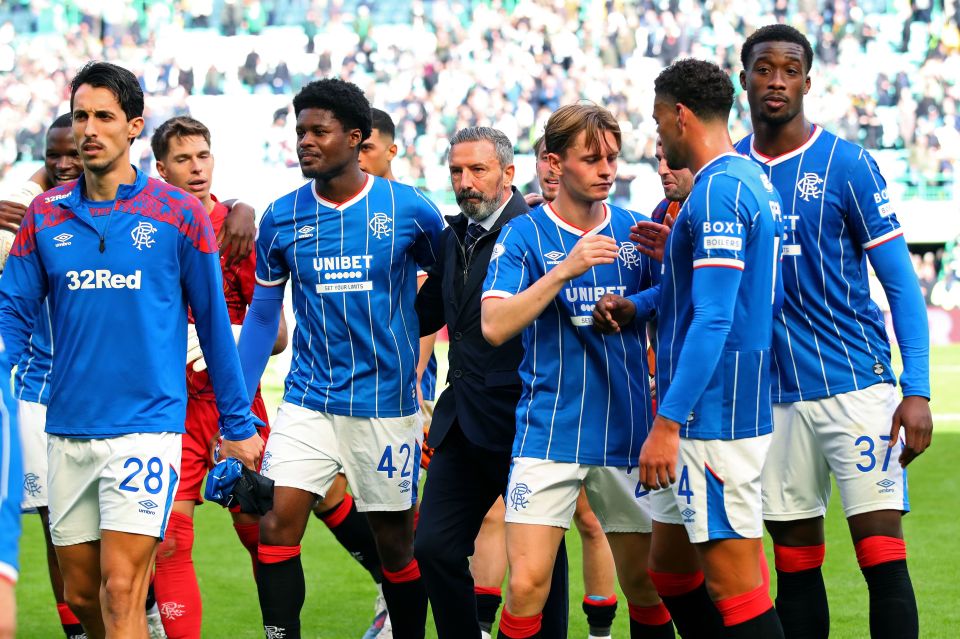
As the squad at Ibrox continues its season, the news will fade into the background of the daily routine, replaced by training sessions, tactical meetings and the demands of the fixture list. But it will not be forgotten. Players will carry their own memories of watching him, of learning from him, of wanting to be like him. In that sense, the retirement of Cristiano Ronaldo from international football is not an ending so much as a transition, from the stage on which he performed to the legacy that will continue to shape the game for generations.