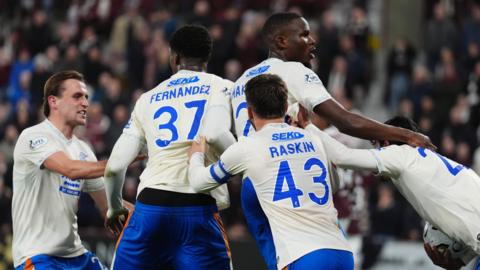
When a manager is asked about one player in the days before a major match, it usually means that player is in the spotlight for the wrong reasons. That is the situation Derek McInnes found himself in this week, as questions about Emmanuel Fernandez followed Rangers into the build-up to Saturday’s Premier Sports Cup semi-final against Aberdeen at Hampden. The Nigerian centre-back has had a few high-profile errors in recent weeks, including during the 2-2 draw at Hearts on Wednesday night, and the criticism has been loud enough that McInnes felt the need to speak up on his behalf. His response was calm, firm and pointed, and it said a lot about how he intends to handle both his squad and the pressure that comes with managing Rangers.
The central message was simple. McInnes made it clear that he thinks Fernandez has been a significant part of the team’s strong performances this season, and that the picture painted by the recent criticism is incomplete. The defender is only twenty-five, he has played in every single match for Rangers this term, and the team has kept more clean sheets than anyone else in the league. Those are not the numbers of a liability. They are the numbers of a player who has been doing a difficult job consistently well, and who happened to have one night, midweek at Tynecastle, when things did not go his way.
What clearly irritated McInnes was the timing and the selectiveness of the attention. He pointed out that he tends to be asked about Fernandez only when the player has had a bad game, and not when he has played well. The most recent example was fresh in his mind. Just four days before the Hearts match, Rangers had beaten St Johnstone comfortably at home, and Fernandez had been outstanding in that game. Nobody asked about him then. It is a fair observation about the way football coverage works, because defenders in particular live in a world where mistakes get replayed endlessly while the quiet, reliable work goes unnoticed. A centre-back can make forty good decisions in a match and be remembered for the one that went wrong.
It is also worth thinking about what McInnes said regarding the Hearts game itself. He did not simply defend Fernandez by claiming the mistakes did not happen. Instead, he argued that Wednesday night was a collective failing, not the fault of one man. That is a subtle but important distinction. A defensive error rarely arises in isolation. It usually follows a loss of possession further up the pitch, a poor decision in midfield, a lack of cover from a teammate or a general loss of shape under pressure. On the night at Tynecastle, Rangers were outplayed for long stretches, conceded twice in quick succession after half-time and only rescued a point with Olwethu Makhanya’s header at the end. When a team plays like that, the back line inevitably looks exposed, and the individual who makes the most visible mistake is usually the one who takes the blame.
That reading fits what happened during the match. Rangers had taken the lead early through Kevin Kelsy, and then found themselves hemmed in by a Hearts side that was energetic, direct and fuelled by one of the loudest crowds the stadium has produced in years. In that environment, any defender would have struggled. The visitors lost control of the midfield, the pressing became disorganised, and the gaps between the lines grew wider as the game went on. A centre-back in that situation is constantly trying to deal with problems that are not of his own making, and when one of those problems turns into a goal, he is often the one left standing in the wrong place. It does not excuse the errors, but it does explain them.
McInnes has good reason to want to protect Fernandez, and not only because of loyalty. A confident centre-back is worth far more than a nervous one, and public criticism can erode confidence quickly. Defenders who start doubting themselves tend to hesitate, and hesitation in the penalty area is one of the most dangerous things that can happen to a team. If Fernandez begins to play cautiously, afraid of making another mistake, his strengths will disappear, and Rangers will lose one of the foundations of their season. By coming out and backing him, McInnes is sending a message to the player and to the rest of the squad that mistakes will be treated as part of the game, not as a reason to panic.
There is also a practical consideration. Fernandez has started every match for Rangers this season, and that level of consistency is hard to replace. Rangers have kept more clean sheets than any other team in the league, which suggests that the defence as a unit is working well. If McInnes were to drop Fernandez in response to a few bad moments, it would disrupt a partnership that has been effective for months. Stability at the back is one of the most valuable assets a team can have, and a manager who understands that will think carefully before making changes in response to media pressure. McInnes has built his reputation on getting teams to defend solidly, and he is not about to abandon that principle now.
The defence of Fernandez comes at an important moment, because Rangers are about to face their biggest test of the season so far. The League Cup semi-final at Hampden offers a chance for McInnes to win the first trophy of his time in charge, and everything about the context makes it significant. Rangers have won three trophies since 2012, which is a modest return for a club of their size and ambition. The last two seasons have ended without any silverware at all, and the supporters are hungry for a change. McInnes took over in June, and he is the latest manager to be handed the task of turning that poor record around. A trophy this early in his tenure would be a major statement.
McInnes himself has been open about what a first piece of silverware would mean. He described the potential trophy as hugely important for confidence and belief, and that is true on several levels. For the players, winning a cup final is a milestone that can transform a squad’s mentality. It proves that the methods work, it builds momentum for the rest of the season, and it creates a habit of winning that can carry through the difficult stretches. For the supporters, it provides evidence that the club is heading in the right direction and that the investment of recent years is starting to pay off. And for McInnes, it would be a chance to establish his authority in a job where patience is rarely in long supply.
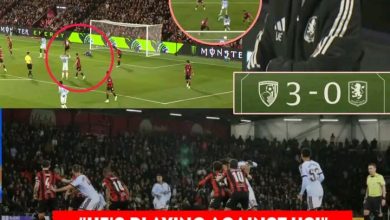
The route to the semi-final has already been encouraging. Rangers beat Celtic 3-0 at Ibrox in the quarter-finals, a result that sent a strong signal about the team’s quality and their ability to perform in big matches. Beating the champions by that margin does not happen by accident, and it showed that McInnes has already built a side capable of handling pressure. That victory will give the squad confidence going into Saturday, even if the opponent is different. It also adds a little extra weight to the expectations, because supporters who watched the Celtic game will now be asking why Rangers cannot go one step further.
Those expectations are reinforced by the form of the opposition. Aberdeen have been struggling, and their recent results explain why Rangers are widely seen as strong favourites. The Dons have lost three of their last four league games, including a 1-0 home defeat to Falkirk on Wednesday night. That is the sort of run that drains confidence and raises questions about the manager, and it is not an ideal preparation for a Hampden semi-final. On paper, Rangers should have the advantage in almost every department, and a place in the December final against either Hearts or Hibernian looks within their grasp.
Yet McInnes is too experienced to take any of this for granted, and he made his caution clear. Cup semi-finals, he said, are often tense affairs, shaped by nerves and by the weight of what is at stake, and they do not always produce the best football. That is a lesson he has learned through experience, and it is one that has been proven many times in Scottish football. The favourites in these games frequently struggle to impose themselves, because the pressure of expectation can be heavier than the pressure of being the underdog. A single mistake, a moment of brilliance or a lucky bounce can decide the outcome, and the margin between a place in the final and a damaging defeat is often tiny.
He also made a point of respecting Aberdeen’s manager, Stephen Robinson, who is no stranger to success in one-off matches. Robinson lifted this trophy last season when he was in charge of St Mirren, which means he knows exactly what it takes to win a cup tie against a bigger club. McInnes described him as an experienced and capable manager, and noted that the players at his disposal also have plenty of experience. That is not just politeness. It is a recognition that Aberdeen, despite their poor form, have the ability to produce a big performance when it matters, and that a team with nothing to lose can be a dangerous opponent. Rangers will need to be at their best to avoid being caught out.
There is an intriguing personal dimension to the match as well. McInnes spent eight years as manager of Aberdeen, and he remains closely linked with the club and its supporters. Facing his old team at Hampden, just days after returning to Tynecastle to face Hearts, means he is in the unusual position of playing two former employers in the space of a few days. He admitted that he has sympathy for his fellow manager, understanding the pressure that comes with the Aberdeen job. He pointed out that managing the club is never easy, even in good times, and that Robinson is a good man who will get things right if he is given time. It was a generous thing to say about someone he is hoping to beat, and it reflected the respect that exists between managers who have walked in each other’s shoes.
McInnes also drew on his own history to put the occasion in perspective. He has been to Hampden many times, and he has managed St Johnstone, Kilmarnock and Aberdeen in semi-finals. On each of those occasions, his teams were not the favourites, but he always believed they could win. That experience, he suggested, is why he expects Aberdeen to feel the same confidence this time. It is a useful reminder that the underdog tag does not carry the weight many people assume, and that a team with belief can overcome far greater odds. It also shows that McInnes understands the mindset of the opposition better than most managers would.
For Rangers, the key will be to stay focused on their own performance and not get distracted by talk of favouritism. McInnes was clear about this, saying that he is concentrating on his own team and believes that if they reach their usual standard, it should be enough to win. At the same time, he warned that the game will require a strong performance over the full ninety minutes. That is a sensible approach, and it fits the pattern of the way he has managed the squad so far. He does not look for excuses, he does not make bold predictions, and he emphasises the importance of preparation and discipline above all else.
Where does that leave Fernandez? Realistically, he is likely to start, and the semi-final will provide a valuable opportunity to answer his critics. A strong, assured performance against Aberdeen would help restore his confidence and remind supporters of why he has been so important to the team this season. If he can handle the physical demands of the Dons’ attack, win his aerial duels and stay calm under pressure, the recent criticism will be forgotten very quickly. Defenders have short memories when they are doing their jobs well, and a clean sheet at Hampden would go a long way towards silencing the doubts.
It is also worth noting that the backing from McInnes is a double-edged sword. On the one hand, it gives Fernandez the support he needs to play without fear. On the other, it puts him under a certain amount of pressure to justify the manager’s faith. Public loyalty from a boss is a powerful motivator, but it also raises the stakes. If another mistake occurs on Saturday, the scrutiny will intensify, and McInnes will find it harder to defend a player who has failed to repay the trust placed in him. That is the nature of the position, and Fernandez will know that he has been given both a vote of confidence and a challenge.
Looking at the broader picture, the situation is a good example of the type of management that McInnes is bringing to Rangers. He is practical, measured and protective of his players, and he is willing to speak up when he feels they are being treated unfairly. At the same time, he is aware of the need for accountability, and he does not hide from the fact that Wednesday’s performance was not good enough. By describing it as a collective failure, he accepted responsibility on behalf of the whole group, and that is a mark of leadership that players tend to respect. It also protects individuals from being singled out, which helps maintain unity in the dressing room.
This approach will be tested over the coming days, with the League Cup semi-final offering the first big opportunity. If Rangers perform well and reach the final, McInnes will have shown that his methods work and that his squad can deliver under pressure. If they stumble, the questions will return, and the focus will once again fall on individual mistakes. That is the reality of managing a club like Rangers, where every game is scrutinised and every decision is debated. It is a pressure McInnes has chosen to take on, and he seems comfortable with it.
In the end, the most important thing for Rangers is to put the disappointment of Wednesday night behind them and approach Saturday with clarity and confidence. They have the quality, the momentum and the favourable circumstances to reach another cup final, and they have a manager who is clear about what he wants from his team. If Fernandez and his teammates can show the discipline and togetherness that have marked their best performances, there is every reason to believe they can get the result they need. And if they do, the story of this week will not be about a defender’s mistakes, but about a team that stuck together and took a significant step towards ending a long wait for silverware