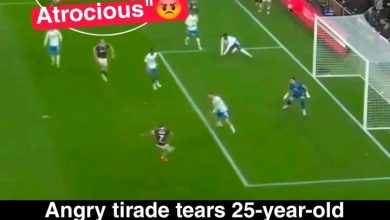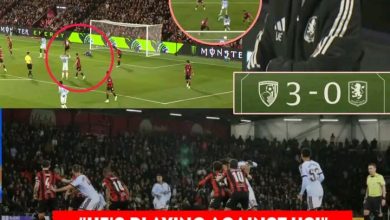
Every so often a football match produces a performance so poor that it becomes the story, and for a lot of Rangers supporters on Wednesday night, that performance belonged to Djeidi Gassama. The winger started the draw at Tynecastle, lasted barely eight minutes of the second half and left the pitch having completed only four passes. By the time he trudged off, the verdict from the stands and from social media was already in, and it did not take long for the pundits to weigh in as well. David Edgar summed up what he had seen as an all-time stinker, a phrase that captures how raw the reaction was to a performance that stood out even on a night when plenty of Rangers players struggled.
The context is important, because this was not an ordinary league game. Derek McInnes was returning to Tynecastle for the first time since leaving Hearts in the summer, and the stadium was packed for a meeting between the second and third-placed teams in the Premiership. Rangers arrived with ten wins and a draw from their previous twelve games under McInnes, which meant there was real momentum behind the visitors. In that kind of atmosphere, with the noise and the emotion and the history, a manager needs his players to be at their sharpest. What he got from his right-sided attacker was something very different.
The manager’s team selection added a small twist to the story. McInnes made one change to the side that had beaten St Johnstone convincingly at the weekend, with Badredine Bouanani dropping out and Gassama coming in. That was a perfectly reasonable decision on paper. Gassama has been one of Rangers’ most dangerous attacking players this season, and the Rangers Review noted that his best start under McInnes had come at Pittodrie, where he consistently drove his team up the pitch. A winger with that sort of record is exactly the kind of player a manager wants against a side that sits deep and counters quickly. Nobody could have called the selection reckless.
Unfortunately, the performance did not match the expectation. The Rangers Review described him as poor, giving up possession almost every time he received the ball. That is the sort of assessment that tends to ring true when you watch a winger repeatedly lose the ball in dangerous areas, and it matches what the numbers later showed. Gassama touched the ball just nineteen times during his time on the pitch and was successful with only four of the seven passes he attempted. For a player who is supposed to be a creative force, those figures are startling. Nineteen touches in roughly fifty minutes is not the profile of a winger who is influencing the game, and four completed passes is barely enough to register on the stat sheet
It is worth pausing on how unusual those numbers are for a player in his position. Wide attackers in a modern side are expected to receive the ball, take defenders on, combine with full-backs and deliver at the end of the move. Even a winger who has an off night will normally find enough of the ball to make some kind of contribution. When a player touches the ball so rarely and completes so few passes, it suggests that he was either not getting the service he needed, or that he was not making himself available, or that he was losing it so quickly that the team stopped trusting him in possession. In Gassama’s case, the evidence points mainly towards the second and third explanations.
The first half set the tone. Rangers had made the perfect start, with Kevin Kelsy finishing calmly after a slack touch from a Hearts defender and a quick exchange with Ryan Naderi inside the box. It was precisely the kind of goal that McInnes had wanted, and the sort that the home crowd had dreaded. But after that early lead, Rangers did not build on it, and the game quickly became a struggle. Hearts had nine shots to Rangers’ four at half-time, even though they had not created a great deal of real danger. That is a picture of a team under pressure and not really getting out of its own half, and Gassama’s inability to hold the ball or carry it forward contributed to that.
What made it worse was that Gassama had a specific job to do. Hearts were forced into a reshuffle because of injuries, with goalkeeper-turned-defender Beau Reus playing at right-back and having to deal directly with Gassama. That meant Gassama was up against an opponent who was not a natural full-back, which should have been an invitation to attack. If there was ever a night to isolate a makeshift defender and run at him, this was it. Instead, the Rangers winger rarely threatened and gave the Hearts man a comfortable evening, which is what turns a poor performance into a missed opportunity.
The half-time interval did not change anything. McInnes was clearly unhappy with what he had seen, and he sent the same eleven back out to give them a chance to improve. He did not like what he had seen in the first period but let the same team head back out onto the pitch to show they could do better, and when they did not, he acted quickly. According to Brit Brief, he had seen enough eight minutes after the restart, and Gassama was the man who made way. It was a decisive piece of management, and it said a great deal about how the manager viewed the performance. Taking off a player so soon after half-time is never done lightly, and it is a clear signal that the person in the dugout has run out of patience.
The substitution turned out to be the right call, which is part of why the criticism has stuck. McInnes sent on Bouanani for Gassama, and the Algerian winger gave the visitors a bigger threat in attack before delivering the free-kick from the left that Olwethu Makhanya headed home as stoppage time approached. In other words, the player who had been left out of the starting line-up made the most important contribution of the night for Rangers, while the player who had replaced him contributed almost nothing. It is the sort of contrast that makes a bad performance look even worse, and it is exactly what a pundit like Edgar would focus on when explaining why the display was so disappointing.
The reaction from the press was largely in line with that view. Brit Brief rated Gassama five out of ten, criticising his decision-making and his habit of losing possession too easily, and noting that he did little to trouble Hearts. The Scotsman’s coverage was similarly blunt. It said he was hooked not long after the restart and did not look happy with the decision, but argued that the manager was justified, because Gassama still lacks the end product to be considered a player who must be on the pitch at all times. That last observation is the heart of the criticism. Nobody doubts Gassama’s pace or his willingness to run at defenders. The question is whether the final ball, the shot or the decision at the critical moment is good enough to justify his place.
That is a fair challenge, and it is one that has followed him for a while. Gassama is a dynamic and exciting player, and his statistics this season are respectable. He has four assists to his name, which shows that he does produce when things go well. But wingers who rely on pace and trickery tend to be inconsistent, and a bad night can look very bad indeed. When the end product does not arrive, the same qualities that make him thrilling, such as his willingness to dribble and take risks, can turn into liabilities. A dribble that works creates a chance. A dribble that fails hands the opposition a counter-attack.
That is exactly what happened in the second half. The player who moved across to the left when Gassama went off lost possession cheaply in the build-up to Hearts’ second goal. The tactical reshuffle that followed his substitution was a bit untidy, and it took time for Rangers to settle again. The visitors had a lethargic start to the second period and conceded twice in quick succession, first to Claudio Braga and then to Calvin Miller. Whatever one thinks about the extent of Gassama’s own responsibility, the fact remains that the match swung against Rangers shortly after he left the pitch, and it left the manager with a problem to solve.
It would be unfair to put all of the blame on one player, however, and that is worth saying clearly. The team as a whole was flat in the second half, and several players were below their usual standard. The Scotsman also pointed out that Minsu Kim was quiet on the left flank and appears more influential when he plays in a central position. Rangers had too many players who were not performing, and the midfield struggled to take control. Gassama was simply the most visible example, partly because his role is so closely tied to creativity and attack, and partly because he was the one the manager chose to take off. When a team plays badly, the winger who loses the ball repeatedly is always going to be the easiest target for criticism.
There is also the matter of how the game ended, and that complicates the picture further. Olwethu Makhanya’s header in the eighty-ninth minute stopped Hearts from closing the four-point gap between the two teams, and it gave Rangers a share of the spoils that few people would have predicted midway through the second half. Kris Boyd believed Rangers would be delighted to leave Tynecastle with a draw after being outplayed for long periods. That is an important qualifier, because it means the result did not tell the whole story. A point was a good outcome, but the performance that led to it was far from convincing, and it left plenty of questions for the manager to answer.
Seen from that angle, Gassama’s night looks like a symptom of a wider issue. Rangers have been winning a lot of games under McInnes, and the early signs have been encouraging. But a team that wins ten out of twelve can also hide problems, and a game like this one exposes them. Against a well-organised side in a hostile atmosphere, the margin for error is much smaller, and individual mistakes carry a much heavier price. If Rangers want to challenge for the title, they need players who can perform in those moments, and they need wide men who can hold the ball and make good decisions when the pressure is on.
For McInnes, the challenge is to decide how to handle the situation. He has options on the right side, and Bouanani’s impact off the bench suggests that he might be the better choice for some games. Dropping Gassama entirely would be a strong message, but it could also damage the confidence of a player who has been one of the team’s most productive attackers. A more measured approach might be to give him a rest or a role off the bench for a game or two, and then bring him back when he is ready. Managers who handle these situations well tend to be those who balance firmness with understanding, and McInnes has a reputation for doing both.
For Gassama himself, the next step is important. Every winger has bad nights, and the best ones respond with a good performance the following week. He is still young, he has the talent to be a top player in the league, and he has shown on many occasions that he can change a game. What he needs to work on is consistency, and in particular the discipline to make the right decision at the right moment. If he can improve his passing, protect the ball in tight areas and pick his moments to dribble, he will be a much more complete player, and the criticism will fade quickly.
The pundit reaction is also part of the story, and it reflects the nature of modern football media. A phrase like all-time stinker is deliberately provocative, and it is designed to grab attention, but it also captures the feeling of supporters who watched the game and felt let down. Edgar hosts the Heart and Hand podcast, which has built its reputation on speaking candidly about the problems at Ibrox, and the show has long been known for its willingness to say what many fans are thinking. In that sense, the harsh verdict was entirely in keeping with the style of someone who tells it like it is.
It is also worth remembering that a single bad night does not define a player. Gassama has had plenty of good performances for Rangers, and there is every chance he will have more. The best response to a harsh critique is not to hide from it, but to use it as motivation, and plenty of footballers have done exactly that. The next few games will tell us a lot about his character, and about whether he is ready to take on the extra responsibility of being a regular starter at a club where the expectations are so high.
In the end, the story of the night is more complicated than a single performance. Rangers drew a difficult game away from home after going behind, they showed resilience to rescue a point, and they kept their title challenge alive. At the same time, they were outplayed for long spells, and several players, including Gassama, were well below their best. That mixture of relief and frustration is typical of a team that is still developing, and it means McInnes has plenty to work on in the coming days
So was it really an all-time stinker? That depends on your standards, but the evidence is hard to ignore. Four completed passes from seven attempts, nineteen touches, a substitution eight minutes after the break and a replacement who made the decisive contribution is not a record any winger would want to have. It was the kind of display that invites sharp words from pundits, and it is no surprise that David Edgar and others reacted the way they did.
What matters now is what comes next. Gassama has a chance to respond, McInnes has a decision to make, and Rangers have a title race to keep alive. If the winger bounces back with a strong performance, the story will be forgotten quickly. If he does not, the questions will get louder, and the manager will have to consider whether his best option on the right side is someone else. Either way, Wednesday night at Tynecastle will be remembered as a night when a talented player had a very bad day, and when a draw felt a lot better than it should have