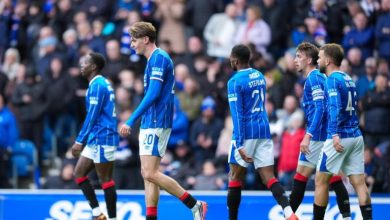
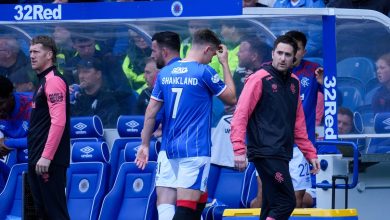
The Rangers starlet who already wants to sign a new contract at Ibrox, months after last one

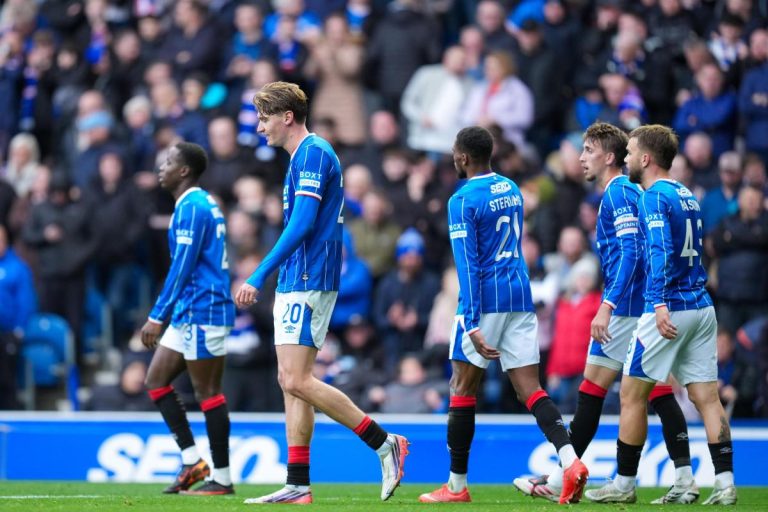
The basic facts are simple enough. McGuire agreed a three-year contract extension with Rangers last month, despite receiving transfer offers from England that date back to the time of his first professional deal in 2025. That sentence contains almost everything that matters about this story. It tells us that he is highly rated, because clubs in England do not chase teenage goalkeepers unless they believe they have found something special. It tells us that Rangers took the threat seriously, because a three-year commitment is not a token gesture. And it tells us that McGuire himself made a choice, turning down the chance to move south and backing himself to succeed at Ibrox.
What makes the timing interesting is how quickly it all happened. He signed his first professional terms at the age of sixteen in 2025, and by around Christmas of that year he was involved with the first team on a full-time basis. That is a startling jump for a goalkeeper, who typically spends years learning the craft in the youth ranks and on loan before being trusted anywhere near a senior squad. McGuire went from being a promising schoolboy to a regular presence in first-team training in a matter of months, and the club clearly decided that a player moving that fast deserved a more serious deal than the one he first signed.
The contract itself matters, and McGuire has been refreshingly honest about why. In his own words, the first professional contract is an important milestone, but the one you sign after it is the one that really counts, because that is the point at which both sides are making a genuine commitment to each other. The comparison is a sensible one. A first deal is often a reward for promise, signed when a youngster is still finding his feet. A second deal is a reflection of what has been delivered and what the club expects to come next, and it usually comes with a clearer sense of the pathway ahead.
That word, pathway, is one of the most overused in modern football, but in this case it carries real weight. McGuire has said that he would never have signed the new contract if he did not believe there was a future for him at Rangers. That is the key sentence in the whole story, because it explains why a teenager with options elsewhere would choose to stay. Young players are not naive. They know that clubs promise opportunities all the time, and they know that those promises often evaporate when a new manager arrives or when a more expensive signing comes through the door. For McGuire to commit this firmly suggests that he has seen something concrete, whether that is the way he is used in training, the conversations he has had with the coaching staff or the fact that he is now officially listed as part of the first-team squad.
That last detail is not a small one. McGuire is now officially listed as a first-team squad member, and he has been included in most matchday squads since becoming involved full-time with the senior group. For a goalkeeper, being on the bench is both a privilege and a form of education. It means sitting in the dugout during high-pressure games, watching how the number one deals with crosses, communication and decision-making, and being ready to step in if something goes wrong. It also means experiencing the atmosphere of Ibrox, Tynecastle and Celtic Park from a position close to the action, which no training session can replicate. These are the invisible lessons that shape a goalkeeper’s temperament, and McGuire is absorbing them far earlier than most.
His physical profile helps explain the interest too. At 6ft 5in, McGuire already has the frame that modern goalkeepers need, and he is still only seventeen. Height alone does not make a goalkeeper, of course, and plenty of tall players struggle with co-ordination, footwork and speed of movement. But it gives coaches a platform to build on, and it means he can command his area, claim high balls and make himself large in one-on-one situations. Clubs in England, where physical presence is prized, have clearly noticed, and the fact that the interest has been consistent since 2025 suggests that it was not just a passing curiosity.
He also arrived at Rangers with a reputation to build, and he did it quickly. He became a regular for the Under-18s soon after arriving at the club and helped Rangers win the CAS Elite U19 league last year. Winning a title at youth level does not guarantee a senior career, but it is a useful sign. Goalkeepers who thrive in winning environments tend to develop good habits, because they are used to the pressure of high-stakes matches and the expectation of keeping clean sheets. It also gave McGuire a platform to be seen, both by Rangers coaches and by scouts from other clubs, which is probably one reason the interest from England grew as quickly as it did.
None of this means that the path ahead will be smooth. Goalkeeping is one of the hardest positions in which to break through, because there is only one place available, and the person occupying it often stays there for years. A young goalkeeper can be the most talented prospect in the country and still spend several seasons waiting for a chance. The challenge for McGuire is to remain patient while continuing to improve, and to avoid the temptation to push for a move or a loan before he is ready. The three-year contract gives him the security to do that, and it gives the club time to decide how best to develop him.
The comparison with other young Rangers players is instructive. Over the past year or so, the club has made a point of tying down several promising youngsters. Left-back Ashton Scally, then sixteen, agreed a new contract despite interest from Chelsea and Manchester City, a development that was described internally as a coup. Others, such as Bailey Rice, who signed a one-year deal with an option for a further year after attracting interest from clubs on the continent, have followed a slightly different route, with shorter commitments that keep their options open. Taken together, these deals suggest a clear strategy, which is to lock in talent early and avoid the situation in which Rangers invest in a player’s development only to lose him for nothing.
That strategy makes sense, and McGuire is arguably its most important beneficiary. English clubs have long targeted Scottish academies, offering contracts and compensation packages that smaller clubs struggle to match. For a player aged sixteen or seventeen, the lure of the Premier League or the Championship can be powerful, especially when it comes with the promise of top-class facilities and a larger platform. By offering McGuire a longer deal and a visible pathway, Rangers have made a statement that they intend to compete. They are not just hoping to keep him, they are actively building around him, and that is a message the player and his family can understand.
There is, of course, a financial side to all this. A three-year deal for a seventeen-year-old protects Rangers’ investment, but it also gives them an asset. If McGuire develops as expected, his value will rise considerably, and the club will be in a strong position whether he goes on to become the first-choice goalkeeper or eventually earns a lucrative move. If he does not, the cost of the contract is relatively low, and the club has lost very little. That balance of risk and reward is one of the reasons why clubs of all sizes are increasingly willing to commit early to their best academy products.
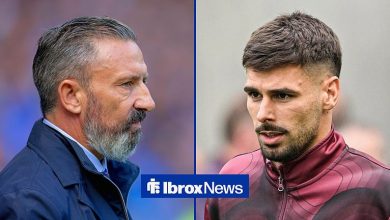
The change of manager also plays a part. Under Derek McInnes, Rangers have shown a willingness to give young players a chance, and McInnes has a history of trusting academy graduates when they prove they are ready. For a goalkeeper like McGuire, that is encouraging, because it suggests that the route to the first team will not be blocked simply by a preference for experienced signings. It also means that the coaching staff will be watching closely, and that every training session and every minute spent with the senior squad counts towards the bigger picture.
Of course, the senior goalkeepers ahead of him in the pecking order matter too. McGuire will learn a great deal from working alongside experienced professionals, and the standard of training at a club like Rangers is a better education than most teenagers could hope for elsewhere. The best young goalkeepers are those who treat every session as a chance to learn, who watch how their more experienced colleagues handle pressure, and who build the kind of relationship with the goalkeeping coach that lasts for years. McGuire seems to understand this, and his comments suggest that he sees the senior squad as a classroom rather than a waiting room.
It is also worth thinking about the mental side of life as a young goalkeeper at a club the size of Rangers. The attention is relentless, the expectations are high and the mistakes are magnified in a way that is hard for anyone to appreciate until they experience it. A seventeen-year-old has to deal with all of that while also finishing school, growing into his body and learning a technically demanding position. The decision to sign a long contract can help by removing one source of uncertainty, because it means he can concentrate on football without worrying about what happens next.
From the club’s perspective, McGuire’s decision is a statement of confidence in the academy and the way it is run. Every time a talented young player turns down a move to England in favour of staying at Ibrox, it makes it easier to persuade the next one to do the same. The supporters, too, tend to respond to a young player who chooses to stay, because it reinforces the idea that the club is a destination and not just a stepping stone. For a fan base that has seen its share of departures in recent years, that matters more than it might appear.
If everything goes well, the story of the next few years is easy to imagine. McGuire continues to train with the first team, gains experience on the bench and perhaps spends a spell on loan at a lower-league club to get regular games. He grows stronger, sharper and more confident, and by the time his contract nears its end, he is knocking on the door of the first team. At that point, Rangers will have a decision to make, but it will be a good one, because it will mean they have developed a goalkeeper capable of playing at the highest level in Scotland.
If it does not go well, the picture is less rosy but not disastrous. Goalkeepers develop at different speeds, and a setback at seventeen is hardly a verdict on a whole career. The important thing is that McGuire has chosen an environment where he is being challenged and supported, and where the people around him believe in his potential. Whatever happens, the experience of training with a top-level squad at such a young age will stand him in good stead, and the contract provides the stability to ride out any bumps along the way
Ultimately, the most striking thing about this story is how little of it is about money or status. It is about a teenager looking at his options, weighing up the promises made to him and deciding that his best chance of becoming the player he wants to be lies at the club he joined as a boy. That is a mature decision, and it reflects well on both McGuire and Rangers. Whether it pays off will depend on years of hard work, patience and a little luck, but the foundations are strong.
For now, the picture is an encouraging one. A tall, talented goalkeeper has committed himself to Rangers for the next three years, turned down offers from elsewhere and made it clear that he sees a real future at Ibrox. The club has secured a young player it believes in and sent a message to the rest of its academy that the pathway is genuine. In a game where promising teenagers are often lost before they ever get the chance to prove themselves, that is no small achievement, and it makes Rydnn McGuire one of the most interesting young names in the Rangers squ