The Role Lawrence Shankland Will Play in Rangers’ Clash With Hearts as Derek McInnes Calls on the Skipper’s Influence

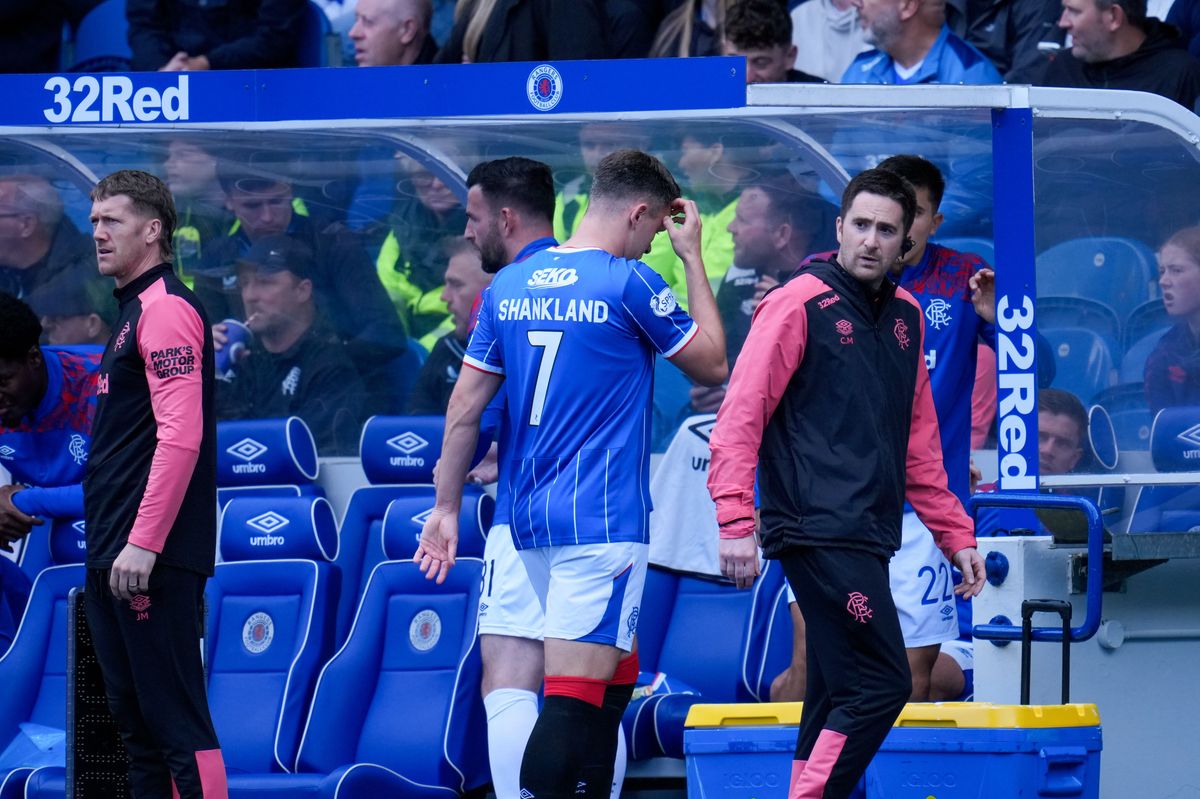
There are not many fixtures in Scottish football with as much emotional baggage as this one. Rangers against Hearts would be a big occasion at any time, but with Lawrence Shankland and Derek McInnes now on one side and their old club on the other, it has turned into something much more personal. Both men spent last season at Tynecastle, and both are now at Ibrox. When Hearts come to Glasgow, the question is not simply who wins. It is how the captain who used to lead them will be used by the manager who used to lead them both.
The background matters, so it is worth setting out. Shankland, a lifelong Rangers supporter, was named Rangers captain after his close-season move from Hearts, where he had also worn the armband. He took over from James Tavernier, who left the club after eleven years at the conclusion of last season. For a Glasgow-born striker who grew up supporting the club, it is a huge honour, and Shankland said as much when the news broke. It also represents a considerable change for a dressing room that had been led by the same man for so long.
McInnes did not rush the decision. He rotated the captaincy through pre-season and wanted to look carefully at the whole squad before settling on a name. In the end he went with the player he knew best. He explained that he had already seen first-hand how well Shankland runs a dressing room, thanks to his years as Hearts captain. That sort of evidence is hard to come by when a manager is building a new group from scratch, and it explains why Shankland was always the favourite even before the announcement was made.
The squad McInnes has assembled is also very different from the one he inherited. Rangers brought in a large number of new players over the summer, and the club has been working on further additions in attack. A group that has changed this much needs a steadying presence, someone who can set standards in training, speak up when things go wrong and absorb some of the pressure when results do not arrive. McInnes has been clear about that. He wants Shankland to have a big influence both on and off the pitch, and he has been equally clear that this influence does not depend on whether his captain is in the starting eleven.
That last point is the heart of the story ahead of the Hearts game. When McInnes talked about Shankland’s influence, he was not only describing the striker’s goals. He was describing a role that goes beyond ninety minutes of football. He said he expected Shankland to be a brilliant captain who has a big influence at the club whether or not he starts games. It is a carefully chosen phrase, and it hints at the possibility that Shankland may not always be the first name on the teamsheet. In a squad with competition for the central striking role, even the captain has to earn his place.
The early weeks of the season have not been straightforward for him. Shankland has had a difficult start, as have Rangers as a team, and goals have not flowed as freely as supporters hoped. That is not unusual for a striker who has moved clubs, particularly when the team around him is still bedding in. New partnerships take time, and a forward who thrives on service from familiar teammates can take a while to find the same rhythm with strangers. McInnes, for his part, has said he is relaxed about it. He pointed out that a player who knows his way around the penalty box and understands how to score goals is not someone he worries about for long.
That confidence is not misplaced. Shankland has built his reputation on the quality of his movement and finishing, and he has scored regularly at Premiership level for several seasons. He drops into pockets of space between the lines, he times his runs into the box well, and he is comfortable finishing with either foot or his head. He also links play intelligently, which is why McInnes has described him in the past as much more than a goalscorer. The Rangers manager has worked with him at Aberdeen and at Hearts, and he has known him since Shankland was a young boy. That history gives the relationship a level of trust that most managers and strikers never develop.
So what will his role actually be against Hearts? The most obvious answer is as the focal point of the attack. Hearts will defend in a compact shape, as they did for most of last season when they came within a final-day result of winning the title. Against a block like that, Rangers need a striker who can hold the ball up, bring wide players into the game and attack crosses. Shankland does all of those things well. His presence also gives the midfielders a reliable passing option, which helps Rangers retain possession when the opposition is pressing hard.
There is a second part to the role, and it is more subtle. Shankland knows Hearts better than almost anyone in the Rangers squad. He knows how their defenders like to play, which centre-back is more comfortable on the ball, who struggles when pulled wide, and how the midfield usually shifts when the opposition has possession. He knows their set-piece routines, because he spent a season being coached by the same staff who designed them. Whatever the formal tactical plan is, that inside knowledge is a resource McInnes can use, and it will almost certainly have been shared with teammates during the week.
The emotional side cannot be ignored either. Shankland spent years at Tynecastle, and by every account he was a hero there. He was the club’s most prolific scorer in a long time, and the supporters adored him. His departure was a blow for Hearts, who had just lost the title race on the final day of the season and then saw their captain, top scorer and talisman leave for Ibrox. For a player in that position, a return to face his old teammates carries a mixture of pride and awkwardness. Some players use it as fuel, while others find it distracting. A captain is expected to handle it, and McInnes is relying on Shankland to do exactly that.
That is where the idea of influence comes back into focus. When McInnes asks his skipper to lead, he is asking for more than a good performance. He wants Shankland to set the tone for the squad in a fixture that could easily become heated. Hearts will be physical, the crowd will be loud, and the temptation for a young team to get caught up in the occasion is strong. A calm head on the pitch makes a difference. A captain who keeps teammates focused, argues sensibly with the referee and refuses to be drawn into needless confrontations can save his team from the kind of mistakes that decide tight matches.
McInnes has also been careful not to put too much on one player. He has said that the role at Rangers is slightly different to the one at Hearts, and that he needs as many captains underneath Shankland as possible. The implication is that leadership has to be shared across the group, and that the armband should not weigh on a single pair of shoulders. This echoes a lesson from the Tavernier era, when so much responsibility rested on one player for so long. McInnes wants a leadership group that includes older heads and younger players who are willing to speak up, and that is a healthy approach for a team still finding its identity.
The new signings will have a part to play in that. Among the recent arrivals is Kosta Nedeljkovic from Aston Villa, and other additions have been brought in to give the squad more depth and energy. How quickly these players adapt will shape Rangers’ season, and a game against Hearts is a useful test of whether they can handle a high-pressure occasion. Experienced figures like Shankland can help them settle by making the first few weeks feel less overwhelming. The influence McInnes keeps talking about is partly about this kind of quiet, daily support that never appears in match reports.
There is also a tactical question about how Rangers will set up around him. A 4-2-3-1 with Shankland as the lone striker would give him support from three attacking midfielders, which suits his style because he can drop deep and let runners go beyond him. A 4-4-2 or a front two would give him a partner and more physical presence in the box, though it might leave the midfield a little light against a Hearts side that likes to dominate the middle. McInnes knows Hearts’ approach well, so he will have thought carefully about which structure gives Rangers the best balance between attack and security.
If Shankland starts, the supply line will be crucial. The wide players need to deliver quality crosses, the midfielders need to find the spaces between the lines, and the full-backs have to provide width without leaving the defence exposed. Hearts will try to cut the supply by pressing high and forcing Rangers into mistakes. If they succeed, Shankland could be isolated, which is the worst-case scenario for a striker who relies on combination play. The antidote is quick passing, intelligent movement and the confidence to play through pressure rather than away from it.
If, on the other hand, McInnes decides to hold Shankland back as an option from the bench, his role changes but remains important. A fresh, experienced striker who can step on in the second half against tiring defenders is a valuable weapon. He can also bring a different type of threat from a younger forward, using his strength and aerial ability to unsettle a back line that has spent an hour dealing with pace. Plenty of managers have won tight games by introducing a proven goalscorer at the right moment, and McInnes will be aware of that option.
Whichever route he chooses, the symbolism of the day will be obvious. Shankland returning to face the club that made him a star is a story that writes itself, and the headlines will follow him whatever happens. If he scores, the celebrations will be mixed with complicated feelings, and if he does not, the focus will turn to how the team coped without their captain’s usual contribution. Neither outcome would change the underlying reality, which is that he was signed to be a leader and a goalscorer for Rangers over the long term, not just for one afternoon.
What matters most for McInnes is the bigger picture. His job is to rebuild a team that has gone through a considerable transition, with a new captain, a new group of players and new demands from the supporters. A win over Hearts would be a statement, particularly given how close his old team came to the title last season, and it would give Rangers valuable momentum. A defeat, by contrast, would increase the scrutiny on the manager and the captain, especially if the performance lacked the intensity expected at Ibrox.
For the supporters, the most important thing is the sense that this is a team with leaders. Fans accept mistakes and bad results if they believe the players care and are fighting for each other, and a captain who sets that tone can win the crowd over even in difficult periods. Shankland understands this better than most, because he grew up in the stands watching the club he now represents. That connection is something McInnes values, and it is part of why he chose him over other candidates for the armband
The influence McInnes keeps mentioning will, in the end, be measured by results rather than words. If Rangers show the discipline, resilience and clinical edge needed to beat a good Hearts side, Shankland’s role will be seen as a success, whether he scores or not. If they struggle, questions will be asked about whether the captaincy has become a burden rather than a boost. That is the reality of the job, and it is why McInnes has been so keen to spread the responsibility around the squad rather than leave it all with one man.
Looking ahead to the match itself, Hearts will arrive confident and well organised, with a squad that has stayed together and a style that has proved effective against most of the league. They will be motivated to show that they can thrive without their former captain, and they will relish the chance to spoil the occasion for him. Rangers will need to be at their best, with a strong start, a disciplined shape and a willingness to take chances when they arrive. If the home side manages that, they should have enough quality to take the points.
My view is that this will be a tight, tense and emotional game, decided by fine margins. Rangers have the stronger individual talent on paper, but Hearts have the advantage of stability and a clear identity. Shankland’s influence, whether from the first whistle or from the bench, could tip the balance in a match where leadership counts as much as technique. A narrow Rangers victory looks the most likely result, though a draw would be no surprise given how evenly matched the sides appear.
Ultimately, the role Lawrence Shankland plays against Hearts will be defined by more than where he lines up. He is the captain, the focal point of the attack, the link between the manager and the dressing room and, for one afternoon, a man facing his past. McInnes has made it clear that he trusts him to handle all of those demands. Whether the skipper delivers on that trust will say a great deal about how Rangers’ season unfolds