Former Juventus player speaks out in support of Federico Chiesa as he struggles for Liverpool minutes

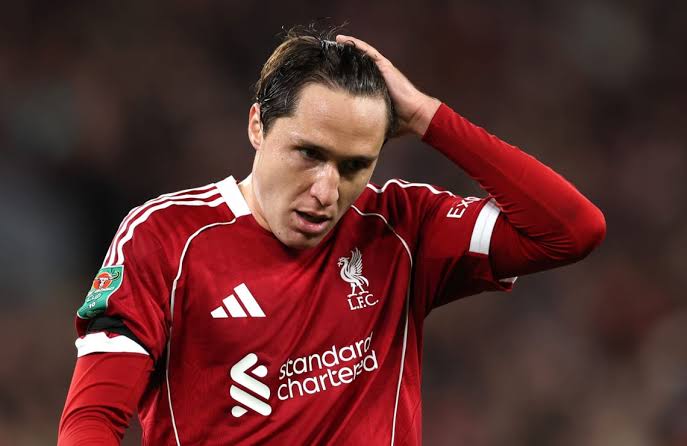
Federico Chiesa’s story at Liverpool has turned into one of the most emotional and talked-about sagas in recent months. When he joined from Juventus in August 2024, fans were filled with excitement and hope. Many believed that the Italian winger, known for his electrifying pace, fearless dribbling, and fierce determination, would become one of the stars of Arne Slot’s new Liverpool project. But more than a year later, things haven’t gone as expected. His time on the pitch has been limited, his impact inconsistent, and most painfully, his place in the Italian national team has slipped away. What was meant to be a dream move has instead become one of the toughest periods in his career.
For Chiesa, it has been a journey filled with patience, self-reflection, and quiet suffering. Since arriving at Anfield, he has not featured once for Italy, and his exclusion from the squad has started to raise eyebrows back home. In Italy, football is more than a sport—it’s identity, pride, and passion combined. To see one of their brightest talents struggling for game time abroad has sparked debates among fans, pundits, and former players.
Among those who have stepped forward to show love and support is Federico Bernardeschi, Chiesa’s former teammate at both Juventus and Fiorentina. Bernardeschi, who now plays for Bologna, has publicly spoken about how much he believes in Chiesa’s talent and how deeply he deserves another chance. For Bernardeschi, Chiesa’s story isn’t about failure—it’s about timing, faith, and rediscovery.
In a heartfelt statement at the Trento Festival, Bernardeschi didn’t just defend his friend; he spoke like someone who had walked that same painful path. “I truly love Fede like a brother,” he said emotionally. “He deserves it, he deserved it, and he will deserve it again. He’s an incredibly talented player. I remember his debut against Juventus in Turin with Fiorentina. I told him, ‘Don’t worry, play, you’re great, there’s no need for me to tell you anything else.’”
Those words paint a picture of two players who share not just a profession, but a deep human connection. Bernardeschi knows what it means to be criticized, doubted, and pushed aside. At Juventus, he too struggled for consistency despite his talent. And so, his words to Chiesa carry weight—they come from experience, from scars that only footballers understand.
Bernardeschi also touched on the heavy expectations that came with Chiesa’s famous surname. Being the son of Enrico Chiesa, a former Italian international and Serie A star, meant that Federico was always compared to his father. Bernardeschi said, “He already had the weight of his father’s surname, so it was as if he had to leave with an extra 30 kg in his backpack. I didn’t think it was right; it should have been Federico, not his father Enrico. He’s proven himself, and he’ll do it again.”
Those words echo the reality of many second-generation footballers. Talent is not enough when you carry a legacy; you must build your own story while being constantly reminded of someone else’s. For Federico Chiesa, that battle began years ago, and now, it continues in a new form at Liverpool.
When Chiesa signed for the Reds, there was optimism everywhere. Liverpool fans saw him as the kind of player who could bring back the flair and directness once shown by Sadio Mane. His energy, passion, and intensity seemed like a perfect fit for the Premier League. But football doesn’t always follow a straight path. Injuries, tactical adjustments, and competition for places have all worked against him.
At Liverpool, Arne Slot has often preferred younger and more settled players like Luis Díaz, Cody Gakpo, and Darwin Núñez in the attacking positions. For Chiesa, breaking into that front line has been a real struggle. Despite flashes of brilliance in training and cameos in games, he hasn’t yet had the extended run of matches that builds confidence and rhythm. And for attacking players, rhythm is everything—it’s what separates sharpness from hesitation, confidence from doubt.
But Chiesa’s story isn’t one of giving up. Those close to the club say he continues to work tirelessly in training. His teammates reportedly admire his attitude, and fans who’ve seen him play even in short bursts describe him as a “cult hero” —a player who represents passion even when luck isn’t on his side. That alone says a lot about the kind of person he is.
Yet, his lack of minutes has had a major consequence: his place in Italy’s national team. Under Gennaro Gattuso, Italy is rebuilding with a mix of youth and experience, but playing regularly is a must for selection. Gattuso himself has admitted that he speaks to Chiesa often, showing that the door isn’t closed. “The Chiesa issue is very simple,” Gattuso said recently. “I talk to my players a lot, and I want to make that clear. I speak every week with Fede, and he knows what I think of him. But I also have to respect what the player tells me. He does not feel at 100 per cent and wants to be at 100 per cent—that is the truth.”
Those comments revealed two things: first, that Gattuso values Chiesa highly, and second, that Chiesa himself is still fighting to reach full fitness and sharpness. Perhaps that’s what has made this period even more challenging—knowing that the door to Italy isn’t shut, but realizing he must walk through it with his own effort.
Italy’s qualification campaign for the 2026 World Cup is approaching a critical phase. If they qualify, the tournament could be a huge opportunity for Chiesa to rediscover himself on the global stage. But that will depend on how much football he plays in the next few months. Reports suggest that if he continues to struggle for minutes, he might consider leaving Liverpool in January to secure regular football back in Italy.
Rousing The Kop reported in September that several Serie A clubs are monitoring the situation closely. Juventus, his old club, and AC Milan have both been linked with potential moves if the opportunity arises. A return to Italy could help him rebuild his confidence, restore his rhythm, and reignite his national team ambitions. But there’s also a sense that Chiesa doesn’t want to give up on Liverpool just yet.
He loves the city, the fans, and the club’s history. Even in his limited appearances, his effort has never been in question. Liverpool fans have noticed how passionately he reacts on the touchline and how much he celebrates teammates’ goals. It’s that spirit that has earned him affection at Anfield, even when he’s not starting games.
Bernardeschi’s words might now serve as motivation for Chiesa. “We need such pure talent, which is sometimes criticized,” he said. “But in the end, talent is talent; it emerges in difficult moments. Like what happened to him last year, but look how he’s emerging. We talk often; he’s on a great team, and if he’s there, it’s because he deserves to be there. Nothing else matters.”
Those lines perfectly describe Chiesa’s journey. Football careers are not defined only by goals or trophies—they’re shaped by resilience. Every setback, every bench appearance, every missed call-up is a test of character. And if there’s one thing Chiesa has shown since his early days at Fiorentina, it’s that he doesn’t back down easily.
When Italy won the Euro 2020 (played in 2021), Chiesa was one of their brightest stars. His fearless performances against Spain and England reminded the world of his extraordinary drive. He became a symbol of Italian spirit—fast, emotional, and unrelenting. That version of Chiesa is still there, waiting to shine again, and Bernardeschi, Gattuso, and millions of Italians believe it’s only a matter of time.
For Liverpool, too, there’s hope that the second half of the season could finally bring out the real Federico Chiesa. The Premier League is unforgiving, but it also rewards persistence. If he can regain form, he could become a valuable option for Arne Slot, especially in the intense months ahead when injuries and fatigue start to affect the squad.
Chiesa’s story is more than a football story—it’s about identity, expectations, and the weight of dreams. From Florence to Turin, from Rome to Liverpool, he has always carried the same hunger. Even now, with his future uncertain, that hunger hasn’t died. It might be silent, hidden behind polite smiles in interviews and brief appearances from the bench, but it’s still burning.
In football, nothing is permanent—form, injuries, and opportunities can change overnight. And for a player like Chiesa, one spark could turn everything around. A single goal, a strong run of games, or a powerful performance in a big match could rewrite his entire Liverpool chapter.
For now, though, the love and faith from people like Bernardeschi show that Chiesa isn’t alone in this fight. The football world still remembers what he’s capable of, and sometimes, belief from others can reignite belief in yourself.
As the World Cup approaches and Liverpool continue their journey under Arne Slot, all eyes will quietly be on Federico Chiesa. Will he rise again? Will Italy call him back? Will he stay at Anfield or return home to Italy? These questions may soon have answers.
But one thing is already certain—Federico Chiesa’s story is far from over. It’s just another chapter in a career built on courage, heart, and the endless pursuit of redemption. Whether he stays in England or returns to Italy, the fire that drives him remains the same. And as Bernardeschi said, “In the end, talent is talent; it emerges in difficult moments.” Perhaps this difficult moment is exactly what Chiesa needs—to remind the world who he truly is.