Just 30 minutes ago, Savinho’s family revealed they couldn’t get in touch with him after the match — And when manager Pep Guardiola finally called back, Savinho was

On a cool evening in Manchester, when fans were still buzzing from the sound of the final whistle and the Etihad lights were beginning to fade into the night sky, something strange and unexpected happened, something that changed the mood of the entire blue side of the city in just a few minutes. People were walking out of the stadium in their usual loud, cheerful way, talking about the match, arguing about tactics, discussing who played well and who didn’t, but right underneath that noise, a silent storm was about to break. And when it finally did, Manchester City fans felt their heart jump into their throat because nobody imagined something so frightening could happen so quickly, especially involving one of their brightest young stars. Savinho, the fast rising talent who had been making headlines for his incredible pace and raw skill, suddenly went missing.
At first, the news didn’t come loudly. It started like a whisper, like one of those things people heard from someone who heard from someone else. But the whisper grew fast. Within only thirty minutes after the match ended, Savinho’s family came forward to say they could not reach him. They had tried calling, messaging, contacting the club, but there was no response. For a few seconds, people didn’t understand what was happening. Some thought it was a rumour, some thought it was a mistake, but as more voices joined, the truth became clear. Savinho was nowhere to be found.
The reaction was instant. Panic spread like wildfire. Fans who were still inside the stadium began to worry. Those walking home stopped and checked their phones again. Some even turned around and started running back toward the stadium gates as if they could somehow help or understand what was unfolding. In pubs around Manchester, news alerts started popping up on screens. Conversations stopped. Fear rose slowly like a heavy cloud covering the entire blue half of the city.
People didn’t know what to think. Was he injured? Was he kidnapped? Did he wander off? Did something terrible happen? The unknown became the scariest part, and in those moments, every City supporter felt the weight of uncertainty pressing down on their chest. Savinho wasn’t just a player. He was a young man with a bright future, someone who still smiled shyly during interviews, someone whose humility made fans love him as much as his football talent. The thought of him being in trouble was unbearable.
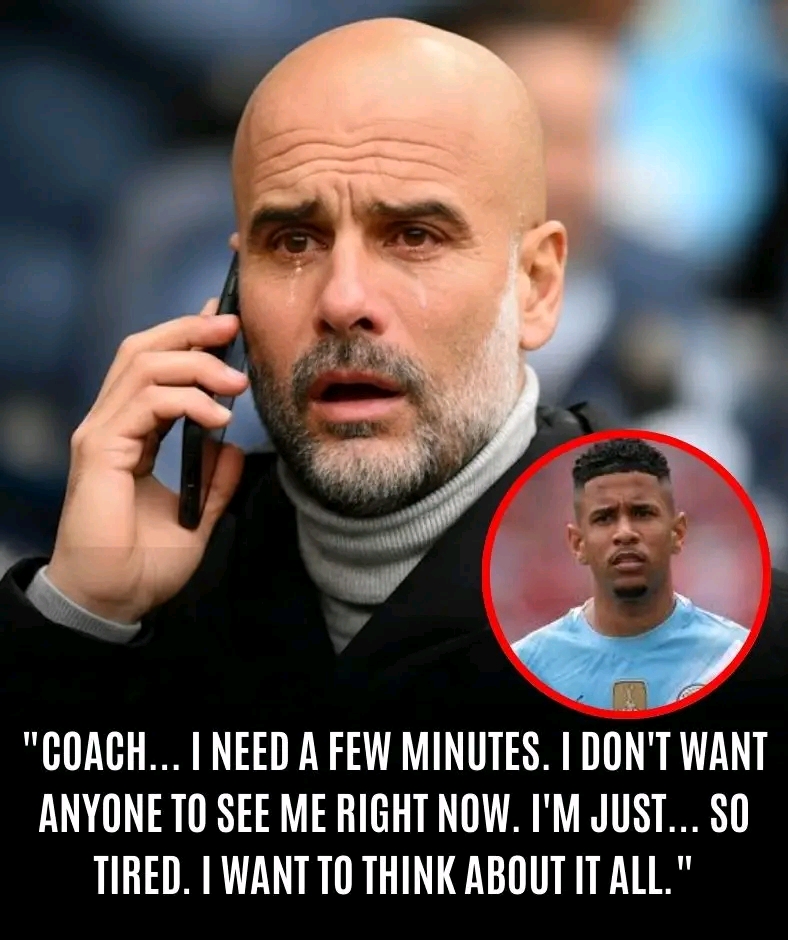
When Pep Guardiola heard the news, he didn’t sit back or wait for reports like many managers would have done. Pep reacted immediately. He tried calling Savinho himself. Sources said he called more than once, his voice tense, his mind racing through possible explanations. Pep Guardiola is a man who has dealt with high pressure, intense games, and huge expectations, but nothing prepares a manager for the moment he realises one of his young players might be in danger.
When the call finally went through, everyone waited for the truth. What happened to him? Was he safe? Why did he vanish? Why did he disappear without telling anyone? And when the answer came, it wasn’t what people expected. It wasn’t a scandal, it wasn’t a fight, it wasn’t a betrayal, it wasn’t a football problem. It was personal. Deeply personal. So personal that even Pep, who controls everything on the pitch, had no choice but to respect Savinho’s privacy and his pain.
The young player, overwhelmed by a personal emergency, had rushed to attend to it without having the time or the emotional strength to inform the club or his family. Something serious had pulled him away. Something bigger than football. Something that broke him in that moment, leaving him unable to communicate. Those close to him later confirmed that he was safe, but emotional. The details were kept private, locked behind the respect of those who cared for him. But one thing became clear: Savinho wasn’t missing because he wanted to disappear. He was facing something heavy, something that shook him deeply.
When this truth was shared privately with Guardiola, the manager’s first reaction wasn’t anger. It wasn’t disappointment. It was compassion. Pep Guardiola understood that footballers, no matter how talented or famous or strong they look on the pitch, are still human beings. They have hearts, fears, family issues, mental struggles, emotional battles. They bleed, they cry, they panic. And Pep knew that the world often forgets this. Fans see the goals, the skills, the celebrations, the tattoos, the money, the fame, but they don’t see the nights players cannot sleep, the problems they hide behind smiles, the things they carry silently.
Savinho’s teammates were shaken when they heard. Many rushed to call, others sent messages, some even left voice notes telling him they loved him, that they were there for him, that he shouldn’t feel alone in the moment life suddenly becomes too heavy. Football sometimes creates brotherhood, and Manchester City’s dressing room wrapped itself around Savinho instantly, treating his pain like their own.
On social media, fans who just hours earlier were arguing about lineups and tactics suddenly united under one voice: support. Concern overflowed across timelines. People who didn’t even know him personally prayed for him, sent love, sent strength. In a world where online comments can be harsh, this time the internet became a soft place, a comforting place. Parents wrote that they hoped he was surrounded by loved ones. Teenagers wrote long messages about how they struggled with mental health too. Adults shared their own experiences with sudden crises, reminding others that life can change in seconds for anyone, even those we think are strong.
The situation brought a heavy conversation into the centre of football culture: mental health, emotional emergencies, and the pressure of being a young footballer in the spotlight. People who often think footballers have perfect lives were suddenly reminded that pressure can crush even the brightest talents. When a player disappears because of emotional overload, it forces the world to open its eyes.
Journalists attempted to dig into the story, but Guardiola shut down all unnecessary questions. He told the media clearly that Savinho deserved privacy, respect, and love. He praised the young winger’s dedication to the team and reminded everyone that personal struggles can hit anyone, anytime, anywhere. His words softened the atmosphere, giving space for patience and understanding.
Days after the incident, while City resumed their match preparations, the club ensured Savinho was receiving proper care and support. He wasn’t pressured to return quickly. He wasn’t forced to explain himself. He wasn’t pushed back onto the pitch before he healed inside. The club wanted him to breathe, to calm his mind, to handle his emergency without carrying the fear of disappointing fans.
Many supporters said that this moment made them love Savinho even more. Not because he dazzled with skills, not because he sprinted past defenders, but because he showed that even heroes can break sometimes. And when heroes break, what matters most is who stands beside them. Manchester City fans stood beside him. His teammates stood beside him. His coach stood beside him. And the world watched a young man being lifted gently instead of judged harshly.
Meanwhile, deeper conversations grew louder: footballers are not machines. They are not entertainment robots. They are sons, brothers, fathers, young people still learning life while the world expects perfection. For someone like Savinho, who faced transfer drama, pressure to perform, dreams to fulfil, and expectations from every direction, one emotional emergency can feel like a tidal wave.
City fans remember how Savinho recently made headlines when his frustration became public after Manchester City blocked his move to Tottenham. People didn’t know how much he was carrying inside. The outside world only saw football drama. Now, everything made more sense. Nobody knew what he was dealing with privately. Sometimes what fans call ‘attitude’ is actually emotional exhaustion. Sometimes what fans call ‘unprofessional’ is actually someone reaching their breaking point silently.
As the days passed, the panic faded and was replaced with relief. Savinho was safe. That was the most important thing. His privacy remained protected. His dignity remained untouched. His humanity was finally recognised by the world that often forgets that footballers are human too.
In community centres, people talked about mental health more openly. In schools, teachers told young students that it’s okay to ask for help. In homes across Manchester, families spoke softly about how unseen struggles can affect anyone. The blue side of the city took the incident as a reminder that compassion matters more than criticism, understanding matters more than gossip, and kindness matters more than judgment.
Savinho will return to football when he is ready. When his heart is steady. When his mind is calm. When life stops shaking beneath his feet. And when he runs again across the pitch, fans will look at him differently. Not as a player who disappeared after a match, but as a young man who survived a heavy moment and came back stronger.
This story is not just about a missing player. It is about the pressure behind success, the fear behind silence, the strength behind vulnerability. It is about a moment that forced everyone to breathe and realise that no amount of talent protects someone from life’s unpredictable storms. And in that moment, the football world showed its human side.
Savinho’s story will be remembere not for the panic it caused, but for the love it revealed. And Manchester City, with all its trophies, victories, and stars, will carry this reminder quietly: sometimes the bravest thing a player can do is simply ask for help