Manchester City Announces Job Opening: Homeless People to Clean the Stadium After Weekend Matches, $20/Hour + Food and Drinks – A Meaningful Second Chance: Not everyone who walks into the Etihad after a match is a regular employee. There are people who have lost everything, now sweeping the stands… with a rare smile on their faces. What caused them to change? And why would a football club.

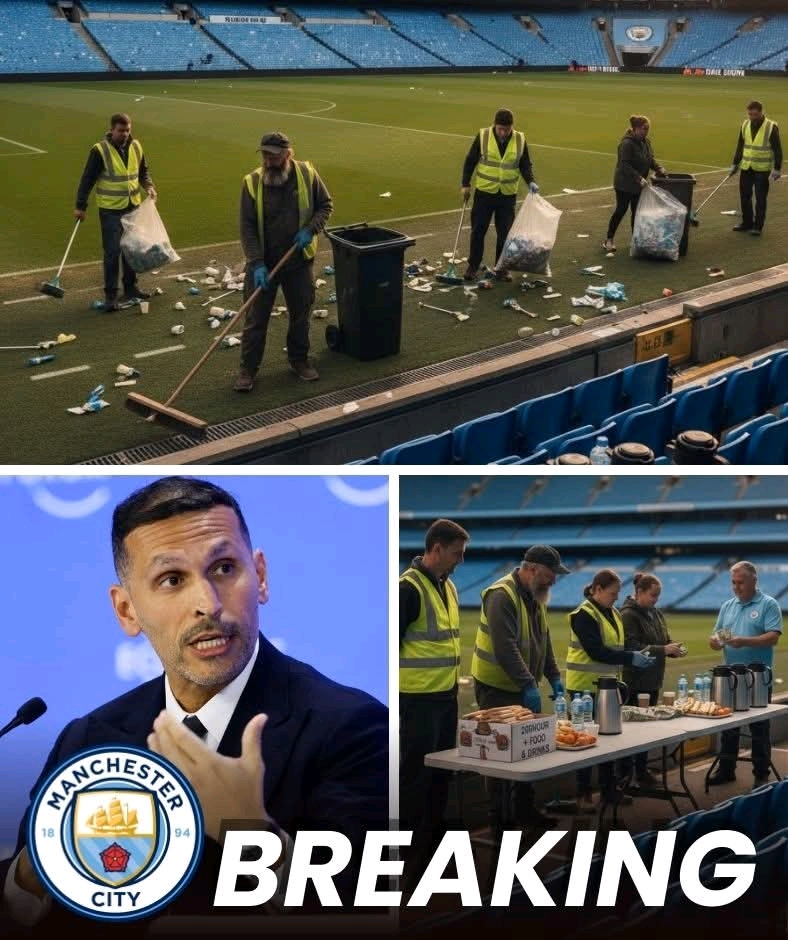
When the final whistle blows at the Etihad Stadium, most people believe the story is over. The crowd roars one last time, the players disappear down the tunnel, and thousands of fans spill out into the cold Manchester night. Seats are left empty. Paper cups roll across concrete floors. The echoes of chants slowly fade into silence. To most, the stadium becomes nothing more than steel, glass, and forgotten noise until the next matchday arrives.
But on certain nights, when the lights stay on a little longer, something very different begins to happen inside the Etihad. Something quiet. Something powerful. Something no one expected.
While the football world argues endlessly about money, trophies, and fairness, Manchester City has quietly opened its doors to people who are usually ignored, overlooked, or forgotten entirely. Homeless men and women. People who sleep on benches, under bridges, or in doorways just a few miles from where millions cheer every weekend. People who walk past the stadium without ever believing it could have anything to do with them.Now, they are inside it.
Manchester City has launched a job program that has stunned fans across the world. After weekend matches, homeless individuals are hired to clean the Etihad Stadium. They are paid twenty dollars an hour. They are given hot meals. Warm drinks. A place to work. A reason to stand tall. This is not charity. There are no cameras following them. No handouts. No pity. Just honest work and dignity.
As the last fans leave and the stadium grows quiet, unfamiliar faces step into the stands. They move slowly at first, unsure, adjusting to the size of the place. Brooms in hand. Bin bags over shoulders. The same seats that held season ticket holders and tourists hours earlier now hold something else entirely. Hope.
People who were invisible just hours before are suddenly part of the night shift at one of the most famous football stadiums in the world.
Witnesses describe the scene as deeply emotional. Not loud. Not dramatic. Just real. Quiet conversations between strangers. Shared smiles. Small jokes about football. Hot food passed around long tables after midnight. Steam rising from cups of tea as shaking hands warm up. For many of these workers, it is the first proper meal they have had in days. For some, it is the first time in years they have been paid fairly for work.
One participant reportedly said that while the job did not change his entire life in one night, it changed something just as important. How he saw himself. That may be the most powerful part of this story.
Homelessness is not just about lacking a roof. It is about losing identity. Losing confidence. Losing the belief that you still matter. Many people living on the streets say the hardest part is not hunger or cold, but invisibility. Being walked past. Being avoided. Being treated like a problem instead of a person.
Inside the Etihad, for a few hours, that changes.
Manchester City’s leadership did not announce this program with a loud press conference. There was no parade. No dramatic reveal. Sources close to the club say the idea came from a simple question. If football can bring millions of people together every weekend, if it can generate record-breaking revenue and global attention, then why can it not also lift up those who have been left behind?
Manchester City recently reported record Premier League revenue. Numbers so large they feel unreal to most people. Hundreds of millions. Sponsorships. Broadcasting deals. Commercial success. In a sport often criticised for excess wealth and detachment from real life, the club wanted to redefine what success truly means.
Trophies fill cabinets. Impact fills lives.
This program does not pretend to solve homelessness. No one at the club claims that cleaning a stadium will fix everything. But it does something many initiatives fail to do. It treats people like adults. Like workers. Like humans with value.
Those who take part are expected to show up, do the job properly, and work as a team. In return, they are paid well. They are fed. They are respected. No one is filmed. No one is used for marketing. The dignity is real.
Social media eventually discovered the story, and reactions poured in from around the world. Fans from rival clubs put rivalries aside to praise the idea. Comments described it as a quiet act of class. The most meaningful win of the season. Proof that football can still surprise people in good ways.
Some people were sceptical at first. In a world where good deeds are often exaggerated for attention, suspicion is natural. But as more details emerged, and as those involved spoke quietly about their experience, the tone shifted. This was not about headlines. This was about nights spent cleaning seats and floors, earning money, eating hot food, and walking away feeling a little more human.
The contrast is striking. Earlier that same day, the stadium would have been filled with shouting, tension, anger at referees, joy at goals, frustration at missed chances. Later that night, under the same lights, there are no chants. No arguments. Just the sound of brooms, footsteps, and conversation.
One person described standing in the empty stand and looking out at the pitch. The same grass where world-class players earn fortunes. The same place where dreams are made and broken. For a moment, that person felt part of something bigger again. That feeling matters.
Football has long been accused of living in a bubble. Players on millions. Fans priced out. Clubs owned by billionaires. Real life pushed to the edges. Stories like this cut through that narrative. They remind people that clubs are still part of cities. That stadiums exist in communities. That responsibility comes with power.
Manchester is a city with deep history. Industry. Pride. Hardship. Success. Struggle. The streets around the Etihad tell stories that never make the news. This program does not erase those stories, but it listens to them.
There is something powerful about earning money through work rather than receiving charity. It restores agency. It restores self-worth. It creates routine. For people living chaotic lives, even a few hours of structure can be grounding.
Shared food after midnight becomes more than just a meal. It becomes connection. People talk about football. About life. About what they would do if things were different. Some talk about family they no longer see. Some talk about mistakes. Some talk about hope they thought was gone.
One night does not fix everything. But it opens a door.
Manchester City did not need to do this. That is what makes it matter. There was no pressure. No obligation. No rule forcing them. They chose to.
In a sport often dominated by ego, power, and controversy, this decision stands quietly apart. It does not scream for attention. It simply exists.
When the trash is cleared and the stadium is ready for the next match, something else remains. Something invisible but powerful. A sense that football can still be about more than ninety minutes.
For those involved, the Etihad becomes more than a stadium. It becomes a place where dignity returned, even if just for a night. Where work replaced begging. Where respect replaced invisibility.
Critics will argue it is not enough. And they are right. But it is something. And sometimes, something is where change begins.
Football clubs love to talk about community. Many wear it as a slogan. Few live it in such a quiet, meaningful way.
As fans argue online about tactics, referees, and titles, this story sits in the background, unnoticed by many, but unforgettable for those who lived it. No trophies were lifted. No goals were scored. But lives were touched.