It’s an absolute zone — Pep Guardiola breaks the silence after Manchester City sacking, revealing dressing room brutality Pep Guardiola has spoken out after leaving his position as Manchester City manager, describing the club’s dressing room structure as an “absolute zone.” Sources confirm Guardiola has rectified his mistake of choosing a key player as the center of stability, thereby revealing internal conflicts behind the scenes.

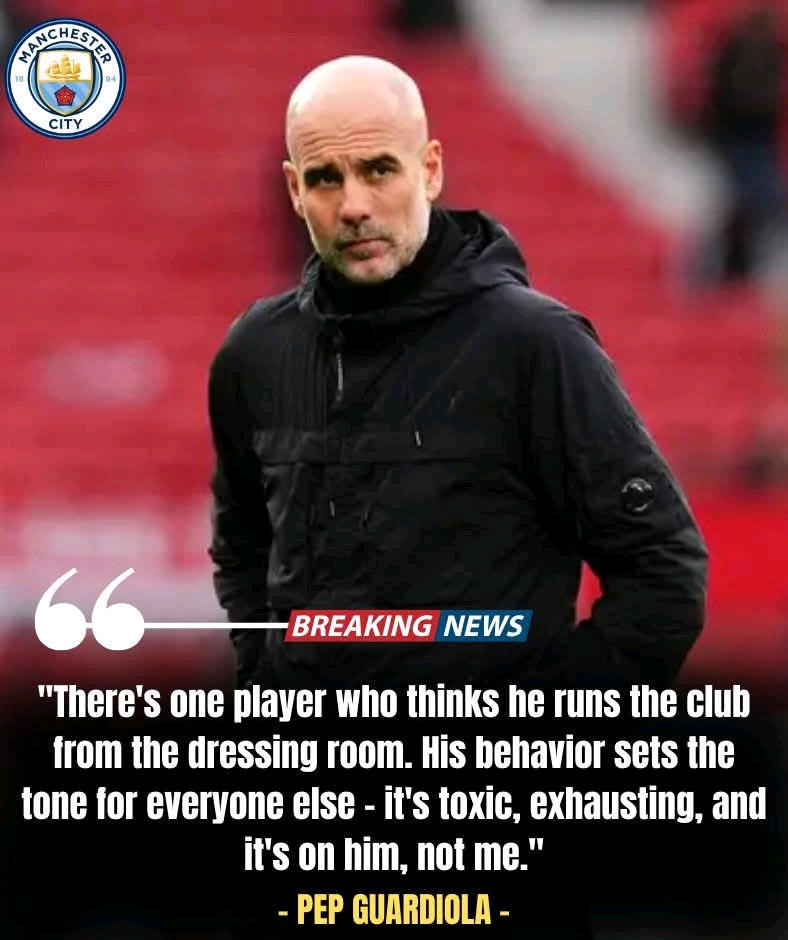
Pep Guardiola has finally broken his silence, and when he spoke, the words hit Manchester City like a thunderstorm. For months, fans waited. For weeks, rumours spread. And for days after his shock exit, the football world wondered what really went wrong at the club that once looked untouchable. Now, Guardiola has spoken, and his message is clear, painful, and explosive. He described Manchester City’s dressing room as “an absolute zone,” a place that had lost order, balance, and trust. Those words alone have shaken the club to its core.
Pep Guardiola did not leave Manchester City quietly. Even though his departure was officially described as a sacking, many inside football knew it was the end of a long and emotional breakdown. Guardiola was not just a manager at City. He was the system. He was the philosophy. He was the man who turned the club into a machine that dominated England and conquered Europe. But machines can break, and Guardiola now admits that the breakdown started inside the dressing room long before the results collapsed on the pitch.
According to Guardiola, the biggest mistake he made was choosing the wrong player as the centre of stability. He did not name the player directly, but sources close to the club say everyone inside the dressing room knows who he meant. This player was given power, influence, and responsibility beyond football. He became the emotional reference point for others. Guardiola trusted him to hold the team together during a difficult period. Instead, that decision became the start of deep internal conflict.
Guardiola explained that Manchester City’s dressing room stopped being a place of unity. Small groups formed. Whispers replaced honesty. Some players felt protected, while others felt exposed. Training sessions were still intense, but the feeling was different. The hunger was gone. The fear of losing was gone too. When Guardiola spoke about an “absolute zone,” he was talking about chaos disguised as control.
At the start of the season, Guardiola sensed something was wrong. Players who once fought for every ball now argued over responsibility. Leaders stopped leading. Younger players felt confused. Senior players felt questioned. Guardiola tried to fix it the only way he knew how: by trusting his core players and demanding even more discipline. But instead of bringing everyone together, it pushed them further apart.
One of Guardiola’s biggest regrets, according to people close to him, was ignoring early warnings. He believed his history with the squad would be enough. He believed loyalty would win. He believed honesty would heal wounds. But football dressing rooms are fragile places. Once trust cracks, it spreads fast. Guardiola now admits that he reacted too late.
Behind the scenes, meetings became tense. Guardiola challenged players openly. Some accepted it. Others resisted quietly. A few felt untouchable. That imbalance destroyed the culture Guardiola worked years to build. Manchester City were no longer one voice. They were many voices speaking in different directions.
As results started to dip, pressure from above increased. The board wanted answers. Fans wanted results. Media stories became louder. Guardiola felt trapped between protecting his players and protecting the standards of the club. He chose standards. That choice cost him support inside the dressing room.
The turning point came after a key defeat. Guardiola addressed the squad with brutal honesty. He told them the truth as he saw it. He spoke about effort, commitment, and attitude. For some players, it was a wake-up call. For others, it felt like an attack. That meeting changed everything. From that moment, Guardiola felt the dressing room slip away from him.
He continued working, continued pushing, continued believing he could fix it. But the relationship was broken. Players began questioning decisions. Tactical instructions were followed, but without belief. Guardiola could feel it on the touchline. He could see it in their body language. The connection was gone.
When the club decided to sack him, Guardiola says he was hurt, but not surprised. He had already accepted that something was wrong beyond repair. What shocked him was how deep the problems had gone. Only after leaving did he fully understand how divided the dressing room had become.
Guardiola says the brutality inside the dressing room was not physical, but emotional. Players felt isolated. Some felt blamed. Others felt protected without earning it. That imbalance poisoned everything. Manchester City, once a symbol of collective strength, became a place of silent tension.
Since his exit, former players, pundits, and fans have reacted strongly to Guardiola’s comments. Some support him fully. Others believe he is trying to protect his legacy. But even his critics admit one thing: something serious is wrong at Manchester City.
Former players have spoken about a loss of hunger. Experts talk about squad fatigue. Fans argue about leadership. Guardiola’s comments have turned those whispers into a loud debate. Was the club too comfortable? Did success make them arrogant? Did Guardiola stay too long? Or did the club fail to support him when he needed it most?
The player Guardiola trusted as the centre of stability is now at the centre of the storm. Every mistake is analysed. Every performance is judged. Teammates are watching. Fans are divided. Some defend him. Others blame him for the collapse. Guardiola’s silence about the name has only increased the pressure.
Inside the club, changes are coming. New leadership, new rules, new faces. But rebuilding trust is harder than rebuilding a squad. Guardiola knows that. He lived it. He feels it. His words were not spoken out of anger, but out of pain.
Guardiola says he still loves Manchester City. He respects the fans. He is proud of what they achieved together. But he refuses to pretend everything was perfect. He refuses to carry the blame alone. His message is clear: success hides problems, and when winning stops, the truth comes out.
The football world is now watching Manchester City closely. Every match, every interview, every selection choice is judged through the lens of Guardiola’s words. “An absolute zone” is not just a phrase anymore. It is a warning.
For Guardiola, this chapter is closed, but the story is not over. He will return somewhere else. He always does. And when he does, lessons from Manchester City will shape him. Trust must be earned every day. Power must be balanced. Dressing rooms must be protected.
Manchester City must now look in the mirror. Guardiola has held it up for them. Whether they like what they see or not, the reflection cannot be ignored.
What happens next will define the club’s future. And no matter what, Pep Guardiola’s final words will echo for a long time inside the Etihad