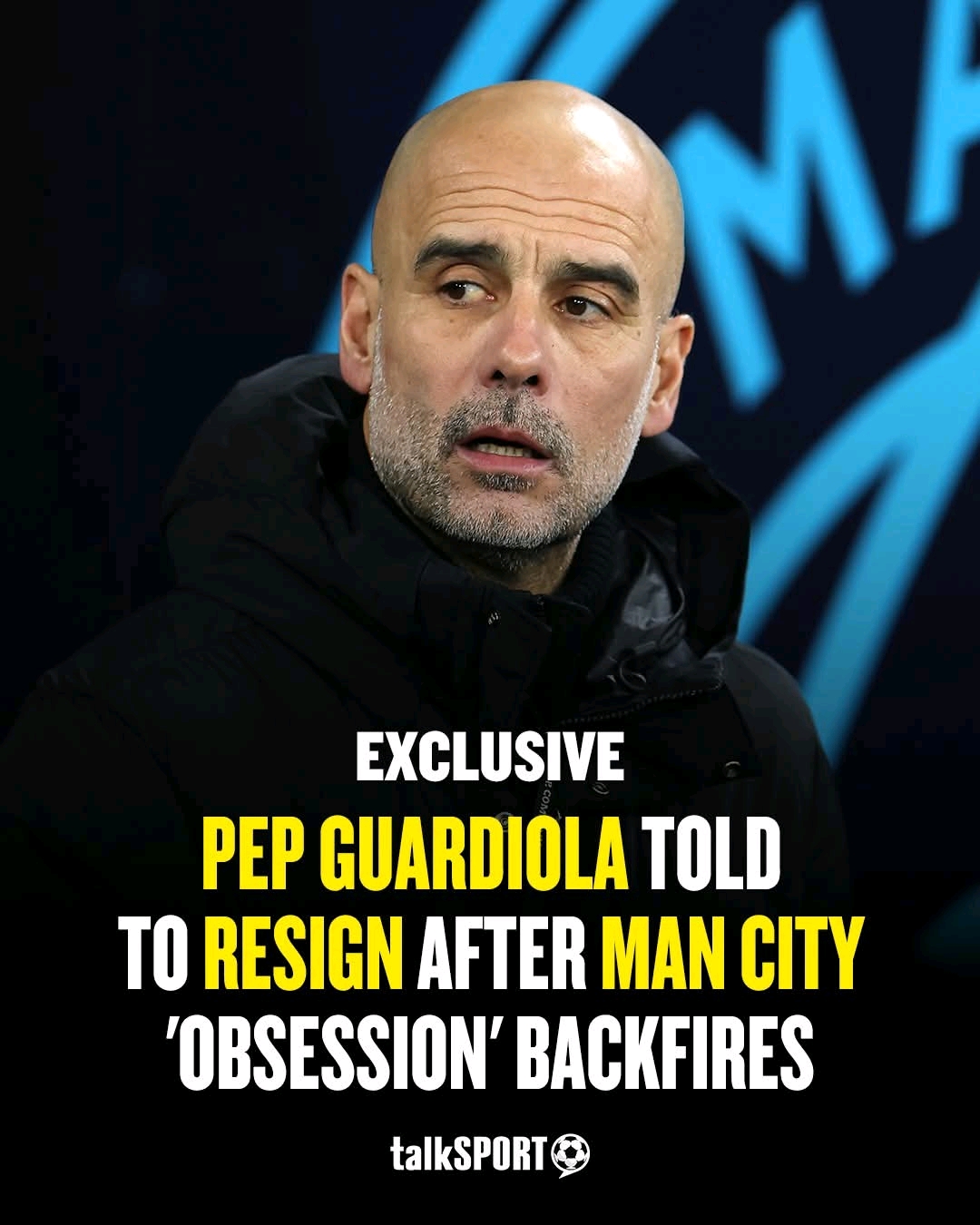
Pep Guardiola has been Manchester City manager for almost ten years now, and for most of that time, he has been untouchable. He arrived in 2016 with a big reputation, big ideas, and big expectations. Over the years, he turned Manchester City into a machine. They won league titles like it was normal. They dominated games, controlled the ball, suffocated opponents, and made English football bend to their will. Pep Guardiola became more than a manager at City. He became the system, the identity, the belief. But football does not stand still, and history shows that even the greatest managers reach a point where the magic fades, the ideas stop working, and the noise grows louder than the results. Right now, many believe Pep Guardiola is standing at that exact point.
After two painful defeats in just one week, the mood around Manchester City has changed sharply. A humiliating loss to Manchester United at Old Trafford was bad enough, but what followed three days later was even worse. A shocking defeat to Norwegian side Bodo/Glimt in the Champions League shook the club and its supporters. This was not supposed to happen. This was Manchester City, serial winners, Champions League holders not long ago, losing badly to a team most casual fans could not even name five years ago. For talkSPORT pundit Adrian Durham, this was the breaking point. Not just a bad run, not just bad luck, but a clear sign that something is deeply wrong.
Durham believes Pep Guardiola now has a duty to do something he has never done at City. He believes Guardiola should offer to resign. Not because he has suddenly forgotten how to manage, not because his achievements should be erased, but because football history has shown us what happens when legendary managers stay too long. Durham compared Pep’s current situation to the final years of Arsene Wenger at Arsenal. Wenger was once untouchable too. He changed English football, dominated the league, built beautiful teams, and earned total respect. But when the decline started, he stayed. And stayed. And stayed some more. By the time he left, the club was divided, fans were angry, and the legacy was damaged.
Pep Guardiola, according to Durham, is now walking that same dangerous road.
Manchester City’s recent performances have not just been poor. They have been alarming. Against Manchester United, City looked slow, disorganised, and weak. They were second best in every department. Against Bodo/Glimt, things got even worse. City did not just lose. They were outplayed, outworked, and outthought. The scoreline did not even tell the full story. It could easily have been five or six goals conceded in both matches. That is not bad luck. That is not one mistake. That is what Durham describes as bad football and bad management.
Pep Guardiola himself admitted after the Bodo/Glimt game that the Norwegian side were very good. And they were. But the bigger issue was how City made them look unbeatable. They passed through City’s midfield with ease. They pressed City into panic. They attacked with confidence. They looked like a Pep Guardiola team from his best Barcelona days, while City looked lost, confused, and empty of ideas. That irony was not lost on Durham, who said City made Bodo/Glimt look like prime Barcelona, a team once coached by Guardiola himself.
For Durham, this is exactly the type of moment where a manager must show accountability. He believes that when a team suffers embarrassing defeats that should never happen, the manager has a responsibility to offer his resignation. Not because it must be accepted, but because it shows leadership. It shows ownership of failure. It gives the club a choice. Either back the manager fully or admit it is time to move on. Guardiola, in Durham’s view, has now reached that moment.
The situation becomes even more worrying when you look at the wider picture. Manchester City are now seven points behind Arsenal in the Premier League title race. They have gone four league games without a win. They are in danger of missing out on a top-eight finish in the Champions League league phase, which would force them into extra playoff games. For a club built on dominance and control, this feels like a collapse of standards.
Last season was the first time since Guardiola’s debut campaign that City failed to win a major trophy. Many blamed injuries, especially the long absence of Rodri. The Spanish midfielder tore his ACL in September 2024 and missed eight months. His absence exposed how important he truly was. City signed Nico Gonzalez to cover for him, but the solution never truly worked. Now, Rodri is back, but he does not look like the same player. The sharpness is gone. The authority is missing. The player who once controlled games and won the Ballon d’Or looks like a shadow of himself.
This raises serious questions. Is Rodri being rushed back too soon? Is Guardiola relying on him because there is no better plan? And if that is the case, why is nobody talking about Kalvin Phillips? Phillips earns around £150,000 per week and has barely played. Under Marcelo Bielsa at Leeds and Gareth Southgate with England, he looked like a top-level midfielder. Under Guardiola, he has become invisible. Since joining City in 2022, he has made just 32 appearances. Loan spells at West Ham and Ipswich did not revive his City career. This season, he has played just seven minutes, a brief cameo in the Carabao Cup.
For Durham, this is unacceptable squad management. Why is City paying huge wages to a player they do not use when the midfield is clearly struggling? Why does Guardiola seem unable or unwilling to trust him? These questions point to deeper issues in Guardiola’s decision-making and man-management.
Then there is Phil Foden. Once seen as the symbol of City’s future, the academy star who grew under Pep’s guidance, Foden now looks lost. He has gone nine matches without a goal or assist. Against Bodo/Glimt, he was anonymous. He barely influenced the game and was substituted after 70 minutes. For a player of his talent, that is worrying. For England, it is even more concerning, with a World Cup coming up this summer.
Durham questioned whether Guardiola is still the right man to get the best out of Foden. He asked what Pep plans to do to restore his confidence and form. Foden needs clarity, belief, and freedom. Right now, he looks confused, unsure of his role, and weighed down by expectations. When a manager who once elevated a player can no longer inspire him, it is a sign that the relationship may have reached its limit.
Another major criticism aimed at Guardiola is his obsession with full-backs. Over recent seasons, Pep has repeatedly used central defenders as full-backs, preferring control and structure over natural width. This experiment worked at times, but now it seems to be backfiring badly. City signed Rayan Ait-Nouri from Wolves with big expectations. At Wolves, he was electric, dangerous, and fearless. At City, he looks lost. He has barely played. He has been limited to just six Premier League appearances, with only 12 minutes of league action since returning from injury.
Instead of trusting Ait-Nouri, Guardiola has continued to use Josko Gvardiol, Nathan Ake, and even midfielder Nico O’Reilly at left-back. Durham mocked the situation, saying Ait-Nouri must be wondering what happened to his football life. A player who once looked worth millions now looks unrecognisable. This, again, points to Guardiola’s rigidity, his refusal to adapt, and his insistence on forcing players into roles that suit his system rather than their strengths.
And then there is Erling Haaland. The world’s most feared goal machine. The striker who breaks records for fun. The man you expect to score even when he plays badly. Right now, Haaland is struggling. He has scored just once in his last eight matches across all competitions. He has not scored from open play in over a month. For Durham, this is the most damning sign of all. If Guardiola cannot get Haaland scoring, then something is seriously wrong.
Durham went as far as saying that anyone could get Haaland scoring goals. That Pep Guardiola, one of the greatest managers of all time, cannot do so right now is alarming. Haaland thrives on service, confidence, and rhythm. City’s current style looks slow and predictable. The chances are fewer. The hunger feels missing. Whether it is tactical confusion or mental fatigue, the result is the same. City’s most important weapon is misfiring.
Pep Guardiola signed a contract extension in November 2024 that runs until the end of next season. On paper, he still has time. But football does not wait for contracts. Momentum matters. Energy matters. Belief matters. Right now, Manchester City look like a team that has lost all three.
Durham is not saying Guardiola must be sacked. He is saying Guardiola should offer to resign. There is a difference. It is about dignity, responsibility, and timing. It is about protecting a legacy before it becomes a burden. Guardiola has given City everything. He has transformed the club forever. But if the ideas are no longer working, if the players are no longer responding, and if the performances continue to collapse, then staying could do more harm than good.
Football history is full of great managers who stayed too long. The warning signs are always there. Bad results. Confused tactics. Players out of form. Fans divided. The manager becoming the story instead of the football. Pep Guardiola is now at risk of becoming that story.
Whether he offers to resign or not, the pressure will not go away. Every game will be judged harshly. Every defeat will be louder. Every mistake will be magnified. This is the reality of elite football. Guardiola knows this better than anyone.
The question now is simple but painful. Is Pep Guardiola still the man to lead Manchester City forward, or has the time come for him to step aside before the decline becomes permanent? Only he can answer that. But as things stand, the calls are growing louder, the performances are getting worse, and the clock is ticking.