HUGE DRAMA AT THE ETIHAD! Man City are denied a spot kick after a lengthy VAR check, with Yerson Mosquera’s arm deemed to be in a natural position by the officials. Should this have been a penalty or was the on-field decision of no penalty correct?

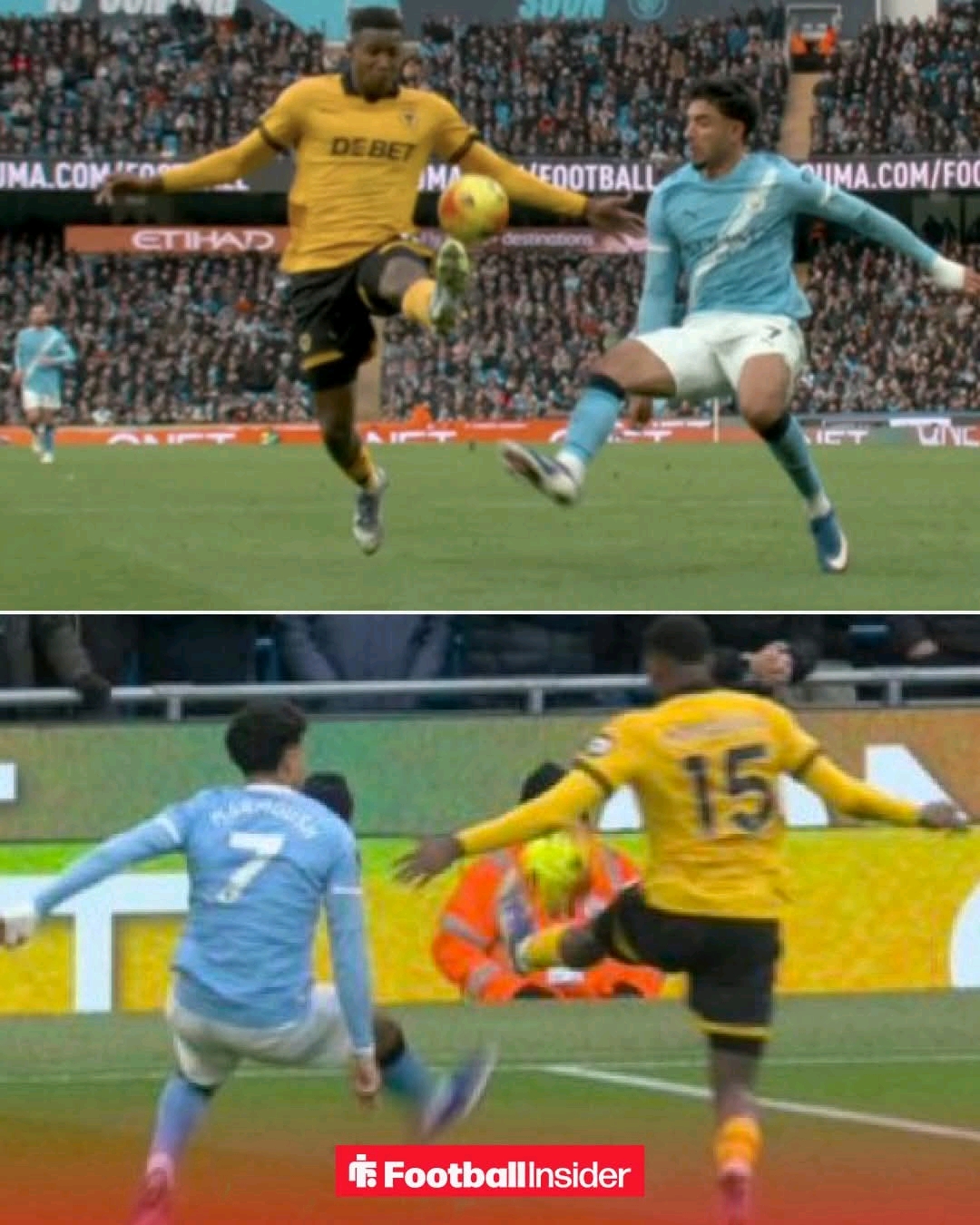
The Etihad Stadium fell silent for a split second, then exploded into anger, confusion, disbelief, and endless debate. Manchester City were pushing, attacking, pressing, and hunting for a breakthrough when the moment arrived that would dominate the match, the post-match interviews, the television debates, and social media for days. A cross flew into the penalty area, bodies collided, arms moved, and suddenly all eyes turned to one thing: Yerson Mosquera’s arm. The referee waved play on. No whistle. No penalty. But this was not the end of the story. It was only the beginning.
City players immediately surrounded the referee. Pep Guardiola stood frozen on the touchline, hands on his head. The fans behind the goal rose to their feet in unison, screaming for justice. Everyone inside the stadium knew what was coming next. VAR. The dreaded pause. The long wait. The slow motion replays. The feeling that football, once again, was about to be decided in a dark room far away from the pitch.
As the VAR check began, tension filled the air. The big screens showed the replay again and again. From one angle, it looked clear. The ball struck Mosquera’s arm inside the box. From another angle, it looked less obvious. His arm was out, but was it unnatural? Was it making his body bigger? Did he have time to react? These were the questions the officials were now asking themselves, while thousands inside the Etihad held their breath.
Manchester City fans were convinced. This had to be a penalty. They had seen penalties given for far less this season. They had watched decisions go against them in big moments. They remembered past controversies, past VAR calls, past frustrations. To them, this was another chapter in a long, painful story. Another moment where City felt hard done by. Another moment where the rules seemed to change depending on the situation.
The check dragged on. Seconds felt like minutes. Minutes felt like hours. The referee stood still, finger pressed to his earpiece. Players from both teams waited nervously. Wolves players looked calm, almost confident. City players looked restless, frustrated, already arguing their case. Erling Haaland paced the edge of the box. Bernardo Silva shook his head. Kevin De Bruyne stared at the referee, hoping, begging, for the signal to point to the spot.
Then the decision came. No penalty. Play on.
The explanation followed quickly. The officials judged that Yerson Mosquera’s arm was in a “natural position.” According to VAR, there was no clear and obvious error. The on-field decision stood. No spot kick. No chance from twelve yards. No immediate justice, at least not in the eyes of the home crowd.
The reaction was instant and explosive. Boos rained down from the stands. Pep Guardiola turned away in disbelief, muttering to himself. City players threw their arms in the air. The sense of injustice was overwhelming. For many, this was not just one decision. It was about consistency. It was about trust. It was about whether VAR was really making the game fairer or simply more confusing.
From the Wolves point of view, the decision was correct. Mosquera did not move his arm toward the ball. He was turning his body. His arm was not raised above his shoulder. He did not gain a clear advantage. The ball struck him from close range. According to the current interpretation of the handball law, this could be seen as a natural position. Wolves fans argued that footballers cannot run or jump with their arms glued to their sides. They insisted that giving a penalty here would be harsh and unfair.
But Manchester City fans saw it differently. They argued that Mosquera’s arm made his body bigger. That the ball was stopped from reaching a dangerous area. That City were denied a clear goal-scoring opportunity. They pointed to other matches, other penalties, other VAR calls where similar incidents had resulted in spot kicks. They asked one simple question: why not this time?
This is where the real drama lies. Not just in the decision itself, but in the lack of clarity around the rules. The handball law has been rewritten, reinterpreted, and revised countless times. Players, managers, fans, and even referees often seem unsure where the line is. What is natural? What is unnatural? What is accidental? What is punishable? These questions continue to haunt modern football.
Pep Guardiola, speaking after the match, chose his words carefully, but his frustration was clear. He spoke about consistency. He spoke about how similar incidents had been punished before. He spoke about how difficult it is for players and managers to understand decisions when the rules feel unclear. Guardiola did not attack the referee directly, but his message was obvious. Manchester City felt wronged.
The players echoed this feeling. Some spoke privately, others hinted publicly. They talked about momentum. About how a penalty at that moment could have changed the game. About how fine margins decide matches at the highest level. When you dominate possession, create chances, and push the opponent deep, moments like this matter. One decision can swing the entire balance of a match.
On social media, the debate exploded. Clips of the incident spread instantly. Fans slowed the video down, zoomed in, drew lines, froze frames. Some said it was a stonewall penalty. Others said VAR got it right. Former players joined the discussion. Pundits argued on television. The same incident produced completely different opinions depending on who you asked.
This is the modern football experience. VAR was introduced to reduce controversy, but moments like this show how it often creates more. Instead of quick decisions, we get long pauses. Instead of clarity, we get confusion. Instead of acceptance, we get endless arguments.
For Manchester City, the frustration was even deeper because of the context. This was not an easy match. Wolves defended well. They were organised, disciplined, and dangerous on the counter. City needed something to break them down. A penalty could have been that moment. A chance to score, to settle nerves, to take control. When that chance was taken away, the pressure only increased.
Wolves, to their credit, handled the situation well. They stayed focused. They did not let the crowd or the controversy distract them. They knew that surviving moments like this is part of football. They trusted the officials. They trusted the decision. From their perspective, justice had been done.
But the feeling inside the Etihad was very different. There was a sense of disbelief that lingered long after the game restarted. Every touch by the referee was greeted with suspicion. Every foul was questioned. The trust between fans and officials felt broken, once again.
This incident also reopened a bigger conversation about VAR and Manchester City. In recent seasons, City fans feel they have been on the wrong end of several high-profile decisions. Whether it is handballs, offside calls, or fouls in the build-up to goals, there is a belief among sections of the fanbase that City do not always get the benefit of the doubt. Fair or not, this perception fuels anger when moments like the Mosquera handball occur.
From a neutral point of view, the truth may lie somewhere in the middle. The decision was not completely outrageous, but it was not completely clear either. It was one of those grey-area calls that depend heavily on interpretation. And that is exactly the problem. Football fans want black and white. Goals or no goals. Penalties or no penalties. VAR, instead, lives in the grey.
As the final whistle blew, the debate was far from over. The match result mattered, but the controversy dominated the headlines. Phrases like “natural position” became the focus. Fans asked why such a crucial decision could be reduced to a subjective phrase. What is natural for one referee may be unnatural for another. Where is the consistency?
The Premier League has promised to improve communication. Referees now explain decisions to captains. VAR decisions are sometimes announced in the stadium. But moments like this show that explanation does not always equal acceptance. Fans want decisions that feel fair, not just justified.
Looking ahead, this incident will be used as another example in the ongoing debate about handball rules. It will be shown in referee training sessions. It will be discussed in meetings. It may even influence future interpretations of the law. But for Manchester City fans, that offers little comfort. What is done is done. The moment is gone. The chance is lost.
So the big question remains. Should this have been a penalty? Or was the on-field decision of no penalty correct?
There is no single answer that will satisfy everyone. That is the reality of modern football. But one thing is certain. The drama at the Etihad will not be forgotten anytime soon. It was a moment that captured everything people love and hate about the game today. Passion. Tension. Controversy. Debate. And a reminder that, even with all the technology in the world, football decisions can still break hearts and divide opinions in seconds.
For Manchester City, it was another night of frustration with VAR. For Wolves, it was a moment of relief. For the Premier League, it was another controversy added to a growing list. And for football fans everywhere, it was proof that the argument over VAR, handballs, and fairness is far from over.