‘I’m pretty sure Howard Webb tomorrow is going to appear in the media to explain why it’s not a penalty

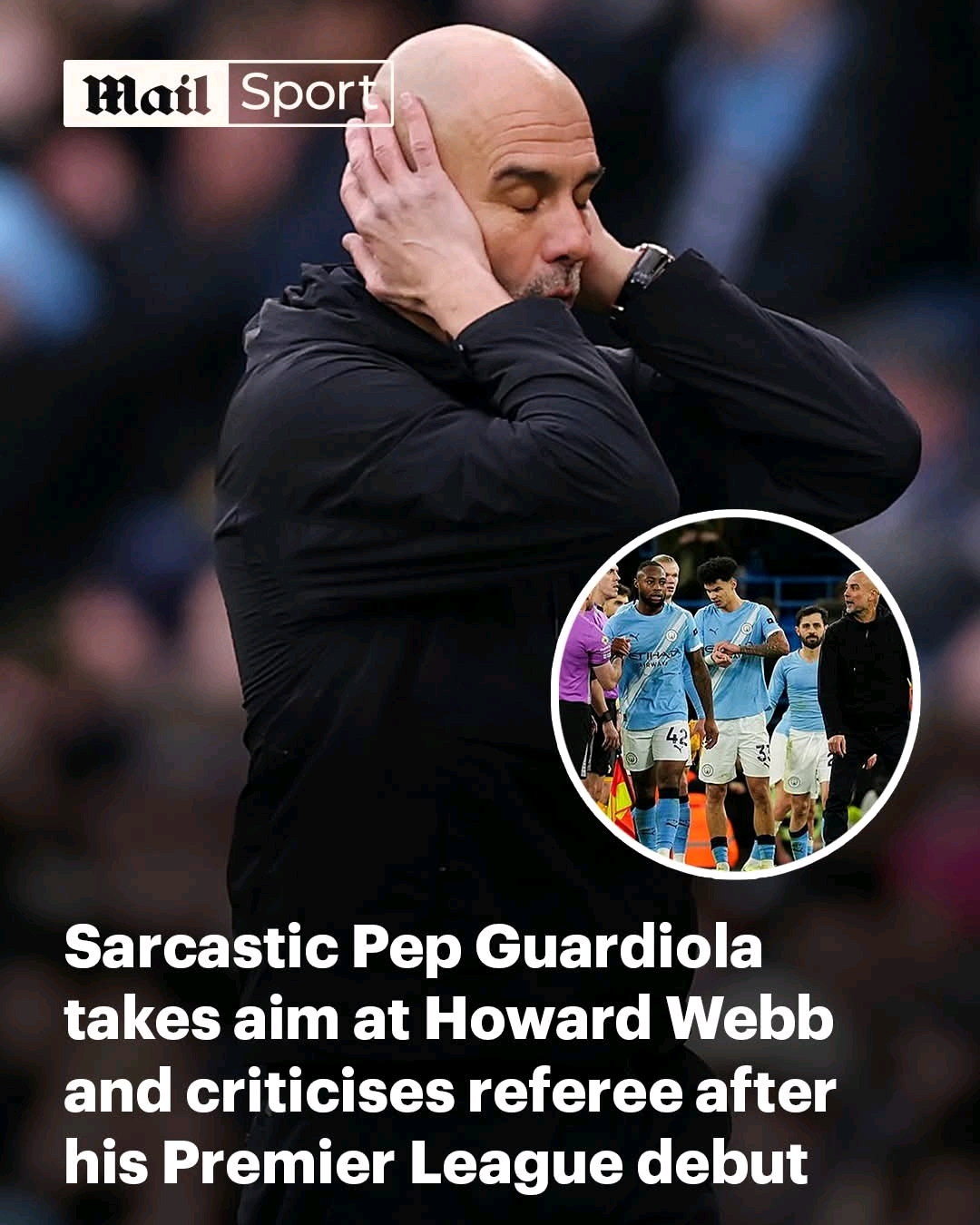
Pep Guardiola did not shout. He did not swear. He did not lose control on the touchline. But his words after Manchester City’s 2-0 win over Wolves were sharper than any angry outburst. They were calm, slow, sarcastic, and very deliberate. And everyone listening knew exactly who he was aiming at. Howard Webb. The referees. And the system he believes has worked against his team for years.
Manchester City had just beaten Wolves at the Etihad Stadium, a result that helped calm a difficult period for the champions. On the surface, it looked like a professional win. Two goals, clean sheet, three points. But beneath the scoreline was anger, frustration, and a growing sense of injustice that Guardiola no longer wants to hide.
The biggest moment came when City were denied a clear penalty. Wolves defender Yerson Mosquera handled the ball in the box. It was obvious to the players. It was obvious to the fans. It was obvious to anyone watching on television. VAR checked it for a long time. The referee, Farai Hallam, was sent to the monitor. This was his Premier League debut. A huge moment for any official.
But after watching the replay, Hallam stuck with his original decision. No penalty. Play on.
The Etihad erupted in disbelief. Guardiola stood on the touchline shaking his head. City players surrounded the referee. Wolves players looked relieved. And just like that, another refereeing controversy was added to a season already full of them.
After the match, Wolves manager Rob Edwards praised the referee. He spoke about courage. About bravery. About sticking to your decision under pressure. But Guardiola saw it very differently. To him, it was not courage. It was another example of referees refusing to give Manchester City decisions they believe they deserve. And Guardiola was not interested in hiding his feelings anymore.
With a calm smile and biting sarcasm, Guardiola began his attack. He congratulated the referee on his “huge debut.” But it was not praise. It was a warning. The referee made a huge debut,” Guardiola said. “Now everybody will know him.”
The words sounded polite, but the meaning was clear. This was not a celebration. This was Guardiola pointing out that the referee would now be remembered not for doing well, but for a controversial decision that could have changed the game.
Guardiola then went deeper. He questioned the logic behind the decision. He mocked the explanation that was sure to come. He already knew what would happen next. “I think it’s the first time they go to the TV and disallow what is a normal position of the arms,” he said. Again, calm. Again, controlled. But every sentence carried frustration built over years.
Then came the real target. Howard Webb, the chief of the Professional Game Match Officials Limited, the man in charge of referees in English football. Guardiola did not shout his name. He did not accuse him directly. He simply waited for him.
“I’m pretty sure Howard Webb tomorrow is going to appear in the media to explain why it’s not a penalty,” Guardiola said. “And what he did against United, like it was the first time he had done it because there was a little bit of doubt.”
This was not just about Wolves. This was about Manchester United. This was about last weekend’s derby. This was about Diogo Dalot’s dangerous challenge on Jeremy Doku.
In that game, Dalot flew into Doku with a reckless tackle. Many believed it should have been a red card. Instead, it was defended by Howard Webb afterward. And the result of that decision was serious. Jeremy Doku could not play in Norway afterward because of the injury he suffered. “That’s why Jeremy could not play in Norway,” Guardiola said. “For the action from Dalot. But it’s OK.”
But it was not OK. And Guardiola made sure everyone knew it. “I’m waiting tomorrow,” he continued. “Don’t wait for Wednesday. We have Champions League, we are busy. Howard Webb, come tomorrow and explain why it’s not a penalty.
It was a public challenge. Guardiola was calling out the refereeing boss directly. He wanted answers. He wanted explanations. And more than anything, he wanted consistency. This was not the first time Guardiola had spoken about referees this season. In fact, it has become a regular theme. The frustration has been building week by week.
At Newcastle earlier in the season, City lost a match filled with controversy. There were two penalty appeals ignored. One for handball. Another for a late and dangerous challenge by Fabian Schar on Phil Foden. Guardiola was furious after that game. He felt City were punished not by Newcastle, but by the officials.
Then there was the Carabao Cup semi-final first leg at St James’ Park. Antoine Semenyo scored a goal that was later disallowed. Guardiola could not understand why. He questioned the lines. He questioned the timing. He questioned the interpretation. And through all of this, there is Erling Haaland
Guardiola believes the Norwegian striker does not get the protection he deserves. He is held, pushed, kicked, and fouled repeatedly. But referees often allow it to happen. Guardiola has spoken about this many times. He believes Haaland is treated differently because of his size and strength, as if being strong means you are allowed to be fouled. All of these moments are connected. All of them led to what Guardiola said after Wolves. “We won despite them,” he said. That sentence said everything.
“We did six Premier League titles in nine years,” Guardiola continued. “I would love to have the players to fight against that.”
He was not asking for sympathy. He was not making excuses. He was reminding everyone that Manchester City have succeeded even when decisions went against them. “I’m saying because I want to fight with my players,” he explained. “Because we have done it down the years that even with these decisions we can win.”
This is Guardiola’s mindset. He does not want his players to collapse because of bad refereeing. He wants them to rise above it. To be stronger. To be sharper. To be so good that even injustice cannot stop them. But that does not mean he will stay silent.
There is a belief among City fans that referees treat the club differently. That City are judged more harshly. That small things go against them while other clubs get the benefit of doubt. Guardiola did not say this directly. But his words strongly suggested it.
And this is where the tension grows. Because Guardiola is not just another manager. He is one of the most respected coaches in football history. When he speaks, people listen. When he criticises referees, it carries weight.
At the same time, referees are human. Farai Hallam was making his Premier League debut. That is not easy. The pressure is enormous. One decision can define your introduction to the league. Rob Edwards chose to support him publicly, and many believe that is the right thing to do.
But Guardiola sees something else. He sees patterns. He sees repeated moments where City do not get penalties. Where dangerous tackles are ignored. Where VAR checks end with no action. And he is tired of it.
The irony is that Manchester City still win. They still dominate. They still collect trophies. Six league titles in nine years is proof of that. But Guardiola’s message is clear. Imagine how much more they could achieve if decisions were fair.
The Premier League likes to talk about transparency. About explanations. About improving refereeing. Howard Webb often appears on television to explain decisions. But Guardiola believes these explanations come too late and change nothing. He wants action. He wants accountability. He wants referees to be consistent.
The Wolves game will not be remembered for the goals. It will not be remembered for tactics. It will be remembered for Guardiola’s words. “Now everybody will know him.”
That sentence will follow Farai Hallam. Not because he had a bad game. But because he was at the center of a moment that exposed deeper problems in English football.
Guardiola has drawn a line. He is no longer quietly frustrated. He is publicly challenging those in charge. And as Manchester City continue their fight on multiple fronts, the battle with referees may become just as important as the one on the pitch.
Because for Guardiola, this is no longer about one penalty. It is about respect. It is about fairness. And it is about protecting his players.
City will move on. They always do. Another game. Another competition. Another chance to win. But the words spoken after Wolves will not disappear.
Howard Webb has been called out. The referees are under pressure. And Pep Guardiola has made it clear that he is watching every decision, every replay, every explanation. And if things do not change, he will speak again.