Sterling could have made the most surprising move of the January transfer window

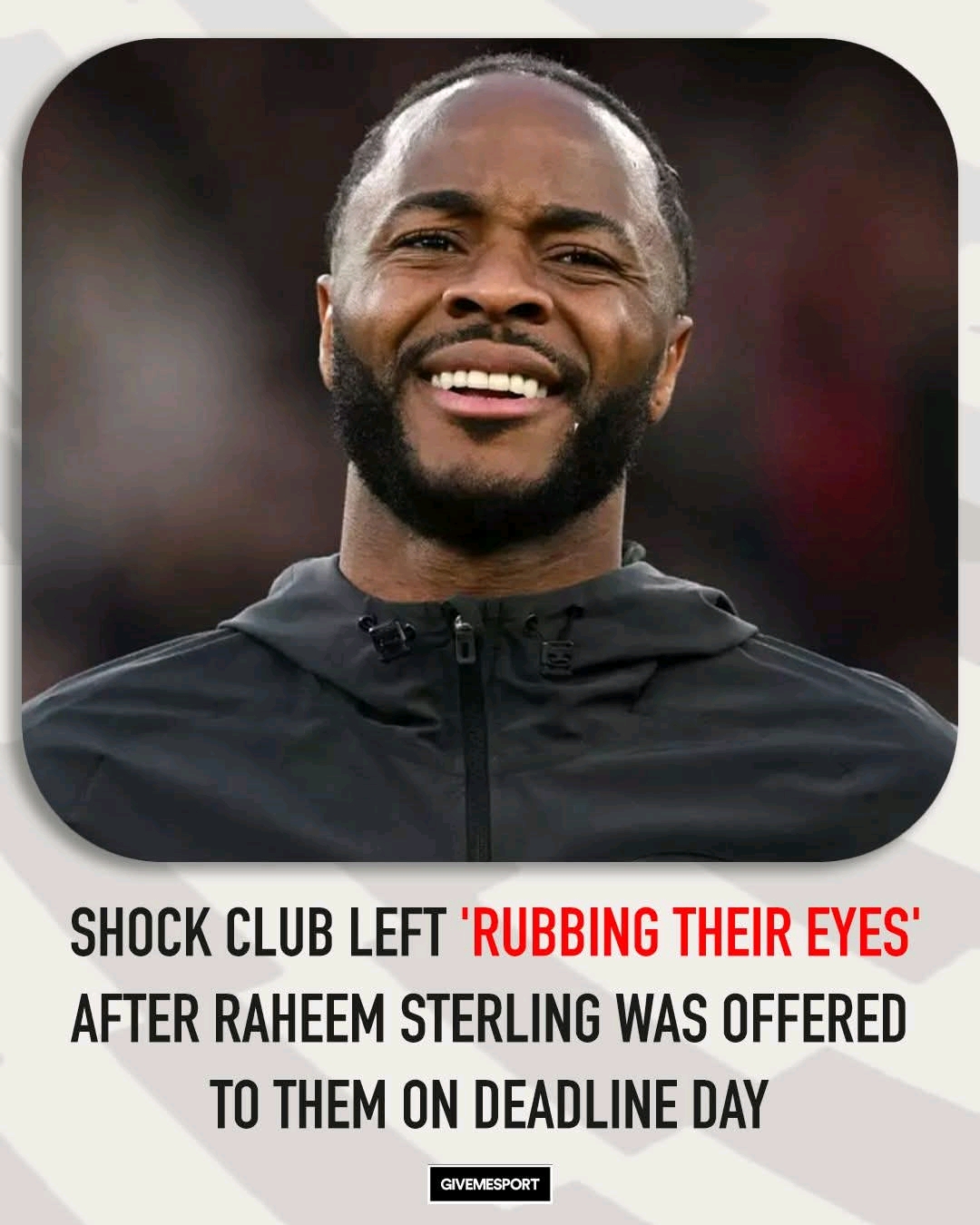
Raheem Sterling’s football life has taken another shocking turn, and once again his name is being spoken about in disbelief across Europe. Not long ago, Sterling was one of the most feared wingers in world football, a man trusted by Pep Guardiola in Manchester City’s golden era, a Champions League winner, a Premier League serial champion, and a player who always showed up on the biggest nights. But football is cruel, and time has a way of turning heroes into unwanted figures almost overnight.
Sterling’s nightmare truly began the day he chose Chelsea. When he arrived at Stamford Bridge in the summer of 2022, he was welcomed as the face of a new project. Chelsea fans believed they were signing a proven winner, someone who would bring leadership, goals, and experience to a young and confused squad. In his first two seasons, Sterling actually delivered moments that reminded everyone of his quality. He scored goals, created chances, and often carried Chelsea’s attack when things were falling apart around him.
But everything changed when Enzo Maresca arrived.
From the very beginning, it was clear that Sterling was not part of Maresca’s plans. There was no long explanation, no public argument, no dramatic press conference. It was just silent rejection. Sterling, one of the most decorated English players of his generation, suddenly found himself unwanted. The manager did not trust him, did not build the team around him, and did not see him as important.
The decision that followed shocked many. Sterling was pushed out on loan to Arsenal for the entire 2024/25 season. For a player who once terrorised Arsenal in a Manchester City shirt, it was an ironic twist of fate. The loan move was supposed to be a chance to rebuild his reputation, to show Chelsea they were wrong, and to remind England why he was once untouchable.
But when the season ended and Sterling returned to Chelsea, nothing had changed.
Maresca’s opinion remained the same. Sterling was told, quietly and painfully, that he would not train with the first team. Day after day, week after week, month after month, Sterling trained alone. No teammates. No tactical sessions. No matchday adrenaline. Just empty pitches, personal drills, and silence. For six long months, one of England’s most famous footballers lived like a ghost inside Cobham.
Eventually, reality won. Chelsea and Sterling reached a mutual agreement to terminate his contract at the end of January. The club released a polite statement, thanking him for his service and wishing him well, but behind those words was a brutal truth. Chelsea were done with Raheem Sterling.
When the news broke, the football world reacted instantly. Reports came flooding in that Sterling’s representatives were in talks with seven clubs across England, Italy, France, and Germany. It seemed impossible that a player of his experience would be unemployed for long. Surely someone would take the chance.
And then came the story that made everyone stop and stare.
Union Berlin.
A solid Bundesliga club, sitting mid-table, fighting for European relevance, suddenly found themselves linked with Raheem Sterling. According to reports, Sterling’s camp offered him to Union Berlin on transfer deadline day. It was one of those moments in football that feels unreal. A former Manchester City star, a Champions League winner, being offered to a club that many casual fans still struggle to associate with global stars.
Union Berlin’s sporting director Horst Heldt later confirmed the approach, and his words said everything. He admitted that sometimes, during transfer windows, names appear that make you rub your eyes in disbelief. Sterling’s name was one of them. But Union Berlin did not believe the offer was serious. They chose not to move forward. They did nothing.
Just like that, Raheem Sterling was rejected.
Not because of lack of talent, but because the move felt unreal, financially heavy, and disconnected from the club’s reality. For Sterling, it was another painful reminder of how far his career had drifted from where it once stood.
Meanwhile, Italy watched closely.
Napoli, the reigning Serie A champions, had long been linked with Sterling. A move to Naples would have reunited him with familiar faces. Romelu Lukaku, his former Chelsea teammate. Kevin De Bruyne, his Manchester City brother-in-arms. It sounded like the perfect rebirth story. A new country, a passionate fanbase, Champions League nights under Italian skies.
But once again, reality stepped in.
Napoli’s sporting director Giovanni Manna admitted that Sterling is a very good player, but also made something very clear. Sterling has not been playing for a long time. Match fitness is a concern. Sharpness is a concern. And most importantly, his financial expectations are massive. Napoli respect him, but right now, a deal feels extremely difficult.
Even in England, interest exists, but it is cautious.
West Ham are watching. Fulham are curious. Crystal Palace have made exploratory contact. But none of them are rushing. None of them are desperate. None of them see Sterling as the automatic answer.
This is the harsh truth of modern football. Reputation fades quickly. Age matters. Momentum matters. Sterling is now 31, and in a sport obsessed with youth, resale value, and pressing systems, experience alone is no longer enough.
Yet, writing him off would be a mistake.
Raheem Sterling has been here before. He has been doubted. He has been criticised. He has been laughed at. And he has always responded by working harder. He is not broken. He is not finished. He is simply at a crossroads.
Where he goes next will define the final chapter of his career. Does he accept a reduced role and rebuild quietly? Does he chase one last big contract? Does he choose comfort, or does he choose redemption?
One thing is certain. The sight of clubs “rubbing their eyes” at the idea of signing Raheem Sterling tells a powerful story about football’s cruelty. Yesterday’s superstar can quickly become today’s unwanted option.
But football also loves comebacks.
And somewhere, in some stadium, under some floodlights, Raheem Sterling may yet remind the world exactly who he is.