Both men signed for Man City in January, but thanks to a little-known rule, only one can feature at Wembley next month

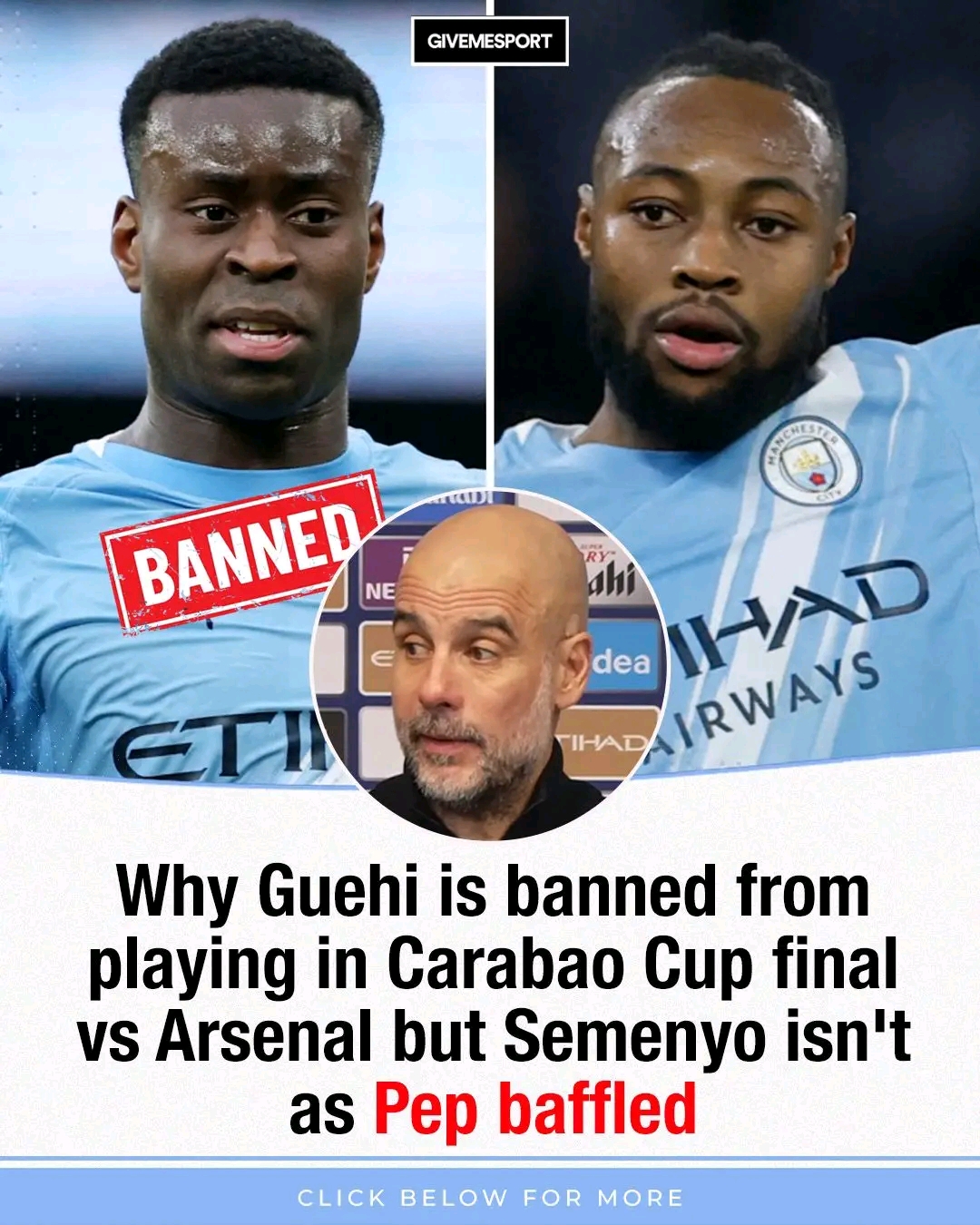
Manchester City’s season keeps moving at a fast and dramatic pace, and once again Pep Guardiola finds himself at the centre of a story that mixes football rules, big money transfers, Wembley dreams, and a sense of injustice that only elite clubs chasing trophies seem to feel. What should have been a simple celebration of progress to another Carabao Cup final has instead opened up a debate that many fans are only now starting to understand. The strange situation where Antoine Semenyo can play in the final, but Marc Guehi cannot, has left supporters confused, Guardiola frustrated, and the spotlight firmly on the English Football League’s competition rules. It is one of those stories that reminds everyone that modern football is not only decided by goals and tactics, but also by timing, paperwork, and lines written deep inside rulebooks.
Manchester City entered the January transfer window knowing they needed fresh energy and depth. Injuries, fatigue, and the sheer weight of competing on multiple fronts forced Guardiola and the club’s recruitment team to act. When the window opened, City moved quickly. Antoine Semenyo arrived first, joining from Bournemouth in a deal that underlined how serious City were about reinforcing their attack. The fee was big, the expectations were even bigger, and the timing turned out to be absolutely crucial. Semenyo was signed before the Carabao Cup semi final first leg, and that single detail has now shaped everything that followed.
Just days after putting pen to paper, Semenyo was thrown straight into the action. Guardiola trusted him immediately, and the winger rewarded that faith in the most convincing way possible. In the first leg of the semi final against Newcastle United at St James’ Park, City played with authority and hunger. The 2 0 win set the tone, but it was Semenyo’s performance that caught the eye. He scored, he stretched the defence, and he looked like a player who had already been part of the Guardiola system for years. At that moment, nobody was thinking about eligibility rules or finals in March. City were focused on getting the job done, and Semenyo was officially part of that journey.
The second leg at the Etihad only confirmed City’s dominance. Newcastle were swept aside in a ruthless 5 1 win that left little room for debate. City were heading back to Wembley yet again, chasing a fifth League Cup under Guardiola. It felt routine, almost expected, but that does not make it any less impressive. Reaching Wembley has become part of City’s identity in recent years. For Guardiola, cup finals are not bonuses, they are standards. However, hidden beneath the celebrations was a problem waiting to surface, and it arrived in the form of Marc Guehi.
Guehi’s signing came after Semenyo’s, and once again timing was everything. City had been linked with the Crystal Palace captain for months. His leadership, calmness on the ball, and Premier League experience made him an attractive option. When the deal was finally completed on January 19, City believed they had secured a defender who could serve them immediately and in the long term. The initial fee was reported to be around twenty million pounds, a figure that looked reasonable for a player of Guehi’s quality and age. From City’s point of view, this was smart business. From a footballing perspective, it made perfect sense. From a Carabao Cup perspective, it created a problem.
The issue is simple on the surface but complicated in practice. Guehi joined Manchester City after the first leg of the Carabao Cup semi final had already been played. According to EFL rules, that timing matters more than anything else. Rule 6.4 states that a registered player can only play for up to two clubs in the competition in one season if they appeared for their parent or loan club before the winter transfer window closed or before the first leg of the semi final, whichever comes sooner. Guehi had already featured in the competition for Crystal Palace earlier in the season, and because his transfer happened after that first semi final leg, he became ineligible to play for City in the final.
For fans, this feels harsh. For Guardiola, it feels illogical. For Guehi himself, it must feel deeply frustrating. Here is a player who has joined a new club, settled into a new dressing room, and contributed to training and preparation, yet he knows that when the team walks out at Wembley, he will be watching from the stands. The irony makes it even harder to swallow. Guehi has already lifted trophies at Wembley. In 2025, he was part of the Crystal Palace side that won the FA Cup and the Community Shield. He knows what finals feel like. He knows what it means to play under the arch. This time, despite wearing the shirt of one of the most powerful teams in England, he is banned by a technicality.
Antoine Semenyo, on the other hand, is free to play. The difference between the two players is not talent, importance, or price. It is a ten day gap in January. Semenyo signed on January 9. Guehi signed on January 19. That small window of time has created a huge difference in outcome. Semenyo will be part of Guardiola’s plans for the final. Guehi will not. For Guardiola, this is hard to accept, and he has made that clear in public.
After the semi final victory over Newcastle, Guardiola did not hide his feelings. Speaking to Sky Sports, he questioned the logic of the rule and hinted that the club would challenge it. He spoke honestly, almost emotionally, about the situation. From his point of view, Manchester City have made a big investment in Guehi. The player belongs to them. He is training, he is part of the squad, and yet he is not allowed to play in the final. Guardiola openly admitted that he does not understand why the rule exists in its current form. He suggested that City would write to the EFL to request a change, or at least an exception.
There was a sense of realism in his words, though. Guardiola knows how football bureaucracy works. In his post match press conference, he even joked about the likely response. When asked what he thought the competition organisers would say, he simply replied that they would probably say no. He laughed, but the frustration was still there. Guardiola understands that rules are rules, but he also believes that some rules no longer fit the modern game. Transfer windows, in his view, are controlled by larger governing bodies. If a player is officially registered and eligible in the league, why should a domestic cup competition block him months later from playing in a final?
Guardiola’s argument is based on logic rather than emotion. He believes that once a player is signed during an open transfer window, that player should be eligible for all competitions going forward. He compared the situation to European competitions, where similar restrictions apply, and questioned whether those rules also make sense. In his mind, the timing of a semi final first leg should not decide whether a player can take part in a final two months later. He pointed out that by March, Guehi will have been at the club for a long time. He will have trained, adapted, and fully integrated. Yet the rule freezes him out because of a moment that happened before he even arrived.
This debate also highlights the strange balance between protecting competition integrity and adapting to the realities of modern football. The EFL introduced these rules to prevent clubs from using multiple players from different teams unfairly in the same competition. In theory, it stops chaos. In practice, it creates situations like this one, where common sense seems to lose to strict wording. Fans watching from the outside often struggle to understand why such details matter more than the football itself.
For Manchester City, the timing could not be more awkward. The Carabao Cup final will see them face Arsenal, the same Arsenal side that is pushing them hard in the Premier League title race. This is not just any final. It is a meeting between the two best teams in the country right now. Every player matters. Every option from the bench matters. Guardiola is known for overthinking finals, for adjusting tactics, and for relying on specific profiles. Guehi could have been useful. His calmness, aerial ability, and leadership would have given Guardiola another choice. Now, that option is gone.
Semenyo’s presence, meanwhile, shows how quickly fortunes can change. He has already justified his price tag with important goals and performances. Being available for the final gives him a chance to make history almost immediately after joining. It also underlines how fine the margins are at the top level. One decision, one date, one signature, and a player’s entire season can look different.
From Guehi’s perspective, patience is the only option. He cannot change the rule. He cannot change the date he signed. All he can do is support his teammates and focus on the competitions where he is eligible. There will be other finals, other big nights, and other chances. Still, missing out on Wembley will hurt, especially when he has already tasted success there before.
The wider football world will watch closely to see if City’s request leads anywhere. History suggests it will not. Competition organisers rarely change rules mid season, especially for one club. Doing so could set a precedent that creates more problems than it solves. Even Guardiola seems to accept this reality, despite his protests. His comments feel less like a genuine expectation of change and more like a statement of principle.
In the end, the Carabao Cup final will go ahead as planned. Semenyo will be available. Guehi will not. Arsenal and Manchester City will battle for another piece of silverware, and the story will shift back to the pitch. Yet this episode will linger as another example of how football rules can shape narratives in unexpected ways. It reminds everyone that success at the top level depends not only on talent and money, but also on timing and fine print.
For fans, it is a lesson in understanding the game beyond the ninety minutes. For Guardiola, it is another reminder that even with all his power and influence, some things remain out of his control. And for Marc Guehi, it is an unfortunate twist in an otherwise promising new chapter at one of the biggest clubs in the world, a chapter that will begin properly everywhere except under the Wembley arch on Carabao Cup final day.