Man City Executive Chairman Khaldoon Al Mubarak Under Investigation for Tax Evasion — Executive Meeting Concludes, His Future Sealed Manchester City insiders confirm that executive chairman Khaldoon Al Mubarak is under investigation for alleged tax evasion. An urgent executive meeting has concluded, with sources indicating that key decisions regarding the club’s leadership and Al Mubarak’s future have now been finalized

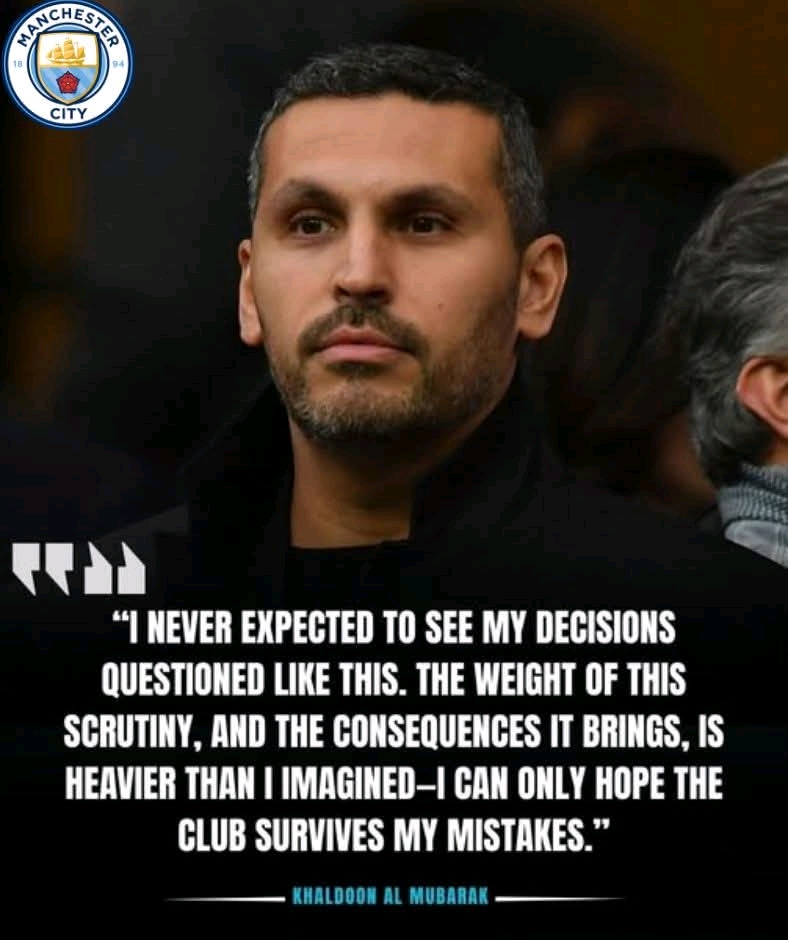
BREAKING news has shaken the foundations of Manchester City and sent shockwaves across English football and beyond. Reports emerging from close to the club claim that Manchester City executive chairman Khaldoon Al Mubarak is under investigation over alleged tax-related matters, a development that has sparked intense debate, fear, anger, and confusion among fans, pundits, and insiders alike. While no official verdict has been announced and no charges have been confirmed, the seriousness of the claims has already created a storm that refuses to die down.
According to sources described as being close to the club’s leadership, an urgent executive meeting was held behind closed doors. The meeting, described by insiders as tense and emotionally charged, reportedly focused on the implications of the investigation, the potential reputational damage to Manchester City, and what this could mean for the club’s future governance. By the time the meeting ended, sources claim that key decisions had been discussed and that Al Mubarak’s future at the club had become a central issue.
Manchester City fans woke up to headlines they never expected to read. For many supporters, Khaldoon Al Mubarak is not just another executive. He is one of the most powerful figures in the club’s modern history, a man whose leadership has overseen an era of unprecedented success, record-breaking trophies, global expansion, and dominance in English football. The idea that his position could now be under threat has left many supporters stunned.
It is important to stress that these are allegations and reports, not proven facts. No official statement has confirmed wrongdoing, and investigations do not automatically mean guilt. However, in the modern football world, perception can be just as damaging as reality. The mere suggestion of an investigation involving a figure as senior as the executive chairman is enough to trigger alarm bells across the football landscape.
Insiders suggest that the executive meeting was called at short notice due to growing pressure and media attention. Senior figures within the club are said to be deeply concerned about how the situation could escalate, especially with Manchester City already under intense scrutiny due to ongoing legal and regulatory issues connected to financial governance. The timing could hardly be worse.
Manchester City have spent years building an image of professionalism, elite management, and global respect. Any suggestion that a top executive could be involved in alleged financial misconduct threatens that carefully constructed image. Rivals have wasted no time reacting. Social media has been flooded with comments from opposing fans, some celebrating the news, others demanding accountability, and many questioning how deep any potential issues might go.
Pundits have also weighed in, with opinions sharply divided. Some have urged caution, warning against rushing to judgment before any official findings are released. Others argue that football clubs, especially those at the very top, must be held to the highest standards of transparency and accountability. The debate has grown louder by the hour.
Behind the scenes, players are said to be aware of the noise, even if they are being shielded from direct involvement. While Manchester City’s dressing room remains focused on football, sources suggest there is unease. When leadership at the very top is questioned, it inevitably filters down, no matter how strong the club’s internal messaging might be.
Khaldoon Al Mubarak himself has remained silent publicly, at least for now. Those who know him describe him as calm under pressure, a man who rarely reacts emotionally in public. However, insiders claim that the gravity of the situation is fully understood at board level. The reported executive meeting was not just routine; it was described as a moment of reckoning.
Supporters are asking difficult questions. What happens if the investigation deepens? What happens if findings are made public? Would Manchester City be forced into leadership changes? And how would that impact the club’s long-term strategy, both on and off the pitch?
The uncertainty has created a vacuum filled with speculation. Some reports suggest that contingency plans are already being discussed, even if they are only precautionary. Others claim that the club is confident the matter will be resolved without lasting damage. The truth, as always, likely sits somewhere in between.
Manchester City’s recent history means that any new controversy is magnified. The club has been one of the most successful teams of the past decade, winning league titles, domestic cups, and finally conquering Europe. Success, however, brings scrutiny. Rivals and critics have long accused City of bending rules, and while many of those accusations have been denied or challenged, the narrative persists.
This latest development has given critics fresh ammunition. On television, radio, and online platforms, the discussion has shifted from football tactics and transfers to governance, ethics, and leadership. Some voices are calling for football authorities to step in, while others argue that legal processes must be allowed to run their course without interference.
Fans, meanwhile, are split. Loyal supporters have rushed to defend Al Mubarak, pointing to his record and insisting that allegations do not equal guilt. Others are more cautious, saying that if any wrongdoing is proven, then consequences must follow, no matter how painful.
What makes the situation even more explosive is the broader context. Manchester City are already navigating complex legal challenges related to financial regulations. Adding another layer of uncertainty involving a senior executive only increases pressure on the club. For some, this feels like a tipping point.
Insiders say the executive meeting addressed not only the investigation but also communication strategy. How should the club respond publicly? Should there be a statement, or is silence the safer option? In modern football, every word is dissected, every pause analysed. One wrong move can make a bad situation worse.
There is also concern about commercial partners and sponsors. Manchester City are a global brand with significant commercial relationships. Any hint of instability at the top could worry partners who value stability and reputation. While no sponsors have made public moves, the situation is being closely watched.
Former players and club legends have also been dragged into the conversation. Some have called for unity, urging fans to focus on the team and avoid panic. Others have said that football clubs must learn that success does not place them above scrutiny.
For Khaldoon Al Mubarak, this could be the most challenging period of his tenure at Manchester City. Even if the investigation ultimately clears him, the process itself is draining and damaging. In football, reputations are fragile, and trust once shaken is hard to fully restore.
The phrase “his future sealed,” circulating in some reports, has caused particular alarm. While no official decision has been announced, the wording suggests that significant discussions have taken place. Whether that means full confidence, temporary stepping aside, or something more drastic remains unclear.
Manchester City have not confirmed any leadership changes. Until they do, everything remains speculation. However, the fact that such stories are emerging at all shows how tense the atmosphere has become.
Fans across the world are refreshing their news feeds, waiting for updates. Every new report sends waves through social media. Some fans are angry at the media, accusing outlets of sensationalism. Others believe that transparency is long overdue.
Football governance experts have also joined the debate. Some argue that clubs need stronger independent oversight to prevent any appearance of impropriety. Others warn that targeting individuals before investigations conclude undermines fairness and due process.
As the story continues to develop, one thing is clear: Manchester City are facing one of their most uncomfortable moments off the pitch. How the club handles this situation could define its reputation for years to come.
The coming days and weeks will be crucial. Will there be an official statement? Will authorities confirm or deny the investigation? Will Khaldoon Al Mubarak speak publicly? Each unanswered question adds to the tension.
For now, Manchester City supporters can only wait. The team will continue to play, goals will still be scored, and trophies will still be chased. But in the background, this cloud will remain until clarity is achieved.
In football, crises have a way of reshaping clubs. Some emerge stronger, others are changed forever. Whether this moment becomes a footnote or a turning point in Manchester City’s history remains to be seen.
What is certain is that the story is far from over. Fans, pundits, and insiders will continue to watch closely, knowing that the future direction of Manchester City could hinge on how this situation unfolds.